






Across hyper-saline coastal dunes, arid limestone bluffs, and sun-scorched desert plains, most ordinary plants wither within minutes from severe osmotic shock. Yet, the genus Zygophyllum, which forms the backbone of the Zygophyllaceae family, effortlessly surmounts nature's harshest ecological trials. Variously known as the 'bean caper' or desert succulent, this genus has evolved over millions of years across North Africa, the Middle East, the Mediterranean littoral, and the semi-arid plains of Southern Africa.
What renders Zygophyllum plants so extraordinary for succulent collectors and landscape botanists is not merely their unique branching architecture and fleshy paired leaves; it is their exceptional halophytic physiology, capable of compartmentalizing high salt concentrations directly within their foliar tissues. When cultivated indoors or in xeriscape rock gardens, their virtually zero-maintenance resilience transforms them into the toughest gems of any botanical collection.
1. Botanical Identity and Morphological Characteristics
The name Zygophyllum derives from the Ancient Greek 'zygon' (yoke or pair) and 'phyllon' (leaf). This etymology highlights the plant's most striking morphological hallmark: fleshy, cylindrical, or obovate leaflets paired symmetrically at the apex of each petiole (bifoliolate foliage). Species belonging to this genus (such as Zygophyllum album, Z. fabago, and Z. morgsana) typically display a subshrub or shrubby growth habit anchored by a woody basal caudex.
At the cellular level, Zygophyllum features specialized parenchymal storage cells packed within its succulent leaflets to conserve water under severe transpiration stress. This parenchyma tissue is shielded by a thick cuticle and a microscopic epicuticular wax (farina) layer, preventing interstitial moisture from evaporating under blazing sun. Most species employ flexible photosynthetic pathways, operating via C3-CAM transitions or modified CAM (Crassulacean Acid Metabolism) variants that seal stomata throughout hot days and capture carbon dioxide during cool nights. Furthermore, selective root salt filtration combined with specialized foliar salt glands makes these plants true biological purification marvels.
2. Light Requirements and Indoor Positioning
Originating from rocky terrains exposed to relentless, unfiltered sunlight, Zygophyllum displays an uncompromising phototropic nature. When grown indoors, it must be situated directly in front of unobstructed south- or west-facing windows that provide at least 6 to 8 hours of direct solar radiation daily.
Under insufficient light, etiolation (weak, leggy elongation with stretched internodes) occurs rapidly; leaflets lose their plump, cylindrical form, pale in color, and begin to abscise. Moving potted specimens outdoors to balconies, terraces, or open garden beds during late spring and summer reinforces stem lignification and promotes dense branching. While the plant easily tolerates scorching heat, poorly ventilated or stuffy indoor settings drastically increase susceptibility to opportunistic fungal pathogens.

3. Watering Discipline: The 'Soak and Dry' Protocol
The single most lethal mistake in cultivating Zygophyllum is adhering to a rigid calendar-based watering schedule. This genus does not merely tolerate prolonged drought; its root physiology fundamentally requires cyclical drought intervals. The 'Soak and Dry' method must be strictly observed.
Never irrigate until the substrate has dried out completely—100% of the way to the bottom of the container. Insert a wooden skewer deep into the root ball to verify dryness; if the skewer emerges entirely dry with zero substrate clinging to it, the plant is ready for water. During irrigation, soak the entire root mass thoroughly until runoff flows freely from drainage holes, and empty the collection saucer within 15 minutes. During winter dormancy, reduce watering intervals to once every four to six weeks or suspend it almost entirely.
4. Ideal Substrate Formulation and Pot Selection
Naturally adapted to calcareous, gravelly, gypsiferous, and alkaline substrates, Zygophyllum cannot survive long-term in conventional potting soils or peat-dense nursery mixes. Water must percolate through the root zone instantly without pooling, ensuring maximum root aeration.
Opt for unglazed terracotta, porous clay, or stone containers equipped with substantial drainage holes to facilitate ambient evaporation through pot walls. Avoid non-breathable plastic or glazed ceramic containers, as they trap residual moisture.
| Component | Proportion (%) | Botanical Function & Benefit |
|---|---|---|
| Coarse Pumice | %40 | Provides exceptional structural drainage, long-term porosity, and root aeration. |
| Crushed Lava Rock / Zeolite | %25 | Releases trace minerals, adds ballast, and prevents substrate compaction. |
| Coarse River Grit / Limestone Chips | %20 | Replicates natural mineral environments and supports an alkaline pH balance. |
| Sterile Cactus Compost / Coco Coir | %15 | Supplies minimal organic binder necessary for initial root anchorage. |
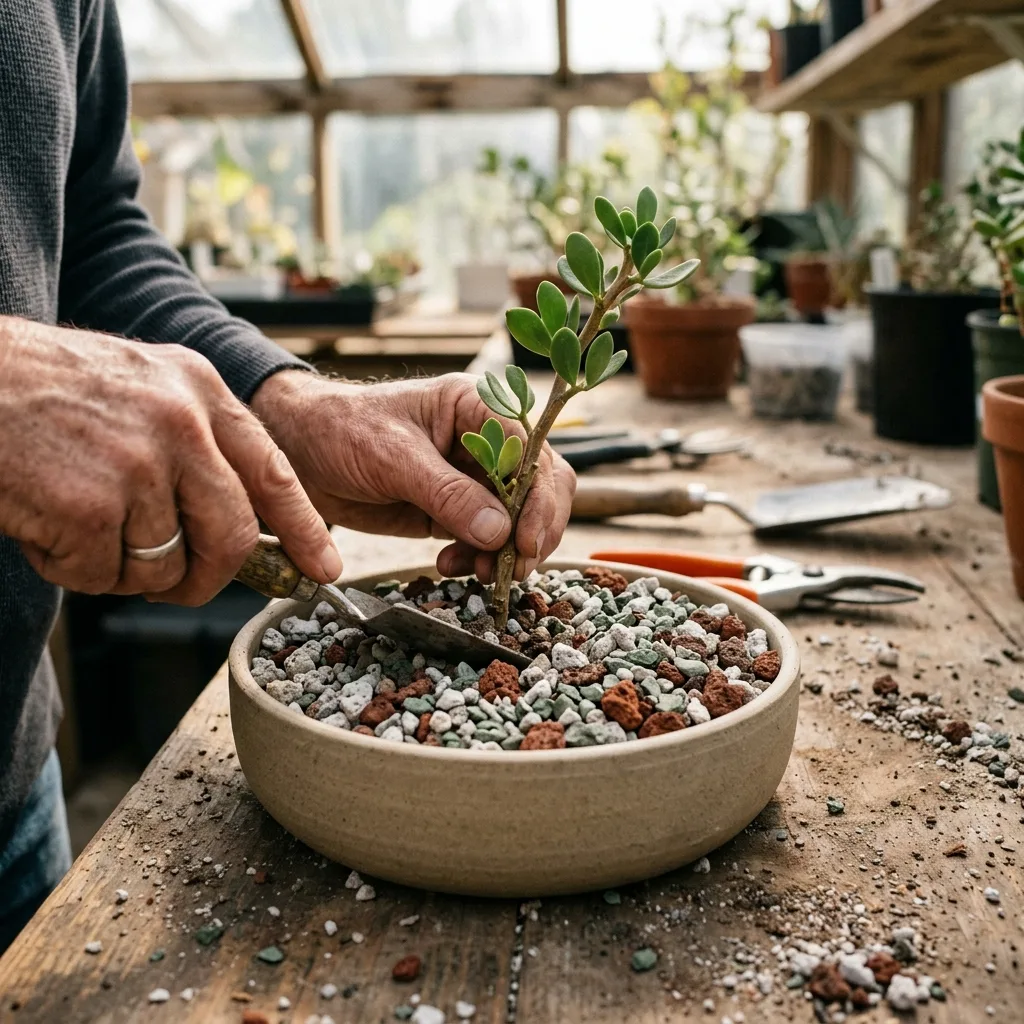
5. Step-by-Step Propagation Techniques and Landscaping Uses
Zygophyllum can be multiplied through two primary methods: semi-hardwood stem cuttings and seed germination. Semi-hardwood cuttings offer the fastest and most dependable method for home growers.
- Selecting Healthy Cuttings: In spring or early summer, use a sterile razor or pruner to sever a healthy, semi-hardwood shoot roughly 8–12 cm (3–5 inches) long, bearing at least 3–4 mature leaf nodes.
- Callus Formation: Never plant freshly taken cuttings directly into moist soil. Allow the cut ends to dry in a shaded, warm, and well-ventilated spot for 4–6 days to form a firm, protective suberized callus that shields against bacterial infiltration.
- Dry Potting: Insert the callused cutting 2–3 cm deep into a completely dry, mineral-heavy substrate formulated according to the specifications above. Do not apply water for the first 7–10 days.
- Root Establishment: After approximately two weeks, mist the substrate surface very lightly to stimulate root exploration. Adventitious fibrous roots and active terminal growth will emerge within 4–6 weeks.
6. Common Pests, Diseases, and Remedial Solutions
Due to high salt tissue concentrations and internal secondary metabolites, Zygophyllum boasts innate chemical defenses against most foliage-feeding pests. Nevertheless, suboptimal cultivation practices can introduce vulnerabilities:
- Root and Crown Rot (Fusarium and Phytophthora): Triggered by overwatering and lack of drainage. When the stem base turns dark and mushy, unpot the specimen immediately, excise necrotic roots using a flame-sterilized blade, dust the wounds with powdered sulfur or activated charcoal, and repot into dry mineral grit.
- Mealybugs (Pseudococcidae): In dry, unventilated indoor spaces, mealybugs may colonize leaf axils as cottony white clusters. Dab them manually with cotton swabs dipped in 70% isopropyl alcohol, followed by a targeted horticultural neem oil emulsion spray.
- Sudden Leaf Drop: Abrupt changes in environmental conditions, inadequate light intensity, or exposure to cold drafts stress the plant, causing it to discard succulent leaflets. Relocating the specimen to a stable, sun-drenched microclimate resolves foliar shedding.
7. Seasonal Maintenance Calendar and Expert Tips
Spring (Active Awakening): As ambient temperatures consistently exceed 15°C (59°F), the plant breaks dormancy. Progressively increase watering frequency and feed once every two months with a low-nitrogen, balanced cactus and succulent liquid fertilizer diluted to one-quarter strength.
Summer (Peak Photosynthesis and Hardening): The phase of maximum solar energy absorption. Specimens kept outdoors can receive deep weekly soakings during peak heat waves, provided the substrate dries rapidly. Indoors, prioritize strong cross-ventilation during sweltering afternoons.
Autumn (Hardening Off): As daylight hours shorten and night temperatures dip, cease all supplemental fertilizing completely. Taper watering intervals by half to encourage the lignification of tender shoots ahead of winter.
Winter (Dormancy and Cold Protection): Although mature specimens withstand brief light freezes down to -2°C (28°F) in fully dry ground, containerized plants should be overwintered indoors between 8–12°C (46–54°F). Position them under maximum available light and keep the substrate completely dry.


Reader Reviews & Comments 3 Reviews
Clara Davenport
Julian Vance
Marcus Thorne
Leave a Review & Rating
Share your plant care tips, experiences, or questions with our succulent community.