






From the volcanic valleys of Mexico to the arid expanses of South Africa's Karoo Desert, succulents thrusting through bare rock represent nature's most resilient living sculptures. Whether it is a classic Jade Plant (Crassula ovata), an architectural Snake Plant (Sansevieria), or trailing strands of Burro's Tail (Sedum morganianum), these botanical wonders have defied centuries of prolonged droughts, scorching winds, and nutrient-barren substrates. Tragically, when brought into indoor living spaces, they frequently perish from 'excessive love.' When a succulent rots atop a coffee table, it does not stem from intrinsic fragility, but rather from our well-intentioned care misconceptions that upend millions of years of evolutionary survival mechanisms.
Many plant enthusiasts mistakenly treat succulents like traditional tropical houseplants, offering them damp potting mix, dim interior corners, and an uninterrupted supply of water. Yet succulent physiology is calibrated for scarcity and strategic storage, never perpetual abundance. Frequent watering is not a gesture of affection; it suffocates the root system, stripping it of oxygen and inadvertently drowning the plant. In this comprehensive guide, we dissect the fatal mistakes committed by novice growers and seasoned collectors alike across anatomical, biological, and practical dimensions.
1. Botanical Identity and Morphological Adaptations
Succulents do not constitute a single botanical family; rather, they form an artificial polyphyletic grouping spread across dozens of diverse plant families including Crassulaceae, Asphodelaceae, Aizoaceae, and Euphorbiaceae. What unites them is succulence: the specialized capacity to store reserve moisture within stems, leaves, or roots. At the cellular level, these plants are equipped with extensive water-storing parenchyma tissue characterized by colossal central vacuoles. Their cell walls are remarkably pliable, shriveling safely during dry spells and expanding rapidly following rainfall to lock moisture inside.
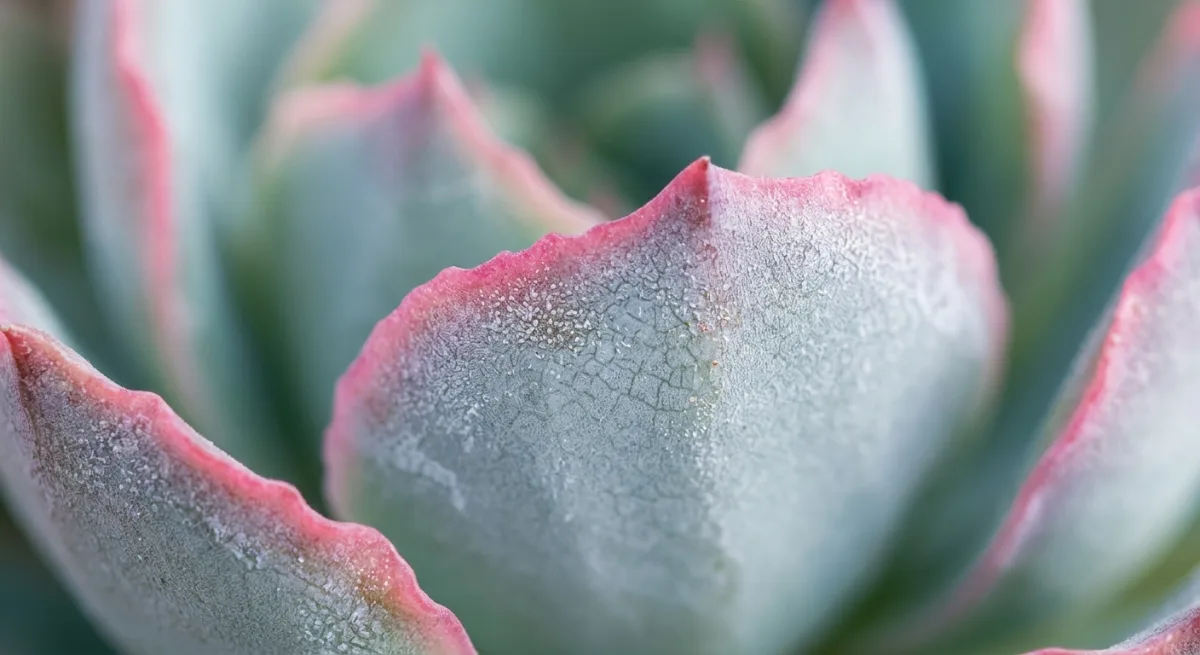
One of the most magnificent physical defenses found on succulents is the powdery, frosted, chalk-like coating on their leaf surfaces, known scientifically as epicuticular wax or 'farina'. The silvery farina coating is the plant's natural, self-produced sunscreen; never rub it off with your fingers. Farina does not merely scatter scorching ultraviolet rays; it also prevents fungal spores from establishing a foothold and drastically minimizes non-stomatal transpiration. Wiping this coating off under the mistaken assumption that it is dust strips the plant of its biological armor and compromises its immune system.
Another physiological triumph is Crassulacean Acid Metabolism (CAM) photosynthesis. To prevent catastrophic water vapor loss during scorching daylight hours, succulents seal their stomatal pores tightly. They open these stomata exclusively at night, capturing carbon dioxide and temporarily storing it as malic acid. This biological reality illustrates why succulents demand fresh nighttime air circulation, uncompacted root systems, and intense, unfiltered daytime illumination.
2. Lighting Requirements and Indoor Positioning
The most pervasive initial error in indoor succulent care is positioning these specimens as static decorative ornaments on living room coffee tables, bathroom vanities, or deep within bookshelves. Deprived of adequate light, a succulent inevitably undergoes etiolation: the stem stretches frantically, internodal spacing widens, rosettes flatten, and chlorophyll synthesis falters, resulting in a pale, washed-out green hue. This leggy growth is the plant's desperate plea for sunlight.
Conversely, the opposite extreme produces equal devastation: hauling a succulent directly from a dim interior corner and thrusting it under the blazing midday July sun. This sudden exposure inflicts severe epidermal photo-oxidation, causing irreversible chlorophyll scorching visible as bleached white or corky brown scars across the foliage.
3. Watering Discipline: The 'Soak and Dry' Protocol
The leading cause of mortality among succulents is not neglect, but fundamentally flawed hydration regimens. The most damaging practices include:
- Surface Misting: Spraying leaves with a mister never hydrates a succulent. It merely deposits moisture between leaf axils, creating a prime breeding ground for fungal pathogens and crown rot.
- Spoon-Feeding or Shot-Glass Watering: Dampening merely the top centimeter of soil leaves deeper roots desiccated, encouraging fragile surface rooting and stunting root development.
- Calendar-Based Watering: Adhering to a rigid routine like 'watering every Monday' is disastrous; transpiration rates fluctuate continuously based on ambient humidity, seasonal dormancy, and container volume.
The physiologically sound method is the 'Soak and Dry' protocol, which faithfully replicates the flash floods of their native desert habitats. Wait until the entire substrate column is thoroughly dry and the pot feels featherlight. Then, drench the soil generously until water runs freely through the drainage openings, discarding any excess that collects in the drainage saucer within 15 minutes. Never reintroduce water until the deepest core of the pot has dried out completely.
4. Substrate Optimization and Container Selection
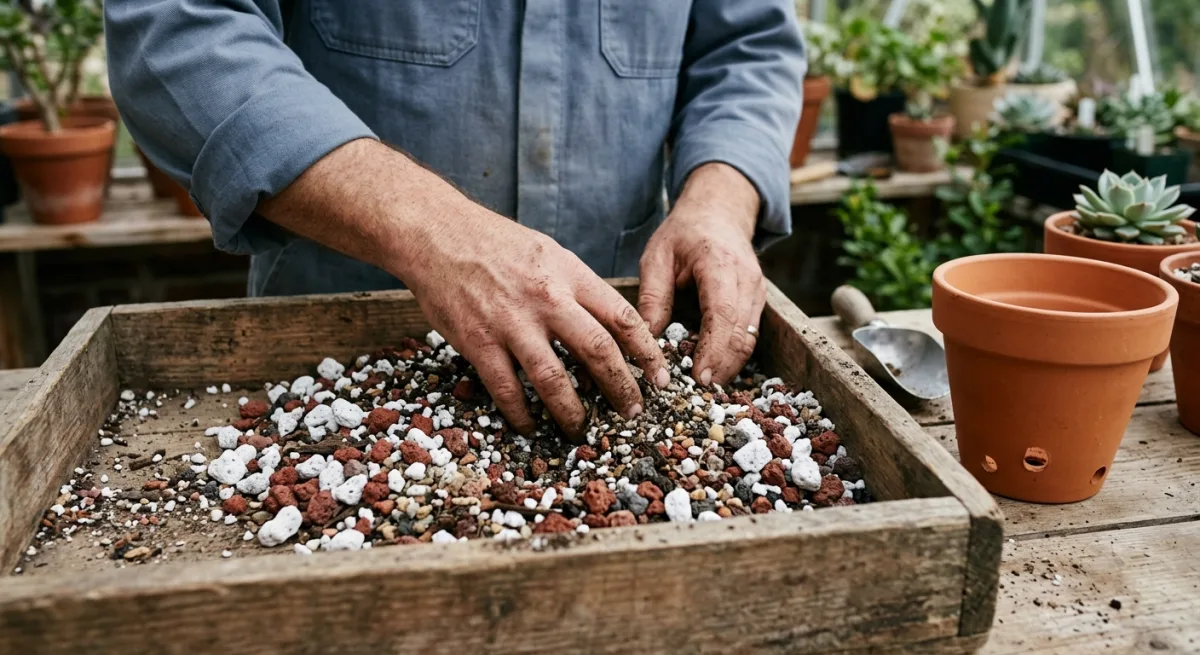
Standard commercial potting mixes labeled as 'all-purpose houseplant soil'—typically rich in dense clay, peat moss, and compost—are virtual death traps for succulents. When dry, these organic mediums shrink into an impermeable, hydrophobic brick; once wetted, they retain stagnant water for weeks, depriving root xylem pathways of oxygen and leaving them vulnerable to waterborne fungi.
Equally lethal are non-draining containers such as glass globes, glazed ceramic mugs, and closed terrariums. Lacking drainage outlets, these vessels trap mineral salts and moisture at the base, guaranteeing root asphyxiation. Porous, unglazed terracotta pots remain the uncontested gold standard because their permeable clay walls allow moisture to evaporate from all sides.
| Substrate Component | Recommended Ratio (%) | Functional and Morphological Benefit |
|---|---|---|
| Coarse Horticultural Pumice (3-6 mm) | 40% | Provides supreme porosity, oxygenates the rhizosphere, and prevents compaction. |
| Sterile Succulent/Cactus Peat Fiber | 25% | Offers a lightweight organic base for root anchorage and minor nutrient exchange. |
| Crushed Lava Rock (Scoria) | 15% | Gradually leaches beneficial trace minerals and maintains open air pockets. |
| Clinoptilolite Zeolite | 10% | Buffers excess moisture and captures fertilizer salts, shielding root hairs. |
| Coarse Perlite / Washed River Sand | 10% | Maintains open capillary channels throughout the soil and ensures low bulk density. |
5. Step-by-Step Propagation Techniques
The most devastating error made during vegetative propagation is inserting a freshly severed leaf or uncallused stem cutting directly into damp soil. Freshly cut botanical tissue possesses an open vascular wound that acts as an open door for soil-borne pathogens; damp soil triggers immediate bacterial decay.
- Harvesting Viable Tissue: Select a plump, undamaged leaf from the lower-to-mid section of the mother stem. Gently twist it side to side until it snaps cleanly away, ensuring the vital basal meristematic tissue at the nodal junction remains intact.
- Callus Formation: Place your leaf or stem cuttings in a dry, warm, well-ventilated spot away from direct sunlight for 3 to 5 days. Confirm that the severed surface has formed a firm, dry, whitish-tan protective scar (callus).
- Dry Bedding: Lay the callused cuttings horizontally atop a tray filled with dry, highly gritty mineral substrate. Do not bury the leaf base; emerging adventitious roots naturally grow downward toward moisture.
- Post-Rooting Hydration: Refrain entirely from watering until you observe delicate pink or red feeder roots and a miniature rosette crown emerging from the base. Once rooted, lightly mist or drop water directly at the root tips using a targeted dropper.
6. Common Diseases, Pests, and Clinical Interventions
Suboptimal growing environments dismantle a succulent's natural defenses, leaving it vulnerable to opportunistic pests and fungal diseases:
- Mealybugs (Pseudococcidae): Appearing as cotton-like white clusters tucked into rosette crevices and leaf undersides, these sap-sucking pests drain sugary phloem sap. Treatment: Dip a cotton swab in 70% isopropyl alcohol and physically dab away visible insects. For widespread outbreaks, spray with diluted cold-pressed neem oil or a systemic horticultural insecticide (keep the plant shaded during treatment to avoid leaf scorch).
- Edema: Manifests as hard, corky, raised brown blisters on leaf undersides caused by cells taking up more water than they can transpire, causing them to burst. Edema is non-contagious; simply expand the intervals between waterings and improve air circulation.
- Fungal Root and Stem Rot: Typically induced by Fusarium or Phytophthora species, presenting as blackened, mushy stems and a foul odor. Emergency Surgery: Unpot the plant immediately, wash the roots, and excise all soft, discolored tissues using a sterile scalpel until only pristine, healthy green tissue remains. Dust the fresh cut with sulfur powder or ground cinnamon, allow it to dry for one full week, and re-root it in fresh mineral substrate.
7. Seasonal Care Protocols and Expert Insights
The succulent life cycle mirrors seasonal light and temperature rhythms. For the majority of spring- and autumn-growing genera (such as Echeveria, Sedum, and Graptopetalum), active growth peaks when moderate temperatures prevail. During these periods, water demands rise, and a balanced, low-nitrogen, high-potassium liquid cactus fertilizer may be administered monthly at quarter-to-half strength.
In winter, diminished daylight triggers a resting period (dormancy). Placing succulents right beside heating vents while watering on a summer schedule results in weak, stretched growth. Winter watering should be reduced to once every 3 to 4 weeks, or scaled back to once monthly if plants are overwintered in a cool room (10–12°C / 50–54°F).
Take special note of summer-dormant genera: Aeonium, Dudleya, and certain Haworthia species slow down significantly or enter dormancy when summer temperatures soar. When an Aeonium tightens its rosette into a closed ball in midsummer, it is resting, not dehydrating. Drenching it during this phase will inevitably cause root rot. Listen to the plant's cues; their health and moisture status are written directly across the turgidity and coloration of their leaves.


Reader Reviews & Comments 4 Reviews
Eleanor Vance
Claire Redfield
Marcus Sterling
Julian Hayes
Leave a Review & Rating
Share your plant care tips, experiences, or questions with our succulent community.