






Spanning from the scorching horizons of the Sonoran Desert to our interior windowsills, cacti are evolutionary marvels whose tissues have been armored for millions of years against nature's most relentless photon bombardment. Yet in modern indoor gardening, a widespread misconception persists: many houseplant enthusiasts misinterpret a cactus's low water requirements and assume it can thrive in windowless bathrooms, dimly lit office cubicles, or the shadowy corners of living rooms. So, can a cactus truly survive without sunlight? The direct, botanical answer is an unequivocal no—at least not while preserving its cellular integrity and photosynthetic balance over the long term.
Confining a desert cactus to total darkness or deep shade causes its metabolic engine to stall completely. A light-starved cactus does not perish overnight; it quietly burns through its internal carbohydrate reserves, producing pale, spindly, and deformed growth in a desperate bid to find illumination, ultimately culminating in complete cellular collapse. In this comprehensive guide, we will analyze the photomorphology of cacti, examine the severe physiological stress of etiolation, and lay out an actionable botanical protocol to revive your plants.
1. Taxonomic Identity, Areole Architecture, and Spine Morphology
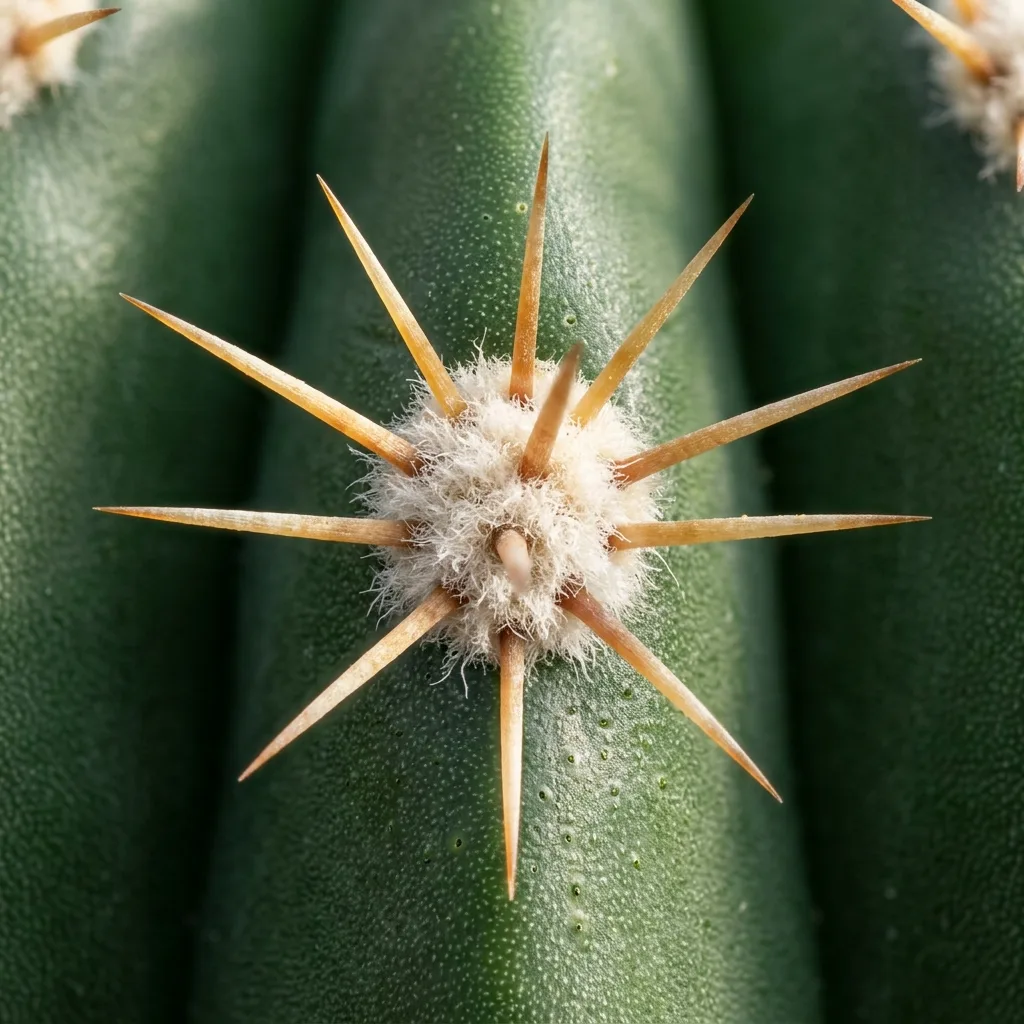
Members of the Cactaceae family are distinguished from all other succulent plant lineages by a unique anatomical organ: the areole. Areoles are highly condensed, modified shoot buds across the cactus body; spines, glochids, lateral offsets, and floral buds emerge exclusively from these specialized meristematic points. Throughout evolutionary history, true leaves were largely abandoned to curb transpiration, transferring the photosynthetic burden directly to the succulent stem (cladode or ribbed cylinder).
Spine morphology serves as a vital solar shield between raw ultraviolet exposure and the living epidermis. In numerous species (such as Echinocactus grusonii or Cephalocereus senilis), dense arrays of spines and silky trichome hairs act as natural photoprotective filters. The micro-shadows cast across the epidermal ribs shield chlorophyll in the cellular membranes from irreversible photodamage. Conversely, when a cactus is sequestered in an environment devoid of photons, emerging areoles generate weak, soft, colorless, and widely spaced spines, because the plant lacks the photosynthetic energy required to synthesize dense lignified defensive armor.
2. Irradiance Thresholds, CAM Physiology, and Etiolation Dynamics
Cactus metabolism operates almost exclusively via Crassulacean Acid Metabolism (CAM) photosynthesis. To survive hyper-arid environments, desert species keep their stomata tightly sealed during daylight hours to prevent transpirational water loss; they open them in the nocturnal cool to capture carbon dioxide and fix it as malic acid. Once daylight breaks, solar photons power the light-dependent reactions that decarboxylate this acid into bioavailable sugars. Deprived of adequate photon flux, a cactus cannot metabolize its nocturnal acid reserves; cellular acidity rises unchecked, inducing metabolic arrest.
To maintain basic metabolic equilibrium, desert cacti demand an irradiance threshold of at least 10,000 to 25,000 Lux (approximately 200–500 µmol/m²/s PPFD). Full-sun genera such as Opuntia and Ferocactus require 6 to 8 hours of direct, unfiltered solar radiation daily. Where natural sunlight cannot be provided, placing the specimen 15–20 cm beneath a full-spectrum LED grow light is essential. When deprived of adequate irradiance, the plant undergoes etiolation: the stem stretches desperately toward available light, narrowing into a pale, chlorotic, needle-like tip. This stretched tissue can never regain its robust, natural girth.
3. Irrigation Dynamics and the Dormancy Resting Period
Sunlight exposure and water uptake are bound by strict transpiration dynamics. Under adequate illumination, a cactus draws moisture through its root system for metabolic use, while ambient warmth accelerates evaporation from the porous substrate. Irrigating a cactus kept in darkness is an immediate death sentence. Without photons to stimulate cellular demand, root uptake ceases entirely. Prolonged moisture suffocates the fine root hairs and xylem vessels, fostering rapid anoxic root collapse.
The overwintering dormancy period is an intentional horticultural phase marked by reduced temperatures and diminished photoperiods. Between November and March, keeping desert cacti in a bright, unheated space maintained at 8–12°C (46–54°F) while completely suspending irrigation allows them to rest safely. This cool, dry pause halts vegetative growth and primes dormant flower buds for spring. If a cactus is positioned in a dim yet artificially warm room, it cannot slip into dormancy; its growth hormones remain active, producing fragile, etiolated stem tissue that ruins the plant's structural balance.
4. High-Mineral Substrate Formulations and Terracotta Aeration
Particularly in indoor settings where lighting is suboptimal, substrate drainage dynamics dictate survival. Standard peat-rich potting mixes act like dense sponges, retaining water for weeks and suffocating root systems. Cactus root structures require an ultra-coarse, mineral-heavy substrate that facilitates gas exchange and drains instantaneously.
| Component Group | Material | Volume (%) | Functional Dynamic |
|---|---|---|---|
| Inorganic Mineral | Pumice (3–6 mm) | 40% | Creates air channels, preventing root suffocation |
| Inorganic Mineral | Lava Rock & Zeolite | 30% | Supplies micronutrients and absorbs toxic salts |
| Inorganic Mineral | Coarse Quartz / River Sand | 10% | Promotes rapid drainage and mechanical root stability |
| Organic Fraction | Screened Coco Coir | 20% | Maintains minimal baseline moisture without compacting |
Pair this mineral mix with an unglazed terracotta pot featuring generous drainage holes. The porous clay walls breathe, wicking excess substrate moisture outward via capillary action and reducing root-rot risks when lighting is marginal.
5. Botanical Triggers for Flowering and Nutrient Support
A cactus kept in darkness cannot flower. Producing floral structures and reproductive nectar requires enormous reserves of adenosine triphosphate (ATP) and non-structural carbohydrates, which can only be manufactured during long stretches of bright solar exposure. An increasing spring photoperiod combined with high daily photon accumulation serves as the primary biochemical trigger for bud development.
Throughout active spring and summer growth, apply a specialized low-nitrogen, high-phosphorus, high-potassium liquid fertilizer (such as an NPK 5-10-10 or 4-8-12 formulation) once a month at half strength. Never apply fertilizer to bone-dry substrate; lightly pre-moisten the pot before feeding to avoid burning delicate capillary root hairs. Never fertilize an etiolated, light-starved, or dormant specimen, as unused mineral salts will accumulate around the roots and cause chemical toxicity.
6. Surgical Propagation, Beheading, and Grafting Protocols
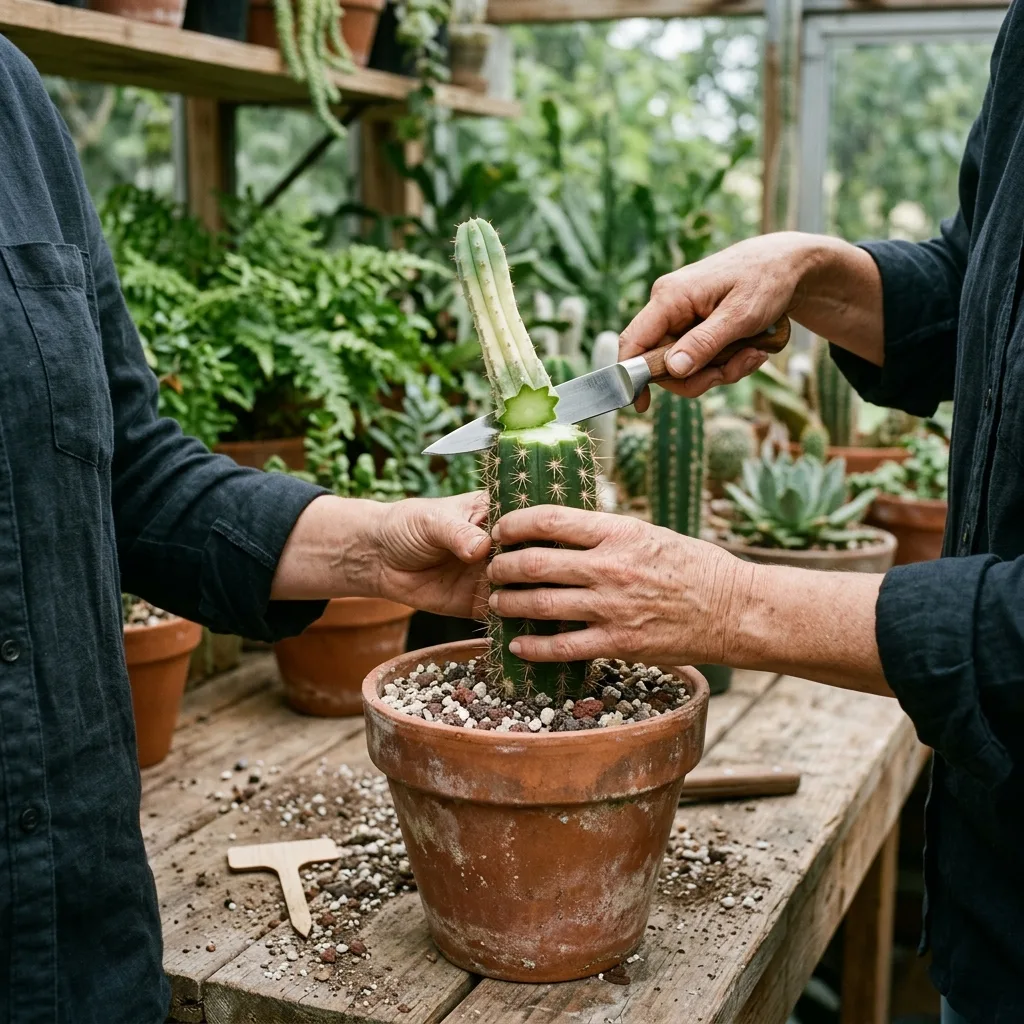
When a cactus becomes heavily etiolated due to poor light, targeted surgery is the best way to salvage its aesthetics and vigor. Using a sterilized, razor-sharp scalpel, excise the spindly, deformed top growth down to where the stem maintains its normal, sturdy diameter. Dust the cut surface on the mother plant with powdered sulfur or ground cinnamon to sanitize the wound. Position the pruned mother base in bright, indirect light; within several weeks, dormant areoles will activate and produce healthy, naturally proportioned offsets.
Color-mutant cacti lacking chlorophyll (such as bright yellow, orange, or red cultivars of Gymnocalycium mihanovichii forma rubra—commonly known as Moon Cacti) cannot produce sugars on their own, meaning they cannot survive without a host even under optimal lighting. These mutants are typically cleft-grafted onto a vigorous, green, photosynthetic rootstock such as Hylocereus undatus. The green rootstock absorbs photons, conducts photosynthesis, and supplies necessary carbohydrates up to the colorful scion.
7. Pathogen Defense: Mitigating Soft Rot and Fungal Infection
The final outcome of prolonged light deprivation is opportunistic pathogen invasion. Chronic low light reduces cellular turgor, causing cell walls to thin and weaken. In this compromised state, soil-borne fungi such as Fusarium oxysporum and Phytophthora species readily penetrate the root cortex. Infections generally reveal themselves as yellowing, water-soaked tissue around the root crown, followed by rapid softening and systemic blackening.
If the lower base of your cactus turns squishy and spongy, de-pot the plant immediately. Carve away all discolored and necrotic tissue with a sterile blade until you reveal clean, firm, pale-green or ivory vascular bundles. Let the pruned cutting rest in a dry, ventilated, shaded area for 4 to 7 days until a tough, protective callus forms over the wound. Plant this callused cutting into a bone-dry mineral substrate and withhold all moisture for 10 to 14 days while keeping it in bright, indirect light to stimulate adventitious root formation.


Reader Reviews & Comments 3 Reviews
Julian Vance
Clara Higgins
Marcus Sterling
Leave a Review & Rating
Share your plant care tips, experiences, or questions with our succulent community.