






As nature retreats into a profound winter hush, plants redirect their vital energy downward into subterranean root systems and deep within the vascular bundles of their main stems, entering dormancy. To the untrained eye, this phase appears bleak and inactive; however, it represents the most strategically critical window for cellular rejuvenation and seasonal preparation. As deciduous species shed their foliage, the structural architecture of the plant is laid bare—presenting an incomparable opportunity to diagnose deadwood, diseased shoots, and structural crossing branches in everything from garden trees to woody potted favorites like the Jade Plant (Crassula ovata).
Yet winter pruning is far from a casual garden cleanup or indiscriminate hedge-shearing exercise. In botanical physiology, every single cut constitutes an open surgical wound. Under low winter temperatures, metabolic activity slows, meaning wound-healing callus tissue develops through entirely different dynamics than in midsummer. A precise cut executed at the correct angle triggers a spectacular flush of vegetative vigor come spring; conversely, an untimely cut can expose unprotected tissues to frost cracks, lethal pathogens, and irreversible branch dieback.
Whether you are tending potted indoor shrubs, dormant garden trees, or hardy succulent stems that have grown leggy, mastering the cellular mechanics of winter pruning will elevate your horticultural confidence. Let us explore the botanical foundations, cutting physics, and methodical protocols required to prune successfully during the dormant months.
1. Botanical Biology and Physiological Foundations of Winter Pruning
At the very heart of winter pruning lies dormancy. Driven by shortening photoperiods (day length) and falling temperatures, plants experience a sharp surge in the stress hormone abscisic acid (ABA), accompanied by a dramatic decline in growth-promoting auxins and cytokinins. This biochemical shift triggers leaf abscission in deciduous species and lowers the metabolic baseline. Because sap hydrostatic pressure in the xylem and phloem drops significantly and retreats toward the crown and roots, pruning during dormancy minimizes vascular bleeding (excessive sap loss).
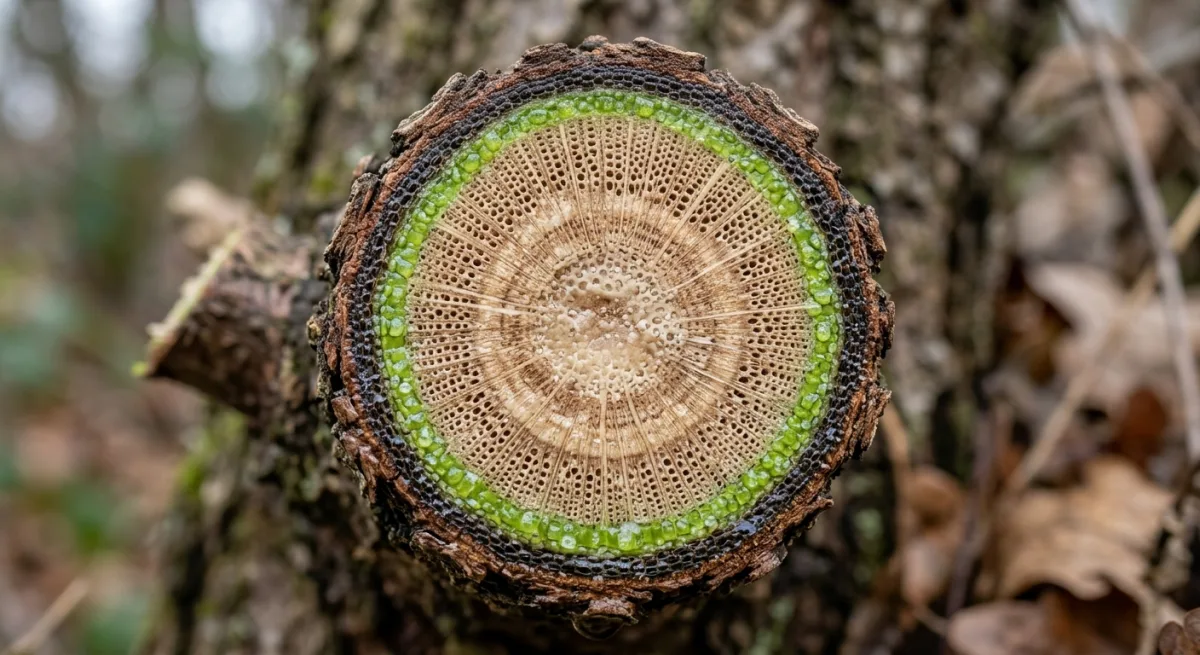
Following a cut, the plant initiates a repair process analogous to scar tissue formation in mammals, known as callus formation. Meristematic cells within the vascular cambium at the cut margin divide rapidly to form a parenchymatous callus. Concurrently, cell walls deposit suberin and lignin polymers, establishing an impermeable chemical and physical barrier that arrests desiccation and prevents fungal pathogens (such as Botrytis and Fusarium species) from penetrating the vascular bundles. In arboriculture and plant pathology, this compartmentalization process is classified under the CODIT model (Compartmentalization Of Decay In Trees).
Furthermore, winter pruning strategically resets apical dominance. Auxin synthesized in the terminal apical bud travels downward via polar transport, suppressing the emergence of lateral buds below it. Removing the terminal shoot in late dormancy disrupts this auxin suppression. When spring arrives, cytokinins streaming upward from the root tips awaken dormant lateral nodes, stimulating denser, structurally robust, and more compact branching.
2. Accurate Diagnosis and Indicators for Pruning
Pruning should never be arbitrary; it requires careful physiological assessment. When evaluating your plants in winter, rely on the classical '4 Ds' diagnostic protocol:
- Dead Wood: Lightly scratch the outer bark with a sterile blade or thumbnail. If the underlying cambium is brown, dry, and brittle rather than crisp and emerald-green, the tissue is non-functional and should be excised cleanly back to healthy wood.
- Diseased Shoots: Branches displaying cankers, fungal spore crusts, bacterial gummosis, or blackened necrosis serve as overwintering reservoirs for pathogens and must be promptly eradicated.
- Damaged and Fractured Stems: Stems split by heavy snow, winter gales, or mechanical impact will inevitably invite opportunistic decay come the spring thaw if left uncorrected.
- Deranged (Crossing or Inward-Growing) Branches: Shoots that cross into the plant's open interior, rub against primary leaders, and impede aerodynamic airflow should be selectively removed to facilitate photosynthetic penetration.
Plants That Should Never Be Pruned in Winter: Deciduous shrubs and climbers that set flower buds on old wood during the previous summer (such as Lilacs, Forsythia, Azaleas, and early-spring flowering succulents like certain Crassula and Schlumbergera) must not be pruned in winter. Cutting them now eliminates the developing floral primordia; prune these species strictly immediately after their flowering cycle concludes in late spring.
3. Step-by-Step Application Protocol
Success in winter pruning depends on millimeter precision and rigorous aseptic technique. Follow this sequential clinical protocol:
- Tool Sanitation: Wipe bypass pruning blades with a solution of at least 70% isopropyl alcohol or briefly flame-sterilize them. Disinfect blades between separate plants. Dull or rusted tools will crush vascular bundles, inducing tissue necrosis and delaying callus establishment.
- Determining the Cut Angle: Locate an active, outward-facing bud. Position your cut roughly 5 to 6 mm (1/4 inch) above the bud, angling down at a 45-degree pitch away from the bud. A completely flat cut permits rain and condensation to pool across the wound face, fueling fungal germination. Conversely, angling toward the bud funnels contaminated moisture straight into the bud axis. The 45-degree slope away from the bud sheds moisture safely.
- Preserving the Branch Collar: When removing a branch back to the parent trunk, never make a flush cut flat against the stem. The swollen shoulder at the base of the branch—the branch collar and branch bark ridge—houses the highest concentration of meristematic cells responsible for synthesizing the protective callus ring. Make your cut just outside the outer margin of this collar.
- The Three-Cut Method for Heavy Stems: For woody branches exceeding 2.5 cm (1 inch) in diameter, utilize a 3-step cut to prevent the sheer weight of the limb from tearing the bark down the trunk: First, make an undercut 1/3 of the way through the branch roughly 20 cm from the trunk. Second, make an overcut slightly farther out to drop the branch limb cleanly. Third, saw smoothly through the remaining stub just outside the branch collar.
- Wound Management: For fine woody stems, modern botanical consensus favors natural suberization over synthetic paints. However, for succulent cuttings and soft-stemmed houseplant nodes, dusting the freshly exposed surface with powdered sulfur or activated charcoal powder inhibits opportunistic spores. Keep the plant in a well-ventilated, dry environment protected from direct precipitation for at least 48 hours following surgery.
4. Essential Equipment, Materials, and Benchmarks
Using the wrong tool transforms a beneficial horticultural intervention into severe biological trauma. Consult the technical reference matrix below before making your cuts:
| Tool / Metric | Technical Specification | Botanical Function & Justification |
|---|---|---|
| Bypass Hand Pruners | SK5 High-Carbon Steel, Scissor Action | Stems 1 to 15 mm. Slices cleanly without crushing cambium rings. |
| Anvil Pruners | Single Straight Blade onto Flat Anvil | Dead, dried wood ONLY. Severely crushes and bruises living tissue. |
| Pruning Saw | Japanese Pull-Stroke Teeth, Narrow Blade | Branches >25 mm. Produces smooth, splinter-free cuts with minimal friction. |
| Sterilizing Agent | 70% Isopropyl Alcohol or 1:9 Bleach Solution | Neutralizes viral, bacterial, and fungal cross-contamination across cuts. |
| Protective Powder (Succulents) | Elemental Sulfur / Activated Charcoal | Absorbs cellular exudate and establishes an antifungal barrier on fleshy wounds. |
| Cut Distance and Pitch | 5-6 mm above outward bud, 45° angle | Protects bud vascular integrity while shedding surface moisture away from growth points. |

5. Five Common Pruning Mistakes and Recovery Solutions
- Mistake 1: Cutting Too Far From or Too Close to the Node.
Physiological Consequence: Slicing directly against the bud dries out its vascular base, killing the node. Leaving an excessively long stub (15-20 mm) creates unvascularized dead tissue that decays downward into the central trunk.
Remedy: Using a sterilized bypass pruner, carefully trim the rotting stub down to precisely 5 mm above the nearest healthy, active bud. - Mistake 2: Pruning Just Ahead of an Approaching Cold Front.
Physiological Consequence: Fresh cut margins suffer rapid frost shock; intracellular moisture crystallizes, rupturing thin cell membranes and provoking extensive dieback.
Remedy: Suspend all pruning until the freezing spell has safely passed. In late winter, cut back the frost-bitten, blackened tips until you reach pristine green cambium tissue. - Mistake 3: Removing More Than 30% of the Live Crown at Once.
Physiological Consequence: The plant's root-to-shoot ratio is catastrophically disrupted. When roots awaken in spring, the root pressure overwhelms the remaining buds, triggering a panicked flush of weak, vertical water sprouts (epicormic shoots).
Remedy: Thin out roughly half of the weak water sprouts in early summer; avoid heavy nitrogen fertilizers and apply balanced potassium/phosphorus amendments to reinforce cellular wall strength. - Mistake 4: Shearing Spring-Flowering Shrubs During Winter.
Physiological Consequence: Floral primordia set on previous-year growth are sheared off, leaving the shrub completely devoid of blossoms for the entire season.
Remedy: No immediate corrective cut is possible. Allow the vegetative growth to mature, and schedule subsequent pruning immediately after flowering completes next season. - Mistake 5: Ripping Bark With Dull or Misaligned Blades.
Physiological Consequence: Jagged, torn bark tears open the cambium boundary, inviting bacterial fireblight or fungal cankers into the exposed xylem.
Remedy: Carefully pare away torn bark edges with a razor-sharp grafting knife or surgical scalpel until the wound margin is glass-smooth, then coat lightly with sulfur powder.
6. Seasonal Pruning Calendar and Long-Term Results
Aligning your shears with the biological calendar is paramount for sustained vigor. Adjust your interventions based on your hardiness zone and seasonal progression:
- Early Winter (November – December): Strict cleanup phase. Remove storm-damaged limbs and deadwood only. Avoid deep structural shaping cuts, as the plant is just initiating deep dormancy and the harshest freezing temperatures lie directly ahead.
- Mid-Winter (January): Deep dormant phase. Suitable for cold-hardy deciduous fruit trees (Apples, Pears) and vigorous woody vines (Grapes, Wisteria). Sensitive ornamentals and indoor plants should remain undisturbed.
- Late Winter / Early Spring (Mid-February – Early March): The Optimal Pruning Window! The worst of the winter freezes have broken, yet vascular buds have not yet cracked open. This is the prime period for structural pruning on climbing roses, ornamental garden shrubs, and decapitating (beheading) leggy winter-stretched succulents.
When you maintain a deliberate, scientifically sound winter pruning routine, you enhance canopy penetration of Photosynthetically Active Radiation (PAR), lower internal microclimate humidity to reduce powdery mildew and rust pressure by up to 70%, and direct stored winter carbohydrates into thick, resilient spring stems with extraordinary blooming potential.


Reader Reviews & Comments 4 Reviews
Eleanor Vance
Julian Hayes
Marcus Thorne
Clara Jenkins
Leave a Review & Rating
Share your plant care tips, experiences, or questions with our succulent community.