






Among the most frequent and alarming visual changes encountered in cactus cultivation are brown patches appearing along the stem. As evolutionary marvels sculpted over millions of years in arid desert formations and extreme rocky habitats, members of the Cactaceae family exhibit distinct cellular-level adaptations against environmental stressors. However, when vibrant green chloroplast tissue gives way to shades of brown, it can signify either a robust biomechanical armor developed to support the plant against gravity, or the onset of a lethal fungal invasion climbing upward from the root system.
Desert cacti (such as Echinocactus, Ferocactus, and Mammillaria) tightly seal their stomata during daylight hours, accumulating carbon dioxide at night via Crassulacean Acid Metabolism (CAM). When this delicate internal balance is disrupted by excessive water or inadequate ventilation, the plant experiences a profound cellular crisis. A cactus turning brown from its base, apex, or lateral ribs is never a random symptom; tissue firmness, the rate of spread, and morphological shifts surrounding the areoles provide the vital keys to an accurate diagnosis.
1. Taxonomic Identity, Areole Structure, and Spine Morphology
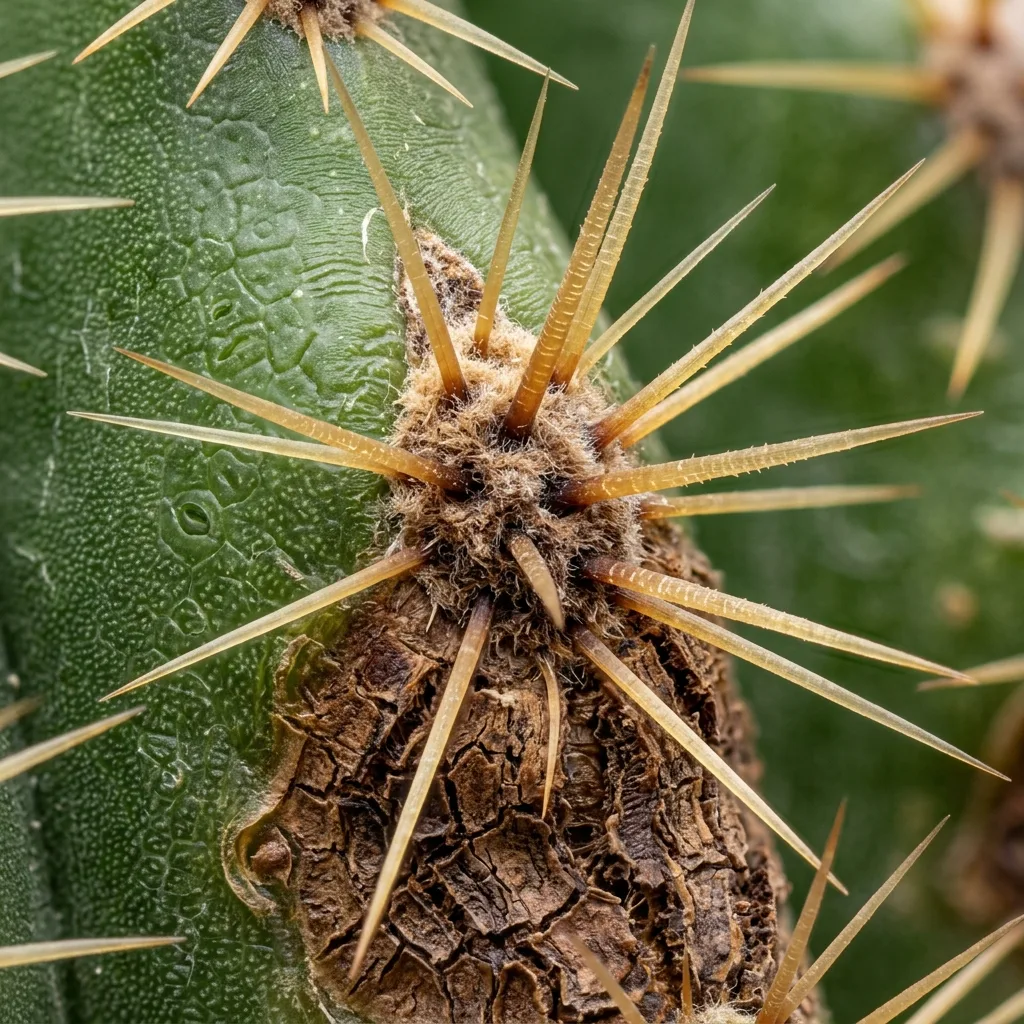
The definitive taxonomic feature separating a cactus from all other succulent plant forms is the presence of specialized vegetative bud structures known as areoles. Areoles represent highly modified, condensed branch nodes from which spines—evolutionarily reduced, transpiration-limiting leaf derivatives—emerge. When browning manifests on the stem of a cactus, the primary focal point of inspection must always be the condition of these areoles and their spine bases.
If the discoloration originates at the soil line (the root collar) and climbs upward, yielding a hard, woody, rough, and bark-like texture upon palpation, this physiological process is botanically designated as corking. As specimens mature, they deposit suberin and lignin to build a resilient, woody dermal barrier designed to support increasing top-heavy mass and defend the epidermis against soil-borne moisture. This is an entirely natural aging process, and the areoles remain structurally intact. Conversely, if the browned zone surrounds the areoles and feels soft, mushy, or collapses under slight fingertip pressure, you are dealing with pathogenic tissue necrosis.
2. Light Requirements, Sun Intensity, and Ventilation Standards
The widespread assumption that all cacti thrive in relentless, unfiltered midday sun often yields catastrophic results for indoor or greenhouse specimens. A cactus that has overwintered in low-light conditions undergoes severe photo-oxidative stress when abruptly thrust into searing south-facing sun in early spring. Chlorophyll pigments within the outer stem cells break down, and the plant manufactures protective anthocyanins and melanin-like compounds, producing bronze or brown sunburn scars.
Unlike root rot, sunburn browning occurs strictly on the side directly facing the light source, typically targeting the upper shoulders of the ribs. The tissue remains firm, yet the epidermis acquires a scorched, parchment-like texture. To prevent this photodamage, plants must be acclimated to higher lux levels gradually over several weeks, coupled with active air circulation to keep surface temperatures down. Stagnant, humid, poorly ventilated microclimates provide ideal vectors for fungal spores to colonize weakened epidermal tissue.
3. Watering Cycles and the Critical Winter Dormancy Regime
The leading cause of a cactus turning soft and brown is overwatering, which suffocates the root collar and feeder roots. Cactus roots are exceptionally intolerant of anaerobic (oxygen-depleted) conditions. When potting media remain saturated for extended periods, cellular respiration ceases, root cell walls collapse, and opportunistic fungal pathogens such as Fusarium or Phytophthora invade the vascular cylinder, driving a wet, brown rot from the inside out.
Between November and March, the vast majority of desert cacti enter obligate dormancy. During this phase, when ambient temperatures should ideally hover around 8–12°C (46–54°F), irrigation must be halted almost entirely. Cacti kept in heated rooms and watered through winter will suffer weak, pale etiolation, while those watered in cold environments rapidly decompose into a brown, liquefied mass originating from the base.
4. Highly Mineral Cactus Substrates and Container Requirements
To keep the base of your cactus solid, dry, and free from pathogenic decay, standard peat-based potting soils must be abandoned immediately. Peat is an organic sponge that turns hydrophobic when dry, yet stays swampy for weeks when wet, inevitably suffocating arid root systems. A superior cactus substrate must consist predominantly of porous, rapidly draining volcanic minerals.
| Substrate Component | Ratio (%) | Botanical Function |
|---|---|---|
| Lava Rock (Scoria - 2-4 mm) | 30% | Porous structure, root oxygenation, and essential microelements |
| Pumice (3-5 mm) | 30% | Moisture buffering and anti-rot mineral stability |
| Zeolite or Calcined Clay | 20% | Cation exchange capacity and moisture-wicking around the collar |
| Coarse Quartz Sand / Grit | 10% | Fluidity and keeping macro-drainage channels unobstructed |
| Sterile Leaf Compost / Coir | 10% | Minimal organic baseline for nutrient exchange |
Regarding container selection, unglazed terracotta pots fitted with ample drainage apertures are paramount. The natural porosity of terracotta allows the pot walls to breathe, drawing excess moisture away from the subterranean root collar and preventing the formation of stagnant brown moisture rings at the soil line.

5. Blooming Inducement and Specialized Nutritional Strategies
A flourishing cactus celebrates the spring equinox by activating floral buds nestled within its areoles. Encouraging healthy seasonal blooming reinforces the specimen's overall immune profile and strengthens cell walls against physiological browning. Never feed cacti standard high-nitrogen houseplant fertilizers; excess nitrogen stimulates weak, hyper-hydrated cellular expansion, causing the epidermis to crack and form unsightly brown calluses.
During active spring and summer growth, supply a low-nitrogen, high-potassium, and phosphorus formulation (such as NPK 4-10-10 or 5-10-15) diluted to quarter strength once a month. Potassium reinforces epidermal thickness, creating a formidable biological barrier against solar radiation and fungal entry through micro-fissures.
6. Propagation, Stem Cuttings, and Rescue Techniques
When browning stems from soft, advancing root rot, surgical propagation provides the sole path to salvage the plant. Because fungal rot travels upward through the central vascular bundle, swift action is imperative:
- Using a razor-sharp, flame-sterilized or alcohol-wiped scalpel, make a clean horizontal cut at least 2–3 cm (1 inch) above the browned, soft zone into fully green, healthy tissue.
- Examine the cross-section meticulously; ensure there are no orange, brown, or rust-colored stains in the vascular ring. Even a single infected cell will cause the rot to resume.
- Dust the pristine cut surface with sulfur powder or activated charcoal to inhibit fungal contamination.
- Rest the top cutting in a warm, shaded, well-ventilated location for 7 to 14 days until a hard, dry callus completely seals the wound.
- Once fully callused, place the cutting upright atop a dry bed of pumice and lava grit. Do not apply water until new adventitious roots have initiated.
7. Defending Against Fungal Pathogens and Environmental Rot
Brown rust fungus and anthracnose often exploit feeding punctures left behind by microscopic pests such as spider mites and mealybugs. These fungal infections appear as small, raised, orange-brown pustules or circular dark brown scabs. For early-stage fungal outbreaks, topical applications of copper-based fungicides or systemic anti-fungal treatments are required.
Regularly inspect the recesses of areoles and rib furrows under high magnification to catch pest infestations before damage escalates. The epidermal cells collapsed by sap-sucking pests eventually oxidize into brown, scaly patches. By combining intense, acclimated light, a high-mineral aerated substrate, and a cold, dry winter dormancy, your cactus will mount its own robust biochemical defense against environmental decay.


Reader Reviews & Comments 3 Reviews
Julian Vance
Marcus Sterling
Clara Higgins
Leave a Review & Rating
Share your plant care tips, experiences, or questions with our succulent community.