






Sprouting from the sheer basalt cliffs battered by the Atlantic winds of the Canary Islands, Aeonium arboreum is one of nature's true sculptural masterpieces. While most succulents hug the arid desert sands as low-lying ground rosettes, this ancient species ascends upon stout, woody stems, mimicking the silhouette of a miniature bonsai tree. Cultivating a Tree Aeonium in your living room or sun-drenched patio differs profoundly from tending to an ordinary potted houseplant; it marches to a distinct biological drumbeat, defying conventional succulent rules through vigorous winter growth paired with mandatory summer estivation (dormancy).
The single greatest pitfall among succulent enthusiasts is misinterpreting the tightly closed rosettes of high summer as a plea for water, prompting repeated, catastrophic waterings. For Aeonium arboreum, this seasonal cupping is never a death sentence—it is an exquisite evolutionary survival strategy engineered to safeguard intracellular turgor pressure against scorching heat. With balanced photonic exposure, highly porous volcanic media, and an irrigation schedule calibrated to its seasonal rhythms, you can easily develop a monumental, multi-branched succulent tree meant to be treasured for generations.
1. Botanical Biology and Physiological Foundations
The genus Aeonium stands among the most structurally distinctive members of the Crassulaceae family. The specific epithet arboreum derives from the Latin 'arbor' (tree), denoting the plant's capacity to develop extensive secondary xylem tissues that mature into genuine woody stems over time. This architectural adaptation evolved to hoist dense, fleshy foliar rosettes toward the oceanic breezes while dynamically pumping moisture and trace minerals upward through hydraulic columns from a shallow root network.
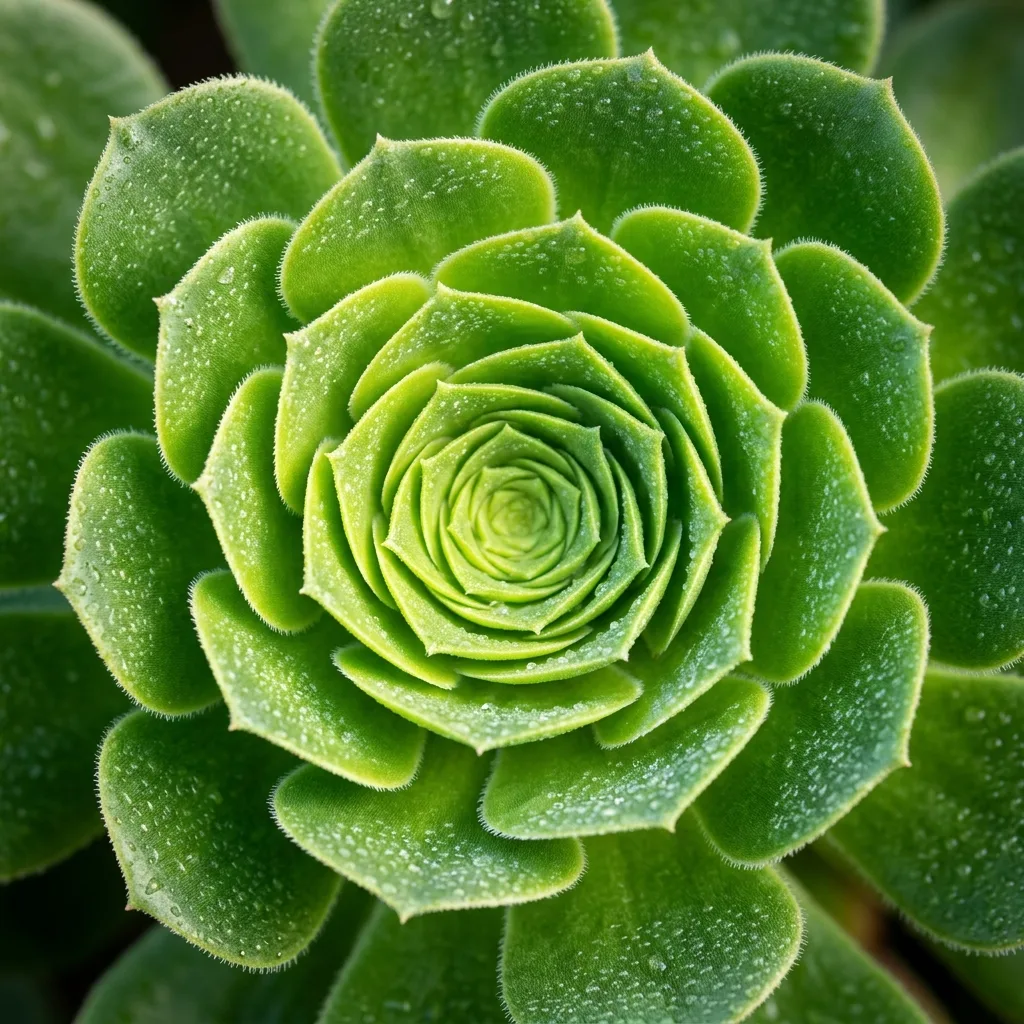
The metabolic engine of the plant resides within the geometric symmetry of its rosettes. The foliage operates via Crassulacean Acid Metabolism (CAM), cracking open stomata under the cover of night to fix carbon dioxide while sealing them tight during peak daytime hours to eliminate transpirational moisture loss. Yet, what truly anchors Aeonium arboreum as an authentic Mediterranean-climate succulent is its profound summer estivation cycle. In its native Macaronesian habitat, summers are blisteringly dry and parched, while winters remain cool, humid, and rainy. Consequently, whenever ambient temperatures exceed 26–28°C (79–82°F), the plant drops its metabolic rate to near zero. Mitotic cell division halts, outer leaves desiccate and drop, and juvenile core foliage pulls tightly into a compact protective sphere.
During this dormancy window, hydraulic uptake capacity across the root zone plummets dramatically. The phase of active vegetative flush occurs exclusively from mid-autumn through late spring, when ambient conditions hover between 12–22°C (54–72°F). Grasping this inverted phenological rhythm is your single greatest weapon against fatal, pathogen-driven root rot.
2. Accurate Diagnosis and Stress Indicators
Accurately reading visual foliage cues through the lens of internal plant physiology is essential when stewarding a Tree Aeonium. Watch for these definitive symptoms to determine your specimen's exact state of health:
- Etiolation (Photonic Starvation & Structural Weakness): Marked by a flattening of the central rosette, drooping leaves, and elongated internodal spacing. Chlorophyll synthesis scatters due to insufficient light levels, the foliage fades to an anemic pale green, and the trunk remains weak and herbaceous rather than lignifying properly.
- Summer Estivation vs. Root Rot: A tightly contracted rosette paired with the gradual shed of crisp, desiccated outer foliage during summer is entirely natural. Conversely, a blackened, soft stem base alongside leaves that turn translucent, turn to jelly, and drop at the slightest touch signals an anaerobic fungal pathogen (such as Pythium or Phytophthora) thriving in waterlogged, compacted soil.
- Loss of Turgor (Chronic Dehydration): Soft, leathery foliage that puckers and lacks firmness during the active growing season (autumn through spring) indicates depleted cellular vacuoles, confirming that root uptake is not matching moisture requirements.
- Solar Scorch (Photo-Oxidative Stress): Abruptly shifting an indoor-adapted plant into harsh, unfiltered midday sunlight produces bleached, brown, papery lesions across the upper leaf surfaces. This damage occurs when excessive ultraviolet radiation induces cellular lysis and photobleaching within unacclimated tissues.
3. Step-by-Step Cultivation Protocol
Follow these horticultural steps to cultivate a sturdy, thick-trunked, multi-headed Tree Aeonium:
Step 1: Light and Temperature Optimization
Aeonium arboreum demonstrates broad adaptability, thriving from bright indirect light to full sun. The classic green species form (arboreum) prefers direct morning sun paired with dappled afternoon light, whereas dark purple and black cultivars (such as 'Zwartkop' or 'Atropurpureum') require a minimum of 5 to 6 hours of direct solar exposure daily to stimulate rich anthocyanin synthesis. During winter, place your specimen directly before your brightest south- or west-facing window. Maintain ideal growth temperatures between 15–22°C (59–72°F); prolonged frost below -2°C (28°F) will rupture intracellular water vacuoles, causing irreversible collapse.
Step 2: Intelligent Hydration (The Soak-and-Dry Method)
During active growth in autumn and spring, hydrate deeply only when the potting substrate has dried completely through the root zone. Water until moisture runs freely from the bottom drainage holes, and empty runoff trays promptly. Tending to succulents with frequent, shallow sips is not nurturing care; it starves root hairs of oxygen and invites fungal decay. In the heart of summer dormancy (June through August), curtail watering to once a month at most, applying just a small splash around the inner pot rim during a cool evening simply to prevent absolute root desiccation.
Step 3: Pruning and Canopy Branching (Decapitation Protocol)
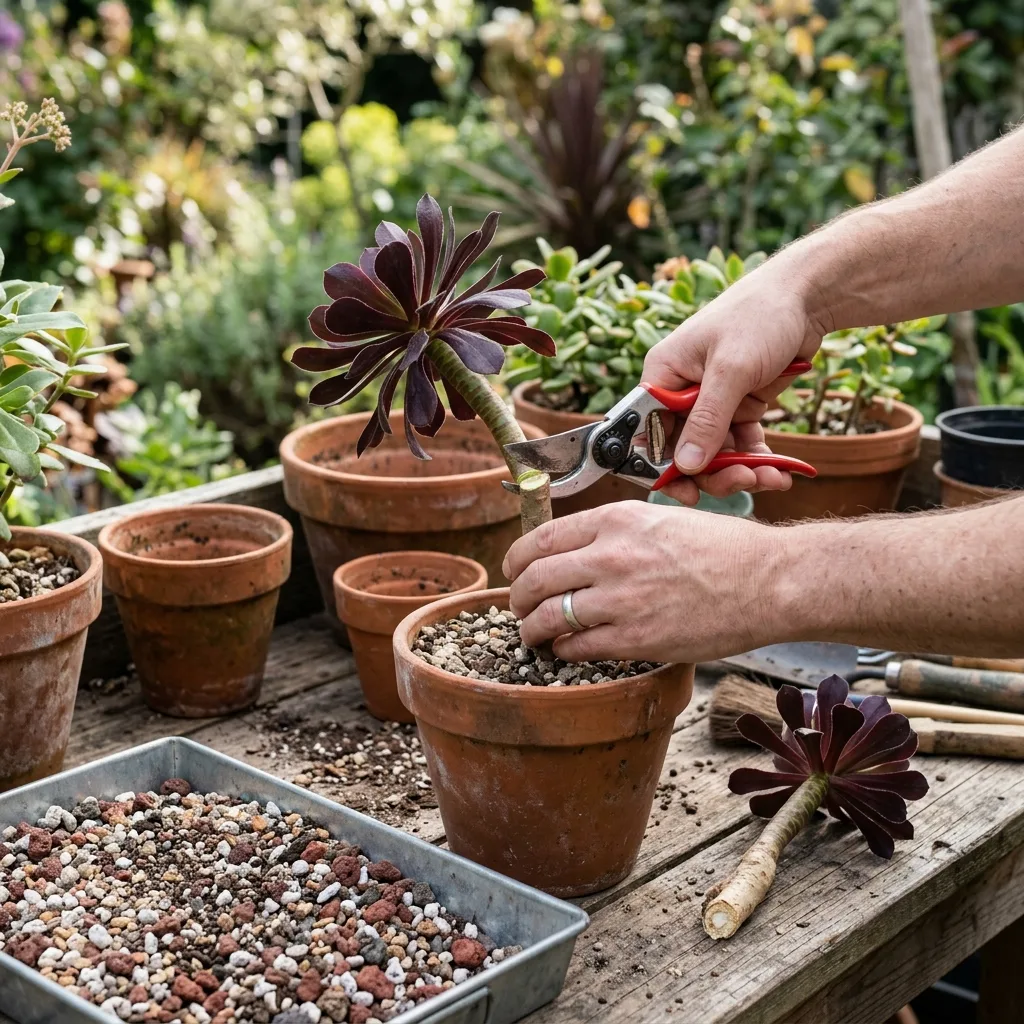
Left unpruned, Tree Aeonium naturally stretches on a single, upright stem, eventually growing top-heavy and structurally unstable. To induce an architectural, multi-branched canopy, execute stem decapitation (beheading) in early spring. Using a sterile pruning shear or scalpel, slice cleanly through the main stem 5 to 8 cm (2 to 3 inches) below the primary terminal rosette. Dust the exposed wound on the rooted trunk with ground cinnamon or sulfur powder. Within a few short weeks, the release of apical dominance will prompt 3 to 8 adventitious buds to erupt around the cut perimeter, forming an abundant crown.
Step 4: Propagating the Rosette Cutting
Place the severed rosette in a dry, shaded, well-ventilated spot for 3 to 5 days to allow the raw wound to generate a protective, callused surface. Once callused, insert the stem into a dry, highly mineral substrate composed primarily of pumice and coarse perlite. Withhold water for the first 10 to 14 days, offering moisture only after the first white, adventitious root tips push into the soil.
4. Essential Substrate, Materials, and Technical Metrics
Unlike tap-rooted desert flora, the root architecture of Aeonium consists of shallow, wide-spreading fibrous roots. As a result, aeration and granular pore size are critical. The table below outlines the optimal substrate and microclimate parameters for Aeonium arboreum:
| Parameter / Component | Recommended Standard / Ratio | Horticultural Justification |
|---|---|---|
| Inorganic Drainage Media | 50% (Volcanic Lava Rock 3–6mm, Pumice, Zeolite) | Establishes vital macroporosity within the root rhizosphere, maximizing oxygen diffusion. |
| Organic Moisture Retainer | 35% Fibrous Peat / Coir Substrate | Anchors fine roots while delivering balanced cation exchange capacity (CEC). |
| Coarse Aggregate | 15% Coarse Horticultural River Sand (Silica-based) | Stabilizes root-to-substrate contact and eliminates localized water pooling. |
| Container Material | Unglazed Terracotta or Cast Concrete | Counterbalances heavy foliage and breathes via porous walls, speeding evaporation of excess moisture. |
| Growing Season Nutrition | Monthly (Balanced NPK with high Potassium, e.g., 10-10-20 at 1/4 strength) | Strengthens plant cell walls and accelerates autumn stem lignification without promoting soft, leggy growth. |
| Substrate pH Target | 6.0 – 6.8 (Slightly Acidic to Neutral) | Replicates the micronutrient bio-availability found in volcanic island soils. |
5. 5 Common Mistakes and Rescue Protocols
- Mistake 1: Heavy Summer Hydration and Feeding During Dormancy
Symptom: Stem basal softening, blackening, and sudden structural collapse.
Rescue: Withhold all water immediately. If basal rot is present, use a sterile blade to cut the stem well above the decay into healthy, crisp green-and-white tissue. Allow the clean cut to callus over fully, then root the salvaged cutting once temperatures cool in early autumn. - Mistake 2: Planting in Drainage-Free Glass or Plastic Terrariums
Symptom: White mold crusting on the soil surface, accompanied by roots sloughing off as black, waterlogged threads.
Rescue: Unpot the plant, prune away all compromised roots, sanitize the remaining root system with a 3% hydrogen peroxide wash, and repot into unglazed terracotta filled with a gritty mineral mix. - Mistake 3: Panicking Over Terminal Inflorescences
Botanical Reality: Aeonium arboreum features monocarpic rosettes; any individual head that blooms will complete its lifecycle, set seed, and die. It signals this transition by elongating into a conical, pyramidal cluster of vivid yellow blossoms.
Management: This is a natural life event. Only the specific rosette that flowers will perish; if your specimen is branched, all other non-flowering stems will continue growing undisturbed. You can enjoy the spectacle without fear of losing the whole plant. - Mistake 4: Mistaking Normal Marginal Cilia for Mealybugs
Symptom: Microscopic hair-like fringes along the leaf margins or small natural resin droplets misdiagnosed as pests.
Rescue: Mealybugs present as soft, cottony, mobile clusters tucked deep into leaf axils. The microscopic marginal hairs (cilia) along the leaf perimeter are natural structural features. Test with an alcohol-dipped swab: static plant tissue will not dissolve or lift off. - Mistake 5: Sudden Solar Shock
Symptom: Bleached, silvery patches followed by dry, necrotic scars across upper foliage.
Rescue: Always acclimate specimens over a 10 to 14-day hardening-off window when transitioning from indoor positions to outdoor sunlight. Begin with 1 hour of gentle early morning sun, gradually increasing duration by an hour every two days.
6. Seasonal Calendar and Long-Term Trajectory
Aligning your cultural practices with the natural evolutionary calendar of Aeonium arboreum guarantees robust vitality year after year:
- Autumn (September – November): Awakening and Rooting: As nighttime temperatures dip, rosettes gently unfold. Increase watering frequency, repot rootbound specimens, and root summer-harvested cuttings. Apply a quarter-strength dose of fertilizer toward mid-autumn.
- Winter (December – February): Peak Growth Window: Keep your plant in your brightest window, protected from freezing drafts. Water thoroughly as the gritty mix dries out. Trunk lignification and fresh leaf production peak during this cool, bright period.
- Spring (March – May): Peak Rosette Expansion and Flowering: Rosettes achieve their widest diameter, and mature branches produce conical flower heads. As late May approaches and temperatures climb, gradually lengthen intervals between waterings.
- Summer (June – August): Estivation (Resting Phase): Relocate the plant to a cooler, well-ventilated spot protected from harsh midday sun. Rosettes will cup tightly and shed outer leaves. Cease fertilization entirely and limit watering to minimal sips around the pot edges simply to keep root systems viable.
Adhere faithfully to this cyclical rhythm, and over the years your Aeonium will transform from a modest cutting into a majestic, wrist-thick specimen succulent tree, crowned with dozens of rosettes that command attention in any collection.


Reader Reviews & Comments 3 Reviews
Julian Vance
Marcus Sterling
Claire Montgomery
Leave a Review & Rating
Share your plant care tips, experiences, or questions with our succulent community.