






When I first encountered the genus Aichryson nestled within the misty, volcanic rock crevices of the Canary Islands—sculpted by persistent Atlantic breezes—I was captivated by how effortlessly nature had miniaturized a stately tree into such an exquisite succulent architecture. Romantically christened the 'Tree of Love' across horticultural circles, this graceful plant ascends like a living bonsai sculpture in our living spaces, adorned with heart-shaped, pubescent foliage and naturally ramifying stems.
However, cultivating Aichryson successfully does not mean mechanically applying standard succulent care routines. This unique member of the Crassulaceae family boasts intricate physiological adaptations: cellular trichome barriers evolved to mitigate drought stress paired with an exceedingly delicate root architecture. Overwatering succulents is never an expression of affection; it systematically asphyxiates roots by stripping the rhizosphere of essential oxygen. For Aichryson, this biological equilibrium is even more unforgiving: insufficient light causes rapid etiolation (spindly stretching), while stagnant moisture delivers its fragile xylem vessels to vascular rot pathogens in mere minutes.
If your indoor Aichryson is yellowing and shedding foliage, if its stems are losing turgidity and collapsing, or if you simply wish to sculpt it into a lush, compact shrub, you are in the right place. Drawing from decades of nursery observations and plant physiology, let us explore the biology of Aichryson from root tip to leaf apex.
1. Botanical Biology and Physiological Foundations
Aichryson—particularly prominent species such as Aichryson laxum, Aichryson tortuosum, and Aichryson bethencourtianum—are monocarpic-leaning or semi-shrubby succulents adapted to arid-subtropical microclimates. Understanding their growth mechanics requires examining three fundamental physiological pillars:
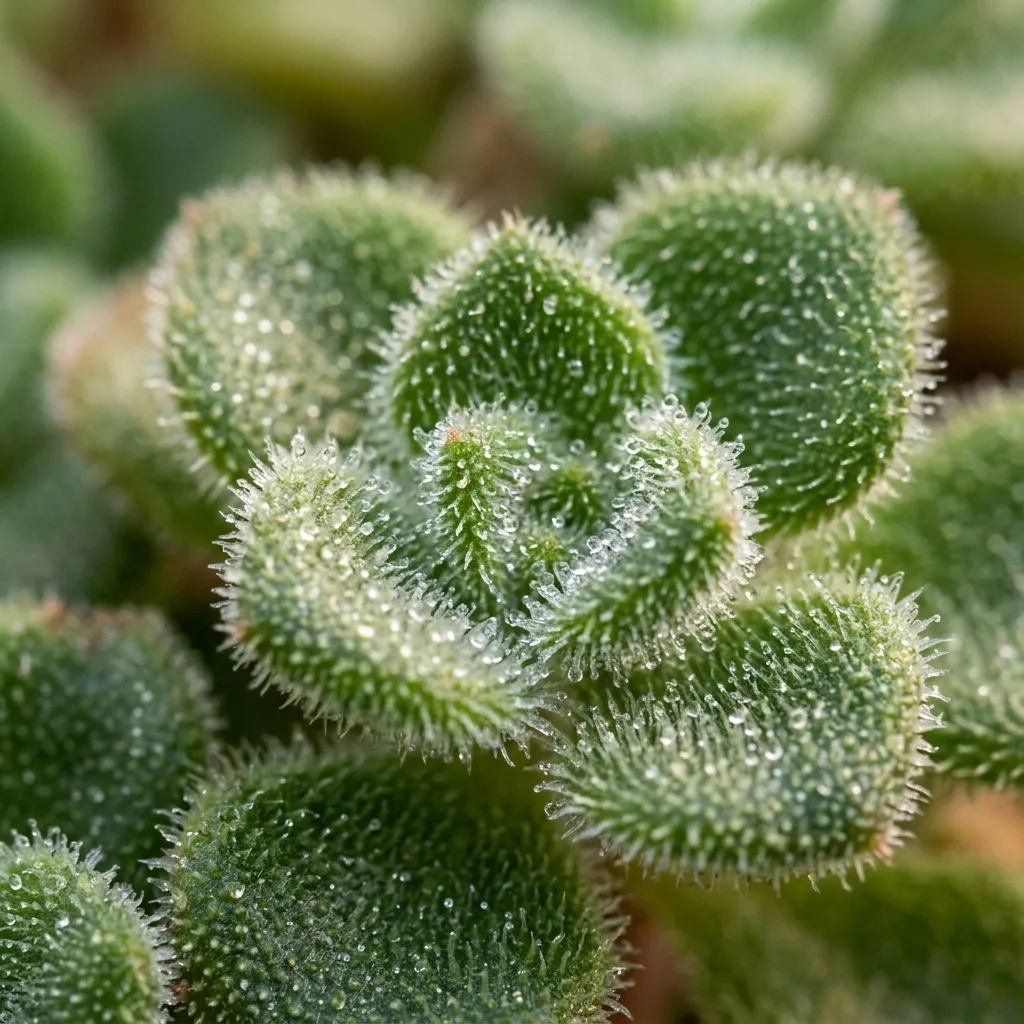
- Epidermal Trichomes (Velvety Foliar Hairs): The microscopic trichomes blanketing the leaf cuticle provide far more than a tactile, velvety charm. They physically condense atmospheric water vapor, channeling trace hydration toward epidermal cells while scattering intense solar radiation to protect sensitive mesophyll tissue from photoinhibition and heat scorch.
- Root Architecture and Elevated Aeration Requirements: In their native basaltic cliff pockets, these plants anchor themselves into shallow mineral debris. They lack stout taproots, possessing instead fine, fibrous networks. Consequently, continuous cellular respiration (rhizosphere oxygenation) is essential; any substrate compaction quickly suffocates root hairs.
- CAM (Crassulacean Acid Metabolism) Photosynthesis: To prevent daytime transpirational water loss, Aichryson keeps its stomatal pores sealed tight beneath the sun. Instead, it absorbs carbon dioxide during the cool of the night, storing it as malic acid. This biological process demands a diurnal temperature fluctuation, requiring nighttime environments to be at least 4–6°C (7–11°F) cooler than daytime highs.
The most active vegetative windows for Aichryson occur during spring and autumn. In the peak heat of summer (temperatures exceeding 32°C / 90°F), the plant enters a semi-dormant estivation state, decelerating its metabolic processes and throttling water uptake. Applying heavy water during this window fosters anaerobic bacteria in the vulnerable root cortex, culminating in rapid defoliation and stem collapse.
2. Diagnostics and Visible Plant Cues
Botanical success hinges upon interpreting cellular signals before irreversible tissue damage occurs. When diagnosing your Aichryson, look for these specific morphological markers:
- Loss of Turgor and Foliar Wrinkling: If the leaves lose their lustrous sheen, curl inward, and lower leaves wrinkle without feeling mushy, the parenchymal water reservoirs are depleted. The roots are healthy, but cellular water reserves require prompt replenishment via thorough watering.
- Chlorosis, Translucency, and Abrupt Leaf Drop: When leaves turn pale yellow, take on a watery, jelly-like consistency, and drop at the gentlest touch, the root system is experiencing hypoxia (suffocation) from saturated soil, triggering accelerated cellular lysis.
- Etiolation (Spindly Elongation and Extended Internodes): If the dense foliar rosettes loosen, turning into stretched, frail stems, the plant is desperately seeking higher photon density. These weak stems inevitably fail under their own future vegetative weight.
- Post-Bloom Exhaustion: In late spring, mature stems produce vibrant clusters of star-shaped yellow flowers. Certain terminal stems are monocarpic, meaning the flowering branch senesces and dies after setting seed. If an entire young specimen blooms simultaneously, it can drain its metabolic carbohydrate stores; selective bud management is crucial for maintaining juvenile architecture.
3. Step-by-Step Care and Pruning Protocol
Follow this precise four-step horticultural protocol to nurture a robust, well-branched, bonsai-form Aichryson:
Step 1: Light Acclimation and Thermal Parameters
Position your specimen where it receives filtered direct morning sun followed by bright, indirect light throughout the afternoon—an east or partially shaded west-facing windowsill is ideal. Unfiltered midday sun will degrade the epidermal trichomes, leaving bleached scorched patches. Maintain an ambient temperature range of 16–24°C (60–75°F), and ensure winter temperatures never dip below 8°C (46°F).
Step 2: The Soak-and-Dry Hydraulic Regimen
Never irrigate on a rigid calendar cycle. Verify that at least the top two-thirds of the substrate volume is completely dry using a wooden dowel or moisture probe before watering. When hydrating, apply water directly onto the substrate surface around the stem base—never into the center of the leaf rosettes. Pour until water runs freely from the bottom drainage apertures, and always empty the runoff saucer after 15 minutes.
Step 3: Structural Pruning for Compact Bonsai Form
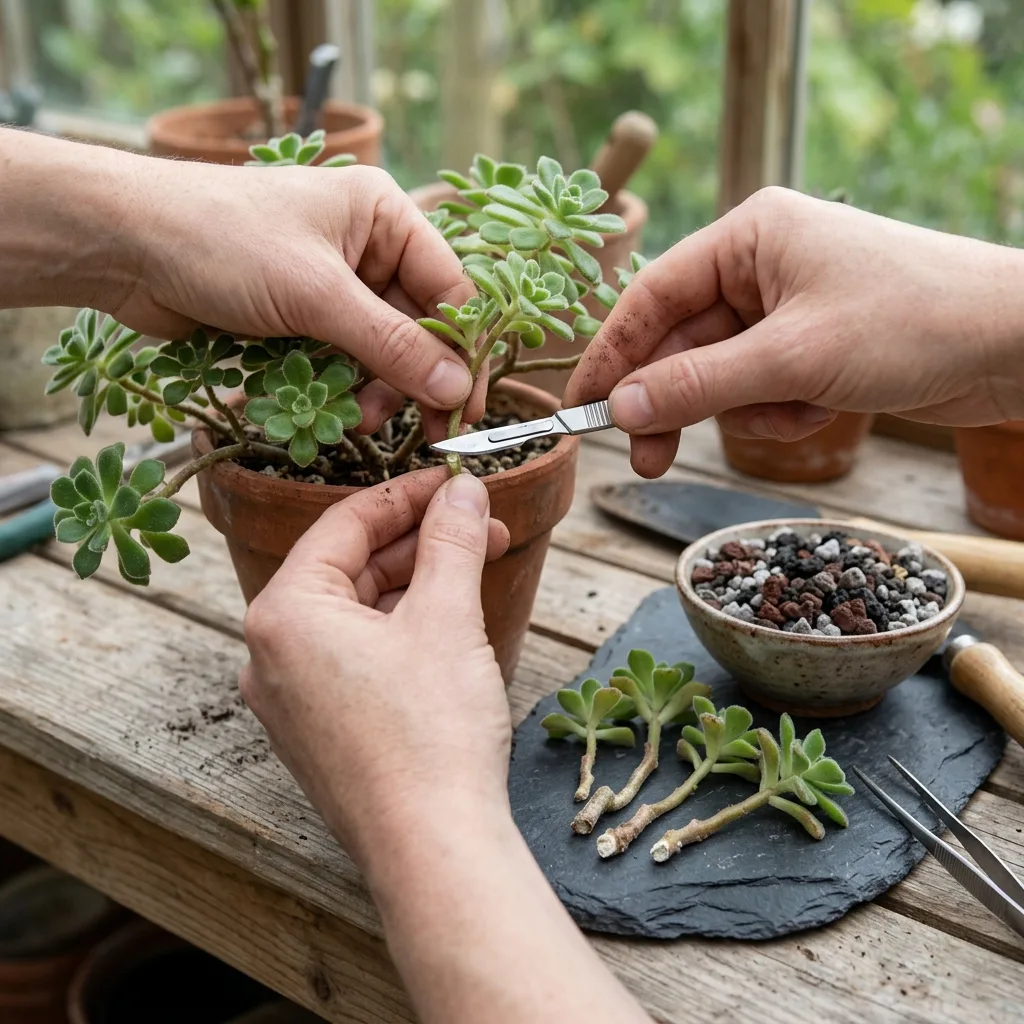
While Aichryson branches naturally, indoor cultivation requires deliberate apical pruning to maintain structural density. In early spring, shorten overly leggy branches using a sterilized, razor-sharp scalpel, cutting exactly 2 mm above a leaf node. This activates dormant axillary buds along the stem, stimulating dual lateral shoots that forge a dense, mature canopy.
Step 4: Stem Cutting Propagation Protocol
Take healthy stem cuttings roughly 5–8 cm (2–3 inches) in length from your pruning trimmings, stripping the bottom two leaves. Never insert fresh cuttings directly into damp soil. Place them in a dry, shaded, well-ventilated spot for 48 to 72 hours to develop a firm protective callus over the cut surface. Plant the callused cuttings into a 70% inorganic pumice-perlite substrate, maintaining very light ambient moisture until adventitious roots establish (typically within 10 to 14 days).
4. Substrate Blueprint, Container Dynamics, and Metrics
Standard potting soils and dense peat moss are the primary causes of root rot in Aichryson. The matrix below outlines the scientifically balanced substrate composition and container parameters required to sustain root vitality:
| Component / Parameter | Target Ratio & Type | Physiological Rationale |
|---|---|---|
| Inorganic Aerator | 40% Pumice (2–4 mm) + 20% Crushed Lava Rock | Establishes capillary macropores; ensures rapid drainage and prevents water compaction. |
| Organic Matrix | 25% High-Grade Coco Coir | Offers structural moisture buffering for delicate root hairs without collapsing into dense muck. |
| Mineral Buffer | 15% Zeolite or Calcined Clay | High cation exchange capacity (CEC); retains and releases micronutrients on demand. |
| Pot Material | Ungrooved, Raw Terracotta | Porous clay walls facilitate evaporative side-wicking and steady rhizosphere aeration. |
| Substrate pH | 6.0 – 6.8 (Slightly Acidic to Neutral) | Maximizes nutrient uptake efficiency for iron, magnesium, and calcium ions. |
| Nutritional Supplement | Low-Nitrogen Succulent Fertilizer (NPK 4-8-12) | Applied at half strength once monthly during the active spring window (April–June). |
5. Five Critical Mistakes and Rescue Protocols
- Mistake 1: Growing in Terrariums or Non-Draining Glass Vessels. Aichryson roots require continuous air exchange. Enclosed glass containers lack drainage, trapping mineral salts and stagnant water that destroy root tissue within 48 hours. Rescue: Immediately unpot the plant, excise necrotic root tissue with sterile shears, dust remaining healthy roots with sulfur or cinnamon powder, and repot in raw terracotta with a free-draining mix.
- Mistake 2: Overhead Foliar Misting. The dense trichomes retain surface water droplets, inviting Botrytis cinerea spores and fungal lesions. Rescue: Stop all foliar misting immediately. Prune heavily infected leaves and move the plant to an environment with active, gentle air circulation.
- Mistake 3: Winter Proximity to Heat Registers. Exposure to dry, forced-air heating desiccates delicate leaves rapidly and triggers spider mite infestations. Rescue: Relocate the pot at least 1.5 meters (5 feet) away from heat registers to a bright, cool spot (12–16°C / 54–60°F).
- Mistake 4: Allowing Indiscriminate Full-Canopy Flowering. Allowing an undersized specimen to flower profusely can deplete its total carbohydrate reserves. Rescue: Preserve structural vigor by deadheading spent flower panicles right at their junction before they set seed, redirecting metabolic energy into vegetative shoots.
- Mistake 5: Over-Fertilization with High-Nitrogen Feeds. Excess nitrogen forces rapid, watery cellular expansion, resulting in soft, floppy stems that collapse under their own weight. Rescue: Flush the potting substrate thoroughly with pure distilled or reverse-osmosis water to wash out residual fertilizer salts, and cease fertilization for at least three months.
6. Annual Phenological Calendar and Long-Term Results
Aligning your horticultural care with the plant's natural seasonal rhythms ensures longevity and vitality:
- Spring (March – May): Vigorous vegetative emergence. Ideal period for repotting, root inspections, structural pruning, and initiating monthly dilute feedings as watering frequency increases.
- Summer (June – August): High-temperature estivation. Shield the plant from blistering midday solar heat. Reduce watering intervals, providing just enough moisture to prevent complete root hair dieback.
- Autumn (September – November): Secondary growth surge. As temperatures stabilize around 20°C (68°F), the plant resumes rosette formation. This is the optimal window for stem propagation.
- Winter (December – February): Quiescent rest period. Restrict watering to minimal maintenance doses (every 3–4 weeks). Substrate should stay mostly dry in a bright, cool room.
Adhering to these physiological guidelines will reward you over 2 to 3 seasons with a sturdy, lignified specimen: a densely branched living sculpture that captures the timeless, wild cliffside spirit of the Canary Islands right in your home.


Reader Reviews & Comments 3 Reviews
Eleanor Vance
Marcus Thorne
Julianna Hayes
Leave a Review & Rating
Share your plant care tips, experiences, or questions with our succulent community.