






The hyper-arid landscapes where desert cacti originally evolved—stretching from the Sonoran Desert across North America to the sun-bleached plateaus of the Atacama—endowed members of the Cactaceae family with the extraordinary superpower to withstand months of absolute drought. Smiling at parched conditions thanks to extensive cellular water reserves stored deep within their internal parenchyma, these desert gems tragically meet their demise on our living room windowsills due to excessive attention and waterlogged soil. Regularly watering desert cacti and succulents is not an act of love; it is an accidental asphyxiation of their root system within an anaerobic, oxygen-deprived soil microenvironment.
Cactus root rot is the single most stealthy pathology plant lovers encounter because the devastation begins out of sight: deep underground within the delicate, absorbent root hairs. While the outer stem may still appear plump and green, virulent fungal pathogens such as Fusarium oxysporum and Phytophthora species may have already turned subterranean vascular tissue into a liquefied pulp. However, if you tune your senses to your cactus's subtle physiological distress signals in time, you can pull even the most desperate cases back from the brink of death through prompt surgical intervention.
1. Taxonomic Identity, Areole Anatomy, and Spine Morphology
Effectively treating a distressed plant begins with understanding its unique botanical morphology at a cellular level. The defining anatomical characteristic that separates all members of the Cactaceae family from other stem succulents is the presence of modified bud centers known as 'areoles.' Areoles are highly specialized meristematic structures from which spines, glochids (tiny, irritating barbed bristles), and vibrant floral blooms emerge. In true desert cacti, foliage leaves have evolved into rigid, calcium- and silica-reinforced spines designed to eliminate transpirational moisture loss entirely while deflecting intense solar radiation.
A cactus body consists of a thick, water-storing parenchymal sponge layer known as the 'cortex,' surrounding a central ring of xylem and phloem vascular bundles that channel water and nutrients up into the vegetative stem. When root rot takes hold, opportunistic fungal spores devour the microscopic root hairs and climb directly into this central vascular cylinder. Once the xylem vessels become clogged by fungal hyphae and defensive gum deposits, the cactus loses the mechanical ability to conduct hydration upward. Paradoxically, the plant begins to suffer severe dehydration caused by overwatering. Understanding this fundamental biological mechanism reveals why the 5 early warning signs of cactus root rot present the way they do.
2. Sunlight Intensity, Photons, and Ventilation Requirements
Root rot is rarely the fault of watering frequency alone; it is almost always accelerated by inadequate photon flux density and stagnant ambient air. Iconic desert species such as the Golden Barrel Cactus (Echinocactus grusonii), Fishhook Barrel (Ferocactus), and Pincushion Cactus (Mammillaria) demand at least 6 to 8 hours of unfiltered direct sunlight daily. In dim indoor lighting, a cactus's metabolic activity slows to a crawl, disrupting its specialized Crassulacean Acid Metabolism (CAM) cycle. In CAM physiology, stomata open strictly at night to exchange gases, requiring robust metabolic energy. When low light stalls this cycle, the roots completely stop absorbing water from the pot, leaving moisture pooled at the bottom—a flawless biological incubator for pathogenic fungi.
Airflow around the windowsill is equally vital for cactus longevity. Stagnant air drops surface soil evaporation to near zero. Position your cacti along south- or west-facing windows where steady air movement naturally whisks away excess humidity. If cultivating under artificial grow lights, position a full-spectrum LED fixture emitting at least 25,000 lux (or 400+ µmol/m²/s PPFD) directly overhead, and employ a small oscillating fan to continually disperse micro-humidity from the soil and stem surface.
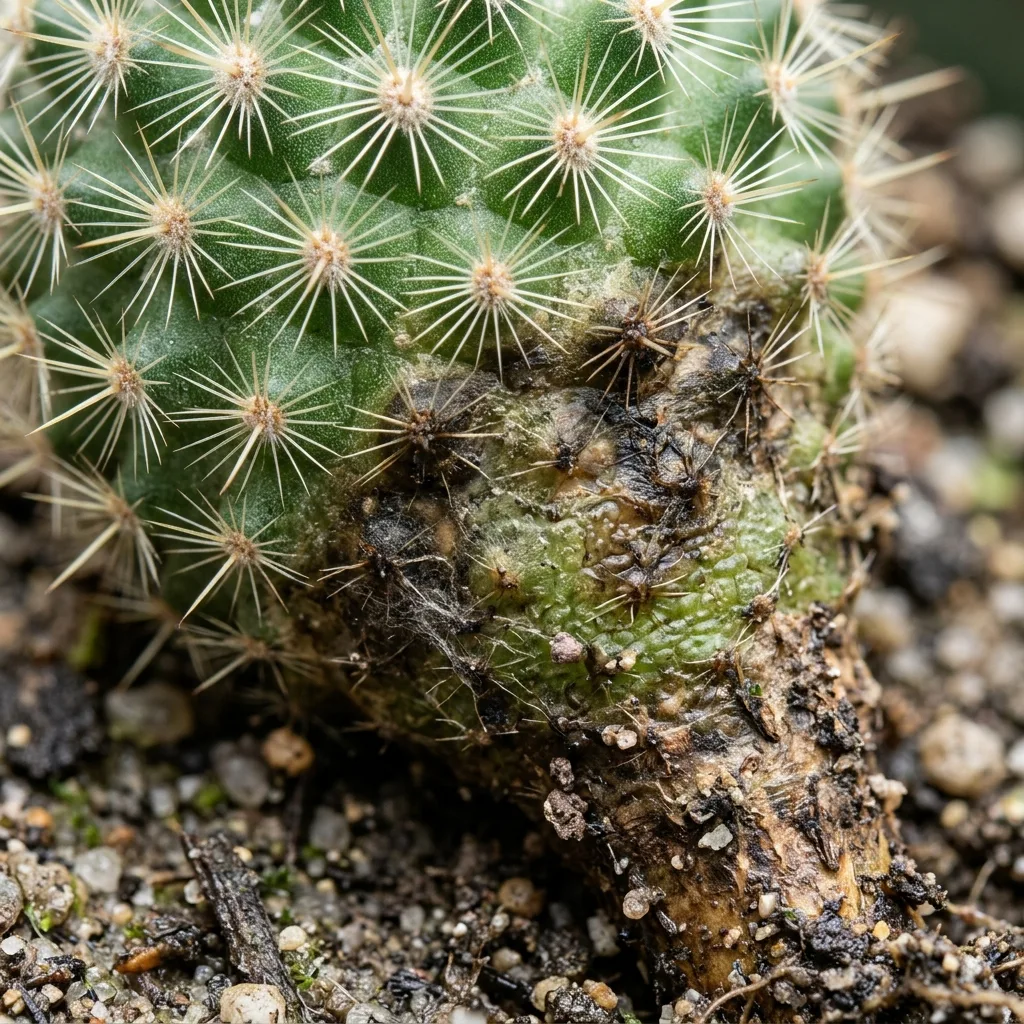
3. 5 Critical Warning Signs & Diagnosis of Cactus Root Rot
Long before a cactus stem collapses in on itself, it flashes clear physiological signals. Here are the 5 definitive early warning signs of cactus root rot you must never ignore:
- Discoloration at the Root Crown (Yellowing, Browning, and Black Water Rings): At the soil line where the stem meets the root collar, look for a translucent, yellowish-brown or wet, blackened ring. Unlike natural 'corking' (which is hard, dry, and bark-like), active rot feels cool, mushy, and waterlogged when gently probed.
- Wobbly Stance and Loss of Root Anchorage: When you gently nudge the cactus sideways with the tips of your fingers, it should feel anchored firmly like concrete. If the plant wobbles like a loose tooth or tilts freely away from the substrate, the subterranean feeder roots have rotted away entirely. A healthy root ball forms a tight, fibrous web binding the potting medium.
- Wrinkling and Rib Shrinkage Despite Wet Soil: If the potting medium is visibly damp or cool to the touch, yet your cactus is shriveling, drawing its vertical ribs inward, and losing turgor volume as if stranded in a drought, root rot has progressed. Because the decayed roots have lost functional xylem connectivity, the plant cannot draw moisture up and is cannibalizing its internal cellular water reserves to stay alive.
- Spongy, Mushy, or Hollow Texture: Under normal conditions, healthy hydrostatic pressure (turgor) keeps a cactus stem rock-hard. If you gently press the lower stem with a finger or clean pencil eraser and the tissue indents effortlessly with a mushy, water-balloon sensation, fungal enzymes have liquefied the cell walls within the cortex.
- Sour, Putrid Soil Odor and Surface Mold: Healthy cactus soil smells clean, resembling warm mineral stone after a desert flash rain. If leaning over your pot reveals a sour, swampy, or rotting vegetable stench accompanied by white or grey mold filaments on the soil surface, anaerobic bacteria and saprophytic fungi have overrun the root zone.
4. High-Mineral Cactus Substrate and Pot Requirements
The primary culprit behind indoor cactus mortality is commercial bagged 'cactus and succulent soil' dominated by dark peat moss. Peat and compressed coconut coir hold saturated moisture for weeks, effectively smothering desert cactus roots. Cacti require an open, porous, and highly mineral matrix that drains excess gravitational water out of the pot within seconds. The custom formula below creates an impenetrable barrier against fungal stagnation:
| Component Type | Material | Ideal Ratio (%) | Botanical Function |
|---|---|---|---|
| Inorganic Mineral | Pumice (3–6 mm grain size) | 40% | Forms stable air pockets and guarantees root zone oxygenation. |
| Inorganic Mineral | Crushed Lava Rock & Zeolite | 25% | Microporous framework that buffers excess water and releases it slowly. |
| Inorganic Mineral | Coarse River Sand or Quartz Grit | 15% | Maximizes gravitational drainage velocity and prevents soil compaction. |
| Organic Fraction | Screened Aged Leaf Compost or Worm Castings | 20% | Supplies essential micronutrients and slow-release organic humates. |
Container selection is just as consequential as the soil mix. Plastic and glazed ceramic containers trap ambient moisture inside the pot walls, vastly escalating rot risks. Unfinished, porous terracotta pots 'breathe' through their clay walls, actively wicking moisture outward and expediting evaporation. Ensure your terracotta pot has at least one wide, unblocked central drainage hole.
5. Inducing Desert Blooms and Seasonal Watering Cycles
Watching a desert cactus produce large, saturated floral blooms is the ultimate botanical proof that your plant is not merely surviving, but thriving in harmony with its natural environmental rhythms. However, many indoor growers keep their cacti in warm, heated living rooms year-round while watering straight through winter. This breaks the plant's essential winter dormancy and creates prime conditions for cold-season root rot.
From late autumn (November) through early spring (March), desert cacti must be moved to a cool (46–54°F / 8–12°C), bright location, and watering must be suspended almost entirely. This dry, cool chill triggers the differentiation of floral primordia inside the areoles. When you gradually resume watering in spring with a low-nitrogen, high-phosphorus and potassium liquid fertilizer (such as an NPK 5-10-10 diluted to half-strength), the cactus will respond with a breathtaking burst of blooms.
6. Step-by-Step Surgical Rescue and Stem Cutting Protocol
If you have spotted any of the 5 warning signs of root rot on your cactus, do not despair. Cacti possess remarkable regenerative vigor. Follow this field-tested surgical resuscitation protocol:
- Unpot the Plant and Cleanse the Roots: Carefully slide the cactus from its pot using folded newspaper or silicone-tipped tongs to protect your hands. Gently rinse away all old substrate under lukewarm running water to expose the entire root system. Take note of dark, mushy, or decaying root threads.
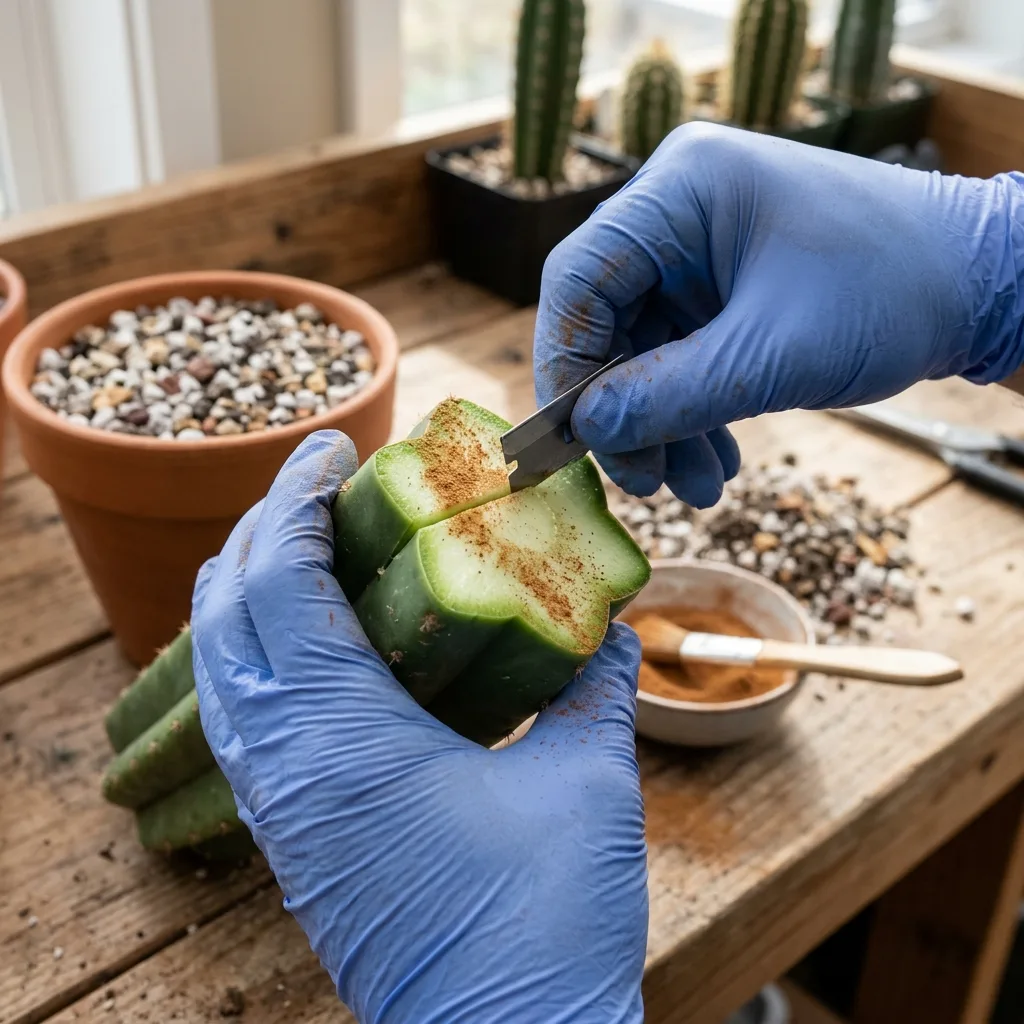
- Radical Surgical Amputation: Disinfect a sharp scalpel, craft knife, or pruning blade with 70% isopropyl alcohol or a butane flame. Make a horizontal, clean slice 1 to 2 cm (about 0.5 to 0.75 inches) above the visibly rotted stem tissue. Inspect the exposed cross-section: if you see any brown, orange, or black flecks or rings within the central vascular cylinder, continue cutting upward in thin slices. You must reach clean, milky-white and light-green tissue with zero discoloration. Leaving behind a single infected vascular cell will allow fungal rot to climb right back up the stem.
- Antiseptic Dressing: Dust the freshly exposed cut surface liberally with pure elemental sulfur powder or culinary ground cinnamon. Cinnamon contains cinnamaldehyde, a potent natural antifungal compound that seals the wound against ambient mold spores.
- Callus Formation (Curing): Place the severed cactus cutting on a clean, dry, shaded shelf with gentle air circulation for 7 to 14 days. Never place a fresh cut directly into potting soil or expose it to water! Allow the wound to dry thoroughly until it forms a hard, leathery, tan-colored scar known as a callus.
- Rerooting in Dry Mineral Medium: Once the cut is completely callused, sit the cutting upright on top of dry, pure mineral substrate (such as 100% dry pumice or coarse perlite). Do not apply any water for the first 14 days. After two weeks, begin lightly misting the surface gravel around the base of the cutting every few days. The micro-humidity will encourage adventitious root nodes to erupt from the areoles and vascular bundles.
7. Long-Term Defense Against Fungal Pathogens
Prevention is always far simpler than surgical amputation. The golden standard for cactus watering is the strict 'soak and dry' method: thoroughly drench the substrate until water flows freely from the drainage hole, and then allow the entire pot—down to the absolute bottom—to dry completely before rehydrating. To verify moisture levels, insert a slender wooden skewer down to the bottom of the container. If it emerges with even a microscopic speck of dark moisture or feels cool against your wrist, hold off on watering.
During early spring as growth resumes, inoculating your irrigation water with a biological preventative fungicide containing beneficial rhizobacteria (such as Bacillus subtilis) helps establish a protective biofilm along the root surfaces, physically crowding out pathogenic fungi. Paired with a porous mineral mix and an authentic terracotta pot, your desert cacti will thrive for decades free from the threat of root rot.


Reader Reviews & Comments 3 Reviews
Eleanor Vance
Marcus Sterling
Claire Redfield
Leave a Review & Rating
Share your plant care tips, experiences, or questions with our succulent community.