






Picture a sculptural titan clinging tenaciously to the fissures of sun-scorched, rocky African slopes: Cussonia, commonly celebrated as the African Cabbage Tree. Most succulent connoisseurs recognize it by its exquisite, palmate, filigree foliage and that mesmerizing basal swollen caudex—a natural, woody reservoir of life. Yet, the moment you welcome a Cussonia into your living space or greenhouse, you quickly discover it is far more than an artistic bonsai candidate; it is an ancient lineage of the Araliaceae family executing a masterclass in drought survival right down to its cellular architecture.
All too often, plant parents introduce this rare botanical specimen to their collection only to be met with sudden leaf drop, a softening trunk, or spindly, elongated shoots that stubbornly refuse to thicken. Truly understanding Cussonia begins with deciphering its subterranean water-storage architecture and arid-season physiology. Showering succulents with frequent water is not an act of devotion; it is a swift path to asphyxiating delicate root systems. When handling Cussonia, this risk is amplified tenfold, as its thick storage roots possess what amounts to an acute biological intolerance toward stagnant, lingering moisture.
Let us pull back the curtain on those profound botanical principles we so often deliberate over warm coffee in our greenhouse. Together, we will explore the precise scientific mechanisms and hands-on protocols that will keep your Cussonia's caudex rock-solid and its crown flourishing with untamed vitality.
1. Botanical Biology and Physiological Foundations
The genus Cussonia (most prominently Cussonia paniculata and Cussonia spicata in cultivation) exhibits a classic pachycaul morphology—possessing a disproportionately thick, swollen trunk relative to its overall height. The caudex, which differentiates at the hypocotyl and stem base, is fundamentally an expansive matrix of storage parenchyma tissue. This specialized tissue hoards colossal volumes of water and complex polysaccharides within broad vacuoles and intercellular spaces. In its native biotope, this internal reservoir steadily feeds moisture through xylem conduits to sustain foliar transpiration through months of grueling drought. However, confined within a container, an improper substrate choice swiftly converts this marvel of survival into an anaerobic death trap.
The root architecture operates on a two-tiered system: superficial, fine capillary feeder roots and deep, robust, storage taproots. When irrigated, the fine feeder roots absorb water rapidly, channeling hydraulic pressure upward into the parenchyma cells of the caudex. If the surrounding potting medium lacks continuous macroporosity and fails to flush excess moisture through the drainage ports within 15 to 20 seconds, root hairs suffer from severe cellular hypoxia. Cellular respiration collapses, paving the way for opportunistic oomycete pathogens such as Pythium and Phytophthora to ascend directly into the heart of the caudex. Thickening this caudex is never merely a matter of genetics; it is an expression of secondary cambial growth triggered by intentional dry-down cycles and strategic substrate staging—a technique perfected in advanced caudiciform bonsai culture.
2. Accurate Diagnosis and Plant Signals
Your Cussonia communicates continuously through the turgidity of its foliage and the structural density of its caudex. Mastering these subtle physiological cues is your primary defense against irreversible tissue compromise:
- Loss of Caudex Elasticity and Wrinkling: Gently press your thumb against the base of the caudex. If the tissue feels spongy or yields under mild pressure while the potting mix is dry, the plant has depleted its vacuolar reserves; it demands an immediate, gradual saturation. Conversely, if the caudex softens while the substrate is damp, you are witnessing the critical, highly dangerous onset of internal root and stem rot.
- Rapid Yellowing and Abscission of Lower Leaves: Cussonia often enters a semi-dormant state during deep winter or mid-summer heatwaves, shedding a few baseline leaves to conserve resources; this is entirely natural. However, if vibrant green leaves suddenly turn limp, soften, and drop en masse, there is acute oxygen depletion and perched water buildup around the lower root zone.
- Etiolation (Light Starvation): Abnormally elongated leaf petioles, expanded internodal spacing, and foliage shifting from an ethereal glaucous blue-grey to a weak, pale lime green all signal severe light starvation. Cussonia requires a minimum of 5 to 6 hours of unfiltered or lightly diffused, high-intensity sunlight every single day.
3. Step-by-Step Cultivation Protocol
Cultivating a robust Cussonia demands a systematic protocol engineered to maximize root-zone oxygenation and promote sustained cambial expansion across five structured steps:
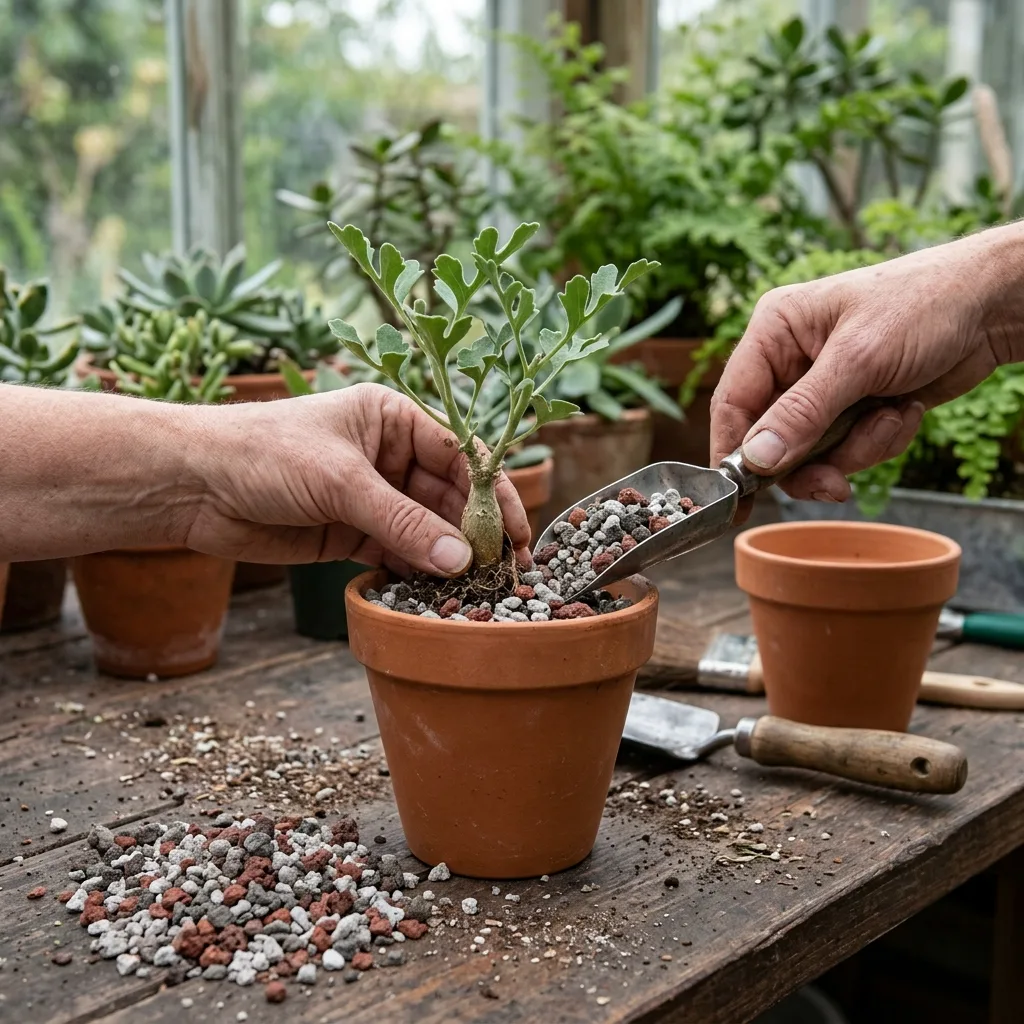
- Formulate an Ultra-Porous Mineral Substrate: Completely discard standard peat-based potting soils. Cussonia demands an aggressively draining, predominantly inorganic mix that facilitates constant gas exchange between root interfaces. Porous volcanic fractions such as pumice, scoria (lava rock), and zeolite must form the structural foundation.
- Select the Proper Container and Establish Drainage: Strictly prioritize unglazed terracotta or breathable, high-fire stoneware containers. Plastic pots retain perched water and trap humidity. Line the bottom of the container with a 2 cm layer of coarse lava rock to ensure primary drainage holes never become clogged by finer media particles.
- Optimize Placement and Acclimatization: Position your plant in your home's brightest south- or west-facing exposure. Avoid thrusting an indoor specimen directly into blistering summer sun without preparation; implement a 10-day progressive acclimatization phase to safeguard foliar epidermal cells against photo-oxidative sunburn.
- Execute a Saturate-and-Dry Irrigation Cycle: The habit of providing 'frequent, tiny sips' of water is the ultimate destroyer of Cussonia. When the substrate is bone dry, irrigate deeply until water flows copiously from the drainage ports. Empty the overflow saucer completely within 15 minutes. Never re-water until at least 90% of the entire soil volume has thoroughly dried out.
- Strategic Pruning and Caudex Architecture: In early spring, carefully prune back leggy apex growth using sterilized bypass shears to stimulate secondary branching lower on the stem. This deliberate disruption of apical dominance redirects growth hormones and metabolic energy toward basal stem thickening and caudex expansion.
4. Essential Substrate Recipe, Equipment, and Metrics
Mastery over Cussonia culture relies on precise volumetric ratios and horticultural balance rather than guesswork. Utilize the following custom substrate formulation and environmental standards to establish an ideal micro-ecosystem:
| Component / Parameter | Recommended Medium / Specification | Target Ratio / Metric | Botanical Rationale |
|---|---|---|---|
| Inorganic Drainage | Horticultural Pumice (3–6 mm) + Zeolite | 50% Substrate Volume | Establishes stable macroporosity; delivers continuous oxygen to root xylem. |
| Mineral Structure | Red Crushed Lava Rock (3–5 mm) | 20% Substrate Volume | Provides trace iron, stabilizes container ballast, and enhances root anchoring. |
| Organic Fraction | Sieved Coarse Coco Coir | 20% Substrate Volume | Maintains a low, highly controlled moisture reserve to prevent root hair desiccation. |
| Humic Enrichment | Fully Decomposed Worm Castings | 10% Substrate Volume | Introduces beneficial root-zone microbiomes and delivers gentle, organic nutrients. |
| Pot Material | Unglazed, High-Porosity Terracotta | 3–4 cm wider than root mass | Facilitates lateral moisture evaporation through pot walls, mitigating fungal pathogens. |
| Light Intensity | Direct / High-Output Diffused Sun | 4,000–8,000 Lux (Min. 5 hours) | Drives active caudex photosynthesis and keeps internodes tight and compact. |
5. Five Critical Mistakes and Emergency Recovery
- Mistake 1: Relying on Standard Peat-Dense Potting Soil.
Remedy: Commercial peat soils turn hydrophobic and rock-hard when dry, yet transform into an airless swamp when wet. Immediately unpot the plant, gently rinse the root system with room-temperature water, and repot into the mineral-rich formula detailed above. - Mistake 2: Allowing Water to Stand in the Drainage Saucer.
Remedy: Standing water is drawn back up into the pot via capillary action, suffocating and rotting the lower storage parenchyma. Empty saucers promptly after watering, or elevate the pot base entirely above the water level using a bed of coarse pebbles. - Mistake 3: Wintering Next to Heat Sources While Maintaining Regular Watering.
Remedy: Hot, dry air from central radiators dehydrates foliar surfaces while the root system remains metabolically sluggish. Move the specimen away from artificial heat into a cool (12–15°C / 54–59°F), brightly lit space, reducing winter watering to once a month. - Mistake 4: Foliar Misting and Overhead Spraying.
Remedy: The complex, incised margins of Cussonia leaves trap water droplets at their junctions, creating prime environments for fungal spores. If indoor humidity is excessively low, run an evaporative room humidifier rather than spraying the leaves directly. - Mistake 5: Over-Fertilizing a Stagnant Specimen.
Remedy: Feeding a plant that is dormant, light-deprived, or recovering from root loss causes catastrophic osmotic shock (fertilizer burn). Limit nutrient applications strictly to active spring and summer growth phases, utilizing a balanced cactus fertilizer diluted to one-quarter strength.
6. Seasonal Management Calendar and Long-Term Horizon
Cussonia aligns its physiological functions with distinct seasonal rhythms throughout the annual cycle:
- Spring (March – May): Vegetative awakening. Feeder roots reactivate, and fresh, lacy leaf flushes erupt from apical meristems. This is the optimal window for repotting, root pruning, and canopy shaping. Gradually increase irrigation frequency as ambient temperatures climb.
- Summer (June – August): Maximum metabolic drive and photosynthetic capacity. Sunlight requirements are at their absolute peak. During extreme heatwaves exceeding 35°C (95°F), provide light afternoon shading to prevent leaf stress. Apply a quarter-strength balanced succulent feed once a month.
- Autumn (September – November): Tissue hardening and vascular preparation for dormancy. As photoperiods shorten, the caudex consolidates cellular sugars and reduces internal free water. Step down watering intervals to once every 2–3 weeks, and cease all fertilizer applications entirely.
- Winter (December – February): Quiescent dormancy phase. Keep the plant in a cool, bright location maintaining a minimum temperature of 10°C (50°F). Irrigate sparingly—just enough (once every 4 to 6 weeks) to prevent severe caudex shrinkage and complete feeder root dieback.
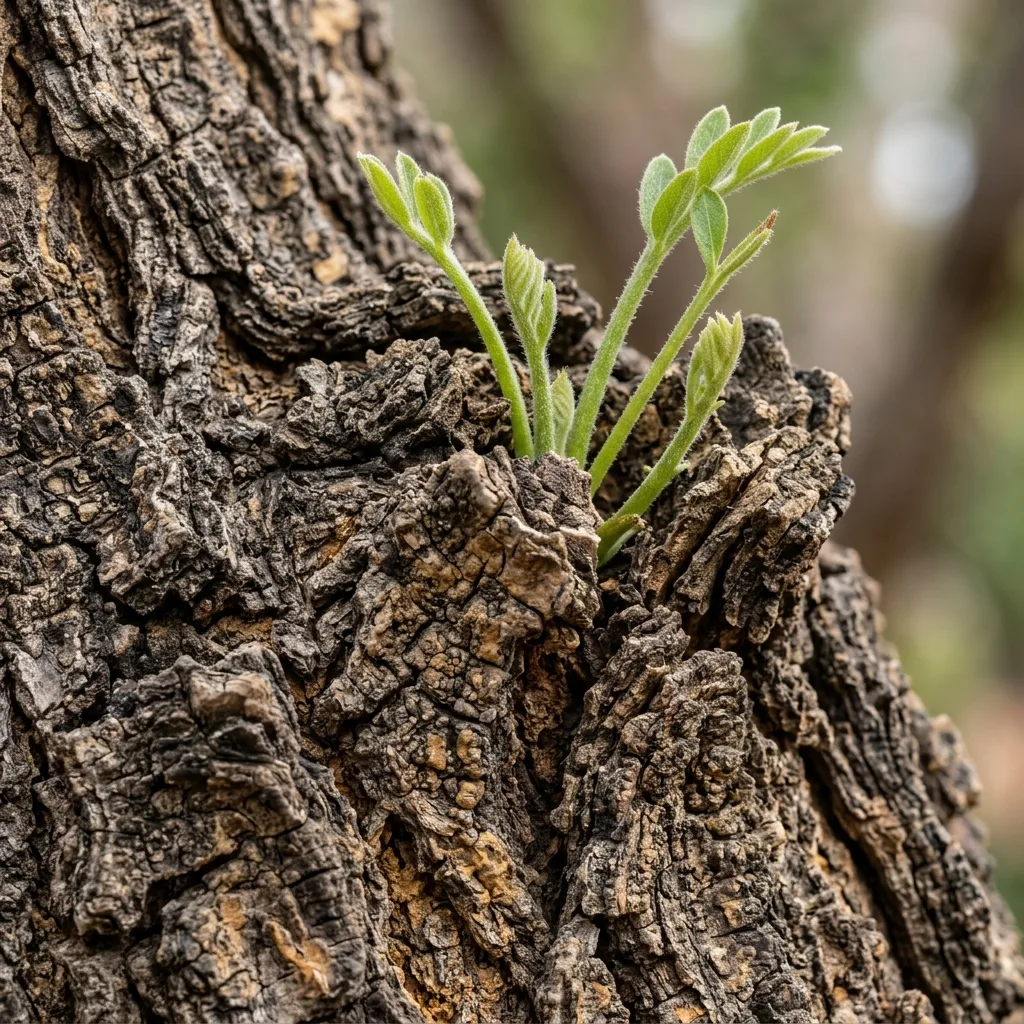
By honoring these intrinsic biological rhythms, you will watch your Cussonia transform over the years into a majestic, living sculpture—complete with fissured, craggy bark and an impressive caudex that stands as the crown jewel of your botanical collection.


Reader Reviews & Comments 4 Reviews
Clara Sterling
Marcus Thorne
Julian Vance
Fiona Gallagher
Leave a Review & Rating
Share your plant care tips, experiences, or questions with our succulent community.