





Across the scorching, semi-arid canyon cliffs of Veracruz and San Luis Potosí in Mexico, colossal swollen stems cling tenaciously to rocky fissures. Registered in botanical science as Beaucarnea recurvata, and colloquially celebrated in living spaces as the 'Ponytail Palm' for its gracefully cascading strap-like foliage or 'Elephant's Foot' for its swollen base, this noble specimen is not a true palm (Arecaceae) at all. Instead, it belongs to the family Asparagaceae: a true caudiciform succulent engineered to endure prolonged dry seasons by storing literal gallons of water inside its woody trunk.
Standing like a living sculpture in our indoor spaces, the secret to understanding this ancient survivor lies in translating its wild survival mechanisms into container culture. Watering succulents out of routine is not an act of love; it deprives their drought-adapted root systems of vital oxygen, inducing rot. For Beaucarnea recurvata, the physiological premise is identical: its swollen caudex is a biological canteen, and offering continuous moisture while that reservoir is full subjects the root system to chronic asphyxiation (oxygen starvation).
Grab a warm coffee and step into our greenhouse. Together, let us explore the cellular anatomy of this magnificent caudex, the biomechanics of its fountain foliage, and the precise scientific care protocol required to nurture it for generations to come.
1. Botanical Biology and Physiological Foundations
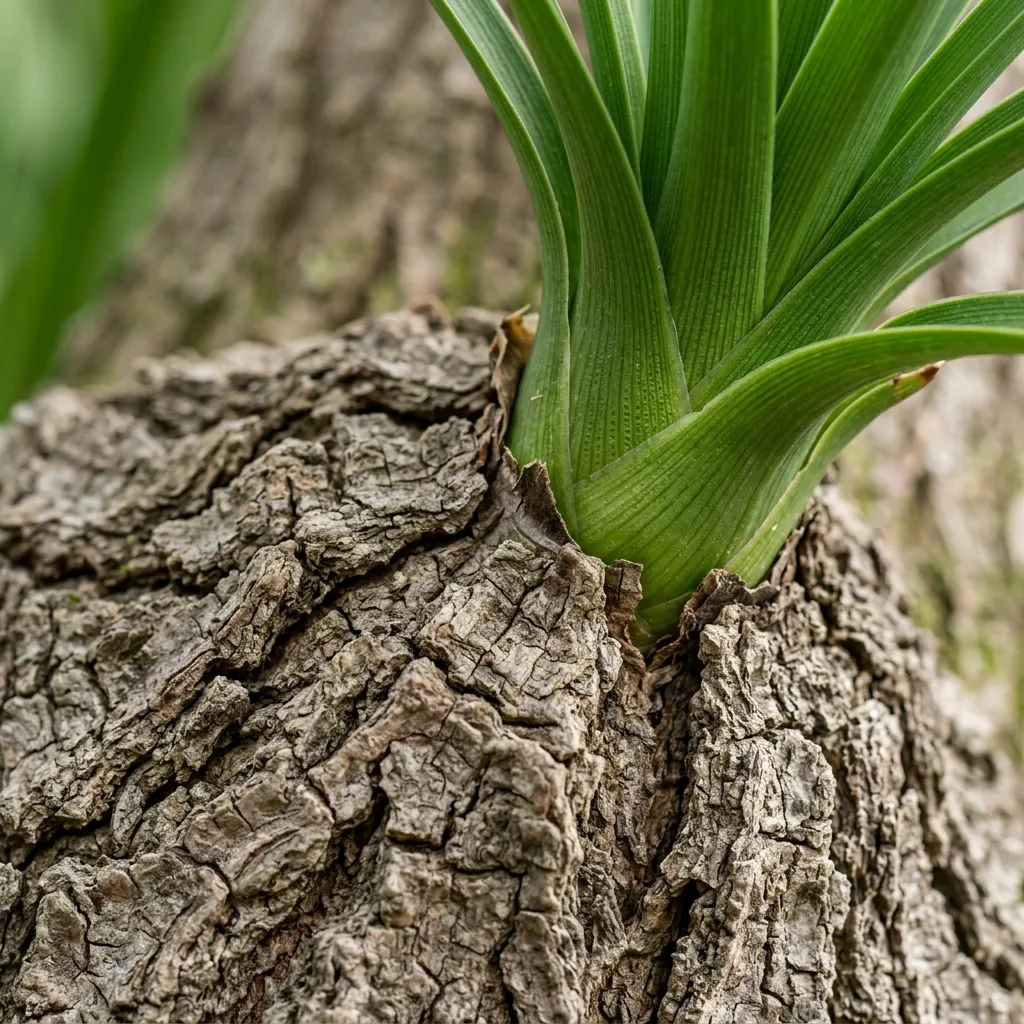
The defining anatomical characteristic of the ponytail palm is its caudex—a tremendously swollen basal trunk that develops a fissured, pachydermatous bark with maturity. This structure is composed predominantly of parenchymatous tissue. Parenchyma cells serve as specialized storage compartments, retaining water and synthesized carbohydrates translocated from the leaves during photosynthesis. In its native habitat, throughout months of total drought, xylem vascular bundles draw moisture upward from these cellular reserves directly toward the apical foliage rosettes.
The leaves of Beaucarnea are marvels of evolutionary adaptation designed to suppress transpiration. Linear, narrow, and strap-like, each leaf is shielded by a heavily thickened waxy cuticle layer, with stomata sunken into micro-grooves along the abaxial (underside) surface. This morphological architecture keeps water vapor loss negligible, even when subjected to dry canyon winds. Beneath the surface, however, lies an entirely different reality: the root system does not feature deep taproots, but rather a shallow, fibrous network radiating horizontally from the base of the caudex. These fibrous roots are extremely dependent on rhizosphere aeration. The mitochondria in root cells require ambient oxygen pockets within porous substrate gaps to generate metabolic ATP. When potting media remain waterlogged, the root cortex undergoes anoxia and necrosis, opening clear infection pathways for opportunistic pathogens such as Phytophthora and Fusarium.
2. Accurate Diagnosis and Visual Symptoms
Cultivating Beaucarnea recurvata successfully indoors hinges upon learning its non-verbal cues. By diagnosing early physiological stress signals, you can intervene before systemic tissue damage occurs:
- Soft, Spongy Caudex: The most critical emergency scenario. This indicates that root rot has migrated upward into the caudex parenchyma, initiating cellular lysis (tissue collapse). Immediate surgical intervention and media removal are required.
- Crispy, Brown Leaf Tips: Typically caused by excessively low indoor humidity, scorched foliage from harsh midday direct sun, or an accumulation of municipal tap water salts (fluoride, chloride, and sodium) within leaf margins.
- Limp, Pale, and Drooping Foliage: A hallmark symptom of inadequate light exposure (incipient etiolation). Chlorophyll synthesis drops significantly, causing leaves to lose their natural mechanical rigidity.
- Deep, Exaggerated Trunk Wrinkles Coupled with Leaf Shedding: Indicates complete depletion of internal caudex reserves, meaning the root zone has been bone-dry for far too long and the plant has entered survival-mode drought dormancy.
3. Step-by-Step Cultivation Protocol
To produce a firm, sculptural caudex and a lush crown of vibrant foliage, integrate these core cultural practices into your routine:
- Light Positioning: Position your specimen near an unobstructed south- or west-facing window, ensuring it receives at least 5 to 6 hours of bright, filtered sunlight daily. Gentle morning or late afternoon direct rays are highly beneficial; however, unshielded summer midday sun directly through double-pane glass can scorch tender leaf tissues.
- The 'Soak and Dry' Irrigation Method: Always probe deep into the container before reaching for the watering can. Never water until the potting medium has dried completely through to the bottom. When irrigating, drench the root zone thoroughly until water runs freely through the drainage holes, and ensure that runoff sitting in the drip saucer is emptied within 15 minutes.
- Root Flare Depth Calibration: When repotting, never bury the broad swollen base beneath the substrate surface. Only the root system and bottom anchor plate should be submerged; burying caudex tissue invites bacterial and fungal stem rot.
- Foliage Hygiene and Pruning: As lower leaves naturally mature and dry up, resist the urge to cut them off crosswise. Instead, gently peel them downward parallel to the trunk; they will snap away cleanly at the base. To neaten brown tips, use sterile shears and leave a paper-thin, 1 mm dry margin rather than cutting directly into living green tissue.
4. Required Substrate Mix, Materials, and Environmental Parameters
The table below details the optimal physical, chemical, and environmental metrics aligned with the root and caudex physiology of Beaucarnea recurvata:
| Component / Parameter | Recommended Standard / Ratio | Botanical Rationale |
|---|---|---|
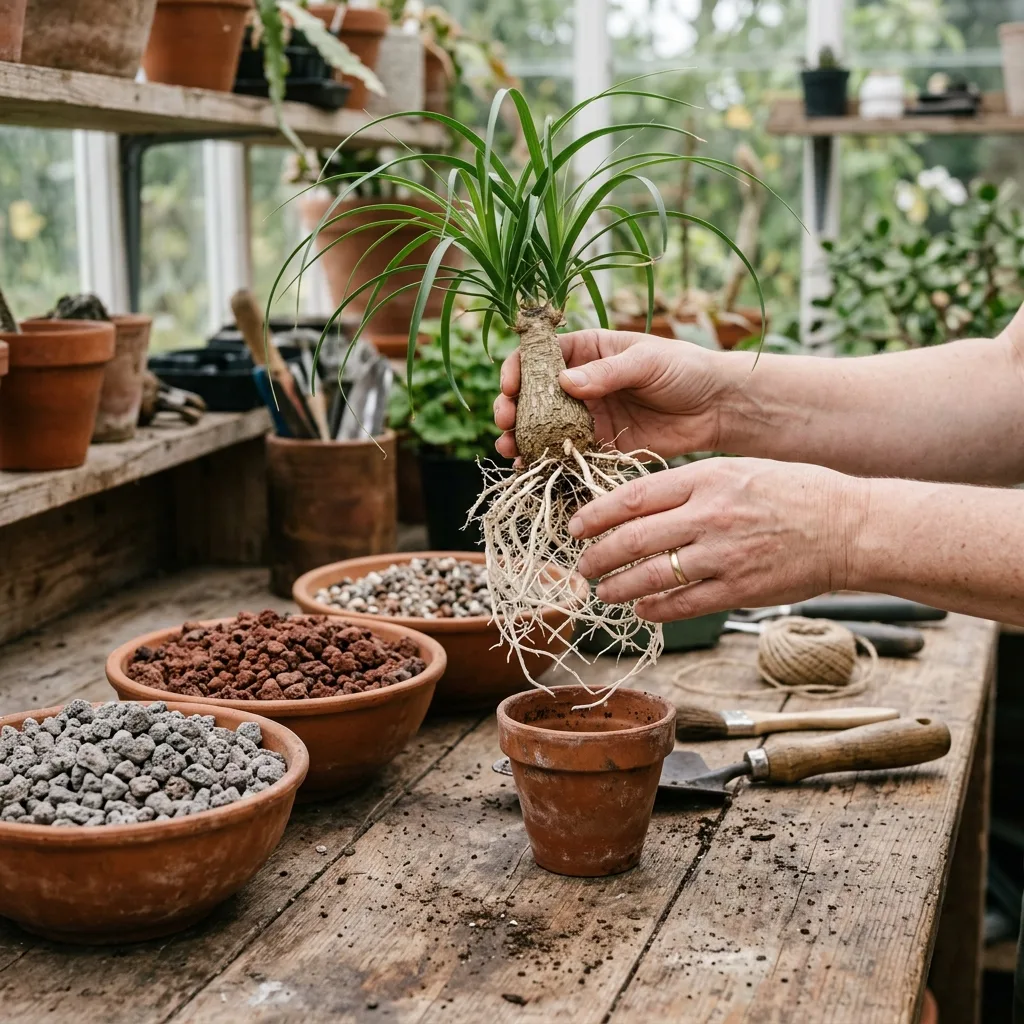
| Coarse Pumice | 35% (3-6 mm) | Creates durable macro-porosity and essential air pockets throughout the root zone. |
| Lava Rock (Scoria) | 20% (2-4 mm) | Provides structural integrity and prevents compaction and settling over time. |
| Coarse Horticultural Sand / Zeolite | 15% | Accelerates drainage velocity and stabilizes cation exchange capacity (CEC). |
| High-Quality Coco Coir | 30% | Retains minimal necessary moisture and creates an anchoring medium for fibrous root hairs. |
| Pot Type | Wide, shallow terracotta container | Balances the heavy top weight while unglazed clay walls allow rapid evaporation. |
| Light Intensity | 10,000 - 25,000 Lux | Maintains active photosynthesis, compact rosettes, and steady caudex expansion. |
| Optimal Temperature | 18°C - 27°C / 65°F - 80°F (Winter min. 10°C / 50°F) | Supports enzymatic activity in parenchyma tissues and promotes steady cellular division. |
5. 5 Common Pitfalls and Emergency Recovery Protocols
- Mistake 1: Using Standard Potting Soil or Peat Moss: These rich organic substrates retain moisture like sponges, keeping roots suffocated for weeks.
Remedy: Unpot the plant immediately, wash all sticky organic sludge from the root network, prune away black or mushy roots with sterilized tools, and repot into the gritty mineral mix detailed above. - Mistake 2: Sticking to a Fixed Calendar Watering Schedule: Watering on a strict schedule (such as 'every Saturday') invariably leads to winter root rot.
Remedy: Rely exclusively on physical feedback: insert a wooden skewer to ensure complete dryness to the base and palpate the caudex for slight give before watering. - Mistake 3: Burying the Caudex Below Grade: Burying stem tissue exposes tender bark to continuous dampness, setting off fungal lesions.
Remedy: Lift the specimen so the widest basal zone rests entirely above the soil line, ensuring only the subterranean roots sit beneath the substrate. - Mistake 4: Condemning the Plant to Deep Shade: Chronic low-light conditions yield weak, drooping foliage and bring caudex development to a halt.
Remedy: Gradually acclimate the plant toward brighter light exposure over 7 to 10 days to prevent acute photoinhibition or sunburn. - Mistake 5: Leaving Standing Water in the Saucer: Capillary action keeps the bottom layer of soil perpetually saturated, quickly killing root tips.
Remedy: Elevate the pot on drainage risers or discard accumulated water within 15 to 20 minutes post-irrigation.
6. Seasonal Management and Long-Term Results
Aligning your cultivation techniques with the natural phenology of the ponytail palm ensures your plant thrives for decades, becoming a cherished, generational heirloom:
- Spring (March - May): The active growth phase commences. Fresh rosettes unfurl from the center of the crown. Water more frequently as the soil dries, and feed every other month using a balanced, highly diluted liquid succulent fertilizer (e.g., NPK 10-10-10 at half strength).
- Summer (June - August): High metabolic activity. High temperatures and transpiration rates mean soil dries quickly; inspect root moisture weekly. Plants can be moved outdoors to a partially sheltered patio once nights stay reliably warm.
- Autumn (September - November): Vegetative growth naturally tapers off. Suspend all fertilizer applications. Extend intervals between waterings, waiting a few days after the soil dries out before re-saturating.
- Winter (December - February): Seasonal dormancy. The plant drops to maintenance metabolic rates. Keep it in a bright, cool location (12°C - 15°C / 54°F - 59°F), safely away from drafts and frost. Reduce watering to once every 4 to 6 weeks depending on indoor temperatures.


Reader Reviews & Comments 3 Reviews
Eleanor Vance
Sarah Jenkins
Marcus Thornton
Leave a Review & Rating
Share your plant care tips, experiences, or questions with our succulent community.