






Let us embark on an imaginary botanical journey to the windswept, sun-drenched granite hillsides of Argentina's Córdoba and San Luis provinces. Rising with sculptural elegance among quartz scree and gravel beds at altitudes soaring well above 1,000 meters, the Acanthocalycium spiniflorum—often celebrated colloquially by growers as the Spiny Cup Cactus—holds an extraordinary place in the hearts of cactus and succulent connoisseurs. With deep water reservoirs stored within its specialized parenchyma tissue, impeccably symmetrical ribbed morphology, and a formidable armor of spines designed to diffuse intense ultraviolet radiation, this species represents one of nature's most sophisticated adaptations to harsh highland climates.
While many succulent varieties enchant us through lush foliage, the genus Acanthocalycium takes its botanical name directly from the Greek akantha (spine or thorn) and kalyx (calyx or cup). Indeed, the unmistakable diagnostic marvel that sets this taxon apart from its closest globular relatives is the floral tube, which encases silky lilac, lavender, or soft pink petals within a protective ring of stiff, scale-like spines. Welcoming this Argentinian highland jewel to the sunniest ledge of your living space or your outdoor patio collection delivers the profound, deeply rewarding payoff that comes from patient, mindful botanical stewardship.
Although structurally classified as a cactus, this ancient survivor operates on true succulent physiology. It does not belong tucked away in dim living room corners; rather, it demands that we honor its primal ancestral cycles. Frequent watering is never an expression of plant love—instead, it deprives roots of essential soil oxygen and leads to cellular collapse. Let us explore step-by-step how to replicate its high-altitude native ecosystem directly within your home cultivation setup.
1. Botanical Profile & Morphological Adaptations
Belonging to the family Cactaceae, Acanthocalycium spiniflorum begins its lifecycle as a depressed-globose sphere, gradually elongating into a stout, cylindrical column as it matures. While wild specimens clinging to Andean slopes may eventually attain heights of 60 centimeters with diameters of 15 to 20 centimeters, potted indoor specimens typically sustain a tidy, compact stature of around 15 to 20 cm. Its central stem is divided into 16 to 22 sharp, deeply furrowed ribs that function precisely like an accordion bellow—expanding effortlessly during seasonal rains to store moisture, and contracting inwards during arid spells to minimize surface area exposure.
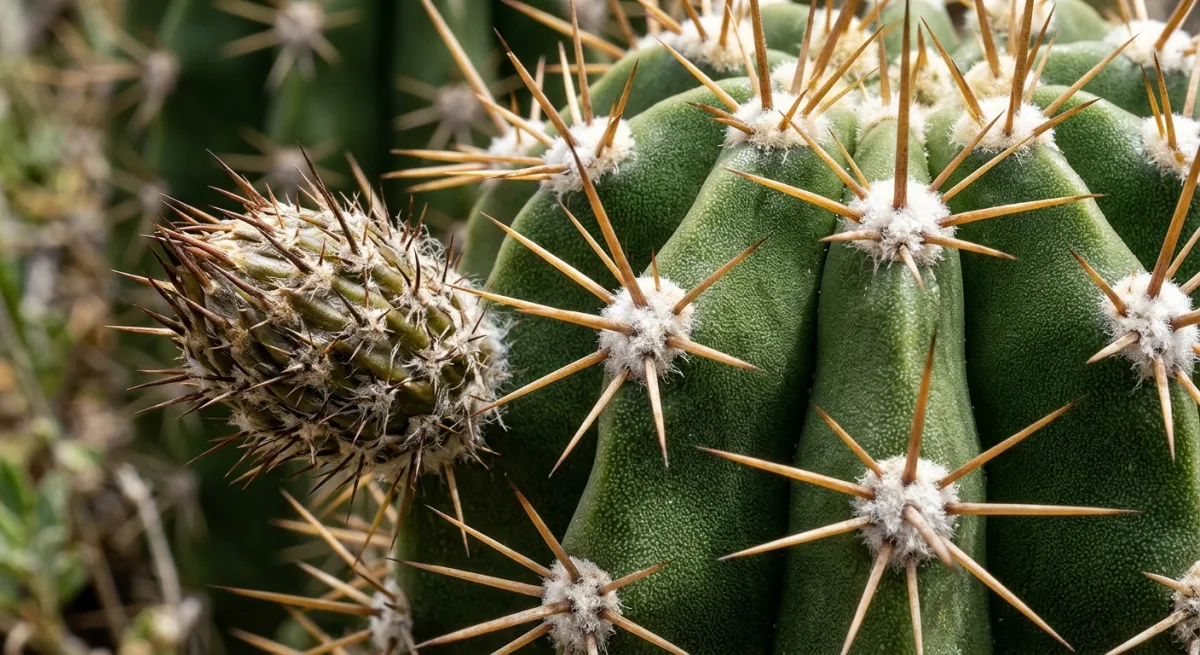
Along the margins of these ribs sit prominent areoles (cushion-like growth nodes) carpeted with dense, grayish-white felt. Emerging from each mature areole are 10 to 20 radial spines alongside 1 to 4 stiffer central spines. These needles showcase an earthy palette shifting from straw-yellow and honey-amber to weathered granite gray, consistently tipped with darker apical points. Far from serving merely as herbivore deterrents, these spines condense early morning mountain mist, funneling life-giving droplets down to the basal feeder roots while casting a lattice of micro-shadows that protects delicate epidermal tissue from high-altitude solar radiation.
During late spring and early summer, mature apical areoles produce funnel-shaped, diurnal blooms spanning 4 to 5 centimeters across. The exterior calyx tube is heavily encrusted with signature spiny scales, confirming its genus classification. Operating via Crassulacean Acid Metabolism (CAM photosynthesis), this plant keeps its stomata sealed throughout the heat of the day, opening them exclusively under nocturnal coolness to absorb carbon dioxide while restricting transpirational water loss to absolute biological minimums.
2. Sun Exposure & Indoor Placement Protocols
Having evolved under the unfiltered skylines of the high Argentinian pampas, Acanthocalycium spiniflorum is an obligate lover of full, intense sunlight. When deprived of adequate luminous flux, the plant stretches upward in a spindly, pale taper—a physiological distress symptom known as etiolation. Not only does this irreversibly deform its geometric perfection, but it also weakens structural cell walls, rendering the cactus acutely vulnerable to opportunistic fungal pathogens.
For indoor culture, an unobstructed south- or west-facing window sill is indispensable. Securing at least 5 to 6 hours of unfiltered direct solar radiation daily ensures that spines grow robust, rigid, and vibrant, while the main stem retains its dense, waxy vigor. However, when transitioning your plant from winter quarters indoors to an outdoor balcony or patio for the summer, you must implement a gradual acclimatization process over 10 to 14 days. Exposing unconditioned epidermal cells directly to searing summer midday sun will cause irreversible, bleached solar scorch marks.
3. Watering Precision: The 'Soak and Dry' Protocol
The plump stem of this succulent cactus consists almost entirely of mucilage-rich parenchyma cells designed to hoard moisture. For Acanthocalycium spiniflorum, the primary cause of fatality in cultivation is never prolonged drought, but rather residual, unoxygenated water trapped around its root zone. Your irrigation regimen must strictly abide by the 'Soak and Dry' standard.
When watering during the active growth phase, saturate the mineral substrate thoroughly until water cascades freely from the bottom drainage apertures. Allow the container to drain completely, and empty any residual runoff from the saucer within 15 minutes. Before offering another drop, confirm that the entire root column—not merely the top two inches of substrate—has dried out completely. A reliable diagnostic technique involves inserting a clean wooden skewer down to the bottom of the pot; if it emerges cool, stained, or damp, defer watering until it pulls out bone dry.
4. Substrate Engineering & Pot Selection
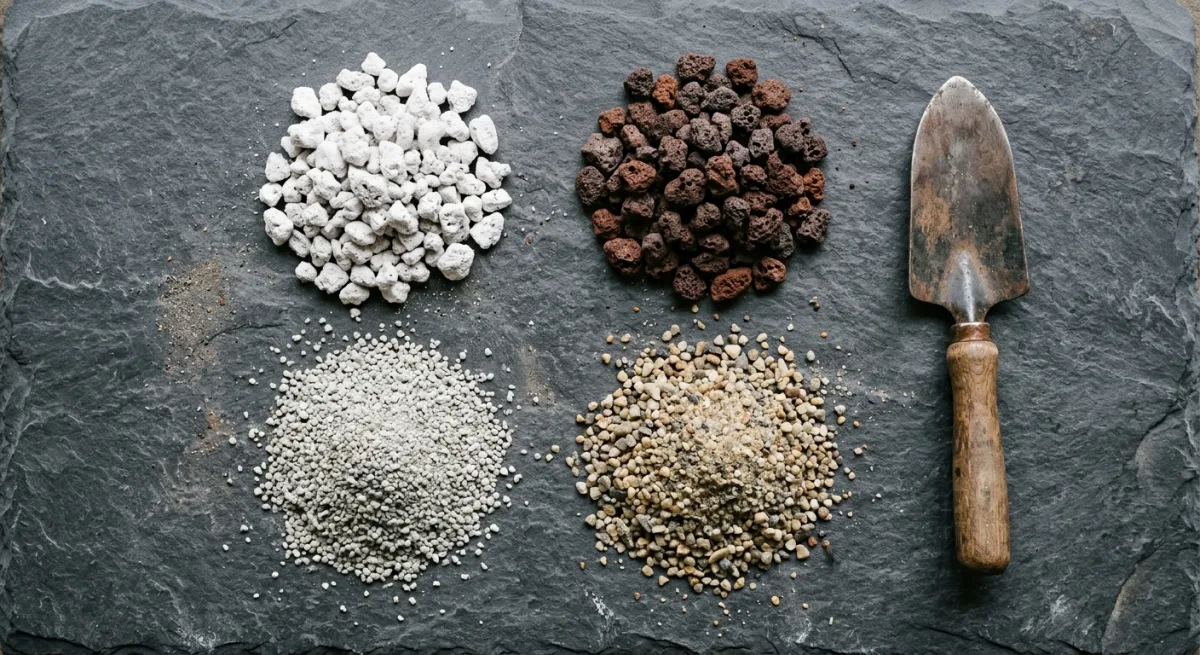
This high-altitude specialist detests heavy, moisture-retentive peat or standard garden loam. Its fibrous root hairs demand rapid gas exchange, immediate gravitational drainage, and an absolute absence of stagnant water pockets. The ideal potting medium should consist of at least 70% to 80% coarse, porous inorganic minerals.
When selecting a vessel, unglazed, high-fired terracotta pots are unparalleled. The porous clay walls permit moisture evaporation not just from the top dressing, but laterally through the pot sides, preventing anaerobic zones. Container depth must correspond closely to the diameter of the cactus stem; avoid overly voluminous or deep planters, as excess uninhabited soil holds residual moisture far too long, drastically increasing the likelihood of root rot.
| Substrate Component | Ratio (%) | Botanical Function & Root Zone Benefit |
|---|---|---|
| Horticultural Pumice (3–6 mm) | 35% | Highly porous volcanic structure provides continuous root aeration without holding excess water. |
| Crushed Lava Rock / Zeolite | 25% | Enhances structural root anchorage and steadily releases essential trace micronutrients. |
| Coarse Quartz Sand / Grit | 15% | Maximizes rapid gravitational drainage and prevents soil compaction over time. |
| Low-Peat Cactus Compost / Coco Coir | 25% | Supplies baseline organic cation exchange capacity and nutrient buffering. |
5. Step-by-Step Propagation Methods
While Acanthocalycium spiniflorum predominantly grows as a solitary specimen, older individuals or those that have experienced minor apical damage occasionally produce basal offsets (pups). The two most dependable propagation methods are vegetative offset division and seed propagation.
- Harvesting Basal Offsets: In early spring, inspect the base of the parent plant. Using a scalpel or horticultural knife that has been sterilized with 70% isopropyl alcohol, sever the chosen offset as close to the main stem junction as possible without gouging the mother plant.
- Callus Formation: Never pot fresh cuttings immediately into damp soil. Place the offset in a warm, well-ventilated, shaded location for 5 to 7 days, allowing the severed vascular tissue to form a dry, hardened, protective callus layer. This barrier is crucial for preventing opportunistic fungal spore ingress.
- Dry Potting: Settle the callused pup into a pot filled with the highly mineral substrate mix detailed above. For the first 10 to 14 days, keep the substrate completely bone dry.
- Root Stimulation: After two weeks, apply light moisture around the pot periphery to entice new adventitious roots to search outward. Once resistance is felt when gently nudging the pup, standard watering may begin.
- Seed Propagation: Scatter fresh seeds in spring over a surface of finely sifted pumice and peat. Keep the environment humid, shaded from intense midday sun, and maintain temperatures between 22–26°C (72–79°F) until germination occurs.
6. Common Pathogens, Pests & Targeted Treatments
Even a rugged mountain xerophyte can suffer when cultivation parameters fall out of balance. The most common arthropod threat comes from mealybugs (Pseudococcidae). These cottony pests conceal themselves within deep rib furrows, between areole spines, or directly around the root collar, piercing dermal cells to siphon nutrient sap. Spot treat them immediately with a cotton swab saturated in 70% isopropyl alcohol, or treat widespread infestations with cold-pressed neem oil solutions or systemic horticultural insecticides.
The most devastating ailment is basal stem and root rot caused by waterborne pathogens such as Fusarium or Phytophthora species. If you detect dark, water-soaked softening near the soil line, unpot the specimen immediately. Excise all necrotic tissue with a sterile blade until you reveal immaculate, bright-green vascular tissue. Dust the clean wound liberally with sulfur powder or cinnamon, allow it to dry thoroughly for 10 days in open air, and re-establish it in fresh, sterile mineral grit.
7. Seasonal Stewardship Calendar & Pro Tips
- Spring (March – May): The revival phase. As ambient temperatures rise, reintroduce moisture cautiously with an initial modest watering on a sunny morning. By mid-to-late April, administer a balanced, low-nitrogen cactus fertilizer diluted to half strength. Floral buds will begin erupting from crown areoles during this window.
- Summer (June – August): The active growth and blooming phase. Water thoroughly whenever the mineral soil dries out completely. Take note: during sustained heatwaves exceeding 35°C (95°F), the cactus may enter temporary summer dormancy (estivation) to protect moisture reserves; scale back watering frequency slightly during these temperature spikes.
- Autumn (September – October): The conditioning phase. Gradually space out waterings as daytime photoperiods shorten. By late October, discontinue watering entirely to signal to the vascular system that cold weather is approaching.
- Winter (November – February): The essential dormancy phase (vernalization). To trigger embryonic floral development for next season, keep the plant in a cool, bright location maintained reliably between 5°C and 10°C (41–50°F) in bone-dry soil. Specimens kept in warm, heated living rooms through the winter rarely set flower buds the following spring.


Reader Reviews & Comments 3 Reviews
Julian Vance
Marcus Sterling
Clara Montgomery
Leave a Review & Rating
Share your plant care tips, experiences, or questions with our succulent community.