






High in the mist-veiled cloud forests of the Serra dos Órgãos mountains in southeastern Brazil, a magnificent forest dweller thrives suspended among the mossy branches of towering canopy trees: Schlumbergera. Arriving in our living rooms during the darkest, coldest months of the year around the winter solstice, bursting with vibrant fuchsia, coral, pristine white, and ruby-red blossoms, the Christmas cactus instantly shatters the archetype of the parched, sun-scorched desert succulent. Yet, the single most catastrophic mistake indoor plant lovers make is condemning this tropical forest beauty to dry, dense clay, heavy desert sand, or arid cactus mixes under the false impression that it belongs in the Sahara.
The biological reality is clear: the longevity, vigor, and sheer abundance of those glorious flower buds you eagerly anticipate all season depend entirely on the pore architecture and moisture dynamics of the root substrate. Heavy, dense peats that suffocate delicate root hairs, or hyper-draining desert gravels that dry out instantly, inevitably trigger premature bud drop and cause the succulent stem segments to wrinkle, desiccate, and lose cellular turgor. Pour yourself a hot cup of coffee as we journey into the botanical architecture of this extraordinary winter treasure—from its cellular root respiration to its areolar meristems—and learn how to cultivate an heirloom specimen that will bloom triumphantly for generations.
1. Taxonomic Identity, Areole Architecture, and Spine Morphology
Botanically classified within the cactus family Cactaceae and tribe Rhipsalideae, the Christmas cactus (predominantly Schlumbergera truncata cultivars or the classic hybrid Schlumbergera x buckleyi) diverges dramatically from typical spiny columnar or globular desert cacti. What appear to be glossy green leaves are actually modified, flattened photosynthetic stem segments that also handle cellular water storage, known scientifically as cladodes (cladodes or phylloclades).
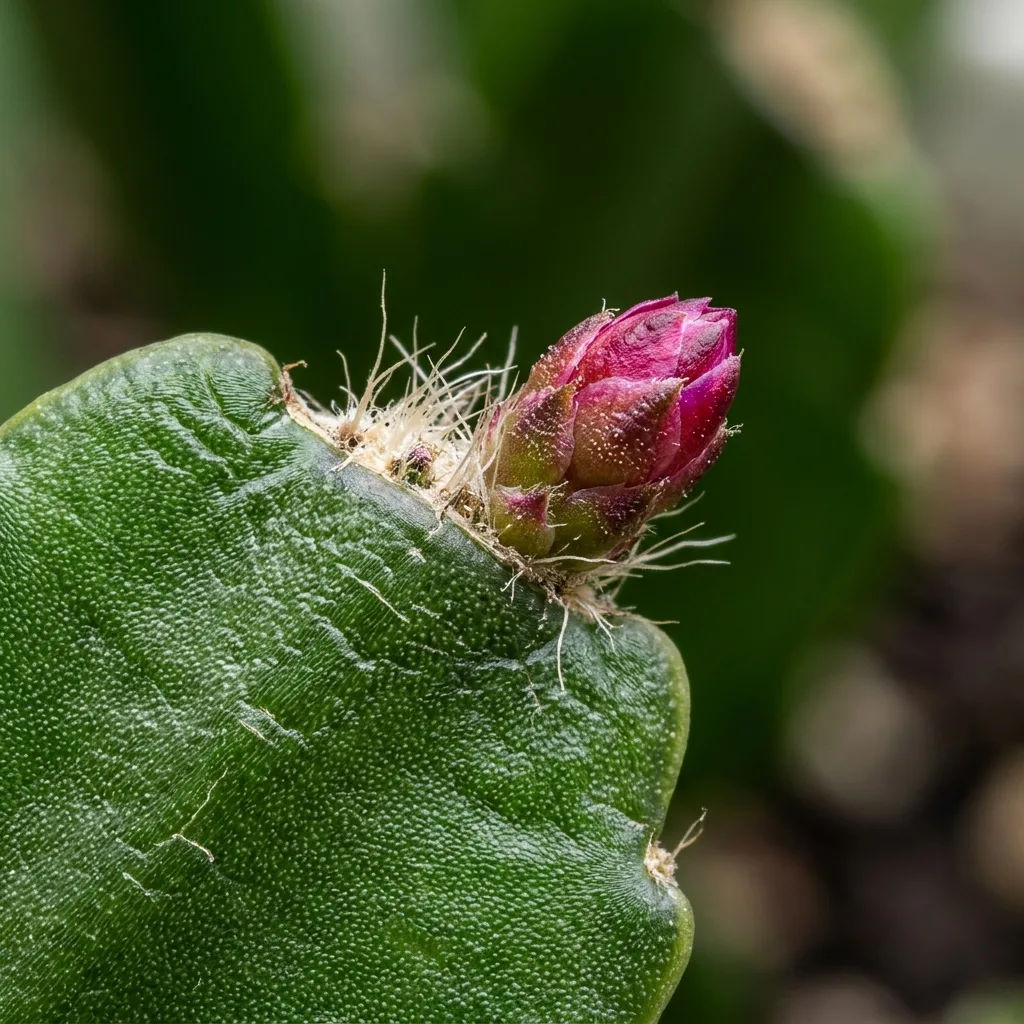
Along the margins and at the very tips of these cladodes lie areoles—the definitive morphological hallmark of all true cacti. However, unlike their desert kin, Schlumbergera areoles do not produce rigid, puncturing spines designed for mechanical herbivore defense; instead, they yield soft, minute bristly hairs (setae) and contain active meristematic tissues capable of generating either new vegetative segments or floral structures. Schlumbergera truncata (frequently marketed as the Thanksgiving cactus) displays prominent, claw-like serrated teeth along its segment edges, whereas the true heirloom Christmas cactus, Schlumbergera x buckleyi, features gently rounded, teardrop-shaped lobes. Its blossoms are distinctly zygomorphic (possessing bilateral symmetry), extending along a horizontal axis into an exotic floral tube with prominently exerted, pollen-bearing stamens.
2. Light Requirements, Sun Exposure, and Aeration Standards
The wild ancestors of the Christmas cactus evolved beneath the dappled shade of dense tropical tree canopies. Because of this evolutionary heritage, exposing your specimen to harsh, unshielded southern sunlight triggers a photoprotective response: the cladodes produce red-purple protective pigments known as anthocyanins to shield their chlorophyll from photodamage. When your cladodes shift from emerald green to a dull bronze-red hue, your plant is signaling acute solar stress, indicating that light levels must be filtered immediately.
The ideal light regimen consists of gentle morning sunlight filtering through an eastern window, or bright, indirect illumination softened by sheer curtains. To maintain peak photosynthetic efficiency and promote gas exchange through stomata, active ambient air circulation is essential. Stagnant, humid, unventilated corners invite airborne fungal spores (particularly powdery mildew and Botrytis cinerea) to germinate at the segment joints. At the same time, keep your plant carefully shielded from frigid winter drafts leaking through unsealed windows, as well as the dry, convective blasts of forced-air heating radiators.
3. Watering Cycles and the Critical Winter Dormancy Regimen
Hydrating a Christmas cactus cannot be dictated by a rigid calendar schedule; it is an intuitive horticultural practice of assessing cellular turgidity and substrate moisture depletion. While it stores water within its succulent stem segments, it cannot tolerate the prolonged, bone-dry desiccation endured by desert species. The golden rule of irrigation: Water thoroughly when the top third of the substrate has dried out, soaking the root ball until water flows freely from the drainage holes, and immediately empty any runoff accumulated in the saucer. Giving tiny, frequent sips of water is not an act of devotion; it suffocates the root core and keeps bottom layers waterlogged, leading directly to anaerobic root demise.
To successfully initiate flower buds, the plant requires an orchestrated short-day photoperiod and cool temperature dormancy throughout autumn (typically October through November). This seasonal transition depends on three primary environmental triggers:
- Uninterrupted Darkness: The plant must receive 12 to 14 hours of continuous, absolute darkness each night. Even the accidental flicker of an indoor reading lamp or ambient streetlight through an uncovered window can disrupt its sensitive phytochrome signaling, completely aborting bud initiation.
- Cool Temperature Gradient: Lowering night temperatures to between 12°C and 15°C (54°F–59°F) directly stimulates floral meristems. Avoid freezing temperatures below 10°C (50°F), but note that consistent warmth exceeding 20°C (68°F) will keep the plant locked into vegetative leaf growth.
- Controlled Water Reduction: During this autumn rest period, slightly widen the intervals between waterings. Allow the cladodes to lose their glossy sheen slightly, but never let them shrivel or wrinkle excessively.
4. High-Mineral Cactus Substrate and Potting Requirements
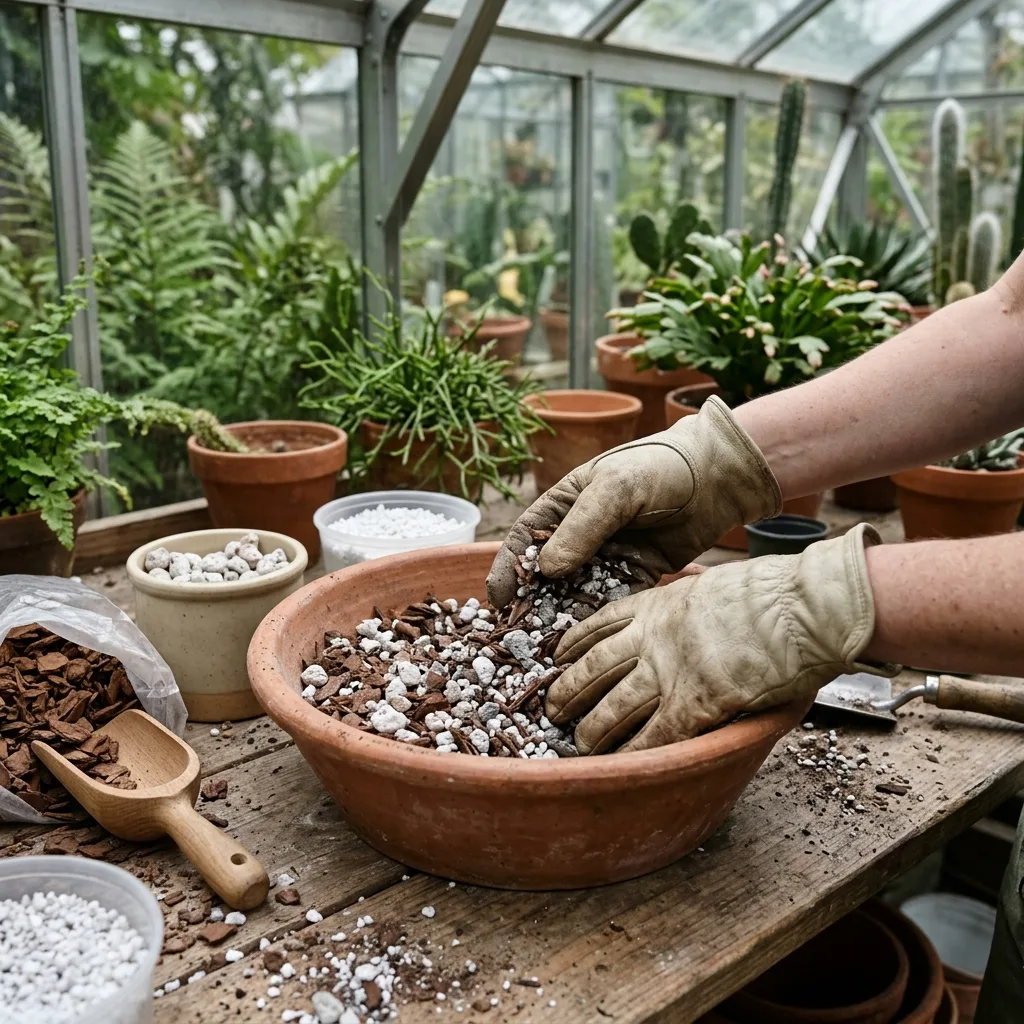
Here we arrive at the heart of horticultural success: designing the optimal substrate for the Christmas cactus and other winter succulents. In their native habitats, forest cacti develop delicate, fibrous, shallow root systems that weave through bark crevices, decomposing leaf litter, and epiphytic mosses. To protect root hair cells from hypoxia and fungal rot, the potting medium must combine uniform moisture retention with extraordinary macro-porosity and rapid drainage.
The comparative table below highlights the distinct physical and structural requirements separating desert cactus soils from an optimal epiphytic Christmas cactus blend:
| Substrate Component | Desert Cactus Mix (%) | Christmas Cactus (Schlumbergera) Mix (%) | Botanical Function & Purpose |
|---|---|---|---|
| Coarse Pumice (3–6 mm) | 40% | 20% | Creates stable air pockets around roots and maximizes oxygen diffusion. |
| Fine Pine Bark (Orchid grade) | 0% | 30% | Replicates natural epiphytic bark substrates; maintains mild acidity (pH 5.5–6.2). |
| Fibrous Sphagnum Peat or Coir | 15% | 25% | Retains balanced, capillary moisture without becoming sodden. |
| Lava Rock & Zeolite (Clinoptilolite) | 35% | 15% | Provides structural mineral support, cation exchange, and disease suppression. |
| Horticultural Perlite or Coarse Sand | 10% | 10% | Prevents compaction in lower root zones, ensuring root aeration. |
When selecting a container, unglazed terracotta remains the gold standard. The porous clay walls facilitate vapor transpiration from within the root zone, significantly curbing the proliferation of pathogenic anaerobic fungi. Ensure the pot is shallow or standard-depth rather than excessively deep, closely matching the spread of the fibrous root ball, and confirm that ample bottom drainage holes are unobstructed.
5. Bud Formation Strategies and Targeted Nutrient Support
Unlocking a lavish winter floral display depends entirely on delivering the proper nutritional ratios synchronized with the plant's seasonal biological clock. During the active vegetative growth phase in spring and summer (April through August), feed your plant every two to three weeks with a balanced, water-soluble fertilizer (such as an N-P-K 10-10-10 or 20-20-20 diluted to one-quarter strength).
As September arrives, cease all high-nitrogen feeding. Excess nitrogen spurs the development of tender green cladodes at the expense of flower buds. Throughout early autumn, transition to a bloom-promoting formula rich in phosphorus and potassium (such as N-P-K 5-15-10) to reinforce root cellular walls and energize the emerging floral meristems. The moment flower buds swell and begin showing petal color, stop all fertilization completely; the plant should dedicate all its metabolic energy to sustaining the open blooms.
6. Propagation, Segment Cuttings, and Grafting Techniques
Propagating Schlumbergera is an exceptionally accessible and rewarding botanical project. The most dependable, high-success method is through cladode stem cuttings. Follow this step-by-step horticultural protocol:
- Select Healthy Segments: In late spring or early summer, identify a vigorous, non-flowering branch containing 2 to 3 mature, deep-green segments.
- Callus Formation: Rather than using shears, gently twist the chosen joint with your fingers until it cleanly separates. Allow the detached cuttings to rest in a warm, shaded, dry location for 24 to 48 hours so the wound can form a protective suberized callus, shielding it from fungal penetration.
- Rooting Substrate: Insert the cuttings base-down into a moistened mixture of 50% perlite and 50% coco coir, burying approximately one-third of the bottom segment.
- Root Establishment: Place the propagation tray in bright, indirect light, keeping the medium lightly moist. Within 3 to 4 weeks, fresh white roots will emerge from the basal areoles, quickly followed by tender new leaf segments.
7. Defending Against Root Rot and Fungal Pathogens
The primary threat to the Christmas cactus is root and stem-base decay triggered by opportunistic soil pathogens—most notably water molds and fungi from the genera Phytophthora, Pythium, and Fusarium oxysporum—which proliferate in waterlogged, poorly aerated potting soils. If the cladodes lose their firm plumpness, turn a dull grayish-green, and feel soft, mushy, or detach at the soil line, root rot is already well underway.
If you face this emergency, execute this immediate intervention protocol:
- Unpot the specimen immediately and gently rinse all remaining potting soil from the roots under lukewarm running water.
- Using sterilized, sharp pruners, meticulously excise every black, soft, water-soaked, or foul-smelling root back to firm, healthy white tissue.
- Submerge the remaining root system for 10 minutes in a diluted 3% hydrogen peroxide solution (1 tablespoon per liter of water) or a biological fungicide bath, dusting cut surfaces lightly with sulfur or cinnamon powder.
- Repot the treated plant into fresh, sterile, bark-rich epiphytic substrate as detailed above, and withhold all watering for the first 3 to 4 days to allow root lesions to heal.


Reader Reviews & Comments 4 Reviews
Eleanor Vance
Clara Davenport
Marcus Sterling
Julian Hayes
Leave a Review & Rating
Share your plant care tips, experiences, or questions with our succulent community.