






From the scorched expanses of Mexico's Sonoran Desert to the arid quartz plains of the South African Karoo, cacti and succulents do far more than merely survive in unforgiving wildernesses—they evolve into living, sculptural works of art. Shaped by chronic drought, blistering solar radiation, and freezing desert nights, these extraordinary botanical engineers have mastered the cellular art of water retention across millions of years of natural selection. Whether you showcase a classic Jade Plant (Crassula ovata), a sculptural Golden Barrel Cactus (Echinocactus grusonii), or a trailing String of Pearls (Senecio rowleyanus) on a sun-drenched windowsill, they ask for only one thing: that we honor the primordial rhythms of their native habitats.
Cacti and succulents operate under an entirely different physiological blueprint than standard tropical houseplants. Dousing them with frequent water is not an act of kindness; it is an accidental asphyxiation that robs root systems of oxygen and welcomes opportunistic fungal pathogens. Likewise, the silvery, matte powdery coating adorning your succulent's leaves is farina—the plant's natural epicuticular sunscreen—which, if rubbed away by curious fingertips, leaves the epidermal tissue permanently vulnerable to sunburn. In this comprehensive master guide, we combine rigorous botanical principles with practical greenhouse experience to elevate your succulent and cactus cultivation to master level.
1. Taxonomic Identity, Areole Structure, and Spine Morphology
In plant taxonomy, an essential rule clarifies an otherwise confusing botanical relationship: Every cactus is a succulent, but not every succulent is a cactus. 'Succulent' is not a formal botanical family; rather, it describes an ecological morphology spanning over 60 plant families (including Crassulaceae, Aizoaceae, and Euphorbiaceae) whose members have evolved specialized parenchymal tissues in their stems, leaves, or roots to store water. Cacti, by contrast, belong exclusively to a single, highly specialized botanical family: Cactaceae.
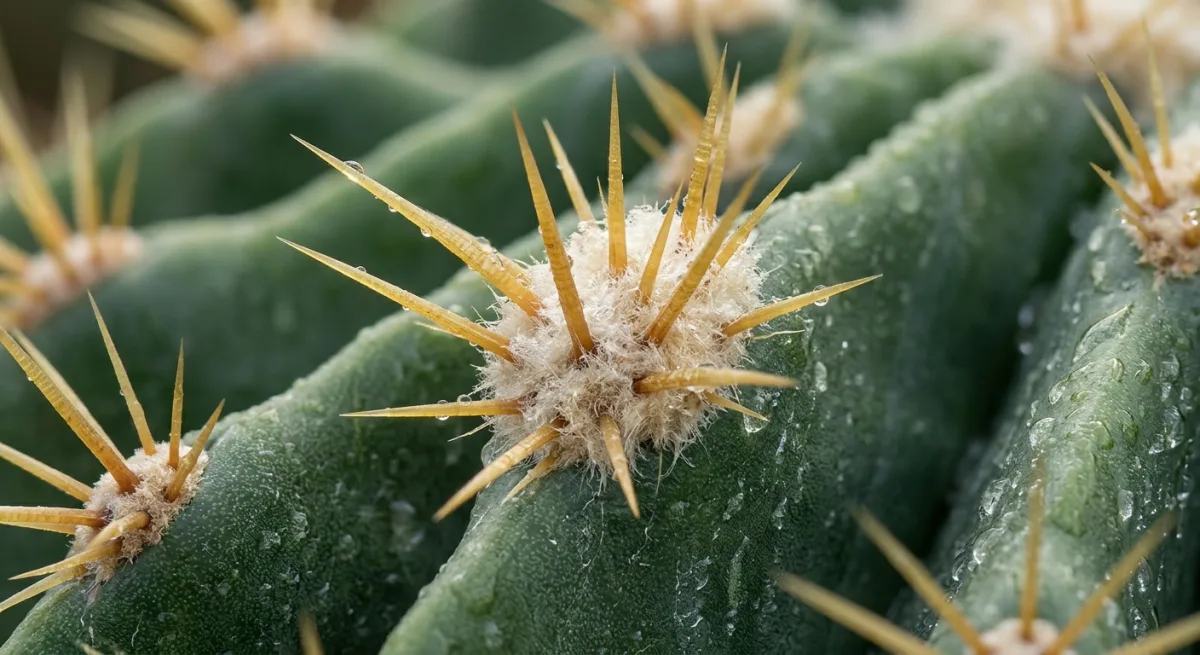
The definitive botanical hallmark separating a true cactus from any other succulent is the presence of the areole. Areoles are highly modified, condensed lateral shoot buds unique to the Cactaceae family. Every spine, floral bud, side offset, and fruit emerges directly from these tiny, woolly, or felt-like cushion structures. While succulent spurges (Euphorbia) may look nearly identical to desert cacti, their thorns emerge directly from the stem's bark tissue, whereas a true cactus produces spines nestled neatly inside areoles. Furthermore, cactus spines are far more than defensive weapons: they function as micro-climatic cooling panels that diffuse intense UV rays, cast micro-shadows across the epidermis, and condense nighttime dew into liquid droplets that drip directly down to the plant's feeder roots.
2. Light Exposure, Solar Intensity, and Ventilation Standards
The metabolism of arid succulents and cacti revolves around CAM (Crassulacean Acid Metabolism) photosynthesis. To completely eliminate daytime evapotranspiration, these plants keep their stomata tightly sealed under the scorching sun. Only during the cool desert night do they open their pores to capture carbon dioxide, sequestering it as malic acid until daylight arrives to fuel chemical conversion into sugars. For this complex biochemical machinery to operate efficiently, the plant requires an abundance of high-lumen, broad-spectrum light.
The most devastating indoor mistake is relegating cacti to dimly lit living room corners or dark coffee tables. Deprived of adequate light, a cactus or succulent undergoes etiolation—a stress-induced deformation where the stem stretches frantically toward the nearest light source. The new growth turns pale, thin, and structurally fragile, permanently ruining the plant's architectural symmetry. True desert cacti (such as Echinocactus, Mammillaria, and Ferocactus) demand a minimum of 6 hours of direct, unfiltered sunlight daily. Conversely, semi-shade succulents such as Zebra Haworthia (Haworthiopsis fasciata), Gasteria, and Christmas Cactus (Schlumbergera) thrive in bright, indirect or gently dappled morning sunlight. Equal in importance to light is unobstructed air circulation; stagnant, humid air is an open invitation for airborne fungal spores to colonize the leaf cuticles.
3. Watering Cycles and the Critical Winter Dormancy Regime
The golden axiom of succulent husbandry is simple: "When in doubt, wait!" Calendar-based watering routines (such as watering every Wednesday) inevitably lead to root rot. A watering decision must be dictated entirely by the complete dryness of the substrate down to the base of the pot. Insert a thin wooden skewer deep into the root zone: if it emerges with the slightest hint of damp soil or cool moisture, withhold water. When watering is required, always practice the 'soak and dry' method. Drench the pot thoroughly until water flows freely from the bottom drainage holes, then discard any standing water collected in the saucer within fifteen minutes.
Crucial to a cactus's annual biological cycle is winter dormancy. Between November and March in the Northern Hemisphere, ambient temperatures should ideally drop to 45–55°F (8–12°C), and watering for desert cacti must be suspended almost entirely. A warm, well-watered winter confuses the plant's biological clock, exhausts its cellular energy, and completely inhibits the hormonal cues required to initiate spring flower buds.
4. High-Mineral Cactus Substrates and Container Selection
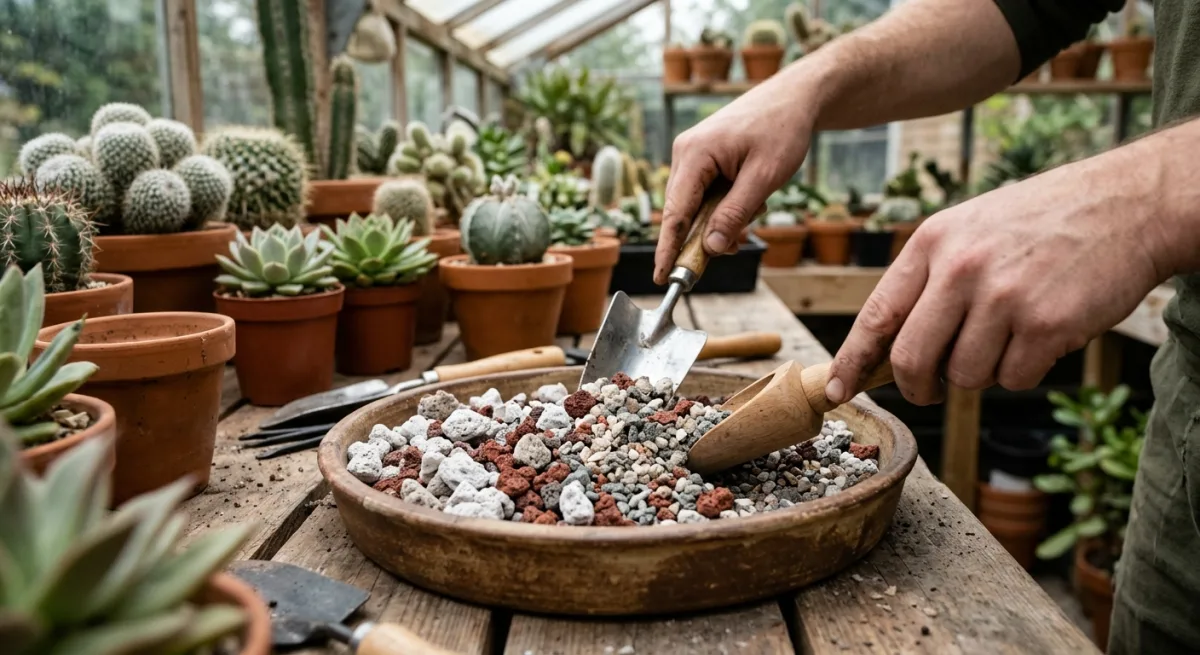
Cactus roots did not evolve to inhabit wet, organic peat bogs. Standard commercial potting soils act like spongy reservoirs, retaining water for weeks and causing root xylem tissues to suffocate and die of asphyxia. The primary objective of an authentic cactus substrate is not to store nutrients, but to deliver rapid, free-flowing drainage and maximize root-zone aeration.
To guarantee lasting root health, use the specialized mineral-to-organic ratios outlined in the formulation guide below:
| Ingredient Group | Material Type | Desert Cacti (%) | Foliar Succulents (%) | Botanical Function & Benefit |
|---|---|---|---|---|
| Porous Inorganic | Pumice (1/8"-1/4") & Lava Rock | 45% | 30% | Creates air pockets; prevents compaction and root suffocation. |
| Mineral Drainage | Coarse Quartz Sand / Zeolite | 30% | 20% | Binds impurities; promotes rapid, uniform drainage. |
| Light Organic Matter | Sifted Coir or Aged Leaf Mold | 20% | 40% | Provides structural root anchorage and baseline micro-nutrients. |
| Biological Protection | Crushed Horticultural Charcoal | 5% | 10% | Acts as an antibacterial shield, neutralizing fungal pathogens. |
When selecting containers, porous, unglazed terracotta pots are invariably the gold standard. The porous clay allows moisture to evaporate laterally through the pot walls, safeguarding roots from waterlogging. If plastic, resin, or glazed ceramic pots are used, they must have multiple drainage holes, and the soil blend must lean even more heavily toward porous mineral grit.
5. Proven Strategies to Induce Blooming and Fertilizer Regimes
A frequent complaint among houseplant enthusiasts is: "Why has my cactus never bloomed?" Spectacular floral displays on cacti and succulents are never a matter of luck; they are the predictable biological payoff of meeting strict seasonal triggers. To encourage profuse floral bud development, satisfy these three physiological conditions:
- Cold, Dry Winter Dormancy: Overwintering your plants in a bright, unheated space at 40–50°F (5–10°C) with zero water induces the production of flowering hormones (florigen).
- Phosphorus and Potassium Supplementation: During active spring and summer growth, apply a specialized, low-nitrogen liquid cactus fertilizer rich in phosphorus and potassium (such as an NPK 5-10-15 formulation) once monthly at half-strength. Excess nitrogen creates bloated, split stems while actively suppressing blossom development.
- Consistent Light Orientation: Once flower buds initiate, never rotate the pot. Buds track the angle of solar incidence; turning the pot forces the plant to expend scarce energy reorienting, which often triggers bud abortion and drop.
6. Vegetative Propagation, Callusing, and Grafting Methods
Few plants match the vegetative resilience of succulents and cacti. The most popular method for multiplying leaf succulents—such as Echeveria, Sedum, and Graptopetalum—is through leaf and stem cuttings. Gently wiggle a mature, plump leaf from side to side until it snaps clean off the mother stem with its basal meristem intact. Avoid placing fresh cuttings directly onto wet soil.
The freshly severed wound must form a protective callus (wound tissue) by resting in a warm, dry, shaded area for 3 to 7 days. If an open wound contacts wet soil, it will absorb opportunistic soil bacteria and rot within hours. Once a smooth, dry callus has sealed the cut, set the leaf atop dry mineral grit. Within several weeks, delicate pink roots and miniature rosettes will emerge, sustained entirely by the mother leaf's internal water reserves.
In cactus grafting, non-chlorophyll cultivars—such as the vibrant neon-topped Moon Cactus (Gymnocalycium mihanovichii)—are permanently joined to vigorous rootstocks like Hylocereus (Dragon Fruit). The secret to a successful graft lies in overlapping the vascular cambium rings of both scion and rootstock at least partially. Secured firmly with elastic horticultural bands, the vascular tissues fuse within 10 to 14 days, functioning seamlessly as a single living organism.
7. Defending Against Stem Rot and Fungal Pathogens
The most lethal adversaries of cacti are root-rot fungi (predominantly Fusarium and Phytophthora), typically triggered by saturated, heavy soils and poor airflow. Rot usually begins invisibly in the feeder roots before ascending into the core of the stem. The moment you detect a soft, discolored, or water-soaked spot near the base of the plant, swift surgical intervention is mandatory.
Unpot the plant immediately and slice away the degraded roots. If the rot has reached the stem, use a razor-sharp, alcohol-sterilized knife to make horizontal cuts across the stem until there is not a single speck of brown, discolored vascular tissue remaining. Dust the fresh cut generously with sulfur powder or ground cinnamon—both potent natural fungicides and desiccants. Allow the plant to callus in a warm, dry, shaded location for two weeks until a rock-hard seal develops, then repot into completely dry, coarse mineral grit to stimulate new adventitious roots.
On the pest front, mealybugs (Pseudococcidae) are notorious for hiding within woolly areoles and deep stem ribs. At the first sign of cottony white masses, isolate the plant immediately. Spot-treat the pests directly using a cotton swab dipped in 70% isopropyl alcohol, which dissolves their protective waxy armor instantly. Follow up with cold-pressed horticultural neem oil sprays during dusk to protect emerging growth and keep leaf crevices insect-free.


Reader Reviews & Comments 4 Reviews
Marcus Vance
David Miller
Emma Watson
Clara Higgins
Leave a Review & Rating
Share your plant care tips, experiences, or questions with our succulent community.