






From the rugged, windswept rock faces of central Mexico to the arid canyon slopes of the Cape Floristic Region, succulents have evolved a vulnerable yet remarkably resilient survival mechanism in response to severe environmental stress: sacrificing biomass to achieve cellular renewal. The cherished Echeveria, Graptopetalum, and Crassula specimens gracing our windowsills occasionally reach a physiological tipping point where the greatest act of horticultural care is not reaching for the watering can, but taking up a sterilized scalpel and making a decisive, deliberate cut.
For plant enthusiasts new to succulent husbandry, cutting into the fleshy stem of a mature or cherished specimen can feel counterintuitive, even devastating—as though one is consigning the plant to the compost bin. Yet in the evolutionary architecture of succulents, pruning is never an ending; it is a profound morphological reset. A plant with a compromised stem, a rosette contorted in search of photons, or basal tissues succumbing to fungal ingress sends subtle yet unambiguous physiological signals that it is ready to be rejuvenated through beheading.
Drawing directly from years of greenhouse trials and clinical horticultural propagation at the Sukulentler.com nursery, this guide explores the 9 vital indicators that necessitate beheading your succulent, the cellular and hormonal processes driving these symptoms, and an exacting, step-by-step surgical protocol to guarantee robust root initiation and long-term vitality.
1. Botanical Identity and Morphological Characteristics
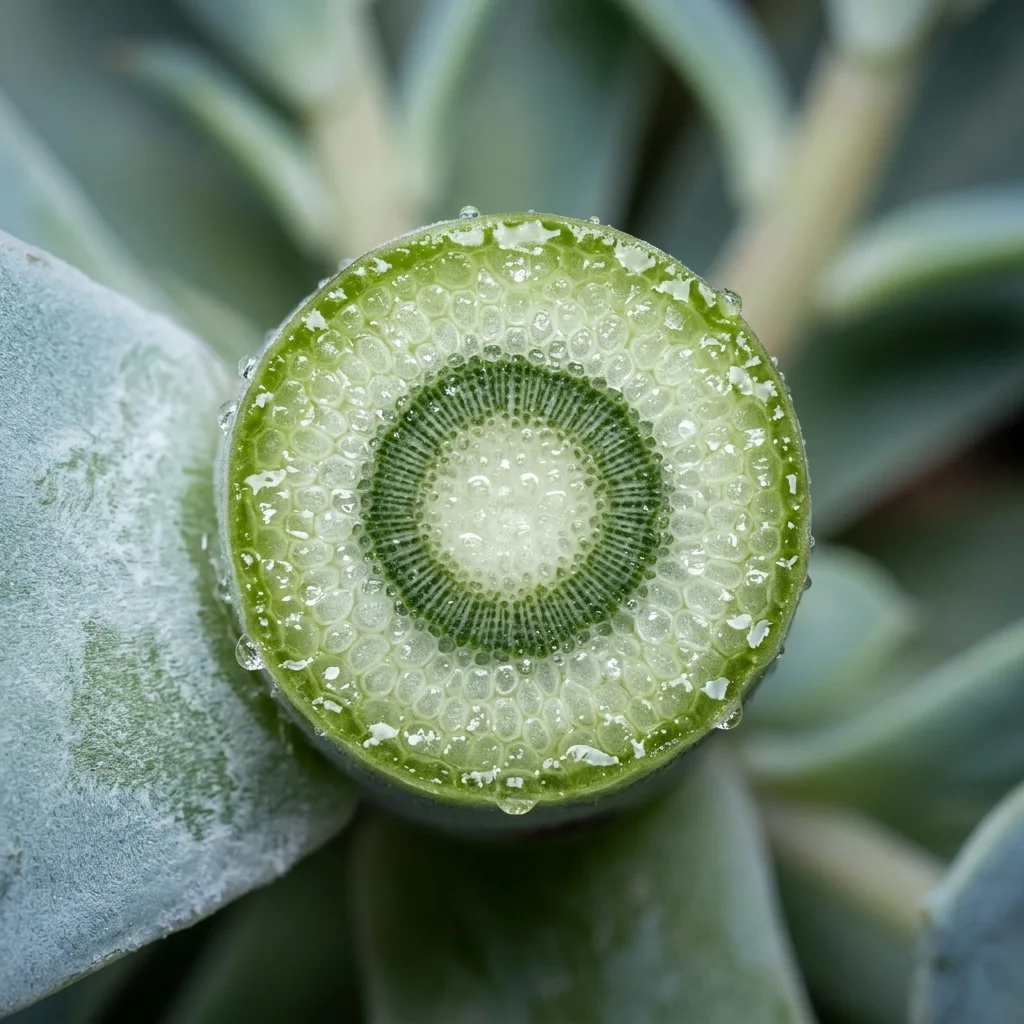
Members of the succulent alliance—predominantly within the family Crassulaceae—are distinguished by specialized water-storing parenchyma tissue, giving rise to their succulent foliage and compact spiraled arrangements. Under optimal solar radiation, genera such as Echeveria, Pachyphytum, and Graptoveria exhibit precise phyllotaxis, where leaves emerge from the apical meristem in an exquisite Fibonacci pattern to maximize light interception while self-shading lower stem tissues. However, when the delicate hormonal equilibrium between auxin (which maintains apical dominance) and cytokinin is disrupted by environmental deficiencies, stem morphology shifts dramatically.
The 9 critical morphological and physiological signs that mandate immediate surgical beheading include:
- 1. Severe Etiolation (Phototropic Stem Elongation): The compact rosette opens prematurely, internodal spacing widens substantially, and the stem stretches into a spindly pale column. Deprived of adequate photosynthetically active radiation (PAR), cells elongate abnormally along their longitudinal axes. This stretched stem tissue can never revert to a compact state; beheading the viable apical rosette is the only botanical remedy.
- 2. Top-Heavy Rosettes and Mechanical Stem Buckling: As the terminal rosette continues to synthesize water-dense foliage, the slender, light-deprived stem below can no longer support the gravitational load, causing the plant to drape precariously over the rim of the pot and risk catastrophic mechanical breakage.
- 3. Prolific Aerial Adventitious Root Formation: The sudden emergence of fine pink or white fibrous roots along the mid-to-upper stem tissue. While minor aerial rooting can respond to ambient humidity, prolific bursts generally signal that the subterranean root system has collapsed, vascular transport is restricted, or the plant is desperately seeking structural and moisture contact with soil.
- 4. Basal Stem Discoloration and Softening (Early Stage Root/Crown Rot): A darkening of the lower stem near the soil line to a translucent brown or black hue, accompanied by a spongy, soft texture upon gentle palpation. Before necrotic pathogens invade the continuous vascular bundles (xylem and phloem), the pristine green upper rosette must be excised immediately.
- 5. Excessive Lignification and Cellular Senescence: Over multiple seasons, the basal stems of mature specimens become heavily corked, thickened, and woody (lignified). While natural, extreme lignification severely constricts hydraulic conductivity and nutrient transport, leading to progressively smaller rosettes and stunted peripheral growth.
- 6. Localized Fungal or Bacterial Stem Lesions: Depressed, dry necrotic patches or water-soaked lesions developing midway along the stem. To prevent systemic colonization of the apical meristem, clean surgical excision must be executed above or below the affected margins.
- 7. Terminal Inflorescence Usurping the Apical Meristem: Occasionally, particularly in monocarpic specimens or hybridized cultivars, a flower scape emerges directly out of the central growth point, terminating the apical meristem. Once anthesis concludes, removing this spent center is critical to stimulate the dormant lateral buds beneath.
- 8. Extensive Basal Leaf Loss Resulting in a 'Palm Tree' Habit: The natural reabsorption and shedding of lower leaves over several seasons, leaving behind 10 to 15 centimeters of naked, unsightly stem crowned by a solitary cluster of leaves. Beheading restores proportion, balance, and mechanical stability.
- 9. Clonal Rejuvenation and Induction of Multiple Basal Offsets: When the objective is to generate multiple healthy offshoots from a single prized mother plant, excising the dominant apical rosette breaks apical dominance, directing endogenous cytokinin reserves to activate dormant axillary nodes along the rooted trunk.
2. Light Requirements and Indoor Positioning
Insufficient light intensity is by far the primary catalyst driving the need to behead succulents. Operating via Crassulacean Acid Metabolism (CAM), these desert-adapted botanicals seal their stomata during the heat of the day to eliminate evapotranspiration, opening them under cover of darkness to sequester carbon dioxide as malic acid. During the day, they require intense photon energy to fuel photosynthetic carbohydrate synthesis. Deprived of at least 5 to 6 hours of bright, direct, or lightly filtered sunlight daily, stem cells rapidly elongate in a desperate phototropic reach toward light sources.
Following surgical beheading, however, you must never place the unrooted terminal rosette under scorching midday sun. Lacking a functional root network to draw up replacement moisture, the severed rosette will lose water through cuticular transpiration faster than it can conserve it, leading to cellular collapse. Position your freshly cut rosette in a warm microclimate receiving abundant, bright indirect light—such as behind a sheer curtain on an east- or bright west-facing windowsill.
3. Irrigation Discipline: The 'Soak and Dry' Protocol
Providing micro-doses of water on a frequent schedule is not an act of kindness; it creates an anaerobic, stagnant soil pocket that inevitably asphyxiates sensitive root hairs. A healthy, fully rooted succulent demands a strict 'soak and dry' regimen: thoroughly saturating the substrate until water drains freely from the drainage holes, followed by allowing the root zone to dry completely throughout its entire depth before the next application.
However, a freshly cut succulent rosette must NEVER be watered. A plant devoid of root architecture possesses zero physiological capacity to absorb soil moisture; exposing fresh wound tissue to wet substrate serves only to invite opportunistic fungal spores and bacterial soft rot. Once placed upon dry substrate, keep the potting mix bone-dry until the initial adventitious root tips—appearing as delicate, vibrant pink or reddish fibrils—emerge, which typically takes 2 to 3 weeks. Only once early root establishment is visually confirmed should light, controlled surface moisture be introduced.
4. Engineered Substrate Composition and Container Selection
For unrooted cuttings to callous, initiate adventitious root primordia, and avoid damping off, an open-structured, highly porous mineral substrate is non-negotiable. Standard nursery potting soils dominated by fine sphagnum peat moss retain excess moisture for weeks, depriving the cut stem of vital oxygen and suffocating delicate new root hairs. A professional succulent formulation must incorporate high-porosity volcanic and mineral components.
| Substrate Component | Ratio (%) | Botanical Function |
|---|---|---|
| Coarse Horticultural Pumice (3–6 mm) | 40% | Creates stable macropores for root-zone oxygenation; prevents compaction. |
| Crushed Red Lava Rock (Scoria) | 20% | Supplies essential trace minerals and facilitates rapid hydraulic drainage. |
| Clinoptilolite Zeolite | 15% | Enhances cation-exchange capacity (CEC); binds harmful pathogenic residues. |
| High-Grade Coconut Coir (Washed) | 20% | Provides structural organic matter and controlled baseline moisture retention. |
| Coarse Horticultural Perlite or Quartz Grit | 5% | Enhances structural lightness and uniform drainage dispersion. |
Regarding containers, always choose unglazed terracotta vessels featuring generous drainage holes. The porous walls of unglazed clay breathe, allowing excess moisture to wick and evaporate outward through the vessel's perimeter, drastically minimizing the hazard of stagnant, anaerobic soil pockets.
5. Step-by-Step Surgical Propagation and Cutting Techniques
When you are ready to behead your succulent, follow this precise four-stage horticultural protocol:
- Surgical Sterilization: Thoroughly clean and disinfect your hobby knife, grafting blade, or precision scalpel using 70% isopropyl alcohol. Avoid standard bypass pruners or blunt kitchen shears, as their crushing action damages delicate parenchyma cell walls and predisposes the stem to fungal infection.
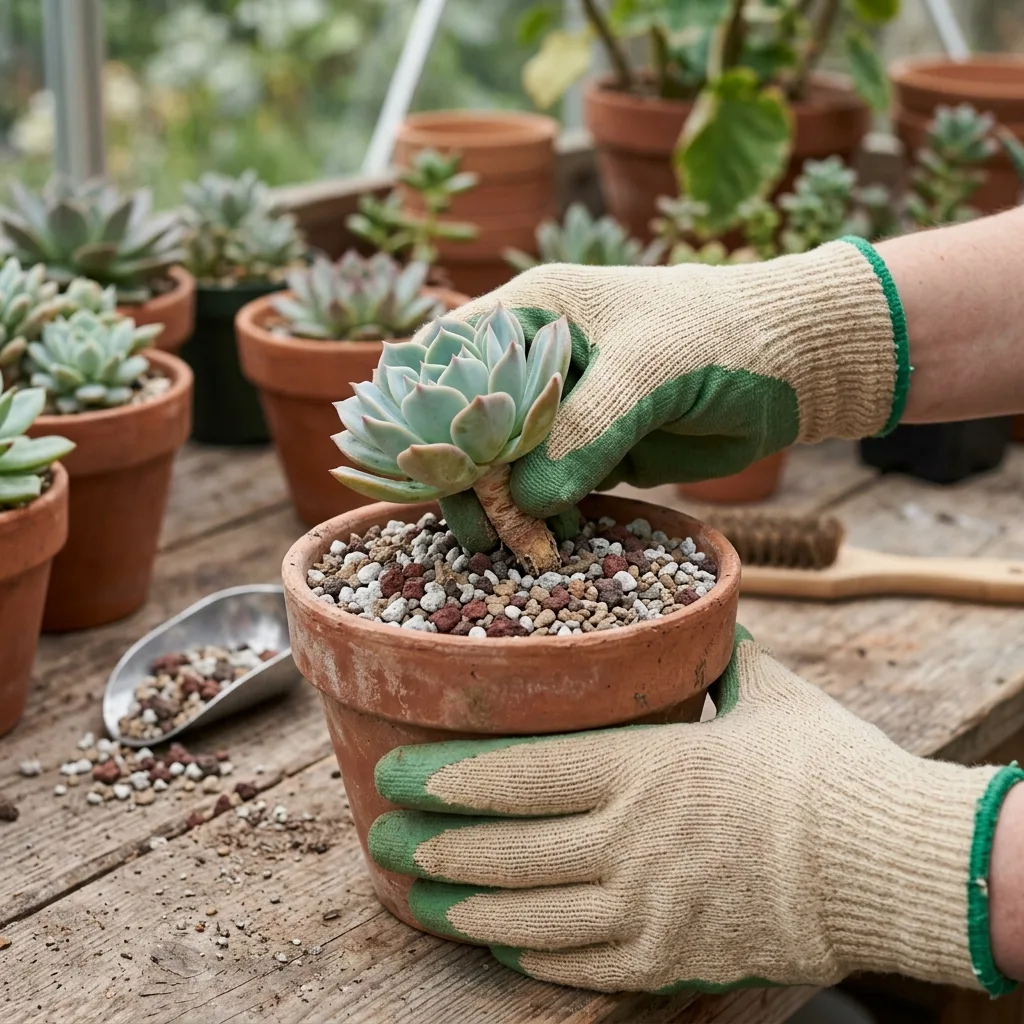
- The Surgical Cut: Identify the clean cut point beneath the primary rosette, ensuring you leave approximately 2 to 3 cm of clear, bare stem beneath the lowest leaves to anchor into the soil later. Execute a single, decisive horizontal cut. If you preserve at least 2 to 4 healthy green leaves along the rooted base left behind in the original pot, that mother stem will rapidly produce fresh clonal offsets.
- Callus Formation: Never place a fresh, wet cutting directly into the soil! Rest the severed rosette in a warm, dry, shaded location with good air circulation for 3 to 7 days. This allows the exposed cellular cut to synthesize suberin and develop a firm, dry, protective white scar tissue known as a callus. Do not rub the silvery, powdery epicuticular wax (farina) coating the leaves during handling; this protective layer is the plant's natural defense against transpiration and UV stress.
- Dry Planting and Rooting Induction: Once the cut surface is thoroughly calloused, rest the base of the stem gently atop the completely dry, mineral-rich potting mix described above. Maintain this dry regime in bright indirect light; within 2 to 4 weeks, vigorous new roots will anchor securely into the substrate.
6. Common Pathogens, Pests, and Therapeutic Solutions
The primary horticultural hazards confronting severed cuttings are soil-borne fungi belonging to the genera Fusarium, Pythium, and Rhizoctonia. Dusting the freshly cut stem with micronized elemental sulfur or pure organic cinnamon powder immediately after slicing creates a natural, effective antifungal shield over exposed vascular tissue. Furthermore, etiolated or physically stressed succulents frequently harbor concealed colonies of citrus mealybugs (Pseudococcidae) deep within the leaf axils. Inspect your plant prior to cutting; wipe away any cottony egg sacs using a cotton swab dipped in 70% isopropyl alcohol and mist thoroughly with cold-pressed neem oil emulsion if needed.
7. Seasonal Maintenance Calendar and Professional Insights
The premier horticultural window for beheading succulents coincides with their active metabolic surge during early spring through early summer (typically March to June in the Northern Hemisphere). During this window of vigorous photoperiod and warmth, cell division rates and endogenous auxin concentrations peak, ensuring swift callus development and prolific root initiation. Avoid elective beheading during mid-winter dormancy, as cold temperatures and brief day lengths stall rooting, greatly heightening rot risks. Winter cuts should be restricted strictly to emergency salvages in the face of progressing black stem rot.


Reader Reviews & Comments 4 Reviews
Eleanor Vance
Julian Thorne
Marcus Sterling
Clara Higgins
Leave a Review & Rating
Share your plant care tips, experiences, or questions with our succulent community.