






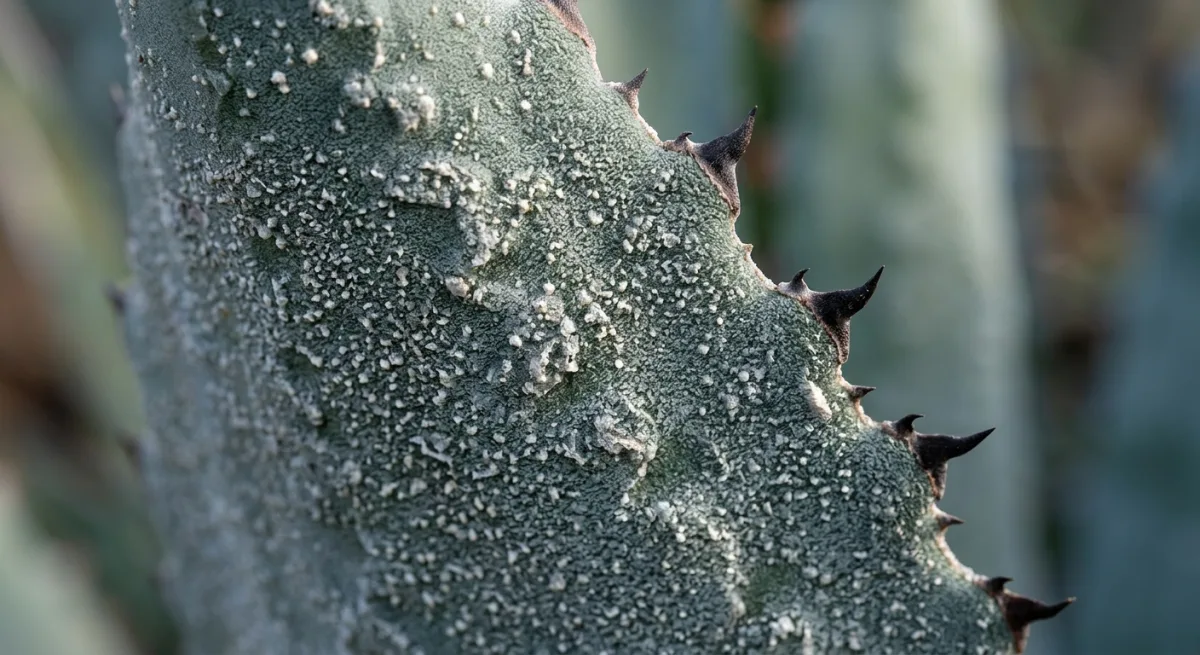
Amid the limestone canyons of the Chihuahuan Desert, braving merciless solar radiation and bone-chilling nocturnal winds, stands a succulent so distinctive that a single touch reveals the sheer defensive genius of nature. Long classified in botanical literature as Agave scabra and widely cherished by succulent collectors as the Rough Century Plant or Sandpaper Agave (Agave asperrima), this species owes its botanical epithet to the dense, microscopic silicate tubercles that coat its leaves, creating a texture remarkably akin to coarse industrial sandpaper. Far from an imperfection, this rough epidermis represents millions of years of evolutionary mastery—a biological armor engineered against desert heat, evaporative water loss, and grazing herbivores.
While many houseplant succulents feature velvety soft or waxy glaucous surfaces, the rough century plant displays an unapologetically rugged, architectural disposition. Its broad, deeply guttered steel-blue to ash-gray leaves, rimmed with curved, dark-chestnut marginal teeth, create a breathtaking sculptural focal point in desert xeriscapes, gravel gardens, or oversized terracotta patio containers. To successfully cultivate this wild desert warrior, one must intimately understand the porous, rocky terrain and drought cycles that govern its native habitat.
In this comprehensive guide, we delve into the morphological anatomy, xylem dynamics, and science-backed cultivation protocols needed to preserve that unmistakable sandpaper leaf texture and sustain this extraordinary specimen for decades without sacrificing vigor.
1. Botanical Profile and Morphological Architecture
Belonging to the subfamily Agavoideae within the Asparagaceae family, Agave asperrima is a medium-to-large, perennial, monocarpic succulent rosette. The specific epithet asperrima is the superlative form of the Latin adjective asper (rough, harsh), translating literally to 'the roughest' or 'most abrasive'—an apt moniker for this textural titan.
- Abrasive Foliar Epidermis: Both adaxial (upper) and abaxial (lower) leaf surfaces are covered in microscopic, raised silicate papillations. These structures scatter and reflect scorching solar radiation while significantly increasing boundary-layer resistance, effectively slashing transpirational water loss.
- Rosette Geometry: Mature solitary rosettes reach 80 to 120 cm (2.5 to 4 ft) in height and spread comfortably across 1.2 to 1.8 meters (4 to 6 ft). The leaves are broad, guttered (concave), and lanceolate, ascending gracefully from a robust basal core.
- Marginal Armature and Terminal Spine: Prominent, reflexed, rust-to-chestnut-brown teeth spaced 1 to 2 cm apart run along the leaf margins. Each leaf terminates in an exceptionally rigid, piercing terminal spine measuring 3 to 5 cm in length.
- Obligate CAM Photosynthesis: Like its arid brethren, it utilizes Crassulacean Acid Metabolism (CAM), hermetically sealing its stomata during daylight hours and taking up atmospheric carbon dioxide exclusively during the cool desert night.
2. Light Requirements and Indoor Positioning
Agave asperrima is an unapologetically photophilic (sun-loving) species with zero tolerance for low light. In its native stomping grounds across southern Texas and northeastern Mexico, it basks in 8 to 10 hours of blazing, unfiltered sunlight every day.
When grown as an indoor potted specimen or housed in a sunroom, place it directly before an unobstructed south- or southwest-facing window receiving full, direct sun throughout the day. Under inadequate light levels, the rosette loses its tight, majestic symmetry; the leaves stretch, narrow, and weaken (etiolation), compromising the structural integrity of the plant. Outdoor specimens flourish under full sun. However, if moving a plant from a nursery greenhouse or indoor setting outdoors, provide a 10-day acclimation period under partial shade to prevent foliar sunburn.
3. Watering Discipline: The 'Soak and Dry' Protocol
The swiftest route to losing a rough century plant is misplaced kindness. Frequent watering does not communicate affection; it deprives the root system of vital oxygen and invites opportunistic anaerobic pathogens. Agave asperrima’s root architecture comprises thick primary anchor roots that forage deep into rocky fissures, paired with fine fibrous feeder roots that rapidly absorb episodic rainfall.
The only scientifically sound approach is the 'Soak and Dry' method:
- Verify that the substrate has dried out completely throughout the container, not just across the top inch. Insert a long wooden skewer or use an accurate digital moisture meter reaching the base of the pot.
- When moisture is entirely absent, saturate the container thoroughly until water flows freely from the bottom drainage holes.
- Discard all run-off collected in the drip saucer within 15 minutes; never allow the base of the pot to sit in stagnant water.
- During active spring and summer growth, watering every 10 to 15 days is typically sufficient depending on ambient heat. In the dormant winter season, reduce indoor hydration to a light drench every 4 to 6 weeks. For outdoor landscape specimens exposed to sub-freezing temperatures, suspend irrigation entirely.
4. Ideal Substrate Chemistry and Container Selection
Agave asperrima cannot survive in dense, peat-laden, moisture-retentive commercial potting soils. In habitat, it anchors in limestone crevices, weathered gravelly slopes, and alkaline alluvial outwashes. Consequently, its potting medium must consist of at least 70% porous, inorganic mineral aggregate.
For container cultivation, unglazed terracotta or breathable stoneware pots are vastly superior to plastic or glazed ceramics. Given the significant weight of its water-filled leaves, select wide-based, stable pots equipped with generous, unobstructed drainage holes to prevent top-heaviness and waterlogging.
| Substrate Component | Volumetric Ratio (%) | Horticultural Function & Root Health Benefits |
|---|---|---|
| Pumice (3-6 mm) | 35% | Provides macroscopic pore space for oxygen exchange; retains zero perched water. |
| Lava Rock / Scoria | 20% | Gradually releases trace minerals and adds essential ballast weight for container stability. |
| Coarse Horticultural Sand / Zeolite | 15% | Keeps internal drainage conduits open and regulates mineral nutrient exchange. |
| Organic Cactus Peat or Aged Pine Bark | 20% | Offers light organic structure and supports slow capillary hydration without compaction. |
| Crushed Limestone or Perlite | 10% | Buffers the root zone to an authentic slightly alkaline/neutral pH (7.0 - 7.8). |
5. Step-by-Step Propagation Methods
Like all agaves, the rough century plant is monocarpic. It spends 15 to 25 years accumulating metabolic energy before sending skyward a majestic, branched paniculate inflorescence 4 to 6 meters (13 to 20 ft) tall. Once its seeds ripen, the mother rosette slowly declines and dies. Nature, however, ensures species survival through vigorous vegetative offsets (pups) produced along subterranean rhizomes.
Rhizomatous Offset Separation
- Optimal Timing: Propagate in mid-spring (April to May), when warming ambient temperatures trigger active root development.
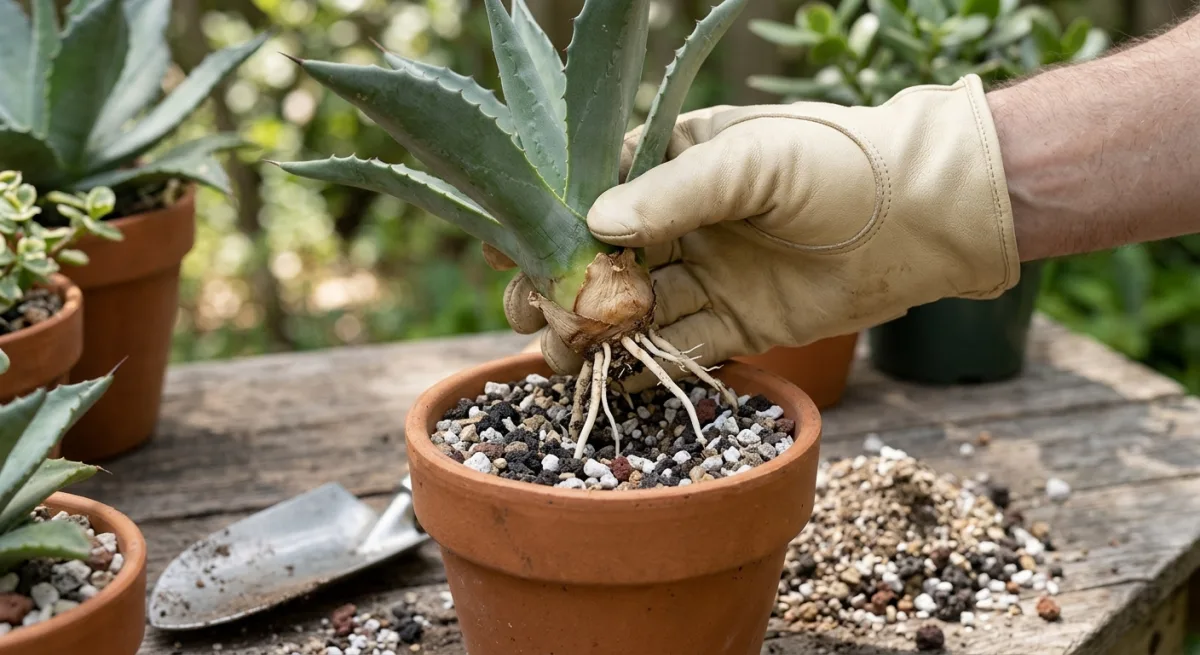
- Exposing the Rhizome: Gently excavate the topsoil around the perimeter of the parent plant to trace the thick horizontal runner connecting the pup to the mother crown.
- Sanitary Severance: Using a sterile, razor-sharp soil knife or heavy-duty pruning shears, sever the connecting rhizome as close to the parent as possible, ensuring the offset retains some of its own independent root fibers.
- Callus Formation: Never plant an offset immediately after cutting! Exposing a fresh, wet vascular wound to moist potting soil almost guarantees fungal infection. Rest the offset in a warm, dry, shaded, well-ventilated spot for 4 to 7 days until a tough, grayish-white callous covers the cut surface.
- Dry Potting and Root Initiation: Pot the calloused pup into the recommended gritty mineral mix. Do not water for the first 7 to 10 days to encourage searching root growth. Following this settling period, provide a gentle soak and relocate the young plant to bright, filtered light.
6. Common Pests, Diseases, and Preventative Measures
Despite its formidable ruggedness, Agave asperrima is vulnerable to two primary threats: saturated, poorly aerated substrates and specialized agave pests.
- Agave Snout Weevil (Scyphophorus acupunctatus): The quintessential nemesis of the Agave genus. Adult snout weevils puncture the basal leaf axils to oviposit eggs, simultaneously introducing destructive microorganisms. The emerging grubs devour the internal vascular crown, causing the rosette to suddenly wobble, emit a foul fermentation odor, and collapse. Protect prized specimens in endemic areas by applying preventive systemic imidacloprid soil drenches in early spring, and treat minor mechanical punctures with powdered elemental sulfur.
- Fungal Crown and Root Rot (Phytophthora & Fusarium): Triggered by excessive moisture paired with cool roots. Lower leaves turn yellow, translucent, and mushy. If caught early, unpot the specimen, excise all necrotic tissue with a sterile blade, dust the wounds with powdered sulfur or systemic fungicide, allow the plant to air-dry bare-root for 7 days, and replant in completely bone-dry mineral aggregate.
- Scale and Mealybugs: These sap-sucking pests congregate deep within the tightly imbricated foliar crevices at the core. Treat targeted outbreaks using a cotton swab dipped in 70% isopropyl alcohol, or drench foliar axils with cold-pressed neem oil emulsified with horticultural potassium soap.
7. Seasonal Maintenance Calendar
Sustaining vigorous, compact growth requires syncing your care routine with the seasonal rhythm of the seasons:
- Spring (Awakening): Gradually ramp up watering frequency as new central leaf spears unfurl. Apply a diluted, low-nitrogen, high-potassium liquid succulent fertilizer every 8 weeks. This is the prime window for repotting and root pruning.
- Summer (Active Growth & Solar Exposure): In extreme midsummer heat (exceeding 38°C / 100°F), plants may enter partial aestivation. Water during the cool evening hours and maintain continuous air movement to prevent heat stagnation.
- Autumn (Hardening Off): Taper irrigation sharply. Permitting leaf cells to slightly dehydrate concentrates cellular solutes, lowering the freezing threshold of the cytoplasm ahead of winter.
- Winter (Dormancy): Agave asperrima tolerates dry, brief sub-freezing temperatures down to -6°C to -8°C (20°F to 18°F) without damage. However, wet roots combined with frost are invariably fatal. Shield outdoor xeriscape specimens from winter rainfall, and winter potted plants indoors in a bright, cool environment (8°C to 14°C / 46°F to 57°F).


Reader Reviews & Comments 3 Reviews
Julian Thorne
Marcus Vance
Eleanor Brooks
Leave a Review & Rating
Share your plant care tips, experiences, or questions with our succulent community.