






Succulents with needle-like foliage and pinecone-esque silhouettes bring the timeless aura of a miniature alpine forest directly into your living room or balcony, captivating collectors as some of the most extraordinary specimens in the botanical realm. 'Can I prune coniferous-style succulents, and when is the right time to cut needle-leaf varieties?' is the very first critical dilemma encountered by plant enthusiasts welcoming these architectural marvels into their collection. Unlike traditional garden conifers, these succulent plants possess specialized cellular water reserves; when pruned correctly, they transform into breathtaking living sculptures, yet an improper cut can trigger severe, irrecoverable tissue loss.
Hailing from the semi-arid, rocky outcrops of South Africa, Crassula tetragona (affectionately known as the Miniature Pine Tree Succulent) marries the venerable elegance of ancient pines with the rugged resilience of fleshy, drought-adapted foliage. Many growers, intimidated by the pointed, needle-like leaves, hesitate to pick up their pruning shears. In truth, conscious pruning executed at the right physiological window forces the main stem to thicken, stimulates extensive ramification, and rewards you with that deeply coveted, lush bonsai silhouette.
Pull up a chair as if we were chatting over a warm cup of coffee at our greenhouse table: today we will unpack the cellular architecture of needle-leaf succulents, step-by-step cutting techniques, precision mineral substrates, and rooting secrets. Sterilize your shears, take a deep breath, and let us unveil the fascinating world of these woody, succulent wonders together.
1. Botanical Identity and Morphological Characteristics
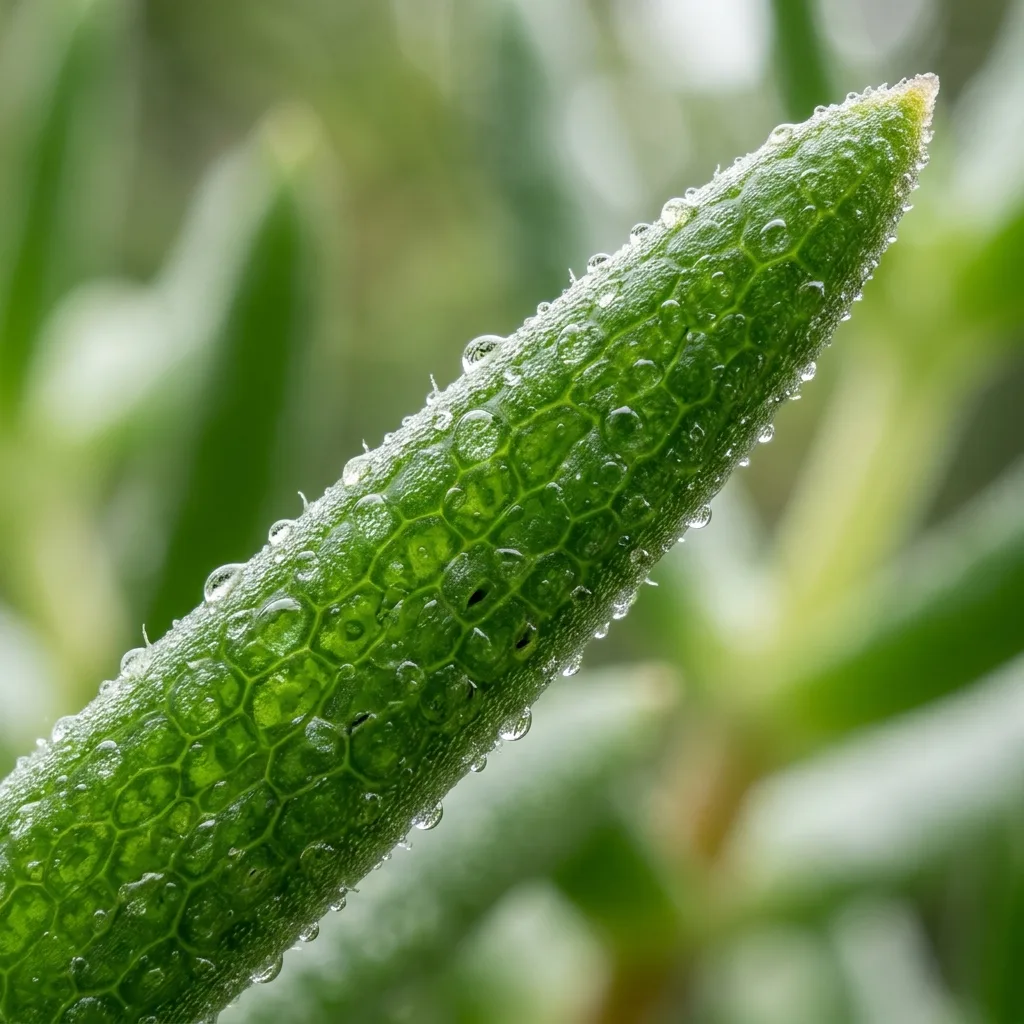
The undisputed crown jewel of needle-foliaged succulents is Crassula tetragona. A distinguished member of the Crassulaceae family, this species is naturally distributed across the arid karroid scrublands of South Africa's Eastern Cape. What appear to be sharp pine needles are not true conifer needles at all; morphologically, they are cylindrical, succulent leaves evolved specifically to minimize transpirational surface area while maximizing internal water storage capacity under blistering sun exposure.
The leaves are arranged along the stems in decussate (crosswise opposite) pairs, creating a distinct four-angled or miniature pinecone geometry when viewed from above (the specific epithet 'tetragona' directly references this four-sided architecture). As the plant matures, it naturally sheds its lowest leaves and develops a tactile, reddish-brown, woody bark via secondary epidermal suberization. This morphological shift lends it the unmistakable appearance of a true dwarf conifer reaching 30 to 100 cm in height. The xylem (vascular wood) tissue within the stems is far more fibrous than that of tender, soft-bodied succulents, granting the plant an exceptionally vigorous regenerative response to mechanical pruning.
2. Light Requirements and Indoor Positioning
Maintaining the tight, architectural pine tree habit in needle-leaf succulents depends entirely on the photon flux density and spectral quality of light they receive. These plants demand at least 5 to 6 hours of bright, direct-to-filtered sunlight every day. In their native rocky habitats, the thick waxy cuticle layer they develop beneath intense solar radiation equips them to thrive under high-intensity light without distress.
When light levels drop below their metabolic threshold, etiolation quickly takes hold. Internodes (the stem spacing between consecutive leaf pairs) stretch excessively, the needle leaves pale to an anemic green, and that sturdy miniature conifer profile degrades into a weak, floppy, scrambling habit. Placing your pot directly before an unobstructed south- or west-facing window is ideal. During the peak of midsummer heat, providing sheer curtain filtration against the magnifying effect of hot window panes helps shield leaf tips from localized photo-oxidative stress and chlorophyll scorching.
3. Watering Discipline: The 'Soak and Dry' Protocol
Never let the conifer-like appearance deceive you into treating these plants like temperate forest shrubs. Remember: watering succulents frequently is not an act of devotion—it deprives the roots of vital oxygen and suffocates them! These plants rely on Crassulacean Acid Metabolism (CAM), keeping their stomata closed throughout the hot day and opening them at night to capture carbon dioxide, an evolutionary masterpiece that drastically cuts water loss.
Your watering protocol must adhere strictly to the 'Soak and Dry' method. Only after confirming that the substrate has dried out thoroughly from the top dressing down to the very drainage holes should you saturate the root ball, pouring water until it flows freely from the base. Always empty any runoff accumulated in the saucer within 15 minutes. During the cold winter rest period (dormancy), decrease your watering frequency to once every 3 to 4 weeks depending on your indoor ambient temperature.
4. Ideal Substrate Formulation and Pot Selection
The root system of needle-leaf succulents will rapidly succumb to anaerobic pathogenic attack if entombed in dense, moisture-retentive, non-aerated soils. Consequently, an inorganic-heavy substrate that guarantees rapid drainage and continuous root gas exchange is non-negotiable.
| Substrate Component | Ratio (%) | Botanical Function |
|---|---|---|
| Horticultural Pumice (3-5 mm) | 40% | Provides sustained root zone aeration and open pore structure |
| Lava Grit (Volcanic Cinder) | 20% | Supplies structural drainage stability and trace minerals |
| Zeolite / Coarse Perlite | 15% | Buffers excess nutrient salts and inhibits anaerobic rot |
| Quality Cactus Peat / Coir | 25% | Provides minimal moisture retention and organic anchoring |
For container selection, unglazed terracotta pots or shallow ceramic bonsai pots equipped with generous drainage holes are the gold standard. Unglazed terracotta features microporous walls that allow surplus moisture to evaporate laterally, serving as a built-in insurance policy against root rot.

5. Step-by-Step Propagation Techniques
Pruning your needle-leaf succulent does not merely rejuvenate the parent plant; it gifts you dozens of viable new specimens! Pruning and propagation are two sides of the same horticultural coin. Here is our step-by-step protocol for foolproof propagation:
- Sterilization: Disinfect your pruning shears or scalpel using 70% isopropyl alcohol. This creates an aseptic barrier against fungal spores and bacterial inoculants at the wound site.
- Identifying the Cut: Select a vigorous, non-flowering stem tip at least 7 to 10 cm in length. Make a clean, precise cut angled at 45 degrees, approximately 2 to 3 millimeters directly above a leaf node.
- Stripping Lower Needles: Gently remove the needle-like leaves along the bottom 2 to 3 cm of the cut stem without tearing the epidermis. This denuded zone will sit beneath the substrate and serve as the launchpad for new adventitious root primordia.
- Callus Formation: Never insert fresh cuttings directly into soil! Rest the cuttings in a dry, well-ventilated, shaded environment for 3 to 5 days so the severed vascular bundles can form a protective suberized callus layer.
- Dry Planting and First Moisture: Insert the callused cutting into the mineral-rich, completely dry substrate described above. Delay the first watering for at least 5 to 7 days post-planting. After 3 to 4 weeks, gently tug the stem; firm resistance confirms that a robust root system has anchored.
6. Common Pathogens, Pests, and Remedial Care
While Crassula tetragona is naturally tough, sub-optimal environmental conditions can trigger physiological stress and pest infestations:
- Stem and Root Rot: Yellowing, translucent, squishy foliage that sloughs off at the touch indicates advanced overwatering. If the lower stem turns blackened or mushy, immediately decapitate the healthy green top well above the rot margin, callus the cutting, and restart the root system.
- Mealybugs (Pseudococcidae): These sap-sucking pests congregate in the tight axils where needle leaves join the stem, appearing as white cottony deposits. Dab them away manually with a cotton swab soaked in 70% isopropyl alcohol. For heavier infestations, apply cold-pressed horticultural neem oil or a systemic insecticide during twilight hours.
- Foliage Drop: The gradual desiccating and shedding of the lowest leaves along the trunk is a completely natural facet of maturation that promotes woody stem development. Conversely, a sudden loss of lush green upper needles points to abrupt temperature plunges, cold drafts, or root shock.
7. Seasonal Maintenance Calendar and Expert Tips
Spring (Awakening & Primary Pruning): March through May is the ideal seasonal window to prune and reshape needle-leaf succulents. As daylight lengthens, cell division surges and apical dominance can be interrupted to trigger auxin redistribution, coaxing multiple latent buds beneath the cut to erupt into bushy, dense branches. A dilute, balanced low-nitrogen succulent fertilizer can be administered now.
Summer (Active Vegetative Growth): Growth continues briskly. On hot balconies with stagnant air, ensure adequate air circulation and provide light shading during peak solar hours. Because the porous mineral substrate evaporates rapidly, monitor root-zone dryness more frequently.
Autumn (Hardening Off): From September through October, taper watering frequency gradually. Cease structural pruning cuts, as cooling ambient temperatures slow wound compartmentalization before winter.
Winter (Rest & Dormancy): Protect your plants from frost (maintain a safe threshold above 5°C / 41°F). Metabolic rates drop drastically in cold weather; irrigate sparingly only when the main stems display faint vertical dehydration wrinkles.



Reader Reviews & Comments 3 Reviews
Eleanor Vance
Julian Thorne
Marcus Sterling
Leave a Review & Rating
Share your plant care tips, experiences, or questions with our succulent community.