






Cradled within the rocky crevices of Peru’s arid Andean valleys where it captures passing morning mists, Peperomia dolabriformis possesses an architectural elegance that captivates houseplant enthusiasts at first glance. Commonly referred to by collectors as the Prayer Peperomia—owing to its upright, folded leaves that resemble hands pressed in devotion—or the Hatchet Peperomia due to its curved, ax-shaped foliage, this species is an evolutionary triumph. In the succulent kingdom, it is a rare marvel for a leaf to function simultaneously as a miniature water reservoir and an optical light lens. Cultivating this captivating perennial brings the ancient botanical wisdom of the high Andes straight to your windowsill.
Many indoor gardeners mistakenly treat this plant as a conventional, moisture-loving tropical foliage specimen, drenching its delicate root system into premature decay. Others mislabel it as a desert cactus, exposing its tender photosynthetic tissues to searing midday sun. In reality, Peperomia dolabriformis is neither a fragile fern nor a sand-dwelling cactus; it is a specialized semi-epiphytic and lithophytic succulent naturally adapted to porous volcanic outcrops. In this master horticultural guide, we unpack the exact physiological mechanics required to maintain plump, vibrant foliage without stem collapse, leaf drop, or collar rot.
1. Botanical Identity and Morphological Characteristics
The genus Peperomia represents a sprawling lineage within the pepper family (Piperaceae), with the vast majority of its species inhabiting humid, shaded tropical rainforest floors. However, Peperomia dolabriformis Kunth evolved in the high-elevation, sub-arid river canyons of northwestern Peru (most notably throughout the Marañón River basin), developing profound xerophytic adaptations to survive severe seasonal drought.
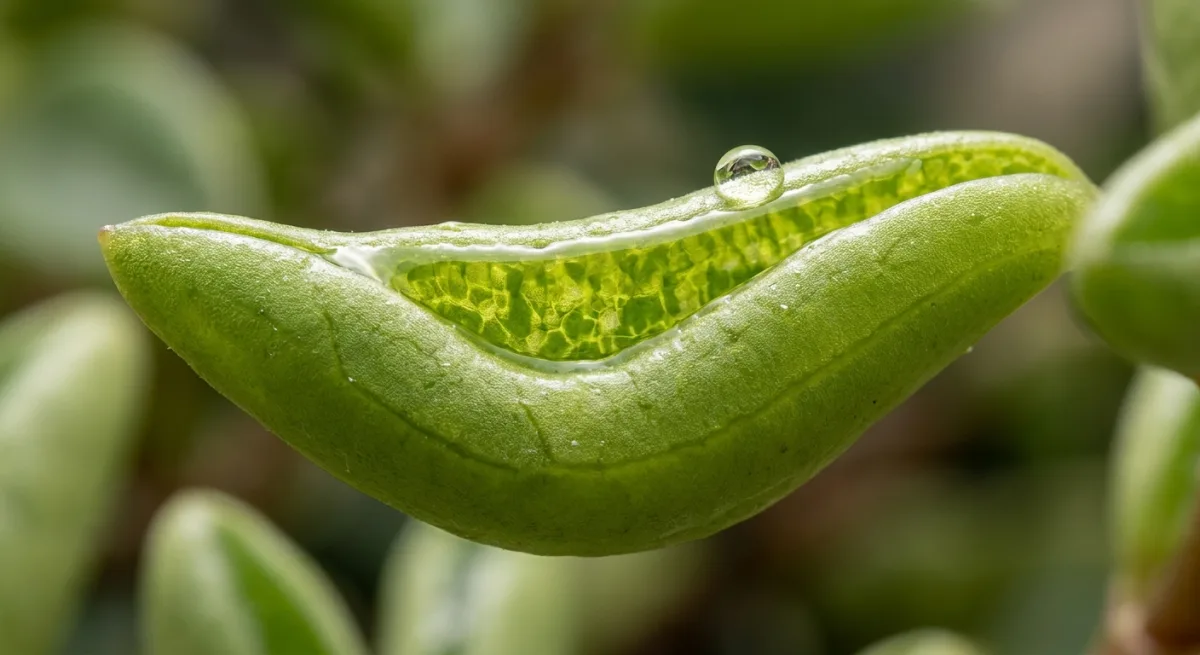
- Dolabriform Foliage Structure: The specific epithet dolabriformis derives from the Latin dolabra, meaning an ax, pickax, or hatchet. The leaves are laterally compressed, succulent, and folded along their longitudinal axis, creating a distinct curved hatchet profile that also resembles fresh green peapods.
- Translucent Epidermal Windows (Fenestration): Along the upper curved ridge of each leaf runs a deep green, gelatinous, semi-transparent strip. This is an advanced 'window leaf' adaptation functionally similar to those seen in Haworthia and Fenestraria. To shield its photosynthetic machinery from the intense, unattenuated Andean solar radiation, the plant has folded its foliage, burying the vulnerable chlorophyll-rich mesophyll deep within the interior. Ambient light enters through this clear apical window, where specialized internal structures filter and diffuse it safely into the core cells.
- Sub-Woody, Caulescent Habit: As the plant matures, its tender green central stems gradually suberize from the base upward, taking on a warm brown, semi-woody bark. In home cultivation, it retains a tidy, dwarf shrub or natural bonsai aesthetic, generally maxing out between 20 to 35 cm (8 to 14 inches) in height.
- Facultative CAM Physiology: Under moderate drought stress, the species engages Crassulacean Acid Metabolism (CAM), tightly sealing its stomata during hot daylight hours to prevent transpirational moisture loss while opening them at night to assimilate carbon dioxide.
2. Light Requirements and Indoor Positioning
The vitality and structural compactness of your Prayer Peperomia hinge on radiant light quality. In its native habitat, it establishes in the bright, ambient glare of canyon walls, protected from direct midday scorch by rocky fissures.
Indoors, the premier placement is a windowsill with an unobstructed eastern or western exposure, or set a couple of feet back from an unfiltered southern window behind a sheer curtain. Soft, direct morning sunlight activates photosynthesis and maintains tight internodes. However, relentless summer afternoon sun (especially between 11:00 AM and 4:00 PM) will cause severe thermal injury, resulting in permanent brown necrotic scars and pale, bleached chlorophyll across the sensitive leaf windows.
3. Watering Discipline: The 'Soak and Dry' Protocol
The single most destructive practice when managing Peperomia dolabriformis is adhering to a rigid calendar schedule (e.g., watering routinely every Monday). Succulents do not respond to days of the week; they respond to soil moisture depletion and cellular turgor dynamics. Frequent light sips do not nourish the plant; they suffocate the fine root hairs and cultivate fungal pathogens.
The gold standard for this species is the rigorous 'Soak and Dry' protocol. Before introducing water, insert a wooden moisture probe or your finger deep into the bottom third of the container. Only when the substrate is 100% dry and the pot feels remarkably lightweight should you irrigate.
- Signs of True Thirst: When the plant depletes its internal water reserves, the plump hatchet leaves soften noticeably, losing their rigid turgor. The clear top window ridge will slightly indent or collapse inward. This tactile softening is your safest cue to water.
- Signs of Overwatering: Adding moisture to already damp soil causes excessive hydrostatic cellular pressure (edema). The lower foliage turns pale yellow, takes on a waterlogged, translucent, jelly-like texture, and drops off at the slightest touch. This is an urgent warning of active root rot.
When watering, direct the stream around the perimeter of the root zone, never into the central crown or leaf axils where trapped moisture invites fungal rots. Saturate thoroughly until water flows freely from the drainage holes. Empty any standing water from the saucer within 10 to 15 minutes; never leave the container sitting in stagnant moisture.
4. Ideal Substrate Mix and Pot Selection
The root system of Peperomia dolabriformis consists of remarkably fine, fibrous, hair-like rootlets that lack the aggressive drilling power of taproots. Dense, peat-heavy, or moisture-retentive commercial potting soils form an anaerobic, oxygen-depleted slurry around these roots, triggering rapid xylem collapse. The potting medium must prioritize macroporosity, instant drainage, and rapid gas exchange.
| Substrate Component | Ratio (%) | Horticultural Function and Root Zone Benefit |
|---|---|---|
| Coarse Horticultural Pumice (3–5 mm) | 35% | Delivers superior aeration, resists soil compaction, and keeps the root zone oxygenated. |
| Crushed Red Scoria (Lava Rock) | 25% | Provides an angular, porous mineral matrix that speeds drainage and anchors fine rootlets. |
| Natural Zeolite (Clinoptilolite) | 15% | Features high cation-exchange capacity (CEC) to buffer nutrients while inhibiting fungal pathogens. |
| Sterile Coconut Coir (Coco Peat) | 15% | Provides a clean, sustainable, slightly acidic organic base that retains gentle baseline moisture without clumping. |
| Coarse Horticultural Perlite or Grit | 10% | Enhances capillary drying uniformity throughout the core of the root ball. |
Pot Selection: Always prioritize unglazed, breathable terracotta containers. The porous earthenware walls allow moisture to evaporate laterally through the clay, accelerating substrate drying and lowering root pathogen risks by up to 70%. Ensure the pot has generous drainage apertures. Avoid planting into oversized vessels; any excess volume of soil that the root system cannot immediately colonize stays saturated too long, drastically increasing the likelihood of root decline.
5. Step-by-Step Propagation Techniques
Cultivating new specimens of the Prayer Peperomia is straightforward, delivering high success rates when conducted during the active physiological surge of mid-spring through early summer.
Method A: Stem Tip Cuttings (Recommended)
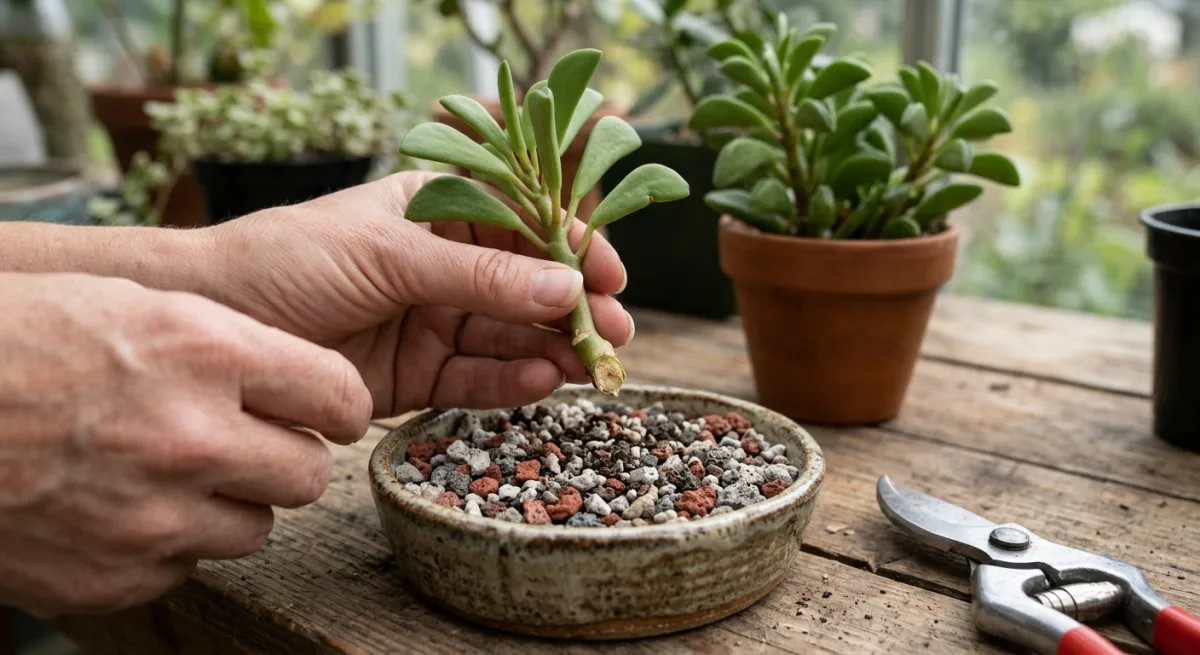
- Select a Vigorous Shoot: Choose a healthy, compact stem tip measuring 7 to 10 cm (3 to 4 inches) in length that exhibits at least 3 to 4 active leaf nodes.
- Execute a Clean Cut: Using a razor or pruning shears sterilized with 70% isopropyl alcohol, sever the stem cleanly just below a node.
- Strip Lower Nodes: Carefully peel away the leaves from the bottom 2 to 3 cm of the cutting to expose clean nodal tissue where adventitious root primordia will develop.
- Allow Callus Formation: Never insert freshly cut succulent stems directly into damp potting mix. Place the cutting in a dry, warm, shaded location with good air circulation for 2 to 4 days until the wound dries into a tough, pale callus. This protective barrier blocks opportunistic fungal entry.
- Potting and Rooting: Insert the callused cutting 2 cm deep into a dry, pumice-rich rooting mix. Withhold water entirely for the first 5 to 7 days. Afterward, mist the soil surface lightly every few days to encourage root searching. Robust root systems will anchor within 3 to 4 weeks.
Method B: Individual Leaf Propagation
While mature, fully turgid leaves carefully detached with their petiole intact can produce roots, generating a brand-new vegetative crown from a single leaf is a slow process that often takes 2 to 4 months. Lay the callused leaf flat on slightly moistened mineral grit in a warm, bright room, keeping the petiole base in gentle contact with the medium.
6. Common Pests, Diseases, and Troubleshooting
While naturally robust against most indoor issues, environmental stress can expose your plant to specific pests and physiological imbalances:
- Mealybugs (Pseudococcidae): These sap-sucking pests lodge themselves into the tight crevices where the folded leaves clasp the stem, concealing themselves beneath white, cottony wax secretions. They siphon essential sap, leading to distorted growth and leaf loss. Remedy: Dab them directly with a cotton swab soaked in 70% isopropyl alcohol. For extensive infestations, spray the entire plant with an organic cold-pressed neem oil or horticultural insecticidal soap solution.
- Basal Stem and Collar Rot: Arising from poorly drained media or excess watering, the stem base near the soil line turns translucent, softens to a dark mush, and gives off an earthy sour odor. Emergency Triage: Unpot the plant immediately, amputate all compromised tissue back to clean, firm green vascular bundles, allow the surviving upper stem to callus for several days, and re-root it as a fresh cutting.
- Sudden Leaf Drop: If your Peperomia abruptly sheds completely green, pristine leaves without prior discoloration, the cause is rarely watering. It is almost always a reaction to cold drafts (exposure to air conditioners, drafty winter windows) or sudden ambient drops below 12°C (54°F). Relocate the plant to a consistently warm, sheltered location.
7. Seasonal Care Calendar and Expert Insights
Aligning your cultural practices with the plant’s biological rhythm ensures long-term vitality:
- Spring (Active Vegetative Surge): Growth accelerates markedly by March. Water thoroughly whenever the substrate completely dries out. Apply a balanced liquid succulent fertilizer diluted to half-strength once a month. This is the optimal window for repotting and pruning.
- Summer (Photosynthesis & Heat Management): When indoor temperatures climb above 32°C (90°F), the plant enters a protective semi-dormant state. Cease fertilization, shield the plant from harsh afternoon sunlight, and ensure robust room ventilation to prevent stagnant heat build-up.
- Autumn (Acclimation Phase): As daylight hours wane and room temperatures cool, extend intervals between waterings. Relocate the plant closer to the window glass to capture lower-intensity seasonal light.
- Winter (Dormancy and Rest): Maintain ambient room temperatures between 15°C and 20°C (59°F to 68°F), keeping the pot away from dry radiator drafts. Scale watering down to a minimum; apply water only when the foliage shows subtle wrinkling (typically once every 3 to 4 weeks). Never fertilize during the winter dormancy period.


Reader Reviews & Comments 3 Reviews
Claire Montgomery
Eleanor Vance
Marcus Sterling
Leave a Review & Rating
Share your plant care tips, experiences, or questions with our succulent community.