






When establishing majestic Agave specimens, vibrant rosettes of Sempervivum, or sprawling carpets of ground-covering stonecrops in your rock gardens and Mediterranean-style open beds, nature's most unrelenting competitors inevitably join the fray: invasive weeds. These deep-rooted intruders do not merely compromise garden aesthetics; they fiercely siphon off precious cellular moisture and vital nutrients stored deep within succulent parenchymal tissues. While implementing a 'plastic sheet barrier against weeds' is one of the most widespread horticultural strategies, it remains a double-edged sword: executed properly, it is a garden lifesaver, but when applied haphazardly, it creates a fatal, stagnant moisture trap for shallow-rooted xerophytes.
Succulents native to arid steppes and desert badlands demand high gas permeability and instantaneous drainage within their rhizosphere. While traditional non-porous black polyethylene sheeting swiftly starves weed seeds of photosynthetic light, it concurrently prevents the underlying soil from breathing, sparking catastrophic outbreaks of opportunistic fungal pathogens—most notably Fusarium and Phytophthora—across root xylems. In this comprehensive guide, we bridge rigorous botanical science with practical outdoor care to help you leverage weed barrier fabrics safely and safeguard your prized succulent collection.
1. Botanical Identity and Morphological Characteristics
When engineering outdoor succulent beds paired with weed suppression fabrics, the most reliable and commonly cultivated taxa include cold-hardy Sempervivum (Hens and Chicks), drought-tolerant Delosperma (Ice Plants), winter-hardy Opuntia (Prickly Pear cacti), and trailing xerophytic Sedum cultivars. Morphologically, these species deploy horizontal feeder roots concentrated within the upper 5 to 15 centimeters of the topsoil. Their thick, waxy protective cuticles and specialized water-storing parenchyma tissue grant them exceptional resilience against prolonged drought, yet render them critically vulnerable to subterranean saturation and hypoxic soil conditions.
Conversely, aggressive weed species such as Cynodon dactylon (Bermudagrass) or Portulaca oleracea (Common Purslane) develop vigorous rhizomatous roots and prolific seed-dispersal mechanisms that easily overwhelm the deliberate, steady metabolism of Crassulacean Acid Metabolism (CAM) succulents. Deploying an opaque physical barrier fundamentally halts germination by blocking the red-spectrum solar wavelengths required to awaken dormant weed seed reserves.
2. Light Requirements and Outdoor Bed Siting
Outdoor landscape succulents thrive under at least 6 to 8 hours of unfiltered direct sunlight daily. Intense solar radiation triggers the synthesis and crystallization of epicuticular wax (commonly known as farina) across foliage surfaces, endowing your rosettes with breathtaking silvery-blue, powder-coated, and violet-magenta colorations. When utilizing a ground weed barrier, top-dressing the fabric with light-colored dolomite chips or crushed river gravel reflects ambient light upward onto the lower tiers of the rosettes, encouraging uniform pigmentation and preventing lower foliage senescence.
If you are applying this installation technique to elevated patio displays, rooftop beds, or raised garden planters, favor southern or south-western exposures. Dark, unshaded plastic can drive subterranean temperatures beyond 45°C (113°F) at peak summer heat. By capping the fabric with pale basalt, light volcanic tuff, or pea gravel, you insulate the delicate root system against extreme thermal stress.
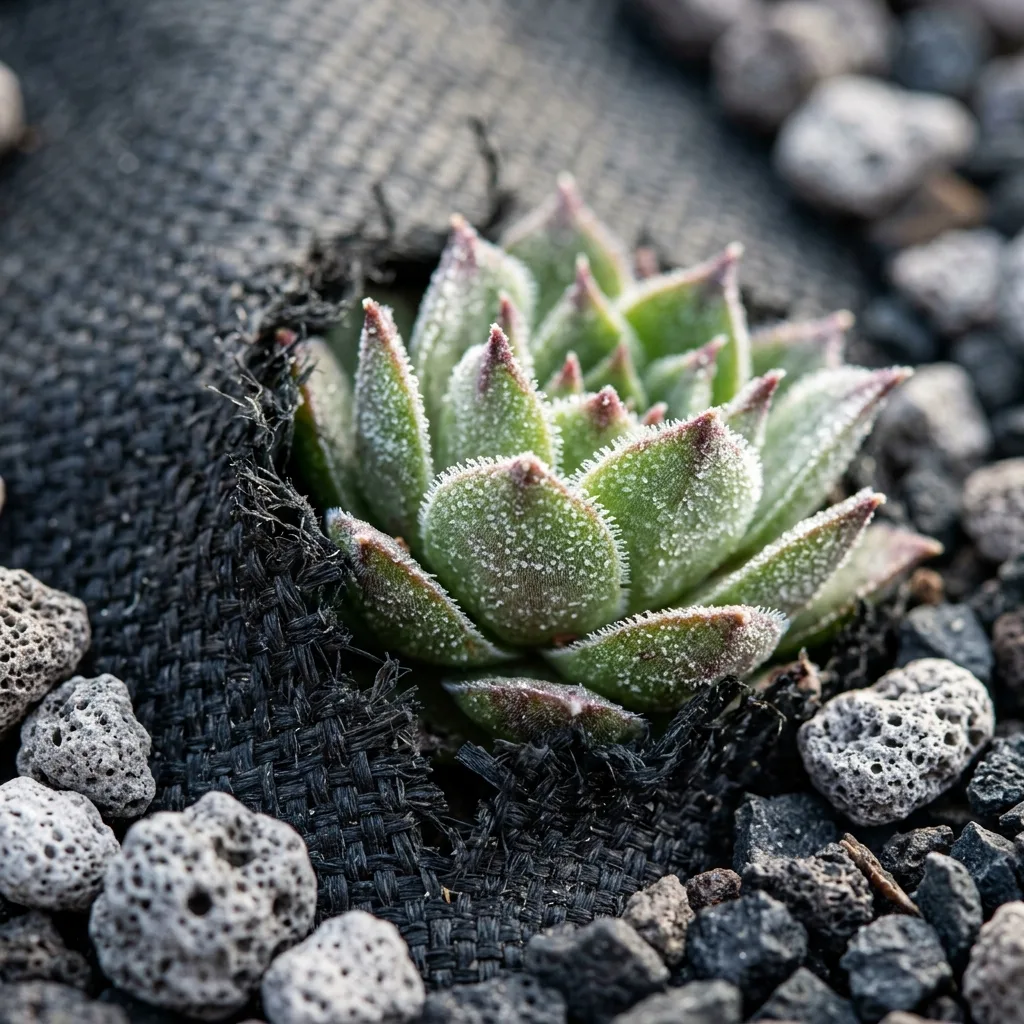
3. Watering Discipline: The 'Soak and Dry' Protocol
Soil situated beneath synthetic landscape barriers retains moisture substantially longer than uncovered, open ground. As a result, arbitrary calendar-based watering routines ('once a week' regimens) must be strictly abandoned. The natural 'soak and dry' cycle essential to desert flora can only be effectively managed when low-volume drip irrigation tubing is installed beneath the fabric, or by cutting sufficiently wide collar apertures around each plant stem.
Before introducing water, always check the soil underneath the fabric with a moisture probe or by lifting an edge to feel the earth; never initiate a hydration cycle until the root zone has thoroughly dried out. During the winter dormancy phase (November through February), if outdoor beds endure seasonal rainfall, verify that all drainage channels across the fabric remain clear and that moisture never pools stagnantly against succulent crowns.
4. Ideal Soil Substrate and Container Adaptations
Any soil blend placed beneath a woven weed barrier must feature a significantly higher ratio of coarse inorganic aggregate compared to conventional garden dirt. Because landscape fabrics slow down overall evaporation rates, maximizing structural drainage is paramount. When constructing raised rockeries or modified garden beds, formulate your base substrate with at least 60% porous mineral components.
| Substrate Component | Recommended Proportion (%) | Botanical Function & Horticultural Benefit |
|---|---|---|
| Pumice Stone (3-6 mm) | 35% | Delivers superior air porosity, ensuring the root rhizosphere breathes continuously. |
| Lava Rock / Zeolite | 25% | Suppresses root-rotting fungal pathogens while gradually releasing micronutrients. |
| Washed Coarse River Sand | 15% | Accelerates percolation beneath the fabric, directing excess moisture down into sub-layers. |
| Sterile Cacti / Garden Loam | 25% | Provides essential organic anchorage; must be entirely sterilized and free of weed seeds. |
If you cultivate your outdoor succulents in broad bowl planters, troughs, or stone pedestals, never line the bottom of the container with solid plastic sheeting. For container gardening, suppress weed seeds exclusively by applying a clean, 1-to-2-centimeter top-dressing layer of volcanic cinder or crushed pumice over the exposed potting mix.
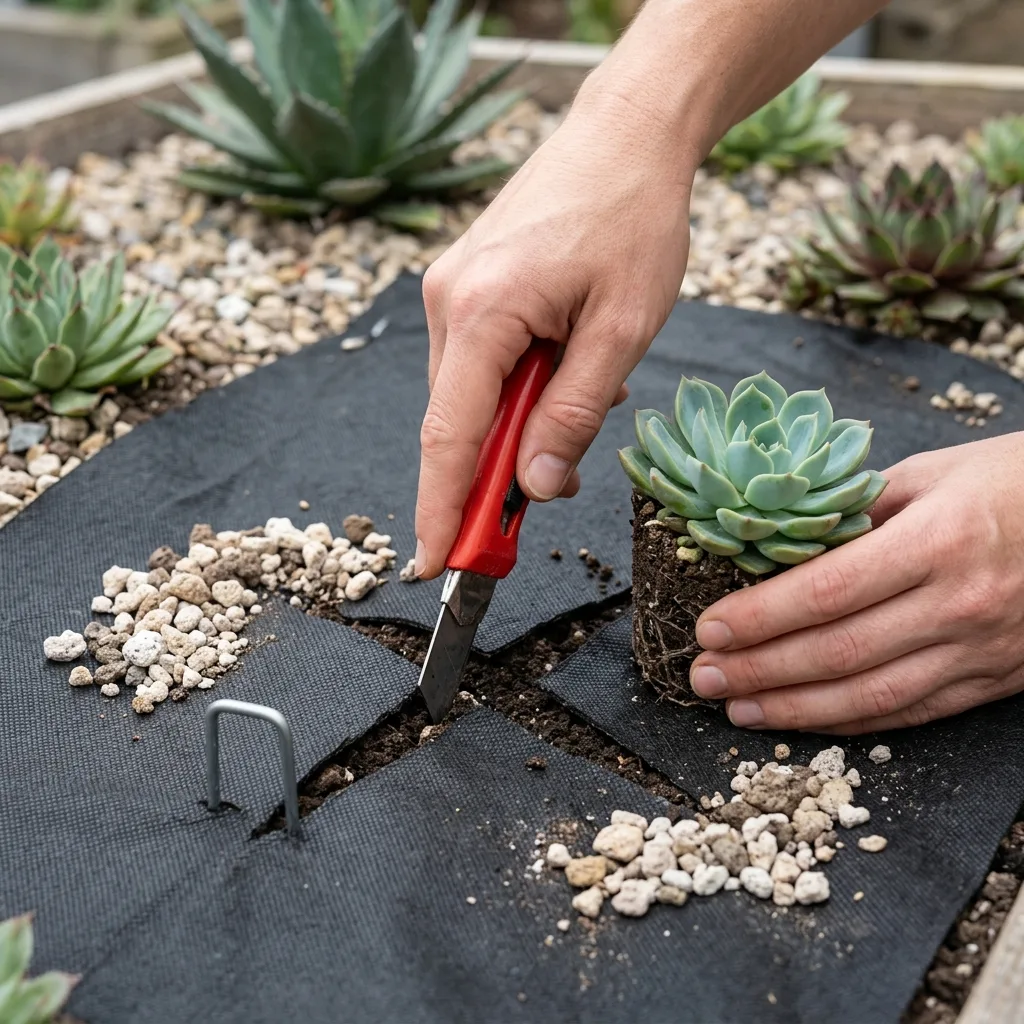
5. Step-by-Step Propagation and Planting with Weed Barriers
Follow this methodical, botanically tested procedure when preparing beds and installing succulents through landscape weed barriers:
- Soil Pre-Conditioning & Solarization (Optional): Four weeks prior to planting, thoroughly drench the cleared native soil and cover it tightly with clear greenhouse plastic in full summer sun. This solarization phase effectively incinerates dormant weed seeds and soil-borne fungal pathogens.
- Laying the Woven Fabric: Remove the clear plastic. Spread your permeable, mineral-rich succulent substrate evenly, then tightly stretch high-grade woven black polypropylene landscape fabric over the bed. Anchor it firmly into the earth using heavy-duty steel U-shaped ground staples.
- Slicing 'X' Slits: Identify your planting stations and, using a sharp utility knife, slice 10-to-15 cm wide 'X' incisions into the fabric. Gently fold the resulting triangular fabric flaps back to expose the soil below.
- Planting & Collar Clearance: Excavate a small pocket, carefully settle the succulent's clean root system, and backfill the substrate up to natural crown height. Ensure the edges of the cut fabric do not rub directly against fleshy succulent stems, as abrasive friction can cause mechanical lesions that invite stem rot.
- Adding Inorganic Stone Mulch: Blanketed over the entire fabric layer with a 3-to-4 cm thick layer of decorative pumice, pea pebbles, or decomposed granite chips. This critical layer shields the synthetic polymers from UV degradation and prevents windblown weed seeds from establishing in the fabric's micro-crevices.
6. Common Diseases, Pests, and Treatments
When atmospheric ventilation beneath garden fabrics is inadequate, the most prevalent threats are subterranean mealybugs (Pseudococcidae) and root-knot nematodes. The secluded, protected microclimate under the fabric can inadvertently provide an idyllic sanctuary for ant colonies, which frequently herd and protect mealybugs on succulent root zones.
Should you observe basal leaves turning translucent, taking on a jelly-like yellow appearance, or encountering blackened, squishy stem tissues, you are confronting acute root rot (often induced by water molds like Pythium). Intervene immediately: lift the succulent from the bed, excise all diseased root tissue using a sterilized scalpel, dust the clean cuts with powdered sulfur or activated charcoal, allow the wound to callus in dry shade for 3 days, and re-establish the specimen in a drier, highly mineralized planting zone.
7. Seasonal Maintenance Calendar and Expert Insights
In spring (March through May), as outdoor succulents break winter dormancy, opportunistic weed seeds attempt a parallel emergence. Immediately hand-pull any rogue weeds that manage to germinate along slit seams or within the stone top-dressing before their taproots anchor into the fabric. Introduce a diluted, low-nitrogen succulent fertilizer via the sub-fabric drip line at the onset of active vegetative growth.
During high summer (June through August), keep a close eye on subterranean temperatures beneath the fabric. If the soil surface feels excessively hot to the touch, augment the thickness of your stone mulch layer to enhance thermal buffering. In autumn (September through October), regularly blow or sweep fallen tree leaves off the bed; decomposing leaf litter traps excess surface moisture and creates a breeding ground for foliar blight. When winter arrives (November through February), protect frost-sensitive selections with breathable horticultural frost blankets (fleece) while ensuring underlying drainage outlets remain completely unobstructed.


Reader Reviews & Comments 4 Reviews
Eleanor Vance
Marcus Sterling
Clara Higgins
Julian Thorne
Leave a Review & Rating
Share your plant care tips, experiences, or questions with our succulent community.