



Succulent Varieties

How to Cut and Behead Leggy Succulents: Pruning, Stem Cuttings, and Rejuvenation Guide

When insufficient light or natural aging causes your succulents to stretch, become leggy, and lose their compact rosette form, beheading them provides a vibrant second life. Learn proper tool sterilization, stem cutting methods, callous formation, and rooting techniques based on proven botanical principles.

Rıfat Özkan
Rıfat Özkan Fact-Checked This guide has been reviewed and verified according to scientific botanical literature and succulent research standards. ⚠️ Toxic to Pets This plant contains toxic sap/compounds. Keep out of reach of cats and dogs. Kedi ve köpeklerde mide bulantısı ve halsizlik yaratır
Plant Care Specialist
18 Nov 2026 • 8 min read
Share: Pinterest
📌

Key Takeaways & Quick Summary

Key Takeaways
  • 🌿 When insufficient light or natural aging causes your succulents to stretch, become leggy, and lose their compact rosette form, beheading them provides a vibrant second life.
  • 💡 Learn proper tool sterilization, stem cutting methods, callous formation, and rooting techniques based on proven botanical principles.
  • 🌱 100% field-tested for beginners, hobbyists, and plant collectors alike.
Save How to Cut and Behead Leggy Succulents: Pruning, Stem Cuttings, and Rejuvenation Guide
How to Cut and Behead Leggy Succulents: Pruning, Stem Cuttings, and Rejuvenation Guide
Advertisement

Have you noticed that tight, compact rosette succulent on your windowsill stretching out like a giraffe's neck over time, leaving wide, awkward gaps between its leaves? This common phenomenon encountered by succulent enthusiasts is known botanically as 'etiolation'—a desperate search for light. Accustomed to the relentless, unfiltered sunshine of Mexican canyons or rocky South African crags, these fleshy perennials expend all their cellular energy elongating their central stems when grown in dim indoor environments. Take a deep breath: cutting your succulent isn't destroying it. Instead, it is the beginning of a fascinating regenerative cycle that can yield dozens of thriving new plants from a single parent.

Taking a blade to your beloved plant's succulent tissue can feel intimidating at first. The anxiety of 'What if I kill it?' is a universal milestone for every plant parent. Fortunately, members of the Crassulaceae family possess an extraordinary capacity for cellular regeneration, capable of initiating adventitious root systems and lateral shoots rapidly from severed meristematic tissues. Cutting your succulent at the right spot—a technique often affectionately called 'beheading' or taking a terminal stem cutting—not only allows you to re-root the top rosette into a pristine specimen, but it also transforms the remaining bare stump into an active nursery producing clusters of baby offsets.

Advertisement

1. Botanical Identity and Morphological Traits

The remarkable resilience of succulents during pruning and surgical beheading lies within their stem anatomy. Genera such as Echeveria, Graptopetalum, Sedum, and Pachyphytum feature leaf node points (nodes) positioned strategically along their stems. Dormant meristematic cells reside at every single node. As long as the primary growth tip (the apical meristem) remains intact, it synthesizes the hormone auxin, which enforces apical dominance and prevents lateral dormant buds below from sprouting.

The moment you make a clean cut and sever the apical meristem, you break this hormonal repression. Cytokinins synthesized in the root system travel upward, stimulating the dormant axillary buds beneath the remaining nodes to burst into miniature, multi-headed offsets. Meanwhile, the excised top rosette is equipped with abundant parenchyma water-storage tissue, giving it sufficient metabolic reserves to generate adventitious root primordia from scratch without wilting away.

Expert Horticulturist Tip: Water your succulent thoroughly 2 to 3 days before you plan to cut it. Hydrated cells with maximum turgor pressure allow the cutting to remain plump, firm, and resilient throughout the critical 2-to-3-week dry callousing and rooting phase without excessive shriveling.

2. Light Requirements and Indoor Positioning

Inadequate light exposure is the primary culprit behind the structural stretching that necessitates beheading. Deprived of photon energy necessary for photosynthetic saturation, the plant elongates its internodes (the stem space between leaves) to reposition its chloroplasts over a wider surface area. Following the cut, optimizing light exposure for both the severed head and the rooted base is essential for successful rehabilitation.

Because the severed rosette cutting lacks a functional root system, it must not be subjected to intense, scorching direct midday sun; doing so will cause rapid cellular moisture loss and tissue scorch. Instead, place it in bright, indirect or sheer-curtain-filtered daylight (roughly 2,500 to 4,000 lux), which provides the metabolic stimulus for rooting without heat stress. In contrast, the remaining rooted stump—from which you want new offsets to burst—thrives under 5 to 6 hours of bright, filtered morning sunlight daily to wake up those dormant axillary buds.
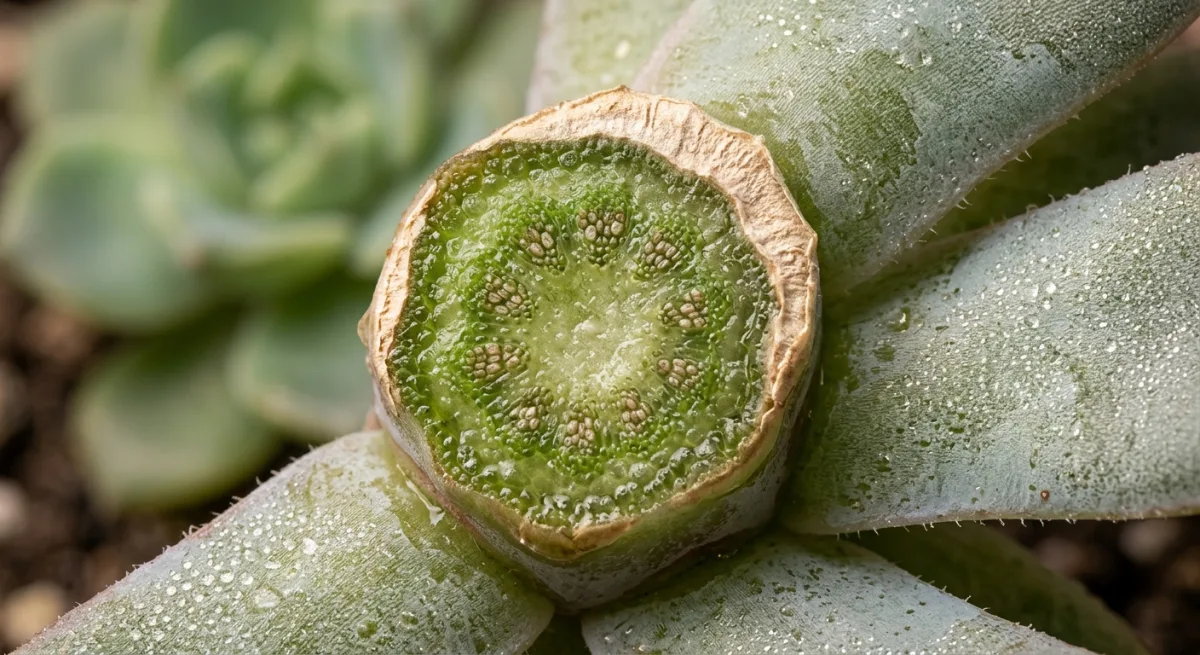
How to Cut and Behead Leggy Succulents: Pruning, Stem Cuttings, and Rejuvenation Guide - Botanical Detail and Leaf Morphology
🔍 Botanical Detail: Characteristic leaf form, surface texture, and morphological features.
Advertisement

3. Watering Discipline: The 'Soak and Dry' Protocol

Frequent, shallow watering is not an expression of care; it starves roots of oxygen and suffocates them. When handling beheaded succulents, your watering regimen splits into two distinct protocols:

  • The Rooted Parent Stump: The bottom stem already possesses an established root architecture, but with fewer leaves remaining, its rate of transpiration drops substantially. Extend your normal watering intervals and only apply water sparingly after the entire substrate has dried completely through to the bottom.
  • The Severed Terminal Rosette: A cutting without roots cannot uptake water from the potting mix. Potting an unrooted cutting into wet soil or pouring water over it is an open invitation for bacterial rot and opportunistic water molds. NEVER water a cutting until a firm callous has formed and the first pink or white adventitious root hairs visibly emerge. Once rooted in soil, transition gradually to the traditional soak-and-dry method.
Critical Warning: Exposing the fresh, uncalloused wound of a succulent cutting to damp potting media or sitting water invites devastating fungal pathogens such as Fusarium and Pythium (black stem rot). Always keep open wounds dry!

4. Substrate Optimization and Container Dynamics

Whether you are establishing fresh roots or repotting recovered plants, a gritty, highly porous, inorganic-dominant substrate is non-negotiable. Dense peat moss or heavy garden loam holds water like a sponge, quickly suffocating and decaying delicate new root tips.

Substrate ComponentRatio (%)Horticultural Function & Benefits
Horticultural Pumice (3–5 mm)40%Promotes macro-porosity, oxygenation, and prevents compaction
Crushed Lava Rock / Zeolite25%Enhances root anchoring and provides trace mineral balance
Coarse Horticultural Sand / Perlite15%Accelerates gravitational water drainage channels
High-Grade Succulent Peat / Worm Castings20%Provides mild organic nutrition and baseline moisture buffer

When selecting containers, always opt for breathable terracotta pots featuring generous drainage holes. The porous clay walls facilitate bilateral moisture evaporation, lowering the risk of water retention and boosting oxygen circulation directly around the root zone.
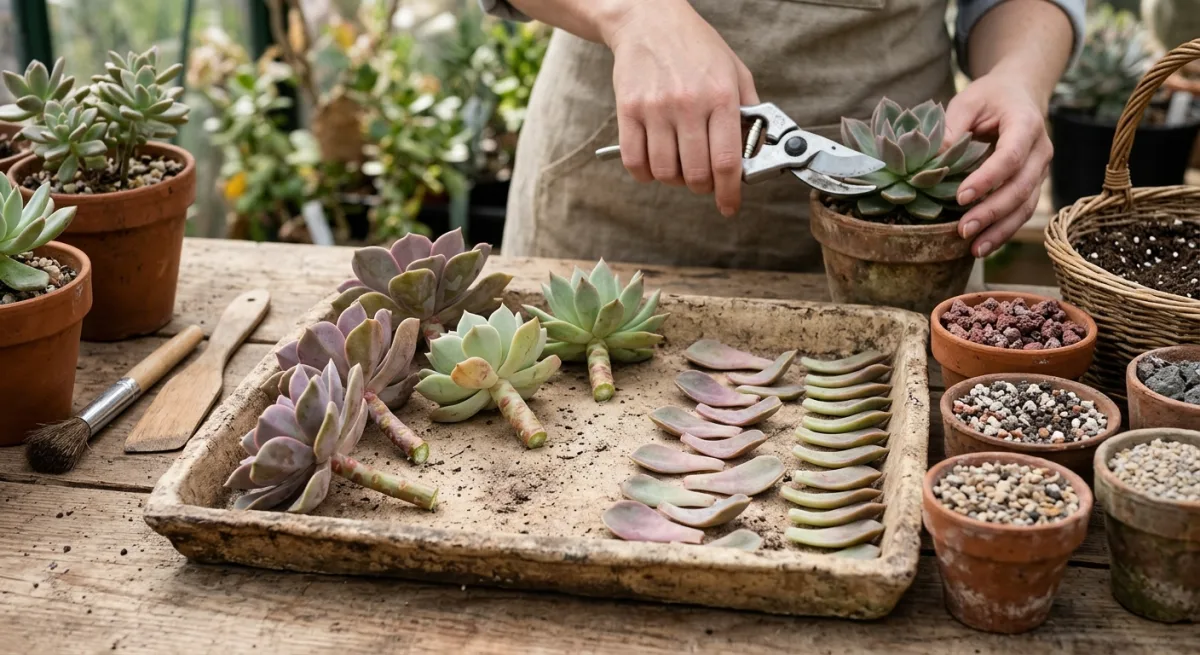
How to Cut and Behead Leggy Succulents: Pruning, Stem Cuttings, and Rejuvenation Guide - Care and Propagation Step
🌱 Care in Action: Healthy root development, repotting, and propagation steps.
Advertisement

5. Step-by-Step Propagation and Beheading Techniques

Execute this surgical botanical intervention with professional confidence by following these steps carefully:

  1. Sterilize Your Tools: Disinfect a sharp craft knife, scalpel, or bypass pruners using 70% isopropyl alcohol or a quick flame pass. Dull blades crush xylem and phloem vascular bundles rather than slicing cleanly.
  2. Determine the Cut Site: Select a point along the elongated stem that leaves approximately 1 to 1.5 inches (2.5–3 cm) of bare stem below the compact rosette. Ideal positioning is 1 to 2 leaf nodes below the dense foliage.
  3. Make a Decisive, Clean Cut: Slice through the stem in one smooth, horizontal motion without sawing or crushing the fragile tissue.
  4. Strip the Lower Leaves: Gently wiggle and twist off the lowest 2 to 3 leaves from the severed cutting to expose a clean length of stem. Set these healthy leaves aside for leaf propagation. You want roughly 1 inch of bare stem to anchor into your substrate later.
  5. Allow Callous Tissue to Form: Do not plant the fresh cutting immediately. Place it in a dry, shaded, well-ventilated area for 4 to 7 days. The wet wound will desiccate, developing a firm, protective, greyish-white cellular shield known as a callous.
  6. Potting and Root Induction: Set the calloused rosette upright atop a tray or pot filled with dry, gritty succulent mix. Within 2 to 3 weeks, vibrant pink adventitious root primordia will push through the stem. Once these roots anchor into the mix, initiate your first light watering.
Pro Tip: Lightly dusting the cut wound with pure ground cinnamon acts as an effective, natural antifungal agent that inhibits spore germination while supporting rapid callous formation.

6. Common Pathogens, Pests, and Remediation

Fungal infection remains the primary hazard during post-beheading recovery. If uncalloused wound tissue encounters excess moisture, the stem can quickly turn black, soft, and translucent. If you spot stem rot climbing upward, immediately make a fresh cut with a sterilized knife at least 1 cm above any discolored vascular tissue into healthy, green flesh, and restart the callousing protocol.

Vulnerable, newly emerged meristematic growth can also attract citrus mealybugs (Pseudococcidae). If you see white, cottony secretions nestled between the inner leaf axils, spot-treat them with a cotton swab dipped in 70% isopropyl alcohol and apply cold-pressed neem oil or horticultural insecticidal soap during evening hours.

7. Seasonal Horticultural Calendar and Best Practices

  • Spring (March – May): The prime golden window for succulent beheading. Vascular cell division is at its peak, and vigorous roots typically develop within days.
  • Summer (June – August): In severe heat (>90°F / 35°C), many succulents enter semi-dormancy to conserve moisture. Avoid heavy pruning during heatwaves, as water loss occurs too quickly.
  • Autumn (September – October): A secondary active growth phase. Ideal for re-rooting cuttings before winter slows down metabolic rates.
  • Winter (November – February): Most succulents are dormant. Postpone elective beheading operations until spring unless you are performing an emergency rescue to cut away advancing stem rot.

Save on Pinterest

Follow us on Pinterest for daily succulent inspiration and plant care hacks.

Save
🎮

Mini Botanical Quiz: Test Your Knowledge!

Answer 3 quick questions to reinforce what you learned in this guide:

1

What plant organ did cactus spines actually evolve from?

2

What is the number one cause of root rot in succulents and cacti?

3

What is the term for a succulent stretching tall and thin due to insufficient sunlight?

Frequently Asked Questions

Do not discard the rooted stem! Even if it looks like a bare stick devoid of leaves, keep it in a bright location with filtered sunlight and reduce watering slightly. Within 2 to 4 weeks, dormant meristematic nodes will activate, sprouting multiple miniature rosettes along the stem. A single healthy stump can easily produce 3 to 6 new succulent heads.
Rooting speed depends on ambient temperature, season, and the specific genus. During active growth in spring and early summer, a well-calloused cutting typically pushes out pink or white adventitious roots within 2 to 3 weeks. Fast-growing genera like Echeveria and Sedum root readily, while thicker-stemmed Aeonium or Pachyphytum varieties may take 4 to 6 weeks.
While water propagation is possible, submerging a freshly cut stem directly into water will almost certainly cause bacterial rotting. If you choose water propagation, the cutting must still be air-dried for 3 to 4 days until a solid callous forms. Afterward, suspend the stem about 1 cm above the water surface rather than submerging it directly, encouraging roots to seek the rising humidity.
Yes, absolutely! The plump leaves removed from the bottom of the cutting make superb propagation material. As long as the basal meristem where the leaf joined the stem came off cleanly and intact, place them over dry succulent soil in bright, indirect light. Within several weeks, each leaf can produce fine root strands and a tiny, independent pup.
This is completely normal during the rooting process. Because the cutting has no roots yet to draw moisture from the soil, it consumes the stored water and nutrients within its lowest leaves to fuel the cellular production of new root primordia. Once the new root system establishes and receives its first proper drink, the remaining foliage will firm up.
Advertisement
Rıfat Özkan
Content Specialist & Author Plant Care Specialist

Rıfat Özkan

Botanical researcher and succulent enthusiast crafting science-backed, practical care and propagation guides to help your indoor plants thrive.

🧭 Keep Learning • Succulent Varieties

Fat-Leaf Mesemb (Antimima ventricosa): Complete Care & Growing Guide

A hidden gem within the Aizoaceae family, the Fat-Leaf Mesemb (Antimima ventricosa) captures collectors' hearts with its keeled, swollen succulent foliage. Discover the essential horticultural secrets—from mineral-rich gritty substrates to strict seasonal dormancy management—to successfully cultivate this South African miniature shrub on your windowsill.

Reader Reviews & Comments

Reader Reviews & Comments 4 Reviews

4.8
★ ★ ★ ★ ★
Average Rating
Eleanor Vance 🌱

Eleanor Vance

Verified Reader
★ ★ ★ ★ ★
I was terrified to take shears to my three-year-old Echeveria that had stretched into an unsightly pole. Following your callousing timeline and the cinnamon tip worked wonders. Three weeks later, I have strong pink roots on the rosette and four tiny baby heads bursting from the old stump!
Marcus Thorne 🌱

Marcus Thorne

Verified Reader
★ ★ ★ ★ ★
The botanical explanation regarding apical dominance and cytokinins finally made the mechanics of beheading click for me. Pristine guide, especially the emphasis on keeping the substrate dry until adventitious roots appear.
Julian Hayes 🌱

Julian Hayes

Verified Reader
★ ★ ★ ★ ★
Great breakdown of the inorganic soil ratios. Swapping to a high pumice and lava mix prevented the usual rot issues I faced in my humid climate. Thank you, Sukulentler team!
Sophia Bennett 🌱

Sophia Bennett

Verified Reader
★ ★ ★ ★ ★
Superb, practical advice. I used to put my cuttings straight into moist soil and wondered why they turned to black mush every time. The 5-day callous rule completely changed my propagation success rate.
Continue Reading

Leave a Review & Rating

Share your plant care tips, experiences, or questions with our succulent community.

5 / 5 - Excellent!
Bot Verification Question

🌱 What do plants need for photosynthesis? (light / dark)

Continue Reading

Related Articles

Fat-Leaf Mesemb (Antimima ventricosa): Complete Care & Growing Guide Succulent Varieties 10 min read
18 Nov 2026 • Rıfat Özkan Rıfat Özkan

Fat-Leaf Mesemb (Antimima ventricosa): Complete Care & Growing Guide

A hidden gem within the Aizoaceae family, the Fat-Leaf Mesemb (Antimima ventricosa) captures collectors' hearts with its keeled, swollen succulent foliage. Discover the essential horticultural secrets—from mineral-rich gritty substrates to strict seasonal dormancy management—to successfully cultivate this South African miniature shrub on your windowsill.

Madison Cactus (Matucana madisoniorum): Complete Care & Growing Guide Succulent Varieties 11 min read
18 Nov 2026 • Rıfat Özkan Rıfat Özkan

Madison Cactus (Matucana madisoniorum): Complete Care & Growing Guide

Endemic to the dramatic canyons of Peru's Marañón River, the Madison Cactus (Matucana madisoniorum) is treasured for its velvety, bluish-grey globular stem, shedding spines, and show-stopping zygomorphic fiery red blossoms. Discover the expert botanical protocols for substrate composition, watering discipline, and seasonal dormancy to keep this Andean jewel thriving in your home.

False Rose Succulent (Senecio oxyriifolius): Complete Care & Growing Guide Succulent Varieties 8 min read
17 Nov 2026 • Rıfat Özkan Rıfat Özkan

False Rose Succulent (Senecio oxyriifolius): Complete Care & Growing Guide

Originating from the rugged rock crevices of South Africa, Senecio oxyriifolius—affectionately known as the 'False Rose' succulent—is an extraordinary species prized for its peltate, fleshy foliage and sculptural trailing habit. In this comprehensive botanical guide, explore its morphological characteristics, custom mineral substrate requirements, and step-by-step propagation techniques.

Advertisement
Member Member Member Rıfat Özkan
Growing Together with 12,000+ Plant Lovers

Weekly Succulent Newsletter

Receive expert plant tips, watering schedules, and rare species care straight to your inbox.

🔒 Zero Spam • Once weekly digest • Unsubscribe with one click anytime.

🌱
Botanical Tip of the Day Verified Botanical Fact

Rotate your pot a quarter turn (90°) weekly to ensure symmetrical and upright growth. ☀️