






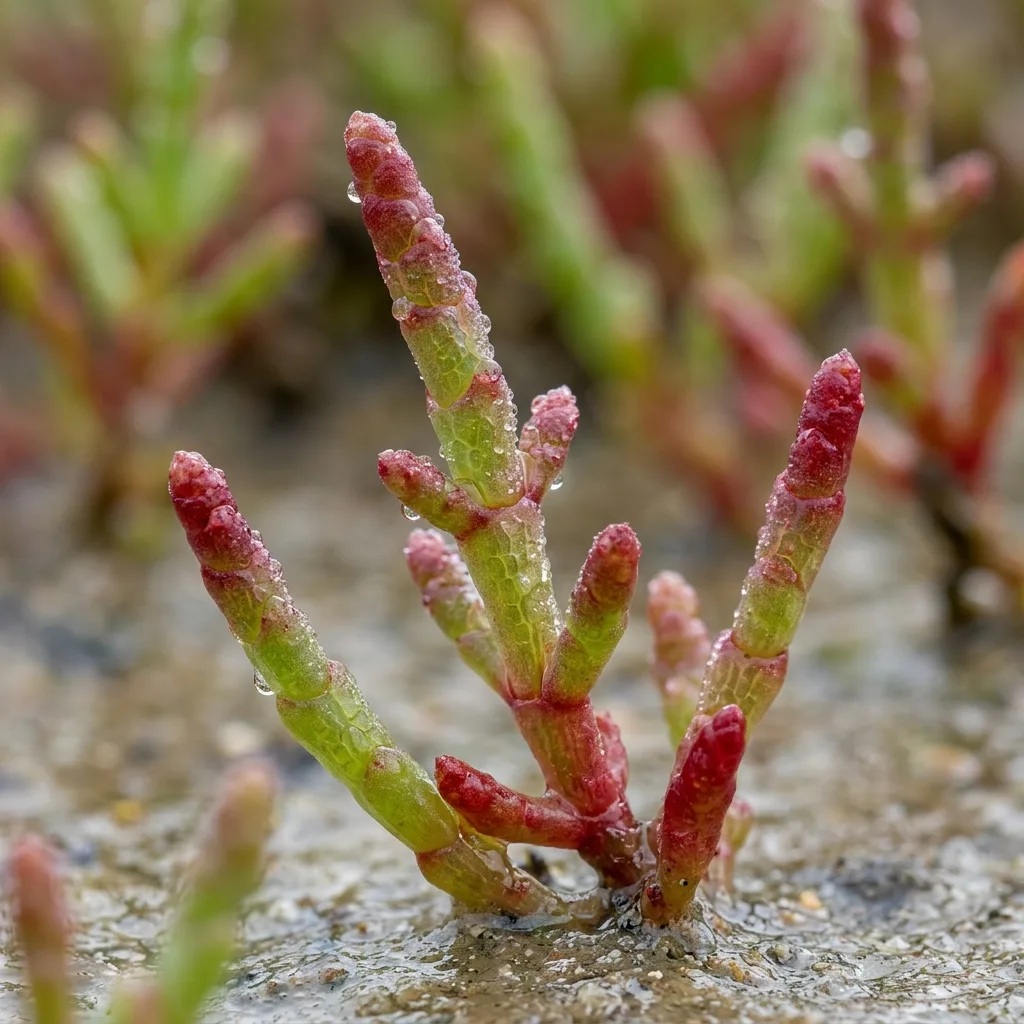
If you have ever wandered through the tide-washed salt marshes and mudflats of coastal shorelines and spotted gleaming, jointed emerald fingers emerging from mineral-laden silt, you have witnessed one of nature's most resilient evolutionary triumphs. Known colloquially as common glasswort, marsh samphire, pickleweed, or sea asparagus, Salicornia europaea is a genuine coastal halophyte that completely defies the conventional rulebook of standard arid desert succulents. While common desert species quickly turn to mush in prolonged moisture and mineral salts, this coastal survivor embraces saline conditions by actively sequestering sodium and chloride ions safely within its expansive cellular vacuoles.
Far from the conventional rosette succulents or ribbed cacti that grace living room windowsills, common glasswort brings an evocative ocean breeze and a singular piece of marine ecology into your botanical sanctuary. However, its specialized anatomy means you cannot rely on the traditional 'let it bone-dry and forget it' routine. When provided with unfiltered photophilic lighting, a meticulously balanced coastal substrate, and generous root aeration, Salicornia europaea transforms into one of the most intriguing, conversation-starting specimen plants any dedicated grower can maintain in a pot.
If you are ready to venture beyond mainstream succulent keeping and welcome these plump, articulate sea fingers into your personal collection, prepare to delve into this authoritative cultivation roadmap—from seed stratification and saline water dynamics to custom silty-sandy soil compounding.
1. Botanical Profile and Morphological Architecture
Salicornia europaea is an annual (or occasionally short-lived tender perennial in mild microclimates) belonging taxonomically to the Amaranthaceae family (formerly categorized within Chenopodiaceae). Over millennia of natural selection in harsh, wind-swept, hyper-saline coastal niches, its vegetative morphology has undergone radical reduction to suppress transpirational water loss. Its true leaves have virtually vanished, reduced to minute, appressed, scale-like margins hugging each cylindrical segment of the succulent stem.
Consequently, the jointed, lustrous green branches assume complete responsibility for both photosynthesis and water storage. Examined under a microscope, the cortical tissue of common glasswort reveals voluminous cellular vacuoles. Through active ion transport, the plant absorbs sodium and chloride ions from its root zone and isolates them inside these inner storage compartments, maintaining cellular turgor without inducing cytoplasmic osmotic shock. This cellular mastery gives glasswort its celebrated firm, crisp, and crunchy texture. As autumn nears, changing solar angles and cooler temperatures trigger the accumulation of betacyanin pigments, transforming the vibrant green shoots into a breathtaking panorama of fiery crimson and amethyst.
2. Light Requirements and Indoor Positioning
Because its native coastal salt pans and estuarine flats are utterly devoid of canopy shade, Salicornia europaea is an obligate photophile—an uncompromising sun worshipper. Under insufficient ambient illumination, the plant rapidly exhibits severe etiolation: internodes stretch abnormally, tissues become limp and pale, and the architecture loses its characteristic upright, robust form, toppling sideways.
When cultivating common glasswort indoors, place it directly before an unobstructed south- or southwest-facing window receiving at least 6 to 8 hours of unfiltered sunlight daily. If you are growing glasswort during gloomy winter stretches or on a shaded patio, supplemental lighting via full-spectrum LED grow lights is mandatory to support photosynthetic turgor pressure. The higher the photon density it receives, the firmer, plumper, and more vibrant its succulent segments will remain.
3. Hydration Protocol: Halophytic Moisture and Aeration Dynamics
Many succulent enthusiasts make the grave error of treating glasswort like an arid Echeveria, allowing the container to desiccate completely for weeks on end. Salicornia is not a desert xerophyte; it is a coastal marsh dweller. Allowing the root ball to dry out to powder causes the microscopic root hairs to desiccate and die irreversibly, resulting in sudden shriveling and systemic collapse.
The goal is to provide consistent, gentle moisture while maintaining abundant pore aeration so roots never sit in stagnant, anaerobic mud. Adopt a thorough drench-and-drain rhythm: saturate the container from above until moisture runs freely from the drainage holes, let the excess drain completely, and water again just as the very top surface begins to dry. To prevent municipal chlorine from damaging delicate tissue, allow tap water to sit in an open vessel for at least 24 hours prior to application.
4. Ideal Substrate Formulation and Pot Selection
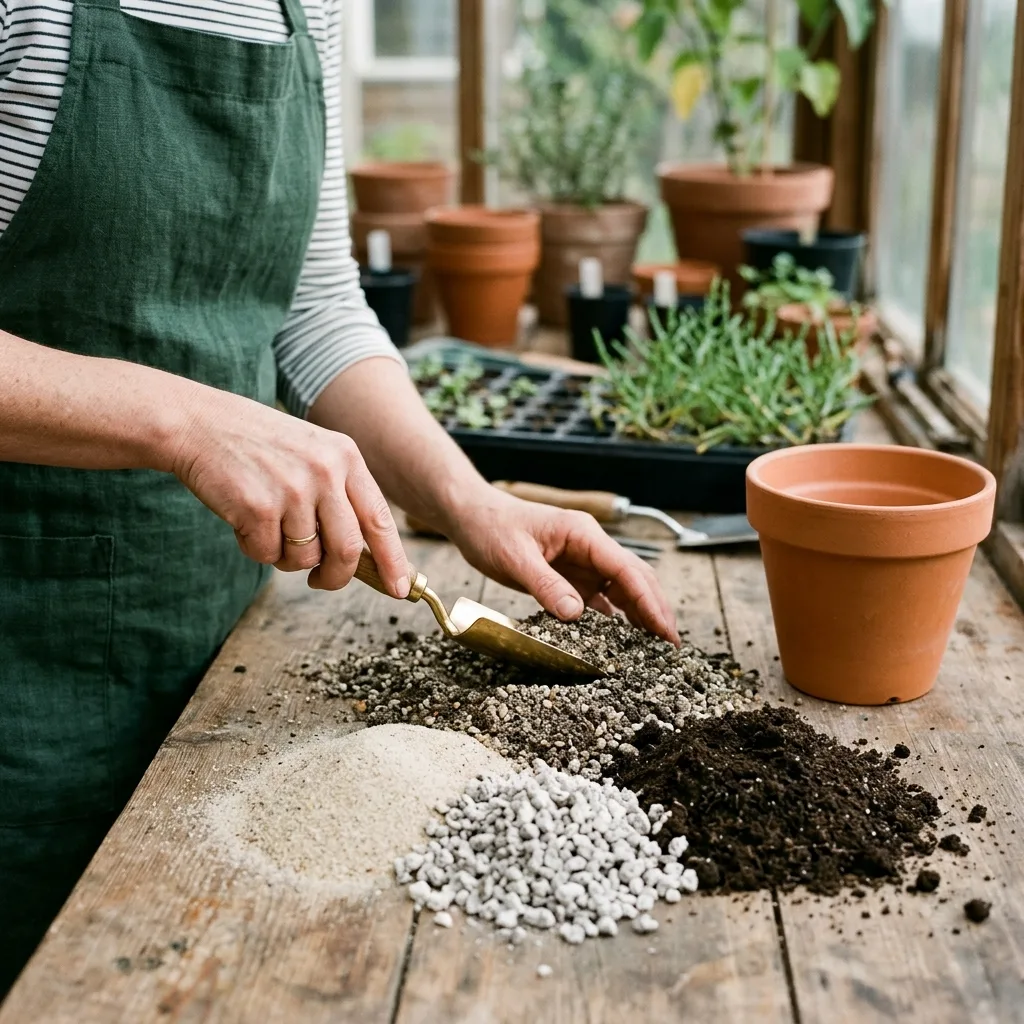
In wild coastal environments, common glasswort anchors into fine silica sands, alluvial deposits, and mineral-dense marine sediments. To emulate this in a container, you need a custom gritty-mineral medium that balances rapid drainage with the delicate, water-retentive capacity of estuarine soil.
The following potting recipe delivers supreme aeration around the root zone while retaining the baseline moisture glasswort requires:
| Substrate Component | Ratio (%) | Biological & Horticultural Function |
|---|---|---|
| Silica Sand / Thoroughly Washed Marine Sand | 35% | Replicates natural coastal sediment, allowing root hair navigation. |
| Fine Horticultural Pumice (2–4 mm) | 25% | Creates stable internal macropores, resisting compaction. |
| Sterile Loam / Peat-Free Compost | 20% | Supplies organic humic compounds and maintains foundational moisture. |
| Crushed Lava Rock / Zeolite (1–3 mm) | 15% | Binds trace minerals and prevents toxic gas pockets near the root zone. |
| Pure Sea Salt Solution (Optional Periodic Feed) | 5% | Used occasionally at trace concentrations to stimulate native halophytic vigor. |
Regarding containers, porous unglazed terracotta is the premier choice. Terracotta walls breathe, releasing excess moisture laterally and preventing root-collar asphyxiation. Dense plastic or glazed ceramic pots hold stagnant moisture far too long, increasing the risk of collar rot. Ensure the pot has generous, unobstructed bottom drainage holes.
5. Step-by-Step Propagation Protocols
Because Salicornia europaea operates primarily on an annual life cycle, seed propagation is the most dependable, authentic way to ensure continuity in your botanical collection. However, vegetative stem cuttings taken from healthy spring growth can also yield rooted specimens.
- Growing from Seed (The Golden Standard): In late autumn, gather the minute seeds embedded within the mature, red-blushed stem segments. In nature, these seeds undergo winter chilling in cold marsh mud; replicate this by cold-stratifying seeds in a damp paper towel inside a sealed baggie in the refrigerator for 2 to 4 weeks. In early spring, surface-sow onto a moist sandy substrate, press lightly without burying, mist thoroughly, and keep bright at 18–22°C (64–72°F). Germination typically occurs within 10 to 15 days.
- The Salinity Stratification Strategy: A fascinating botanical quirk is that Salicornia seeds do not germinate under hypersaline stress; they await early spring rains that dilute coastal salt levels. Therefore, use only pure, un-salted freshwater throughout the germination and early seedling stages. Once seedlings develop 4 to 5 distinct stem joints, you may gently introduce a trace saline solution (around 0.5% sea salt) every few weeks.
- Apical Stem Cuttings: In late spring, slice a vigorous, non-woody 7–10 cm (3–4 in) terminal shoot using an alcohol-sterilized razor blade. Allow the cut surface to callus in dry shade for 24 hours. Insert the cutting into lightly moist horticultural perlite and sand. Kept under bright filtered light and high humidity, root emergence will occur within 2 to 3 weeks.
6. Common Cultivation Pitfalls, Pests, and Solutions
Thanks to the natural concentration of salts, minerals, and phenolic compounds within its cells, common glasswort is virtually immune to common houseplants pests like mealybugs and spider mites. Nonetheless, physiological disorders can occur under improper cultural regimens:
- Stem Base Softening (Collar & Root Rot): If the stem turns brown, translucent, or mushy right at the substrate line, excessive moisture retention combined with inadequate aeration is the culprit. Immediate action is critical: cease watering, excise all infected tissue, and take salvageable upper green segments as cuttings to re-root.
- Shriveling and Wrinkling: Deflated, creased stem segments signify severe dehydration. This is caused either by prolonged dry soil or by severe salt encrustation that locks out moisture via reverse osmosis. Flush the substrate thoroughly with generous amounts of fresh water to leach out excess salt crusts, then re-establish a stable watering schedule.
- Etiolation and Sprawling: Thin, limp, drooping green stems are a direct cry for stronger light. Move the container systematically into direct sun or supplement with a high-output LED fixture.
7. Seasonal Botanical Care Calendar
Harmonizing your care routine with the seasonal rhythms of this coastal halophyte guarantees lush vigor:
- Spring (Awakening & Emergence): The primary window for sowing cold-stratified seed and pricking out young seedlings. Increase watering frequency and place plants in morning sun. A single light application of diluted cold-pressed seaweed kelp extract stimulates robust root development.
- Summer (Peak Photosynthesis & Turgor): Glasswort displays maximum green plumpness. Monitor container moisture daily, as warm temperatures increase transpiration. Good air circulation outdoors on a breezy balcony keeps the epidermal cells firm and crisp.
- Autumn (Pigmentation & Seed Maturation): Taper watering slightly as temperatures drop. Stems will blush into glorious crimson, coral, and burgundy hues. Harvest the minute seeds from the jointed segments once flowers fade.
- Winter (Dormancy or Rejuvenation): While outdoor specimens naturally terminate their life cycle with hard frosts, indoor plants kept in a bright, cool spot (10–14°C / 50–57°F) with light background moisture can persist into a second growing season or self-seed effortlessly in their containers.


Reader Reviews & Comments 4 Reviews
Eleanor Vance
Julian Miller
Marcus Thornton
Chloe Bennett
Leave a Review & Rating
Share your plant care tips, experiences, or questions with our succulent community.