






Tucked away in the shaded crevices of sheer limestone bluffs flanking river valleys in Alabama and Georgia, Sedum nevii (affectionately known as Nevius' stonecrop or cliff stonecrop) stands among the most refined, protected botanical gems of the succulent realm. Unlike desert succulents that crave scorching sunbeams, this delicate calciphile thrives in the cool updrafts of river canyons and the mineral riches of calcareous rock fractures, gently rewriting the conventional playbook of xerophytic gardening. Discovered in 1857 by botanist Reuben Nevius, this unique perennial captures the horticultural imagination with its tight, blue-green rosettes—miniature living sculptures of nature—and star-like, snow-white spring inflorescences that reward the observant grower.
While myriad stonecrop species bake under direct, blistering sunlight, Nevius' stonecrop utilizes cellular hydration management adapted specifically to temperate, dappled forest understories. Because natural populations are localized and vulnerable in the wild, nurturing this endemic species in your home or on your terrace is not merely an aesthetic endeavor—it represents meaningful ex-situ conservation of a living botanical heirloom. In this guide, we merge the warm, encouraging intimacy of a morning greenhouse conversation with rigorous botanical principles, walking you through every facet of keeping Nevius' stonecrop thriving for years to come.
1. Botanical Profile and Morphological Characteristics
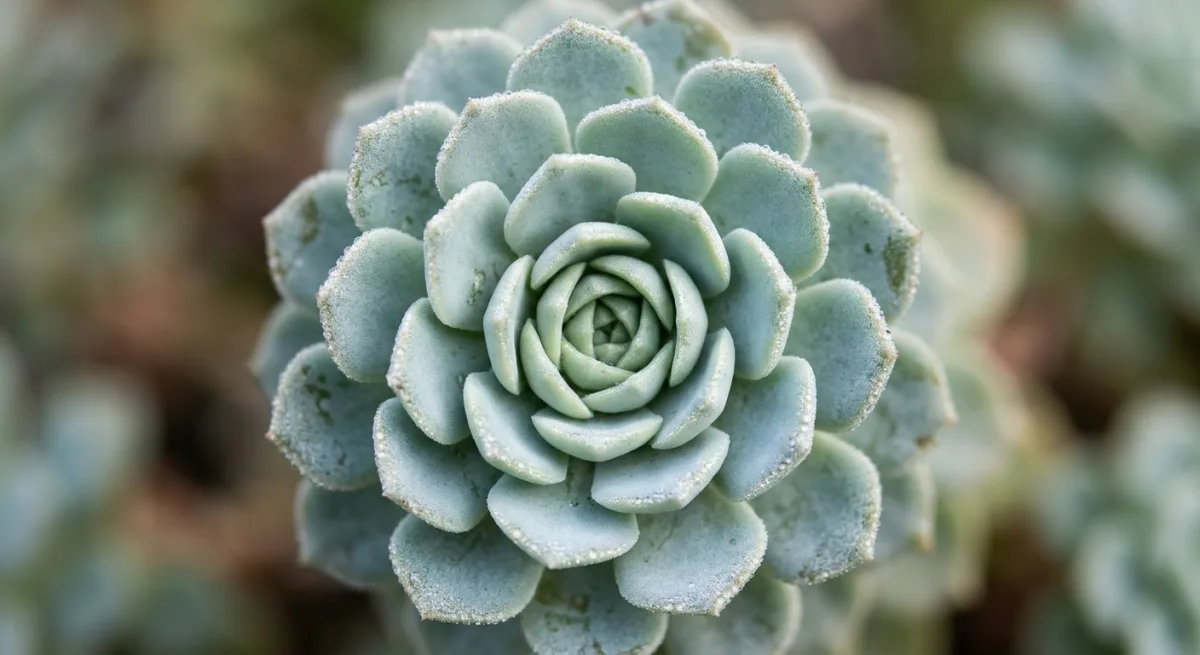
Nevius' stonecrop (Sedum nevii) is a perennial, evergreen, mat-forming succulent classified within the family Crassulaceae. The species produces exceptionally compact rosettes measuring between 2 to 5 cm (0.8 to 2 inches) across, displaying hues that shift from glaucous blue-gray to tender emerald. A delicate epicuticular wax (farina) blankets the spatulate, rounded foliage, giving the leaves a velvety matte sheen while curtailing non-stomatal transpirational moisture loss during warm spells. When gently touched, the leaves feel remarkably plump, firm, and fleshy.
In late spring, reddish-green flowering scapes rise 8 to 12 cm (3 to 5 inches) from the rosette centers, terminating in three- to five-branched cymes. The star-shaped, 4- or 5-petaled chalk-white flowers present a dramatic chromatic contrast against prominent, dark purplish-black anthers that dust visiting pollinators with pollen. Although frequently confused with the closely related Sedum ternatum (wild stonecrop), Sedum nevii is readily distinguished by its leaf phyllotaxy: rather than displaying leaves arranged in clean whorls of three along the stem, its foliage forms densely spiraled, imbricated rosettes.
2. Light Requirements and Strategic Placement
Standard desert succulents demand at least six hours of blazing, direct sun; Sedum nevii breaks the mold. Adapted to steep, sheltered limestone ledges and river bluff understories, it flourishes in bright, filtered shade or gentle morning rays. Two to three hours of early east-facing sun provides ample photon energy to fuel rosette compactness without triggering etiolation (undesirable stretching toward the light).
Indoors, unshaded southern or western window ledges can generate destructive thermal heat; if placed along these exposures, diffuse incoming sunlight with a sheer linen curtain or position the container roughly three feet back from the glass. East- or northeast-facing windowsills are virtually tailor-made for this species. For outdoor rockeries or trough containers, mimic its native habitat by positioning the plant under the airy canopy of deciduous trees or on the northeastern face of a decorative limestone boulder.
3. Watering Protocols: The 'Soak and Dry' Regimen
The root system of Nevius' stonecrop consists of delicate, shallow, fibrous networks evolved to anchor into thin humus ribbons trapped between rock fractures. Drizzling tiny sips of water over the pot every few days is not kindness—it deprives the rhizosphere of essential oxygen, swiftly bringing on anaerobic pathogens. The gold standard of care is the tried-and-true 'Soak and Dry' protocol.
When watering, drench the substrate thoroughly until water runs unimpeded from the drainage holes, ensuring complete hydration of the root core. Subsequently, allow 80% to 100% of the potting medium to dry out entirely before offering another drink. Confirm subsurface moisture by inserting a dry wooden skewer deep into the container; if it emerges completely clean and bone-dry, irrigation is warranted. During late autumn and winter dormancy, reduce your watering cadence down to once or twice monthly depending on ambient humidity.
4. Ideal Substrate Formulation and Container Selection
Root vitality in Sedum nevii is governed entirely by substrate aeration and hydraulic conductivity. Because this plant is naturally calciphilic—rooted in the dolomite and limestone seams of southeastern river canyons—heavy, acidic, peat-dominated potting soils will rapidly asphyxiate the root zone. You need an open, highly porous, mineral-based medium that evacuates gravity water in seconds while preserving internal microscopic aeration.
Pot choice is equally foundational. Glazed ceramic and plastic containers hold dampness against the roots for far too long. Unglazed terracotta represents the optimal home for Nevius' stonecrop, as its micro-porous walls allow lateral vapor diffusion ('pot breathing'). Because the species possesses shallow roots, choose broad, shallow azalea pots or succulent pans rather than tall, deep standard pots.
| Substrate Component | Ratio (%) | Horticultural Function & Botanical Benefit |
|---|---|---|
| Pumice (3–5 mm grain) | 35% | Exceptional structural porosity, superior root zone oxygenation, and rapid drainage. |
| Crushed Lava Rock or Zeolite | 25% | Non-collapsible mineral framework that buffers moisture and prevents substrate compaction. |
| Crushed Dolomitic Limestone / Coarse Oyster Shell | 10% | Buffers pH into a slightly alkaline zone (7.0–7.5), faithfully replicating wild limestone cliffs. |
| Well-Aged Leaf Mold or Sterile Sifted Coir | 20% | Provides balanced cation-exchange capacity (CEC) and steady, light organic nutrition. |
| Coarse Horticultural River Sand (Washed) | 10% | Creates an intricate network of micro-channels for delicate root hair adhesion. |
5. Step-by-Step Propagation Methods
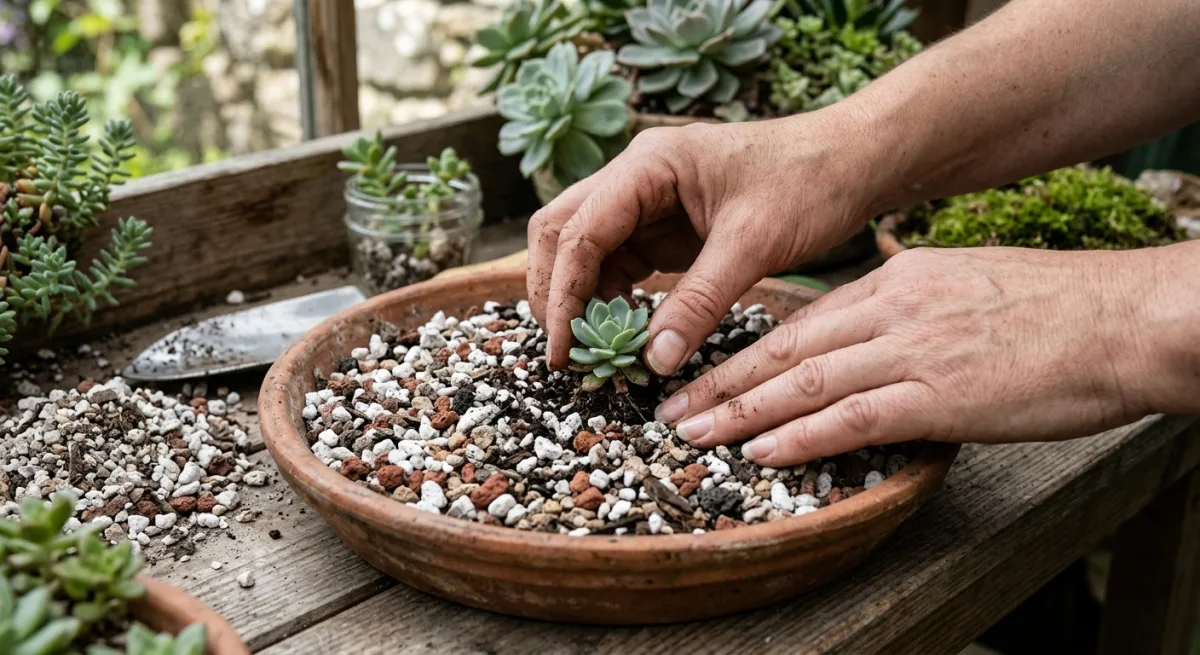
Thanks to its creeping growth habit and freely emerging lateral offshoots, Nevius' stonecrop is a joy to propagate. The optimal window for taking cuttings is mid-spring through early summer, when the plant's metabolic drive is operating at peak capacity:
- Harvesting Stem and Rosette Cuttings: Locate a vigorous lateral branch bearing an intact rosette at least 3 to 4 cm (1.2 to 1.5 inches) across. Using a sterilized, razor-sharp scalpel, make a clean cut near the main stem. Gently peel away the bottom two or three leaves to expose a short section of bare stem.
- Callus Formation: Do not place fresh cuttings directly into moist soil! Lay them out in a dry, shaded, well-ventilated spot for 48 to 72 hours. This period allows parenchymal scar tissue (a callus) to seal the wound, providing an impermeable barrier against soil-borne fungal entry.
- Dry Planting and Root Induction: Insert the callused stem lightly into the mineral grit substrate described above. Withhold all water for the first 5 days. On the sixth day, lightly mist the substrate surface around the rosette perimeter. In approximately 2 to 3 weeks, fine, silver-white feeder roots will anchor into the grit.
- Root Division: When repotting congested mats in the spring, tease apart the root balls of mature colonies by hand. Divide the root mass into two or three balanced clumps, potting each clump directly into a shallow terracotta bowl for immediate, fully rooted specimen displays.
6. Common Pathogens, Pests, and Corrective Treatments
While Sedum nevii displays notable natural fortitude, poor airflow combined with over-generous watering can lead to several classic horticultural dilemmas:
- Crown and Stem Rot (Phytophthora / Pythium): Evidenced by translucent, water-soaked lower leaves, premature leaf drop, and a dark, jelly-like softening of the crown. Remedy: Immediately excise all necrotic tissue with a sterile blade, salvage undamaged terminal rosette tips, let them callus thoroughly, and reroot in fresh, fully sterile mineral grit.
- Mealybugs (Pseudococcidae): These pervasive sap-feeders hide deep inside the tight basal crevices of the rosettes, looking like tiny tufts of white cotton. They suck plant sap, stunting apical growth. Spot-treat localized colonies using a cotton swab dipped in 70% isopropyl alcohol; treat broader infestations with cold-pressed neem oil or insecticidal potassium soap applications applied away from direct light.
- Etiolation (Light Deprivation Spindling): When denied sufficient lumens, rosettes unravel and stretch out along fragile, elongated internodes. Gradually acclimate the plant to a brighter micro-location with filtered daylight. Prune elongated rosette tops to induce fresh, tightly clustered adventitious shoots along the lower nodes.
7. Seasonal Horticultural Calendar & Expert Maintenance
Aligning your cultivation rhythm with the innate seasonal clock of Nevius' stonecrop ensures sturdy mats and abundant spring flowers:
- Spring (Awakening & Anthesis): Beginning in March, resume regular soak-and-dry watering. As floral scapes develop, apply a single feeding of balanced, low-nitrogen liquid succulent fertilizer diluted to quarter-strength.
- Summer (Aestivation & Thermal Protection): During persistent heat waves exceeding 32°C (90°F), cellular respiration slows down. Cut back watering frequency to prevent root boiling, shield plants rigorously from hot afternoon sun, and maximize ambient air movement via fans or breezy outdoor placement.
- Autumn (Secondary Vegetative Push): As day and night temperatures cool, rosettes tighten into firm, dense geometric rosettes. This window provides an ideal opportunity for division, propagation, and soil renewal.
- Winter (Cold Hardiness & Dormancy): Sedum nevii is remarkably cold-hardy (USDA Zones 6 through 9, tolerating dry conditions down to roughly -15°C / 5°F). In outdoor rock gardens with sharp gravel drainage, it withstands frost well. If grown in containers, protect from freezing rain; keep plants in an unheated, bright, frost-free area (5–10°C / 41–50°F) and restrict water to rare, light dampening.


Reader Reviews & Comments 4 Reviews
Eleanor Vance
Julian Thorne
Marcus Sterling
Clara Higgins
Leave a Review & Rating
Share your plant care tips, experiences, or questions with our succulent community.