






Wandering through the arid, rock-strewn expanse of the Karoo semi-desert in Southern Africa, the first sight that captures your curiosity is what appears to be an ancient, weathered stone nearly swallowed by the earth, its surface studded with wart-like tubercles. Yet that boulder is entirely alive—a breathing, moisture-banking caudex of Fockea edulis, pumping vital hydration through months of blistering, unforgiving drought. Inviting this primordial botanical relic into your living room or sunroom is akin to curating a living desert sculpture. Nurturing that wild, untamed resilience within the comfort of your home begins with a deep appreciation of its subterranean cell biology and the photosynthetic horsepower of its twining vines.
The single most widespread pitfall in Fockea cultivation is an impatient urge to unearth and showcase the magnificent caudex the moment the plant is potted. In its native habitat, however, this swollen reservoir matures almost entirely underground, swelling vigorously only under the buffered moisture-oxygen equilibrium provided by subterranean soil layers. Much like a tree expanding its foundational root system, a Fockea absorbs carbon and sunlight through its delicate leaves, funneling energy downward to lock within this living cistern. Recreating this microclimate rewards the grower with a specimen that combines the refined grace of a classical bonsai with the immortal endurance of a desert stone—a deeply gratifying achievement for any dedicated plant lover.
1. Botanical Biology and Physiological Foundations
Fockea edulis and its close relative Fockea capensis are pachycaul caudiciform succulents belonging to the Apocynaceae family. The plant's architectural centerpiece is its 'caudex'—a hypertrophied basal storage organ derived from the ontogenetic fusion of the hypocotyl and upper root system. Anatomically, this caudex is constructed predominantly of specialized water-storage parenchyma cells intertwined with expansive xylem vessels. When drought strikes, the plant minimizes transpiration by shedding foliage, subsisting comfortably for seasons on the water reserves buffered inside these parenchyma vacuoles.
Its aerial growth consists of slender, rapidly elongating climbing lianas (vines). Unlike strict CAM (Crassulacean Acid Metabolism) species, Fockea relies heavily on efficient C3 photosynthesis when provided with adequate water and light during its active growing cycle. This physiological adaptation allows rapid carbon assimilation. The synthesized carbohydrates travel rapidly downward through the phloem, consolidating within the caudex as dense starch granules. Pruning these twining shoots prematurely essentially starves the caudex of its developmental fuel; conversely, allowing the canopy to scramble freely can double or triple annual caudex expansion.
2. Accurate Diagnosis and Signs of Distress
Attuning yourself to your Fockea requires little more than a gentle tactile check of the caudex and keen observation of leaf posture. Cellular turgor pressure reveals the plant's internal water balance in real time:
- Softening or Wrinkling Caudex: If a gentle press at the base of the caudex yields a spongy, yielding texture, your plant is either dehydrated (loss of cellular turgor) or suffering from root rot that has collapsed the water-conducting xylem. In the case of fungal rot, softening is often accompanied by dark discolouration, oozing tissue, or a sour smell.
- Yellowing and Dropping Lower Leaves: Towards late autumn, this is a completely natural entry into semi-dormancy. However, if leaf drop occurs in mid-spring or summer, it points toward waterlogged soil and root hypoxia (asphyxiation).
- Spindly, Weak Vines with Stretched Internodes: A textbook indicator of etiolation caused by insufficient light. Healthy Fockea foliage under bright conditions remains compact, leathery, and rich deep green.
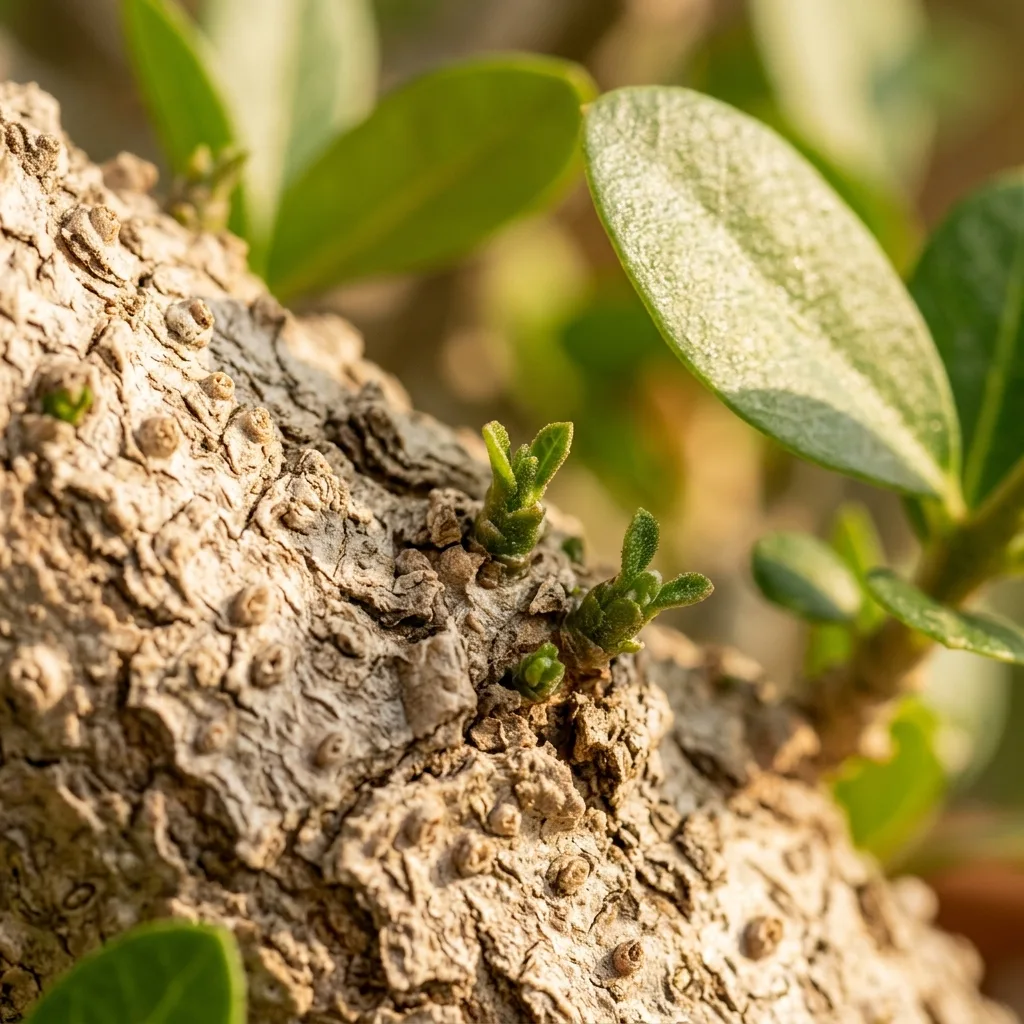
- Superficial Fissures on the Caudex: Typically harmless. When a long period of drought is followed by sudden, heavy irrigation, inner parenchyma cells swell faster than the corky outer bark (periderm) can stretch, causing vertical cracks. Over time, these heal into an exquisite, aged patina.
3. Step-by-Step Cultivation Protocol
Follow this disciplined four-stage protocol to cultivate a thriving, rot-resistant Fockea edulis with steady caudex development:
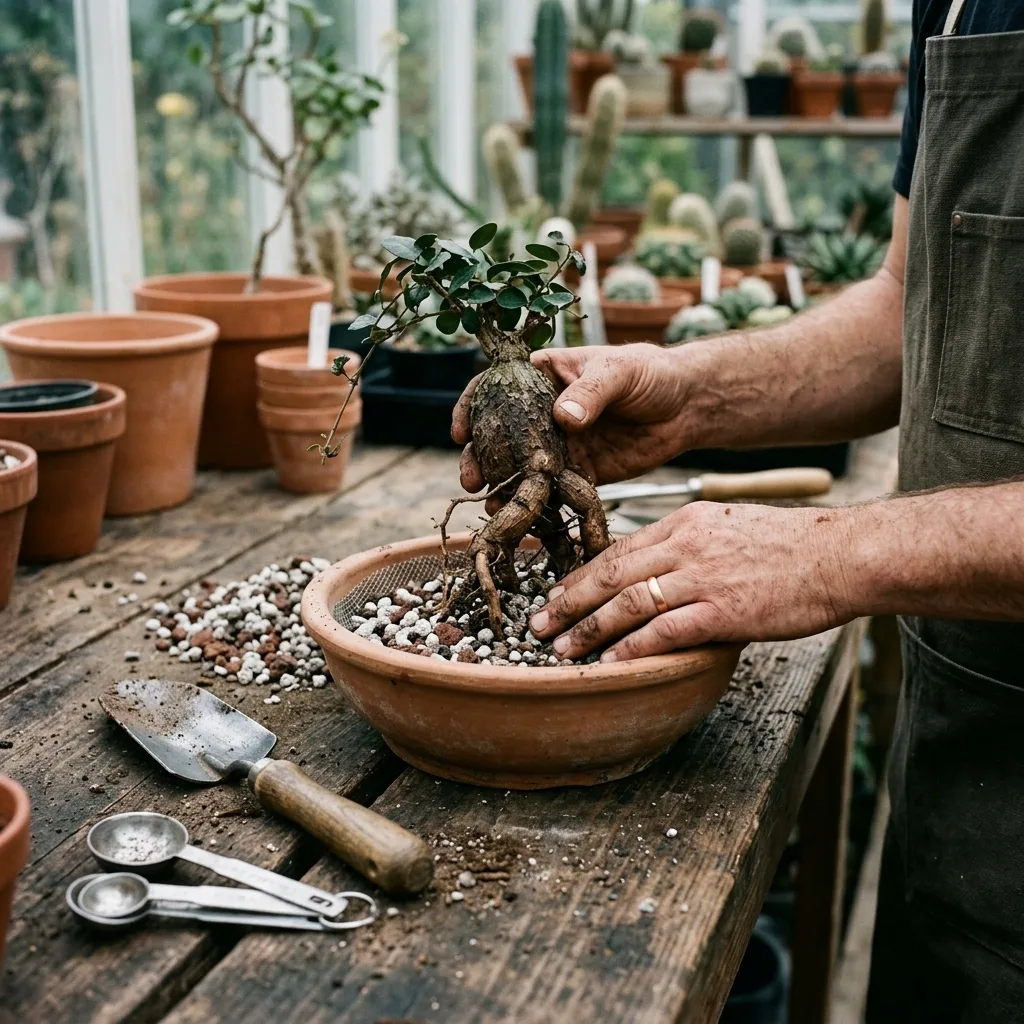
- Container Selection and Foundation Setup: Opt for unglazed, porous terracotta or shallow, heavy ceramic bonsai pots. Ensure generous drainage holes, cover them with plastic mesh, and lay down an initial 1.5 cm layer of coarse pumice or expanded clay pebbles to prevent basal water stagnation.
- Substrate Formulation: Fockea feeder roots will deteriorate rapidly in dense, peat-heavy soils. The blend should consist of at least 75% inorganic, highly porous minerals (pumice, crushed lava rock, zeolites, or coarse perlite). The remaining 25% should be a low-retention organic component, such as sifted coco coir or mature, fibrous leaf compost.
- Positioning and Vine Trellising: Position your specimen where it receives a minimum of 4 to 5 hours of bright, filtered sunlight daily. Shield the exposed caudex from blistering, unmitigated midday summer heat, while permitting the climbing vines to stretch toward full daylight. Provide a bamboo trellis, cedar stake, or copper wire frame; vertically oriented shoots exhibit significantly higher photosynthetic efficiency than trailing ones.
- Strategic Irrigation Cycle: During active growth (spring through early autumn), soak the substrate thoroughly until water cascades freely from the base, ensuring total root saturation. Empty any runoff from the drip saucer within 15 minutes. During winter rest (when ambient temperatures dip below 12°C/54°F), reduce watering to a sparse monthly sip, providing just enough moisture to prevent the main caudex from collapsing.
4. Required Equipment, Materials, and Key Parameters
The table below details the ideal physical and chemical parameters for growing a specimen-grade Fockea edulis:
| Component / Parameter | Recommended Standard / Ratio | Physiological Rationale |
|---|---|---|
| Inorganic Mineral Content | 75% (3–6 mm Pumice, Lava Rock, Zeolite) | Guarantees maximum aeration and virtually eliminates stagnant moisture pockets. |
| Organic Fraction | 25% (Quality Coco Coir / Decomposed Leaf Mold) | Provides essential cation exchange capacity for steady nutrient uptake. |
| Light Intensity | 25,000 – 45,000 Lux (Bright Indirect to Gentle Direct) | Maximizes C3 carbon assimilation without scorching the sensitive periderm. |
| Substrate pH | 6.0 – 6.8 (Slightly Acidic) | Ensures uninhibited micronutrient absorption (especially iron and magnesium). |
| Fertilization Strategy | Low-Nitrogen, High-Potassium (NPK 5-10-15) | Reinforces cell wall lignification and caudex density rather than weak foliage surges. |
| Temperature Thresholds | Growth: 20–30°C (68–86°F) / Rest: 8–12°C (46–54°F) | Metabolic activity stalls below 8°C; sub-zero exposure causes irreversible tissue frost collapse. |
5. 5 Common Pitfalls and Rescue Protocols
- Mistake 1: Exposing the Entire Caudex While Young: Lifting a slender young caudex above the soil line stunts its growth indefinitely. Rescue: Re-pot the plant with the caudex buried up to its branch collar in a mineral substrate, and practice patience for two full seasons.
- Mistake 2: Compulsive, Constant Pruning of Shoots: Snapping off every emergent vine to maintain a manicured bonsai outline starves the subterranean reservoir. Rescue: Allow active vines to run free for at least 40–50 cm during summer. Restrict your corrective shaping to late autumn as the plant naturally slows down.
- Mistake 3: Relying on Commercial 'Cactus & Succulent' Peat Mixes: Dense commercial peat shrinks into an impermeable hydrophobic brick when dry, yet remains sodden around the root core when wet. Rescue: Unpot the plant carefully, wash away peat residue from the roots under lukewarm water, and transition into a 75% grit mineral mix.
- Mistake 4: Watering Cold Roots in Winter: Cold, saturated substrate combined with low ambient heat is the primary catalyst for basal rot. Rescue: At the first sign of soft or darkening basal tissue, unpot the specimen immediately, excise damaged roots with a flame-sterilized blade, dust cuts with sulfur or cinnamon powder, air-dry for 4 days, and replant into bone-dry pumice.
- Mistake 5: Abrupt Sun Exposure without Acclimation: Moving an indoor plant directly into intense summer sunshine results in permanent, corky sunburn scars on the caudex. Rescue: Acclimate the plant progressively over 14 days, shifting it into incrementally brighter exposure week by week.
6. Seasonal Calendar and Long-Term Milestones
Spring (Awakening): By late March, axillary buds on dormant stems begin to swell. Reintroduce regular moisture incrementally. Apply a half-strength, low-nitrogen liquid fertilizer once a month. Re-secure or adjust trellising structures.
Summer (Peak Vegetative Drive): With temperatures above 25°C (77°F), metabolic transpiration peaks. Water thoroughly whenever the pot dries out. Climbing vines will surge rapidly; gently weave them along your support wire or trellis.
Autumn (Energy Relocation): Through September and October, shoot growth slows down as synthesized carbohydrates consolidate within the caudex. Stretch the intervals between waterings. Gently remove spent, yellow foliage and prune untidy vines back to desired structural nodes.
Winter (Dormancy and Preservation): From November to February, position the plant in a cool, bright spot (10–14°C / 50–57°F) with minimal hydration. Slight deflation or wrinkling of the caudex is a normal physiological moisture-conserving response; do not panic and drench the pot.


Reader Reviews & Comments 3 Reviews
Clara Davenport
Julian Vance
Marcus Sterling
Leave a Review & Rating
Share your plant care tips, experiences, or questions with our succulent community.