






Journeying from the arid coastal bluffs of Chile and the sun-baked foothills of the Andes straight into our living spaces, Calandrinia—widely celebrated as Rock Purslane (botanically classified as Calandrinia spectabilis or Cistanthe grandiflora)—stands as an enchanting botanical wonder that effortlessly captures the devotion of succulent collectors. Crowned with fleshy, elongated blue-green foliage cloaked in a frosted coat of epicuticular farina, it casts upward slender, arching pedicels. Swaying gracefully in the summer breeze, these stems burst open with brilliant fuchsia-purple, poppy-like silky petals that shimmer under the morning sun—offering one of nature's most dazzling visual contrasts against raw drought.
To the untrained observer, Rock Purslane might initially appear as an ordinary succulent subshrub, yet beneath its cellular membranes lies an impeccably evolved survival engine. Unfortunately, indoor enthusiasts and patio gardeners frequently experience the heartbreak of severe light starvation (etiolation)—yielding floppy, pale, leggy stems—or catastrophic overnight root rot brought on by well-intentioned overwatering. Dousing your succulents frequently is not an act of love; it is an unwitting suffocating of their roots, which desperately crave oxygen in the rhizosphere. In this guide, we unite decades of hands-on nursery observations with precise physiological realities to help you guide your Rock Purslane toward its most sculptural and profuse form.
1. Botanical Biology and Physiological Foundations
The genus Calandrinia belongs to the family Montiaceae and evolved across coastal scrublands and hyper-arid microclimates. The succulent leaves store vital moisture within specialized, sponge-like water-storage parenchyma cells. During prolonged dry spells, these cells dynamically regulate internal osmotic pressure to prevent tissue collapse, preserving baseline photosynthetic function without interruption. The extraordinary elasticity of their cellular walls allows the foliage to plump rapidly upon rainfall and gracefully contract during drought, shrinking overall surface area to curb transpiration losses to an absolute minimum.
Equally extraordinary is the plant's metabolic flexibility: Rock Purslane can seamlessly switch between C3 photosynthesis and CAM (Crassulacean Acid Metabolism). When moisture is abundant, it utilizes the C3 pathway to drive rapid biomass and foliage production. However, when ambient heat and drought intensify, it seals its stomata tightly during blistering daytime hours and cracks them open under the cool night sky to operate CAM. The atmospheric carbon dioxide gathered at night is stored within vacuoles in the form of malic acid, which is subsequently converted into carbohydrates by solar energy the following day. For this metabolic machinery to run efficiently, intense, unfiltered sunlight is non-negotiable; in the shade, Rock Purslane enters a metabolic logjam.
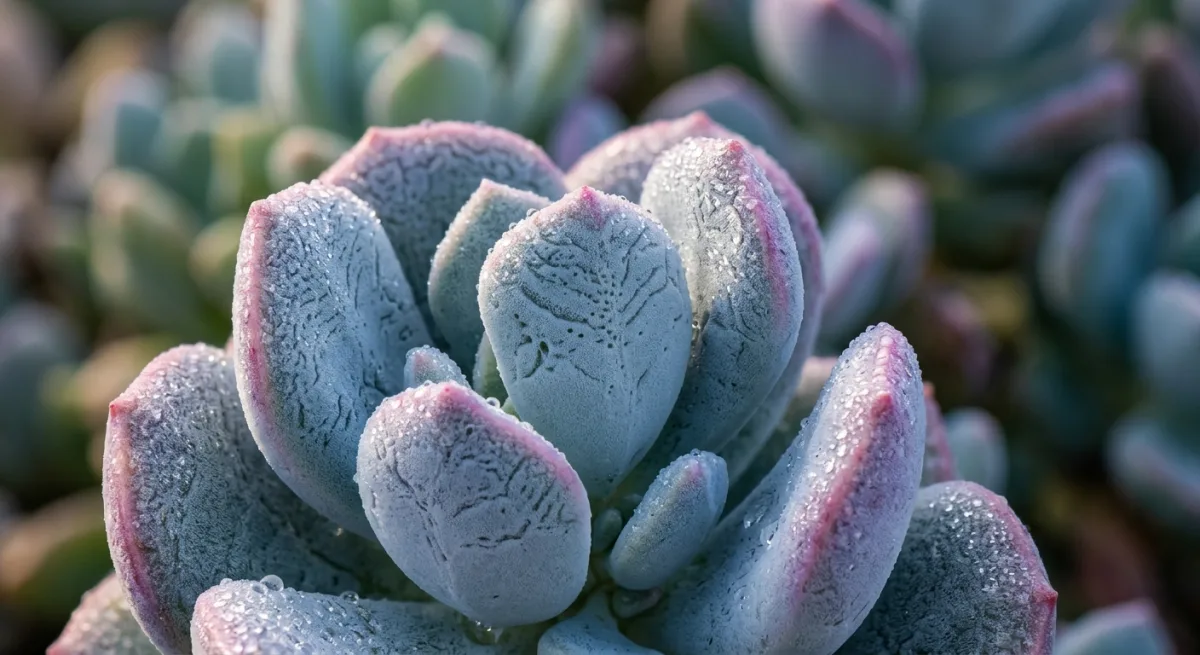
The velvety, glaucous powder adorning the leaves is a microscopic layer of epicuticular wax, widely referred to as farina. This silvery farina functions as the plant's natural, self-synthesized sunscreen and protective hydrophobic barrier; handling the leaves or rubbing it away leaves the cellular tissue exposed to ultraviolet scalding and fungal spore colonization. Below ground, the root architecture features a central anchoring taproot complemented by a diffuse network of fibrous feeder capillaries. These delicate capillaries demand continuous gas exchange through root xylem vessels; standing moisture in the substrate arrests cellular respiration, plunging the root zone into hypoxia and rapid anaerobic decomposition.
2. Diagnostic Symptoms and Nutritional Indicators
Mastering Rock Purslane cultivation demands the ability to interpret the silent visual signals communicated by its foliage, stems, and growth patterns. Diagnose your specimen's condition using the following matrix:
- Light Starvation (Etiolation): Deterioration of the tight rosette form, elongated internodal spacing, fading of the farina wax to a dull lawn-green, and weak, spindly stems reaching desperately toward light sources.
- Moisture Deficit (Root Desiccation): Pronounced longitudinal wrinkling along lower leaves, loss of cellular turgor making leaves feel limp and deflated, and the potting medium pulling away from the container edges. This signifies completely dry root hairs and warrants a deep, deliberate soak.
- Waterlogging and Root Suffocation: Leaves turning translucent, yellow-tinged, and water-soaked (gelatinous); foliage dropping at the slightest brush of a hand; and blackened, mushy tissue spreading from the root crown upward.
- Phosphorus and Potassium Deficiency (Flower Inhibition): Vigorous leafy growth accompanied by a total absence of flowering scapes, or flower buds that abort and dry out before ever opening.
3. Step-by-Step Cultivation Protocol
To keep your Rock Purslane vigorous, resilient, and flowering prolifically from day one, implement this rigorous five-step horticultural protocol:
- Strategic Placement and Photoperiod Acclimation: Rock Purslane demands at least 6 hours of direct, unfiltered sunlight daily. South- or west-facing windowsills, rooftop gardens, or sun-drenched balconies are ideal. If bringing a plant home from an indoor retail nursery, never expose it immediately to scorching midday sun; acclimate it gradually over a 10-day period from bright indirect light to full sun to prevent UV burns.
- Air-Permeable Mineral Substrate Assembly: Dense, peat-heavy commercial potting soils are a death sentence for this species. Build a coarse, gritty substrate dominated by porous pumice, volcanic lava rock, and coarse river sand so the root zone can breathe freely (refer to Section 4 for precise volumetric ratios).
- The Thorough 'Soak-and-Dry' Irrigation Technique: Superficial surface sprinkles fail to hydrate the root zone and cause capillary feeder roots to die back. Instead, drench the container thoroughly until water cascades cleanly out of the bottom drainage holes. Always empty any collected runoff from the saucer within 15 minutes. Never water again until the substrate has dried out completely down to the bottom of the pot (verify using a wooden moisture probe).
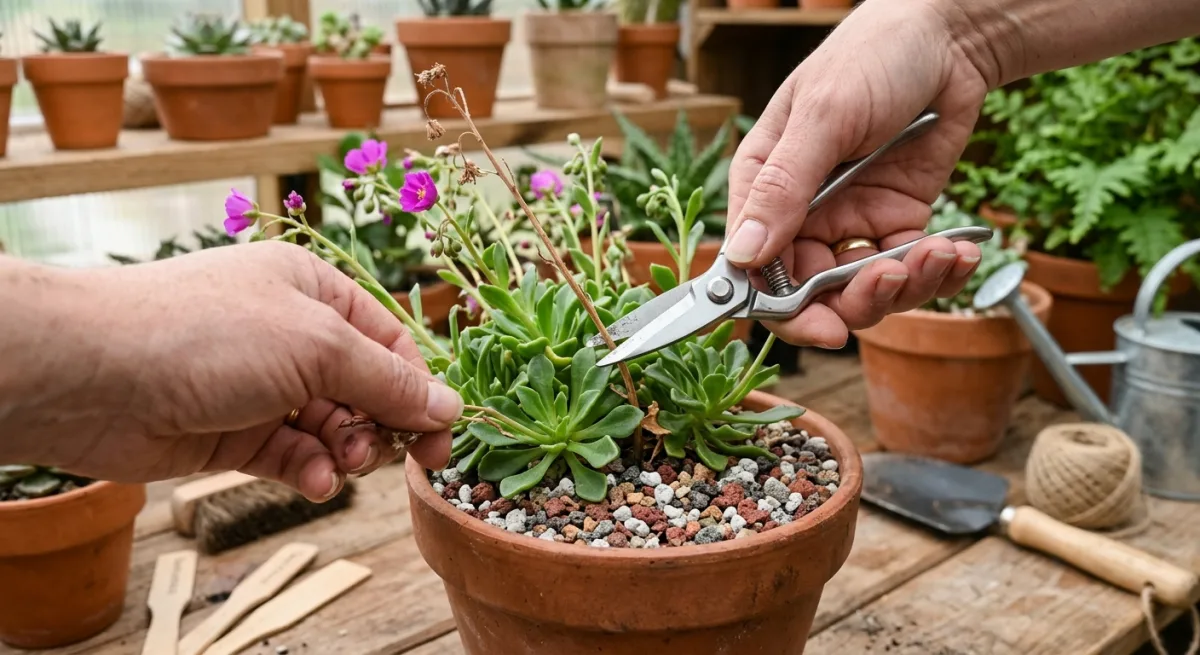
- Blooming Induction and Post-Flowering Pruning: From late spring into autumn, Rock Purslane sends up graceful, long flowering stalks. Once individual floral spikes finish their bloom cycle, prune the stems cleanly down at their base using sterilized bypass pruners. This curbs unnecessary seed development, redirecting metabolic resources into developing compact new rosettes and secondary flower scapes.
- Winter Rest and Temperature Management: During winter, place your plant in a luminous, cool space maintained between 5°C and 12°C (41°F - 54°F). This seasonal chill provides the necessary vernalization cues for the plant to program massive flower bud initiation for the approaching spring. Space winter waterings far apart, often requiring moisture only once every 3 to 4 weeks.
4. Essential Substrate Recipe, Equipment, and Vital Parameters
Cultivation success hinges upon precise balance across chemical and structural substrates. The exact horticultural formula we rely on for Rock Purslane is detailed below:
| Component / Parameter | Recommended Standard | Physiological Rationale |
|---|---|---|
| Horticultural Pumice (3-6 mm) | 40% by Volume | Provides high air-filled porosity and buffers root moisture without waterlogging |
| Crushed Lava Rock / Volcanic Scoria | 25% by Volume | Provides structural root channels and trace micronutrient mineral release |
| Coarse River Sand / Zeolite | 15% by Volume | Anchors the root system and prevents soil compaction and hydrophobic pockets |
| Quality Sifted Organic Compost or Coir | 20% by Volume | Supplies fundamental organic nutrients with low moisture-holding retention |
| Substrate pH | 6.0 - 7.0 (Slightly Acidic to Neutral) | Maximizes bioavailability and root uptake of phosphorus and iron |
| Light Intensity | 5,000+ Foot-Candles / Full Sun | Fuel for CAM pathway, tight rosettes, and intense farina/anthocyanin synthesis |
| Ambient Temperature Range | Active: 18-28°C (64-82°F) / Rest: 5-10°C (41-50°F) | Facilitates cellular recovery, bud vernalization, and robust metabolic rhythms |
5. 5 Common Pitfalls and Emergency Recovery Protocols
- Using Off-the-Shelf Standard Houseplant Soil: Peat-rich mixtures hold water like a wet sponge, suffocating the delicate root system. Recovery: Gently unpot the plant, rinse the suffocating soil entirely from the root system under tepid water, trim off blackened roots, allow the bare roots to dry in shaded air for 24 hours, and replant into the mineral mix described above.
- Sheltering the Plant in Low-Light Indoors: Cultivating Rock Purslane in deep shade leads to flower bud drop and severe stretching. Recovery: Prune off elongated, weak top growth using a sterile scalpel; relocate the pot immediately to a southern window or open balcony. Sturdy, compact rosettes will rapidly push from dormant nodes.
- Misting Foliage with Water Sprayers: Spraying dissolves the delicate farina wax and traps humidity at the leaf nodes, triggering powdery mildew. Recovery: Stop misting immediately. Deliver water exclusively to the soil line using a long-spouted watering can, keeping all foliage dry.
- Planting in Cachepots Without Drainage: Static water pooling at the base of decorative pots is the quickest killer of Rock Purslane. Recovery: Repot without delay into a porous, unglazed terracotta pot featuring generous drainage holes. Terracotta breathes through its clay walls, expediting substrate drying.
- Maintaining Warmth and Heavy Watering Throughout Winter: Depriving the plant of its winter rest leads to weak, out-of-season growth and zero spring blooms. Recovery: Scale back irrigation drastically, move the plant away from central heating vents, and position it in a chilly, sunlit room or frost-free porch to induce restorative dormancy.
6. Seasonal Management Calendar and Long-Term Specimen Care
Aligning your cultivation practices with the natural seasonal cycle rewards you over time with a thick, semi-woody central trunk, developing your Rock Purslane into an awe-inspiring, bonsai-like succulent subshrub.
Spring (Awakening & Vegetative Vigor): As ambient temperatures settle consistently above 15°C (59°F), the plant launches vigorous new foliage. Increase irrigation frequency according to the soak-and-dry method. Feed monthly with a diluted, low-nitrogen, high-potassium succulent fertilizer. Flower spikes will begin emerging midway through the season.
Summer (Floral Grandeur & Peak Flowering): The zenith of performance. Consistently deadhead spent flower scapes to trigger perpetual re-blooming. If temperatures exceed 35°C (95°F), Rock Purslane may enter an estivation pause; provide light shade during extreme midday heat and carefully pace your watering.
Autumn (Tissue Hardening & Cold Prep): As daylight hours diminish, cease all fertilization. Gradually extend intervals between waterings. This water-stress protocol concentrates the internal cell sap, acting as natural cellular antifreeze against unexpected cold snaps.
Winter (Rest & Metabolic Dormancy): The plant rests. Keep the gritty medium almost bone-dry, watering sparingly only if rosettes exhibit severe deflation. When kept in a frost-free, bright space resting between 5°C and 10°C, your Rock Purslane will respond to the very first warm rays of spring with an explosive, months-long symphony of magenta blooms.


Reader Reviews & Comments 3 Reviews
Eleanor Vance
Julianna Reed
Marcus Thorne
Leave a Review & Rating
Share your plant care tips, experiences, or questions with our succulent community.