






When observing its wild ancestors ascending the precipitous volcanic cliffs of Jalisco and Michoacán in Mexico, it is effortless to appreciate just how sculptural and graceful an Agave can be. Yet, when a rare chimeric mutation occurs within this untamed species, it transforms into an ivory-and-emerald botanical masterpiece that sets collectors' hearts racing: the Variegated Foxtail Agave, scientifically designated as Agave attenuata 'Variegata' (also affectionately known as the Variegated Lion's Tail or Swan's Neck Agave). Stripped of the fierce, flesh-tearing marginal spines typical of its genus, this satiny architectural marvel is one of the most treasured guests in discerning living spaces and curated conservatories.
Cultivating collector succulents extends far beyond keeping a plant alive; it demands an intimate dialogue with the genetic heritage and physiological vulnerability encoded within its cellular tissue. Nurturing a Variegated Foxtail Agave is akin to stewarding a living canvas. Because the luminous cream-and-white leaf margins completely lack chlorophyll, the plant's photosynthetic machinery operates with a significantly reduced engine. Tending to it requires both the tender empathy of an devoted plant companion and the analytical precision of a seasoned botanist.
1. Taxonomy and Distinct Morphological Attributes
An illustrious member of the Asparagaceae family, Agave attenuata is classified in botanical literature as a monocarpic, rosette-forming perennial succulent—blooming once at the culmination of its multi-year life cycle before completing its biological journey. The defining morphological trait setting this species apart is the complete absence of wicked terminal spines and sharp marginal teeth; its leaves are pliable, gracefully arching, and virtually smooth to the touch.
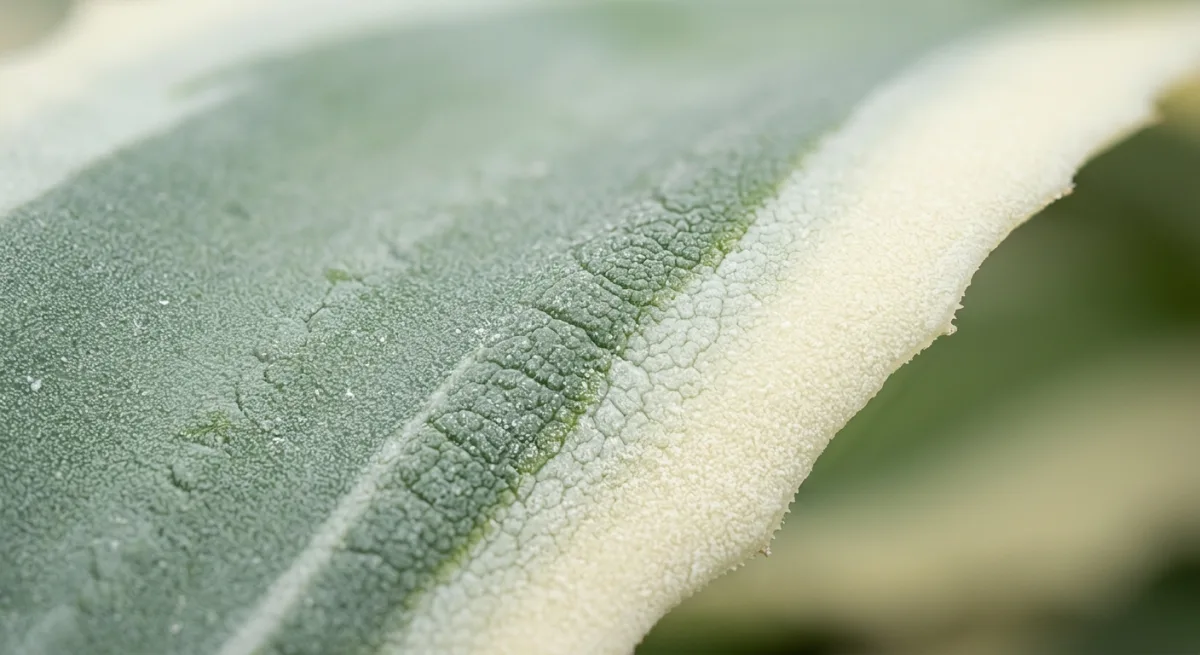
In the 'Variegata' cultivar, we encounter a cellular marvel known as a periclinal chimera. Due to spontaneous genetic divergence within the L1 and L2 apical meristem cell layers, the peripheral tissues are rendered incapable of synthesizing chlorophyll pigments. This generates a sharp, breathtaking contrast between the glaucous, soft pale-green midrib and the broad, cream-to-ivory outer margins. As the specimen matures, it gradually elevates its heavy rosette upon an architectural, trunk-like stem. Upon reaching its developmental zenith, it produces a colossal, gracefully curving floral raceme spanning 2 to 3 meters that swoops toward the earth before curling upward, mimicking the bushy tail of a fox.
2. Delicate Light Ratios and Thermal Thresholds
Chlorophyll is the fundamental photosynthetic pigment converting solar photons into metabolic energy. Because the expansive albino margins of Agave attenuata 'Variegata' are utterly barren of chlorophyll, the plant exhibits a classic physiological paradox: it requires intense light to fuel its reduced metabolic capacity, yet its pale, unpigmented tissues lack protective screening and will scorch (necrotize) under direct midday radiation.
- Optimal Exposure: Gentle, early-morning sunshine (up to 11:00 AM) is ideal. For the balance of the day, provide bright, indirect illumination filtered through 40–50% shade cloth, or position it in an intensely lit indoor room near south-facing glass. In dim conditions, variegation will not immediately disappear, but the emerging leaves will stretch, attenuate, and the compact architectural rosette will unravel into an unsightly state of etiolation.
- Thermal Tolerances: Adapted to warm, frost-free Mexican microclimates, this chimera has virtually zero cold hardiness. Growth stalls dramatically below 10°C (50°F). Sustained temperatures at or below 0°C (32°F) trigger intracellular crystallization, rupturing the thin succulent cell walls and causing the lush foliage to collapse into a translucent, gelatinous mass within hours. Winter ambiances should never dip below a baseline of 7–8°C (45–46°F).
3. Root Physiology and Irrigation Discipline
Operating on Crassulacean Acid Metabolism (CAM), the Variegated Foxtail Agave captures atmospheric carbon dioxide exclusively during the dark hours of night, tightly sealing its stomata during peak daylight to curtail moisture loss. Drenching this succulent on a casual whim is never an expression of love; rather, it suffocates the subterranean root hairs by starving the rhizosphere of oxygen. While Agave attenuata possesses a slightly fleshier, more fibrous root network than arid desert agaves, it retains zero tolerance for stagnant water sitting around its roots.
Cultivate an unwavering 'soak and dry' regimen. Never reintroduce water until at least 80% of the container's substrate volume has dried completely. During irrigation, apply water strictly around the root flare; never let moisture pool within the apical growing core of the rosette. Water trapped in the crown during cool evenings provides an immediate entry point for devastating opportunistic fungal pathogens, primarily Fusarium and Pythium crown rots.
4. Custom Collector Substrate & Mineral Balance
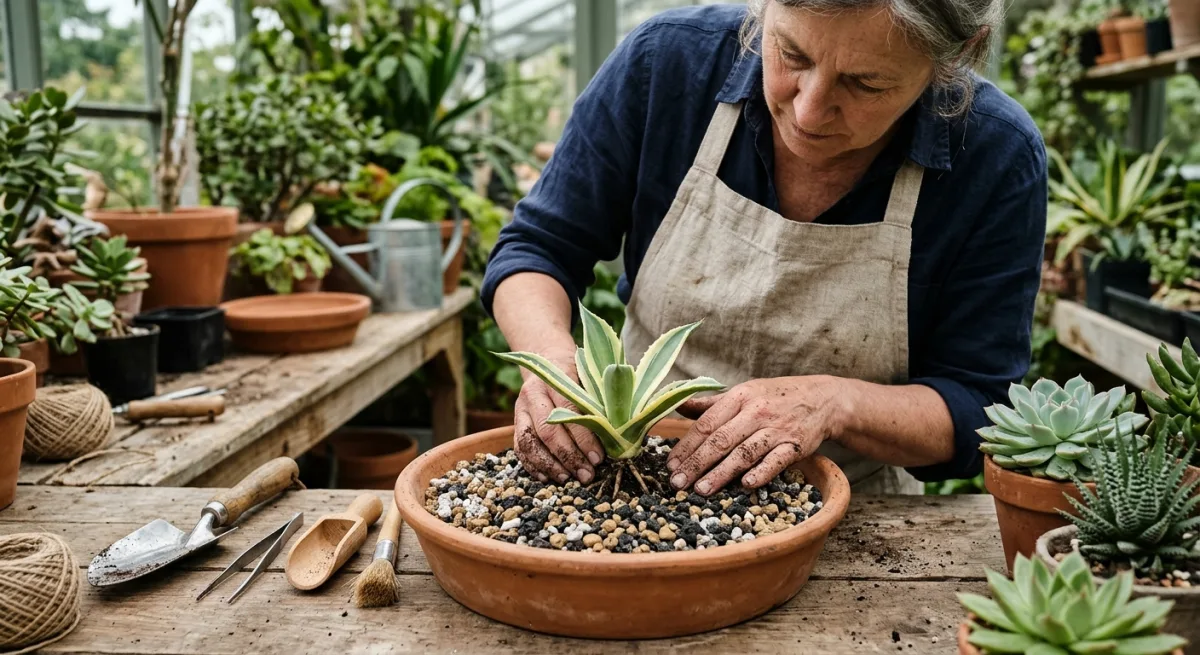
An exquisite, mutated botanical gem must never be relegated to standard peat-heavy nursery potting soils. Organic-rich substrates retain excessive moisture, rapidly compact over time, and choke out vital gas exchange. Our objective is an airy, mineral-predominant mix engineered with countless microscopic voids that drains instantaneously the moment moisture touches the soil surface.
| Substrate Component | Volumetric Ratio (%) | Botanical Function |
|---|---|---|
| Hard Japanese Akadama (Medium Grain) | 35% | Superior cation-exchange capacity (CEC), moisture buffering, and root anchorage. |
| Horticultural Pumice (3–6 mm) | 30% | Permanent microporosity, structural stability, and superior compaction resistance. |
| Clinoptilolite Zeolite | 15% | Absorbs excess salts, binds ammonium, and establishes natural antifungal properties. |
| Red Volcanic Scoria (Lava Grit) | 10% | Trace mineral supplementation and persistent aeration channels. |
| Coarse Washed Coco Coir Fibers | 10% | Provides a micro-capillary moisture bridge between porous mineral granules. |
5. Propagation Complexities & Safe Production Techniques
Propagating Agave attenuata 'Variegata' via seed is practically impossible. The chimeric arrangement is not passed through sexual reproduction; seed embryos will either revert entirely to the wild solid-green form or emerge as fully albino seedlings lacking all chlorophyll, which inevitably wither and starve within weeks of germination. Discerning growers rely on two vegetative propagation strategies:
- Basal Offsets (Pups): Offshoots naturally produced around the base of the mother stalk may be detached once they have developed some independent roots and their rosette diameter spans at least 10–12 cm (4–5 inches). Sever the connection cleanly using a sterilized scalpel. Dust the wound with sulfur powder or activated charcoal, allow the incision to callous in a dry, shaded area for 4 to 6 days, and set the pup into a dry, fully mineral substrate until new roots initiate.
- Inflorescence Bulbils: As the epic, curving flower spike nears the conclusion of its monumental bloom cycle, it may generate hundreds of adventitious plantlets (bulbils) along the stem. Carefully harvest only those miniature plantlets displaying distinct, balanced variegation margins, and root them over pure volcanic pumice.
6. Collector Safeguards: Physical Protection and Aesthetic Longevity
The Variegated Foxtail Agave is a slow-growing specimen with a remarkably sensitive epidermis that cannot rapidly shed or conceal cosmetic trauma. Lacking protective marginal barbs, its soft, succulent leaves are easily damaged. Hailstorms, curious pet claws, or minor friction in cramped corridors will produce permanent brown cicatrices (callous scars) that will mar the leaf's beauty for years until the foliage is naturally shed through basal senescence.
House your specimen in a wide-based, heavyweight container—such as high-fired terracotta or unglazed stoneware—to offset the substantial top-heavy mass of the rosette as it elongates. When repotting, enlist a second set of hands and support the broad, spineless leaves using soft microfiber wraps to prevent structural creases, preserving every millimeter of this living botanical masterpiece.


Reader Reviews & Comments 1 Review
No comments yet. Be the first to share your succulent experience!
Leave a Review & Rating
Share your plant care tips, experiences, or questions with our succulent community.