






When gazing upon the sheer, dizzying limestone fissures of the Sierra Madre Oriental mountain range in northeastern Mexico, one encounters an arresting botanical silhouette emerging from the rocky crevices like a fountain of frosted white and verdant green. Recognized in botanical literature as Agave bracteosa 'Monterrey Frost'—and affectionately termed the 'Frosted Candelabra Agave'—this rare selection stands as one of nature's finest architectural triumphs. In its wild habitat, its fibrous, tenaciously anchoring roots and palmately upright, arching rosettes render it remarkably impervious to punishing mountain gales and blistering high-elevation plateau sunshine.
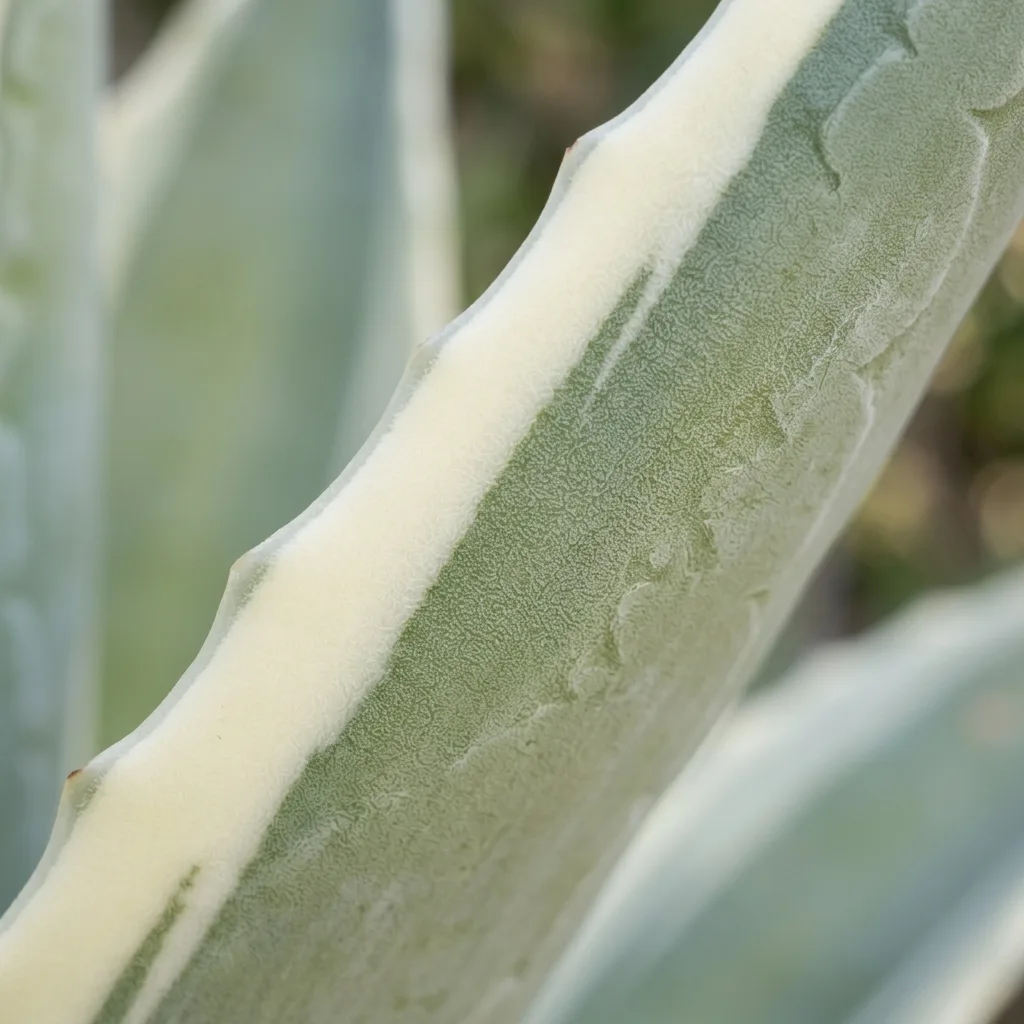
For many succulent enthusiasts, the word 'Agave' immediately conjures images of aggressive, desert-dwelling behemoths armed with flesh-tearing marginal teeth and dagger-sharp terminal spines. Yet 'Monterrey Frost' gracefully shatters this forbidding reputation: its leaf margins are completely devoid of vicious teeth, its soft tips will not puncture skin, and its flexible internal fiber matrix yields safely to contact without snapping. Decorated with frosted, creamy-white longitudinal margins, its foliage creates an elegant, sculptural centerpiece in a bright living room or modern xeriscape garden, quickly becoming an indispensable darling among contemporary collectors who appreciate refined, minimalist botanicals.
Throughout this master guide, we will explore step-by-step how to maintain your 'Monterrey Frost' in pristine, exhibition-grade health, whether displayed in an artisan terracotta vessel indoors or an outdoor rock garden. From its cellular water-retention mechanisms and root-zone aeration dynamics to precise limestone mineral balancing and seasonal irrigation protocols, settle in with a warm cup of coffee as we unpack the profound botanical science behind this extraordinary cultivar.
1. Botanical Identity and Morphological Characteristics
Agave bracteosa is a monocotyledonous perennial succulent nested within the family Asparagaceae and subfamily Agavoideae. Originally discovered inhabiting precipitous limestone canyons surrounding the city of Monterrey, Mexico, this variegated sport—cultivar 'Monterrey Frost'—features striking frosted, pale cream-to-ivory outer margins flanking a soft, glaucous olive-green median band. Upon reaching full maturity, the rosette attains an ideal, well-mannered footprint of approximately 40 to 60 cm in diameter and 45 cm in height, making it impeccably suited for container culture and sophisticated interior spaces alike.
Morphologically, what sets this species worlds apart from its congeners Is the Thumb Cactus? Mammillaria Matudae Care and Blooming Guide">Is the Orange Snowball Cactus? Botanical Care Tips for Growing Rebutia">is the total absence of marginal serrations. Instead, running your fingers along the leaf edge reveals a slightly cartilaginous, finely sandpaper-like micro-texture that is entirely harmless to touch. Utilizing Crassulacean Acid Metabolism (CAM) photosynthesis, the plant seals its stomata tightly during daylight hours to virtually eliminate transpiration loss, nocturnal openings allow carbon dioxide uptake and its subsequent storage as malic acid within cellular vacuoles. This elegant biochemical pathway ensures that the leaves maintain their turgid, architectural posture even through prolonged stretches of atmospheric drought.
2. Light Requirements and Indoor Positioning
'Monterrey Frost' naturally craves the light dynamics of its native limestone escarpments: intense, bright, and abundant photon flux. However, a crucial physiological nuance must be respected: the creamy-white marginal ribbons of its foliage consist of albinistic cells that are entirely deficient in protective chlorophyll. Consequently, these pale bands are inherently more vulnerable to solarization and thermal leaf scorch than the deep green central tissues.
When cultivated outdoors, the plant revels in the crisp morning sun, but benefits immensely from filtered light, shade cloth, or the dappled canopy of light-foliaged trees during blistering midsummer afternoons. When grown indoors, an unobstructed southern or southwestern exposure is mandatory to preserve the tight, compact geometry of the rosette. Insufficient light inevitably triggers etiolation; the leaves become limp and elongated, the crisp ivory margins dull to an unattractive muddy hue, and the majestic, upward-arching habit sags dispiritedly outward.
3. Irrigation Discipline: The 'Soak and Dry' Protocol
The single most pervasive pitfall in container succulent culture is applying modest sips of water on a frequent, well-intentioned schedule. In reality, frequent superficial hydration is not an act of kindness; it suffocates the root architecture by filling capillary voids with stagnant moisture and starving the roots of atmospheric oxygen. The root system of Agave bracteosa has evolved specifically to run through rocky fissures, where it is constantly oxygenated by canyon breezes and soaked solely during intense, fast-draining deluge events.
Therefore, the golden rule of cultivation is the strict application of the 'Soak and Dry' protocol. Before introducing water, insert a wooden moisture probe or skewer completely down to the very base of the container; unless it emerges bone-dry without a trace of clinging soil particulate, withhold water. When watering is due, drench the root zone thoroughly until water cascades freely from the bottom drainage holes, and immediately empty any excess accumulated in the saucer. During the winter dormancy window, lengthen irrigation intervals dramatically to once a month, or only when the lower leaves exhibit the very first signs of subtle dehydration furrows.
4. Ideal Substrate Formulation and Container Selection
When engineering a potting medium for 'Monterrey Frost', remember that its primary objective is not moisture retention, but instantaneous hydration followed by rapid gas exchange. Because its ancestral cradle consists of alkaline, limestone-dominant terrain, traditional commercial peat-based potting soils represent a slow death sentence due to their acidic nature and tendency to compact into an anaerobic mass. The finished potting mix must consist of at least 60% to 70% coarse, porous inorganic minerals.
Regarding your choice of container, bypass glazed ceramic or unvented plastic pots in favor of thick-walled, unglazed terracotta. The natural micro-porosity of baked clay wicks excess moisture outward through the pot walls, evaporatively cooling the root zone and preventing deadly root hypoxia.
| Substrate Component | Ratio (%) | Functional Botanical Purpose |
|---|---|---|
| Horticultural Pumice (3-6 mm) | 35% | Creates durable macro-pores and oxygen pockets around the root zone |
| Scoria (Crushed Lava Rock) | 20% | Provides internal micro-porosity while slowly leaching trace iron and minerals |
| Limestone Chippings / Zeolite | 15% | Buffers substrate pH naturally toward slightly alkaline (7.0 - 7.8) and anchors roots |
| Premium Organic Cactus Blend | 20% | Supplies beneficial microbial colonization and minimal organic nutrients |
| Coarse Perlite / Quartz Grit | 10% | Ensures swift drainage velocity and guards against long-term substrate compaction |

5. Step-by-Step Vegetative Propagation Techniques
Variegated Agaves such as 'Monterrey Frost' cannot be reliably propagated from seed, as sexual reproduction typically results in reversion—producing offspring with uniformly green leaves that lack the coveted cream margins. Vegetative propagation via clonal division is the only pathway to preserve this specific variegated chimera intact. Fortunately, mature specimens naturally produce miniature replicas (basal offsets or pups) around the base of their rhizome.
- Select the Optimal Season: Undertake offset division in early spring through early summer, coinciding with the initiation of the natural seasonal surge in active root growth.
- Evaluate Offset Independence: Choose pups that have achieved at least one-quarter the volume of the mother rosette and have begun developing their own incipient adventitious root threads.
- Perform a Surgical Cut: Carefully unpot the specimen or clear away the top mineral layer around the root neck. Using a razor-sharp pruning knife sterilized with 70% isopropyl alcohol, sever the connecting rhizome stolon cleanly, leaving as much of the pup's own root tissue intact as possible.
- The Crucial Callusing Phase: Never pot fresh offsets immediately. Place the newly severed pups in a warm, dry, shaded location with gentle ambient air circulation for 4 to 7 days, allowing the wounded parenchymal tissue to seal and form an impenetrable, suberized callus barrier.
- Dry Planting and Root Establishment: Seat the callused offset into the aforementioned gritty inorganic mineral mix. Do not water for the first 7 to 10 days; merely mist the surface stones around the base of the pup occasionally. After two weeks, as root elongation is naturally stimulated in search of water, transition cautiously into the standard soaking protocol.
6. Common Pests, Diseases, and Clinical Remedies
Agave Snout Weevil (Scyphophorus acupunctatus): The primary nemesis of the entire genus. This destructive curculionid beetle punctures the basal crown to deposit eggs, after which the burrowing larvae consume the core vascular tissues from the inside out. If the basal leaves suddenly lose turgor, emit a sour fermentation odor, or the entire rosette rocks loosely in its pot, infestation is advanced. Preventative systemic drenches of organic cold-pressed neem oil or targeted beneficial entomopathogenic nematodes in early spring provide excellent biological defense.
Mealybugs (Pseudococcidae): These sap-sucking insects seek refuge deep within the tight, clasping leaf axils. At the first sign of cottony white colonies, dip a cotton swab directly into 70% isopropyl alcohol and contact-treat the pests, followed by a localized rinse with tepid water.
Fungal Leaf Spot (Anthracnose): In conditions combining sluggish air circulation with excessive ambient humidity, circular, necrotic brown-to-black lesions can erupt on the foliage. Promptly excise severely infected leaves using a flame-sterilized blade, apply a targeted copper-based botanical fungicide, and immediately optimize ambient air currents using a gentle oscillating fan.
7. Seasonal Horticultural Calendar and Expert Pro-Tips
Coordinating your care routine with the natural phenological rhythm of 'Monterrey Frost' guarantees vibrant vigor throughout the year:
- Spring: The awakening phase. Resume thorough 'Soak and Dry' watering as the substrate dries out. Administer a low-nitrogen, high-potassium-and-phosphorus cactus fertilizer diluted to one-quarter strength once per month.
- Summer: During extreme heat waves exceeding 35°C (95°F), the plant naturally enters a protective semi-dormant state. Screen the foliage from harsh, direct midday sunlight and restrict watering exclusively to late, cool twilight hours.
- Autumn: Gradually space out irrigation cycles as ambient daylight and temperatures decline. Discontinue all supplemental fertilization entirely to allow tissue hardening ahead of winter dormancy.
- Winter: Agave bracteosa boasts impressive cold tolerance down to -6°C to -8°C (21°F to 18°F) for short durations, provided its root zone remains bone-dry (honoring its rugged montane provenance). However, the fatal synergy of cold and wet roots will destroy the crown overnight. Keep the potting substrate rigorously dry throughout the dormant winter months.


Reader Reviews & Comments 4 Reviews
Julian Vance
Elena Rostova
Marcus Sterling
Claire Dupont
Leave a Review & Rating
Share your plant care tips, experiences, or questions with our succulent community.