






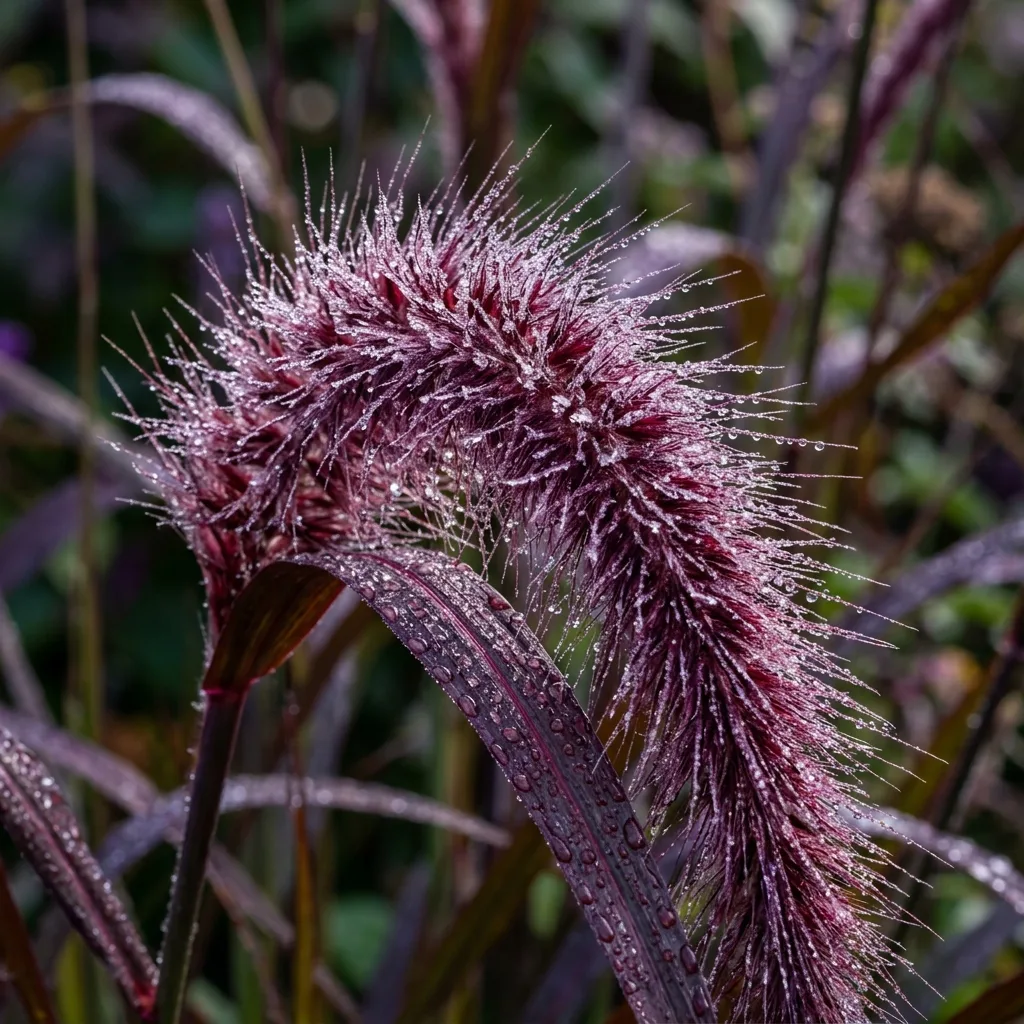
Picture a breathtaking elegance that stretches from the wind-swept, sun-drenched rocky slopes of North Africa and the Eastern Mediterranean straight to the focal point of our modern gardens: purple fountain grass. Known in botanical literature as Pennisetum setaceum 'Rubrum' (and reclassified in contemporary taxonomy as Cenchrus setaceus 'Rubrum'), this perennial ornamental grass earns its name from its cascading, arching leaf blades that mirror a surging water fountain, accented by soft, fox-tail-like burgundy-purple seed plumes. Forming an immaculate textural and chromatic contrast alongside succulents and xeriscape species, this velvety grass injects dynamic movement into your outdoor space, whispering gently with the faintest breeze.
For many plant enthusiasts, purple fountain grass appears at first glance to be an entirely hands-off ornamental; however, its tropical heritage makes it acutely vulnerable to freezing winter temperatures and heavy, moisture-retentive soils. When we position this architectural centerpiece next to our prized succulent collections, understanding its cellular osmotic equilibrium, root zone oxygenation, and anthocyanin pigmentation ensures that its radiant ruby hues never fade over the years. Pour a fresh cup of coffee and join me in the greenhouse as we explore this practical, scientifically anchored guide to unlocking every cultivation secret of crimson fountain grass.
1. Botanical Biology and Physiological Foundations
The profound burgundy, bronze, and plum leaf coloration of purple fountain grass stems from high concentrations of anthocyanin pigments localized within the mesophyll cells of the foliage. Unlike conventional green grasses, the 'Rubrum' cultivar optimizes its photosynthetic performance by deploying an anthocyanin shield against harsh ultraviolet solar radiation. This biological adaptation dictates an essential physiological rule: if the plant is deprived of sufficient direct sunlight and radiant lumens, cellular chlorophyll synthesis takes precedence, and that spellbinding ruby-purple tone degenerates into a flat, washed-out olive green.
Furthermore, this grass utilizes the C4 photosynthetic pathway. Shared with warm-climate champions like maize and sugarcane, this metabolic adaptation allows the plant to close its foliar stomata significantly during scorching summer heatwaves, sharply mitigating transpiration-induced water loss. Beneath the surface, its root anatomy is composed of a dense, fibrous network of adventitious feeder roots. While these fibrous strands excel at pulling micro-pockets of hydration from between coarse soil particles, the root epidermis undergoes rapid maceration (cellular decay and tissue breakdown) the moment it is deprived of dissolved oxygen. Consequently, open, porous substrates that drain surplus water within seconds are a non-negotiable survival requirement.
2. Accurate Diagnosis and Symptom Recognition
Always remember that your plant communicates its internal status clearly; leaf pigmentation, structural rigidity, and root crown firmness serve as direct indicators of its metabolic vitality:
- Insufficient Solar Radiation (Etiolation and Chlorosis): Reversion of the lower foliage to pale green, accompanied by weak, sprawling, flopping leaves that refuse to maintain their proud arch, signals an urgent demand for at least 6 hours of unfiltered direct sunlight daily.
- Rhizosphere Hypoxia (Overwatering and Heavy Soils): Browning leaf margins coupled with a blackened, mushy, or softened root crown. Just as over-saturating succulents is a misguided expression of care, keeping purple fountain grass perpetually soaked suffocates its fibrous root system.
- Cold Stress and Frost Necrosis (Sub-0°C / 32°F Exposure): Foliage rapidly transforms into parchment-like, bleached straw while the subsurface crown turns gelatinous. Hardy primarily in USDA Hardiness Zones 9–11, exposure to sustained freezing temperatures ruptures the plant's cellular membranes irreversibly.
- Root Binding and Compaction: In container-grown specimens, water puddling on the surface without penetrating, roots warping out of container drainage ports, and visibly diminished plume sizes reflect severely congested root architecture.
3. Step-by-Step Implementation Protocol
Sustained, robust growth in crimson fountain grass hinges on rigorous planting mechanics and adherence to precise seasonal pruning cycles:
- Site and Aspect Selection: Designate a south- or west-facing planting bed in your garden or patio that captures unobstructed, full-spectrum, all-day sun.
- Substrate Drainage Preparation: Excavate a planting pit twice as wide and equally as deep as the root ball. Line the lower 5 cm (2 inches) with coarse volcanic pumice or crushed lava rock to prevent basal water stagnation around the lower roots.
- Planting Depth Calibration: Never bury the root crown (the sensitive junction where the foliage stems merge into the root system) below grade. The crown must sit completely flush with the surrounding soil line; subterranean burial invites fatal crown rot.
- Settling Irrigation: Gently tamp the backfilled soil around the root mass to eliminate subterranean air pockets, then administer a deep, saturating initial soak. Do not irrigate a second time until the substrate has dried out thoroughly.
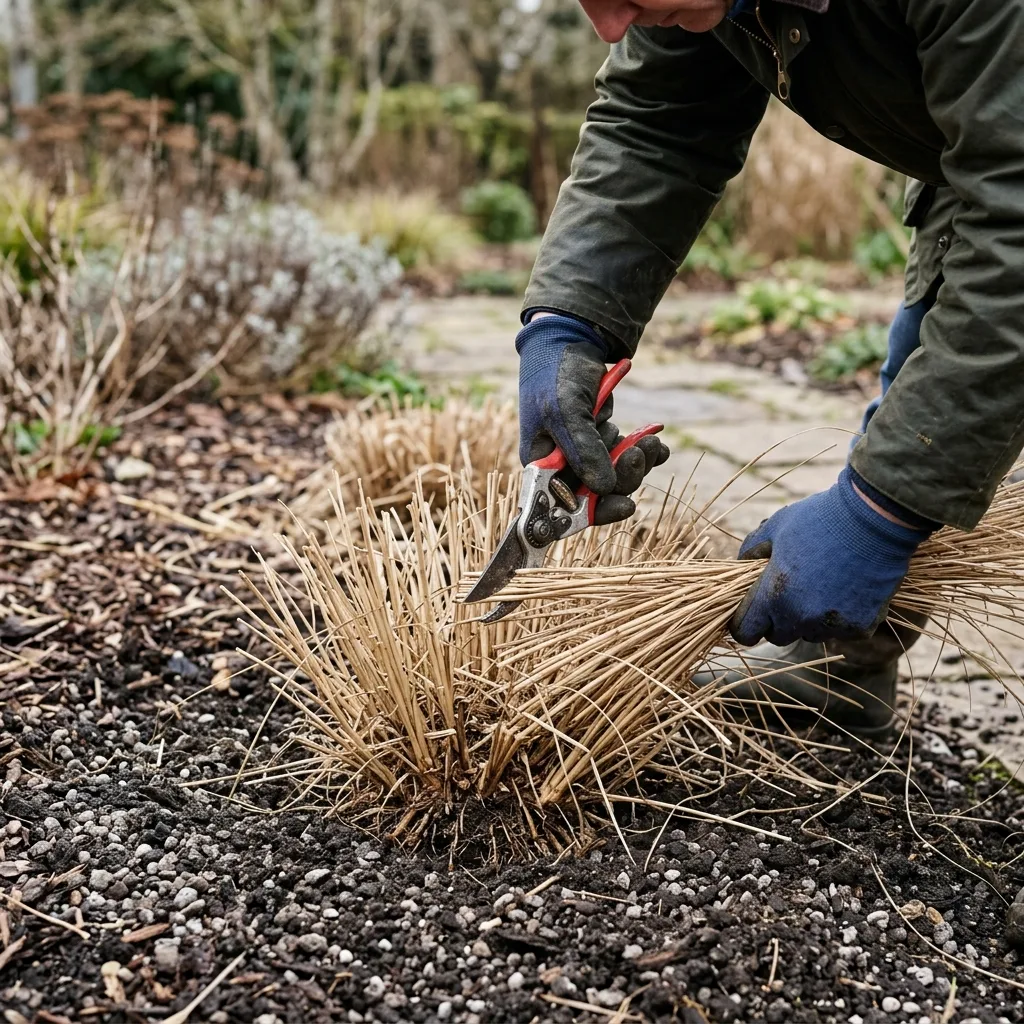
- Rejuvenation Cutback (Late Winter / Early Spring): Once all danger of frost has passed—typically late February or early March—shear back the dead, dried foliar mound 10 to 15 cm (4 to 6 inches) above soil level using sterile, razor-sharp hedge shears. This radical rejuvenation cutback immediately stimulates an explosion of fresh burgundy shoots.
4. Essential Equipment, Materials, and Benchmarks
Whether you cultivate your grass as a container accent on a terrace or directly in a xeriscape border, the following substrate specifications ensure optimum cellular resilience:
| Component / Parameter | Recommended Standard / Ratio | Physiological Justification |
|---|---|---|
| Base Garden / Potting Loam | 40% Sandy-Loam Topsoil | Provides mechanical anchorage and foundational cation-exchange capacity. |
| Inorganic Drainage Aggregate | 30% Coarse Pumice + 15% Crushed Lava Rock | Introduces macro-porosity into the rhizosphere, maximizing oxygenation. |
| Graded Zeolite / Perlite | 15% Clinoptilolite Zeolite (1–3 mm) | Adsorbs key micro-nutrients while buffering extreme moisture fluctuations. |
| Substrate pH | 6.0 – 7.5 (Slightly Acidic to Neutral) | Facilitates smooth iron and magnesium uptake, sustaining anthocyanin pathways. |
| Photoperiod & Intensity | Minimum 6–8 Hours of Full Sunlight Daily | Drives peak C4 photosynthetic velocity and intense ruby-bronze pigmentation. |
| Irrigation Cadence | Deep watering once the top 5 cm (2 in) is dry | Wet-dry cycling forces deeper root penetration and reinforces drought tolerance. |
5. 5 Common Pitfalls and Rescue Remedies
- Pitfall 1: Premature Autumn Pruning. Autumn rain pools within open, cut stems, saturating the dormant crown.
Rescue: Leave foliage undisturbed until spring. If mistakenly cut, shield the crown with dry pine bark mulch or breathable horticultural fleece to guard against frost and pooling moisture. - Pitfall 2: Planting in Partial or Deep Shade. Deprived of light, leaves bleach green, turn weak, and fail to produce plumes.
Rescue: Immediately excavate and transplant the clump into a fully exposed sunny border, or relocate the container to an unobstructed south-facing terrace. - Pitfall 3: Frequent, Shallow Top-Watering. Moisten only the soil crust forces roots to linger near the surface, where midday heat scorches them.
Rescue: Transition to the 'drench-and-dry' method. Saturate the soil thoroughly until water drains from the base, then withhold irrigation until dry. - Pitfall 4: Non-Draining Decorative Planters. Trapping water around fibrous roots causes rapid anaerobic fermentation and pathogenic root rot.
Rescue: Unpot the plant immediately, excise necrotic black roots with sterile shears, and repot into a porous terracotta vessel fitted with ample drainage holes and gritty aggregate. - Pitfall 5: Excessive High-Nitrogen Fertilization. Heavy nitrogen forces rapid, soft cell elongation, diluting anthocyanin saturation and causing foliage to flop.
Rescue: Cease synthetic fertilizers immediately. In spring, apply only a low-nitrogen, potassium- and phosphorus-rich compost tea or a controlled-release succulent formula.
6. Seasonal Calendar and Long-Term Trajectory
The developmental trajectory of purple fountain grass aligns gracefully with the natural rhythm of the seasons:
- Spring (Awakening and Pruning): As soon as frost risks clear (March), execute your hard rejuvenation cutback. Top-dress the perimeter with mature leaf compost or a low-nitrogen organic amendment. Vigorous new shoots will emerge within 2 to 3 weeks.
- Summer (Peak Vegetative Display and Inflorescence): By July and August, the plant reaches its full architectural spread, unfurling rich, smoky-purple plumes. C4 photosynthesis operates at peak efficiency, offering stellar drought defiance.
- Autumn (Color Intensification): As diurnal day-night temperature swings widen, anthocyanin concentrations peak, turning the foliage an intoxicating dark wine hue. Systematically taper down supplemental watering.
- Winter (Dormancy and Cold Protection): In cold winter areas (USDA Zones 8 and below, experiencing temperatures below -5°C / 23°F), lift potted specimens into a bright, unheated, frost-free greenhouse or sunroom (+5°C to +10°C / 41°F to 50°F). In milder borders, mulch heavily around the base with dry leaves.
By implementing this disciplined botanical protocol, your purple fountain grass will return with boundless vigor every spring, reigning as the undisputed, vibrant masterpiece of your landscape for years to come.


Reader Reviews & Comments 3 Reviews
Eleanor Vance
Marcus Thorne
Clara Higgins
Leave a Review & Rating
Share your plant care tips, experiences, or questions with our succulent community.