






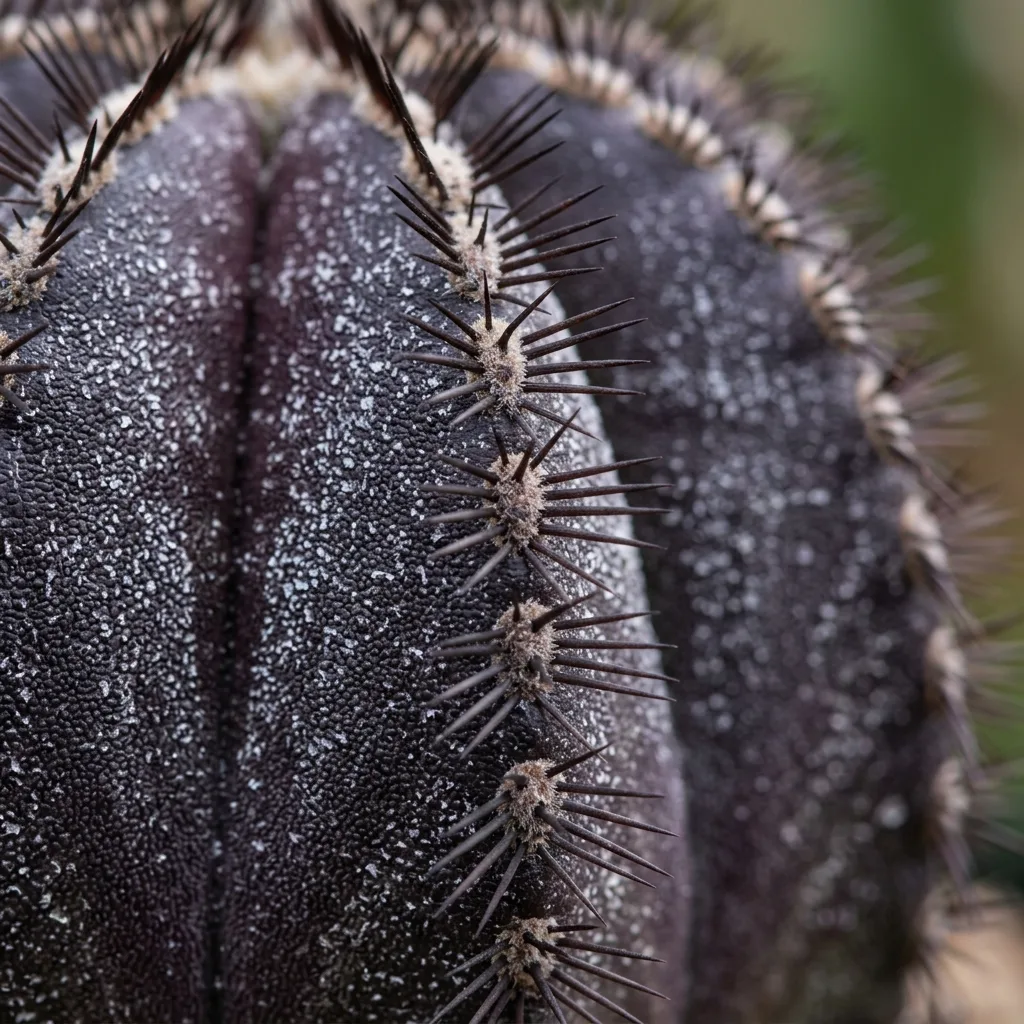
On the windswept, isolated mountain summits of Minas Gerais, Brazil, nestled directly among outcroppings of pure quartzite stone, rises a botanical entity that appears as though it tumbled from another planet: Uebelmannia. With its metallic purple-bronze epidermis, a powdery farina layer composed of microscopic wax crystals, and razor-sharp, geometric ribs, this plant stands as the crown jewel of discerning succulent and cactus connoisseurs. In nature, this extraordinary purple armor is a magnificent, cellular-level shield—evolved specifically to deflect severe ultraviolet radiation and arrest moisture loss in scorching alpine winds.
However, when we welcome Uebelmannia into our living rooms, grow setups, or greenhouses, everything shifts. Treating it like an everyday desert cactus by burying it in calcareous, off-the-shelf succulent soils or drenching it with tap water will suffocate and liquefy its microscopic root hairs within mere hours. Watering succulents excessively is never an act of affection; it simply cuts off oxygen exchange and unwittingly drowns the rhizosphere. When dealing with Uebelmannia, the margin for error is essentially zero. In this comprehensive master guide, we explore the exact biological prerequisites needed to grow this aristocrat of the plant kingdom with vigorous roots, a flawless globular form, and zero cellular cracking.
1. Botanical Biology and Physiological Foundations
Uebelmannia (most notably the type species Uebelmannia pectinifera) conducts Crassulacean Acid Metabolism (CAM) photosynthesis under exceptionally strict biochemical constraints. During daylight hours, it locks its stomata firmly shut to prevent transpirational water loss; as night falls and temperatures plunge, it opens these apertures to capture carbon dioxide and synthesize malic acid. The dense accumulation of protective betalain and anthocyanin pigments within the epidermal cells produces that coveted, dark purple-bronze hue. Meanwhile, the silvery-white, scaly bloom coating the skin represents the cactus's self-generated organic sunblock. Never wipe this delicate farina away or handle the plant carelessly with bare hands; once rubbed off, the underlying cellular walls are left permanently vulnerable to severe photoinhibition and sunburn.
The plant's most delicate biological vulnerability lies in its root architecture. In its native biotope, it inhabits pure quartzite gravel and intensely acidic (pH 4.5 to 5.5) rock crevices. Calcareous water loaded with calcium carbonates or alkaline potting mixes quickly calcifies and blocks the root xylem vessels, precipitating acute iron chlorosis. Furthermore, high-humus organic soils foster aggressive fungal pathogens (particularly Fusarium and Phytophthora). During the active growing period, root initiation demands dedicated bottom heat (a steady 22–26°C / 72–79°F) paired with constant, generous atmospheric air circulation.
2. Diagnostic Signals and Symptoms of Stress
An Uebelmannia expresses internal physiological distress through obvious epidermal markers. Interpreting these cellular distress beacons early is critical to saving the specimen:
- Root Suffocation and Early Rot: A translucent, yellowish-brown discoloration right at the collar where stem meets substrate, feeling distinctly spongy or soft upon gentle palpation. This warrants immediate unpotting and radical root excision.
- Etiolation (Insufficient Light): The apical meristem (crown) narrows into a conical tip while the intense purple pigmentation fades into a dull, watery lime green. Chlorophyll synthesis surges at the expense of structural integrity and native form.
- Chronic Root Dehydration: Deep inward accordion collapse along the ribs and general body deflation occurring alongside a damp substrate. This paradox signals that the fine root hairs have rotted or desiccated, cutting off vascular water transport entirely.
- Alkaline Shock / Lime Toxicity: A sudden cessation of vegetative growth, accompanied by premature basal suberization (corky brown crusting along the base) and chlorotic yellowing.
3. Step-by-Step Cultivation Protocol
Follow this systematic protocol to establish a robust, rot-resistant root system and preserve pristine body architecture:
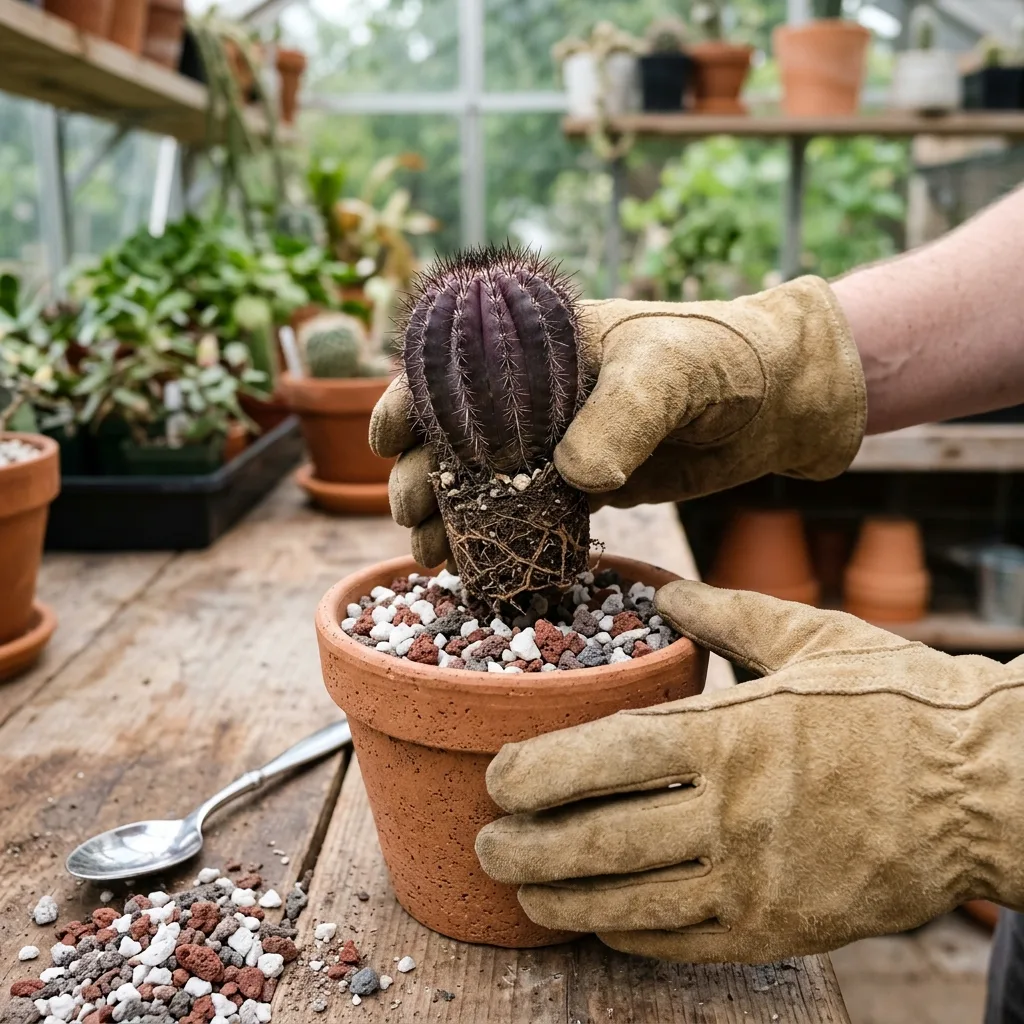
- Pot Selection and Drainage Foundation: Select an unglazed, porous terracotta container that is merely 1 to 2 cm (around 0.5–0.75 inches) broader than the root mass. Place a 2 cm layer of coarse, dust-free pumice or volcanic scoria over the drainage hole to guarantee unhindered moisture runoff.
- Assembling the Acidic Mineral Substrate: Formulate an 85–90% inorganic matrix featuring non-calciferous quartzite sand, thoroughly washed pumice, porous lava rock, zeolite, and a hint of acidic perlite. Absolutely eliminate garden loam, limestone-based amendments, and heavy standard peat moss.
- Root Positioning and Collar Top-Dressing: Settle the primary root system gently into the free-draining mineral mix. Crucially, never bury the root crown or bottom stem tissue under organic dirt; stabilize the collar solely with coarse quartzite gravel or inert volcanic granules to maintain maximum aeration.
- The Dry Callusing Window: Withhold all moisture after repotting. Keep the specimen in a warm, bright, sheltered location without water for at least 7 to 10 days. This dry respite allows microscopic root tears to seal and generate protective suberized callus tissue, shutting out fungal hyphae.
- Initial Hydration and Water Chemistry: Administer the first watering using soft, room-temperature rainwater or reverse-osmosis water. Verify that the fluid's pH registers in the slightly acidic band between 5.5 and 6.2.
4. Essential Substrate Recipe, Equipment, and Parameters
Generic succulent rules fail when applied to Uebelmannia. The following formula and environmental metric table reflect its authentic native habitat:
| Parameter / Component | Cultivation Standard | Physiological Function |
|---|---|---|
| Substrate Inorganic Ratio | 85% - 90% (Pumice, Zeolite, Pure Quartzite) | Maximizes rhizosphere gas exchange; zero stagnant moisture. |
| Substrate Organic Ratio | 10% - 15% (Sifted acidic pine bark compost) | Nutrient exchange capacity with zero calcium carbonate. |
| Water and Substrate pH | pH 5.0 - 6.0 (Strictly Acidic) | Ensures smooth iron and micronutrient vascular transport. |
| Illumination Intensity | 6,000 - 10,000 Lux (Bright, diffused high UV) | Drives anthocyanin synthesis and tight ribbed geometry. |
| Active Growth Temperatures | 24°C - 32°C day / 18°C - 22°C night | Optimizes nocturnal CAM malic acid uptake and cycling. |
| Winter Dormancy Minimum | 12°C - 15°C (54°F - 59°F; bone-dry) | Prevents vascular freezing and catastrophic dormancy rot. |
5. Five Critical Mistakes and Emergency Interventions
- Mistake 1: Hydrating with Hard, Calcareous Tap Water. Excessive bicarbonates drive soil pH above 7.5, causing alkaline lockup where the roots cannot access iron. The base corks aggressively and turns yellow.
Remedy: Immediately flush the pot with pure distilled water or water softened with 2–3 drops of organic apple cider vinegar per liter, and commit permanently to collected rainwater. - Mistake 2: Supplying 'Just a Sip' During Winter Rest. Cold temperatures drastically shut down root metabolism. Supplying even a tablespoon of water during dormancy invites swift stem liquefaction.
Remedy: If the substrate gets accidentally soaked, immediately unpot the cactus, gently dry the root ball with absorbent paper, let it air-dry bare-root in a warm room for 4 days, and replant in bone-dry grit. - Mistake 3: Overhead Misting or Spraying the Epidermis. Water droplets dissolve the precious epicuticular farina and collect inside the fuzzy apical aeroles, breeding botrytis and apical decay.
Remedy: Never mist this genus. Confine water exclusively to the rim of the pot. If the apical dip gets wet, wick it dry instantly using a cotton swab. - Mistake 4: Housing in Deep, Non-Porous Plastic Pots. Plastic seals moisture inside; with inadequate bottom airflow, the lower media stays soggy, depriving root hairs of cellular oxygen.
Remedy: Shift the cactus into a shallow, broad-based terracotta vessel at the very next opportunity. - Mistake 5: Abrupt Exposure to Blistering Midday Sun. Moving a winter-softened or shaded plant directly into baking overhead solar rays over-excites plant cells, inflicting irreversible chalky-white or scorched brown solar scars.
Remedy: Acclimate the plant progressively over 3 to 4 weeks using light shade cloth, beginning strictly with gentle early morning sunlight.
6. Seasonal Calendar and Long-Term Projections
Aligning with Uebelmannia's natural biological clock ensures decades of sculptural perfection:
- Spring (April – May): Vegetative activity emerges with glowing golden-yellow wool and vibrant spines at the crown. When ambient conditions consistently exceed 20°C (68°F), initiate a gentle bottom watering. Apply a micro-dose (quarter-strength), low-nitrogen cactus fertilizer once a month.
- Summer (June – August): The metabolic peak. Soak deeply in the cool evening hours once the substrate is completely dry to the bottom. During extreme heat waves exceeding 35°C (95°F), the cactus may enter aesthetic dormancy (estivation); space out waterings slightly until temperatures soften.
- Autumn (September – October): With cooling daylight, gradually lengthen the intervals between waterings. Allow the cellular sap to concentrate in preparation for cold weather by terminating irrigation completely by late October.
- Winter (November – March): Absolute dormancy. Maintain a bright, sun-drenched windowsill or greenhouse spot kept at an ambient minimum of 12°C (54°F) without a single drop of water. Slight rib shrinkage is completely normal; it reflects the plant's clever strategy of condensing sugars to lower the cellular freezing point.
Adhering strictly to this physiological protocol guarantees that your Uebelmannia will develop into a peerless living sculpture over the years, rewarding you during high summer with delicate, funnel-shaped sulfur-yellow blossoms glowing against dark purple armor.


Reader Reviews & Comments 3 Reviews
Julian Vance
Clara Sterling
Marcus Thorne
Leave a Review & Rating
Share your plant care tips, experiences, or questions with our succulent community.