






Perched upon the rugged limestone plateaus of the Toliara region in southwestern Madagascar, resilient against scorching winds and prolonged arid spells, thrives a botanical marvel: Operculicarya decaryi, colloquially revered as the Madagascar Elephant Tree. Exhibiting a rugged, swollen pachycaul trunk reminiscent of an elephant's weathered hide and concealing extensive water-storing root tubers beneath the ground, this species does not simply endure drought—it embraces it as a lifestyle. When you introduce this ancient specimen to your collection, you are welcoming far more than a simple potted plant; you are hosting a miniature sculpture forged by centuries of patience that gently decelerates the pace of time.
As an exceptional member of the cashew family (Anacardiaceae), this species is often mistaken in domestic settings for Portulacaria afra (Elephant Bush), yet its cellular water architecture operates on a vastly different physiological plane. Developing a true specimen-grade caudex adorned with deep, rugged furrows depends entirely on how effectively you support its xylem vascular bundles and storage parenchyma cells. Drenching succulents indiscriminately is not an act of kindness; it simply asphyxiates root cells within saturated soil. Pour yourself a fresh cup of coffee as we unpack the cellular dynamics and home cultivation protocols needed to transform this desert tree into a resilient, heirloom bonsai.
1. Botanical Biology and Physiological Foundations
In structural botany, Operculicarya decaryi is classified as both pachycaul (possessing a disproportionately thick, swollen trunk relative to its branches) and caudiciform (forming a swollen, water-retentive base or subterranean tuber system). The cortical tissue within the trunk and its tuberous storage roots are densely populated by water-storing parenchyma cells. These specialized reservoirs maintain osmotic potential, preserving cellular turgor pressure even when the tree sheds its foliage during extended periods of seasonal dormancy.
Its tiny, lustrous, imparipinnate leaves minimize surface area to dramatically reduce transpiration. Under intense direct sunlight, the leaves produce a glossy resinous film—a thickened cuticular shield designed to scatter excessive ultraviolet radiation. As the tree matures, the bumpy, verrucose bark undergoes suberization (cork development), creating an insulating barrier that shields the delicate living cambium from severe thermal swings. If the substrate remains persistently waterlogged, these fleshy tissues are starved of oxygen; cellular respiration collapses into anaerobic fermentation, rapidly inciting irreversible root rot driven by opportunistic oomycetes such as Pythium and Phytophthora.
2. Accurate Diagnosis and Plant Signals
The Elephant Tree reacts swiftly to microclimatic shifts. By learning to interpret its cellular signals, you can readily understand what your tree is communicating:
- Foliar Chlorosis and Leaf Drop: Abrupt drops in ambient temperature (below 12°C / 54°F), cold drafts, or root suffocation caused by poor drainage. If leaf loss occurs toward early winter while the trunk remains rock-solid, the tree is entering natural dormancy; suspend regular watering immediately.
- Softening or Wrinkling Trunk: Gentle pressure applied to the primary caudex will reveal one of two conditions: severe dehydration (if the substrate is bone-dry and compacted) or systemic root rot (if the substrate remains wet while the trunk softens). In the case of rot, the vascular system collapses; the tree cannot uptake water regardless of moisture levels, paradoxically dehydrating in wet soil.
- Elongated, Spindly Growth (Etiolation): Insufficient light levels cause internodes to stretch unnaturally. Foliage shifts to a dull, dark green, and lateral trunk expansion ceases entirely.
- Reddish or Bronze Leaf Margins: This indicates healthy anthocyanin synthesis in response to high light levels, shielding chlorophyll pigments from photoinhibition. It is a reliable sign of optimal solar adaptation.

3. Step-by-Step Cultivation Protocol
Follow this systematic procedure to foster robust root establishment, trunk expansion, and long-term vitality in your Operculicarya decaryi:
- Light Acclimation and Siting: Position your tree in an unobstructed south- or southwest-facing exposure. Providing a minimum of 5 to 6 hours of direct, unfiltered solar radiation daily stimulates lateral cambium division, fueling proportional pachycaul development.
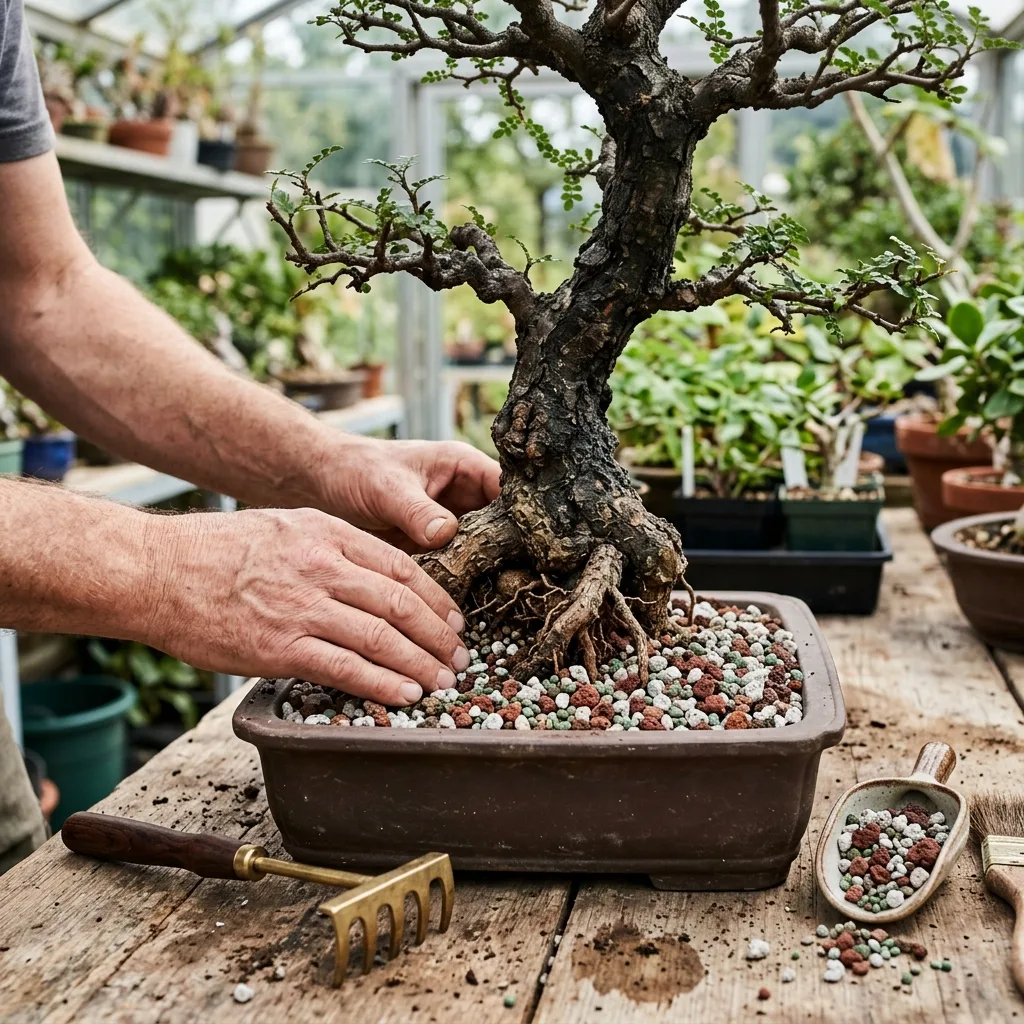
- Mineral-Dominant Substrate Formulation: Never rely on standard peat mixes or standard potting soils. Blend an open, gritty substrate composed of pumice, volcanic scoria, zeolite, and a modest fraction of sifted coco coir. Continuous interstitial airflow throughout the root zone is mandatory.
- Dynamic Soak-and-Dry Hydration Protocol: During the active vegetative window (mid-spring through early autumn), water thoroughly only after the root ball has dried out completely. Ensure water flows freely from the drainage apertures, and discard runoff collected in the saucer within 10 minutes.
- Targeted Structural Pruning: In early spring, prune back elongated lateral shoots using sterilized bonsai shears, leaving 2 to 3 leaf nodes intact. Pruning temporarily interrupts apical dominance, directing auxin distribution toward the trunk base and funneling energy into the primary caudex.
- Exposing the Root Caudex (Repotting): When repotting biennially in mid-spring, elevate the root ball slightly, exposing 1 to 2 cm (0.5 to 1 inch) of the thick tuberous storage roots above the soil line. Exposed to sunlight and air, these tissues will gradually suberize, forming an eye-catching extension of the primary trunk.
4. Substrate Composition, Environmental Metrics & Specs
To cultivate an enduring Elephant Tree, balance your inorganic substrates and environmental factors according to the parameters detailed below:
| Component / Environmental Factor | Recommended Proportion / Value | Botanical Rationale |
|---|---|---|
| Coarse Horticultural Pumice | 40% (3–6 mm grain size) | Delivers maximum root oxygenation and balanced internal capillary retention. |
| Volcanic Scoria (Lava Rock) | 30% (2–4 mm grain size) | Maintains structural integrity over years without breakdown; provides trace minerals. |
| Zeolite (Clinoptilolite) | 15% (2–5 mm grain size) | Provides high cation-exchange capacity (CEC), buffering fertilizer salts. |
| Organic Fraction (Coir / Worm Castings) | 15% (Sifted, fibrous grade) | Provides a stable organic matrix to sustain beneficial mycorrhizal communities. |
| Luminous Intensity | 50,000–80,000 Lux (Direct Sunlight) | Suppresses internodal stretching and drives photosynthetic output into the caudex. |
| Critical Thermal Minimum | 10°C / 50°F (Ideal Winter: 14–18°C / 57–64°F) | Temperatures below 10°C risk membrane breakdown and lethal cold-induced rot. |
5. Five Common Cultivation Pitfalls and Corrective Actions
- Mistake 1: Relying on Standard Commercial Succulent Soil: Most commercial cactus soils are composed largely of decomposed peat moss. They become hydrophobic when desiccated, yet remain waterlogged for weeks when saturated. Remedy: Unpot the specimen on a dry day, gently wash away all peat residues with lukewarm water, air-dry in the shade for 48 hours, and repot into an 85% inorganic mineral mix.
- Mistake 2: Treating It Like Portulacaria afra in Winter: While common Elephant Bush remains partially active through winter indoors, Operculicarya decaryi enters true physiological dormancy. Remedy: If the base begins to soften, halt all moisture immediately and move the pot to a warm (22°C / 72°F), bright spot. If basal rot is evident, take tip cuttings from healthy green stems to reroot before decay ascends.
- Mistake 3: Displaying the Tree in Low-Light Interiors: Displayed on deep interior tables, shoot growth will stall and newly emerged leaflets will shed prematurely. Remedy: Move the specimen to an unobstructed windowsill or position it beneath a full-spectrum horticultural LED system running 12 hours daily (PPFD 300+ µmol/m²/s).
- Mistake 4: Foliar Misting: Operculicarya decaryi is not a tropical rainforest understory plant. Standing moisture on the tiny pinnate leaflets invites fungal pathogens and induces leaf drop. Remedy: Cease misting entirely; hydrate strictly via substrate drenches while maintaining steady air movement.
- Mistake 5: Rushing into Shallow Bonsai Containers: Confining a slender young sapling into a shallow display pot prematurely limits root development and halts caudex thickening. Remedy: Keep the plant in a deep terracotta or fabric nursery container until the trunk reaches your desired diameter before transitioning to a formal bonsai tray.
6. Seasonal Management Calendar and Long-Term Trajectory
Cultivating a flourishing Elephant Tree requires synchronizing your care routine with the natural seasons:
- Spring (March – May): Vegetative awakening. Latent nodes along the rugged bark erupt with tiny bronze-red shoots. Gradually increase watering frequency. Apply a balanced, low-nitrogen, potassium-focused fertilizer at quarter-strength once monthly. Perform structural repotting and root training during this window.
- Summer (June – August): Peak metabolic growth. Full solar exposure drives strong internal turgor. Water deeply whenever the inorganic mix dries out completely. Outdoor positioning on a breezy terrace accelerates bark suberization and overall vigor.
- Autumn (September – November): Growth slows. As photoperiods contract, extend intervals between waterings and suspend all fertilization. When nighttime temperatures dip below 12°C (54°F), move outdoor trees indoors. Moderate yellowing and leaf loss are completely normal during this transition.
- Winter (December – February): Deep dormancy. The specimen may drop most or all of its foliage. Keep the tree in a bright position between 15°C and 20°C (59–68°F). Keep the substrate essentially dry, offering only a small sip of water around the pot edge once a month to prevent complete root dieback ahead of spring.
Adhering to these physiological protocols allows your Operculicarya decaryi to thrive across generations, carrying the ancient architectural spirit of Madagascar into your living space.


Reader Reviews & Comments 3 Reviews
Julian Vance
Clara Sterling
Marcus Thorne
Leave a Review & Rating
Share your plant care tips, experiences, or questions with our succulent community.