






Across the sun-baked expanses stretching from the scorched Rio Grande Valley of Texas to the limestone bluffs of Tamaulipas, Mexico, miniature botanical jewels thrive tucked inside narrow rock fissures: Lenophyllum. Frequently misidentified by succulent enthusiasts as a Sedum or Echeveria, this unassuming genus actually possesses some of the most elegant evolutionary adaptations for surviving severe drought. The principal dilemma we face when cultivating them indoors is forgetting their sheer cliff-face heritage and treating them like conventional, pampered houseplants.
When standing before a pot of Lenophyllum, you might hesitate to touch its foliage; the fleshiest leaf will snap cleanly from the stem at the slightest graze. Yet this extreme fragility is no flaw—it is a shrewd biological mechanism for survival and colonization. Frequent watering is never an expression of plant affection; it paralyzes cellular oxygen exchange and suffocates root systems. Let us delve into the cellular physiology of Lenophyllum and design a step-by-step roadmap to transform this rare gem into a thriving, rot-free showpiece on your windowsill or balcony.
1. Botanical Biology and Physiological Foundations
The genus Lenophyllum (notably prized species such as Lenophyllum texanum, L. reflexum, and L. guttatum) represents a strictly xerophytic branch of the Crassulaceae family. Formulating an effective cultivation regimen is impossible without understanding their cellular adaptations. Lenophyllum leaves are packed with specialized parenchyma cells housing vast vacuoles rich in mucilage and stored water. This internal reservoir allows the plant to sustain hydration for weeks on end within moisture-starved limestone pockets.
Like many extreme xerophytes, Lenophyllum operates via strict CAM (Crassulacean Acid Metabolism) photosynthesis. Under scorching daytime conditions, its microscopic pores (stomata) remain tightly sealed to eliminate transpirational water loss. Only when nocturnal coolness settles does the plant open its stomata, absorbing carbon dioxide and converting it into malic acid for temporary storage. If you plant your specimen in an overly organic, dense substrate and fail to provide nocturnal temperature drops alongside adequate air circulation, this metabolic engine stalls. When subterranean gas exchange halts, xylem vessels cease moisture transport, and the plant experiences physiological drought—melting from root to crown even as its potting medium stays soaked.
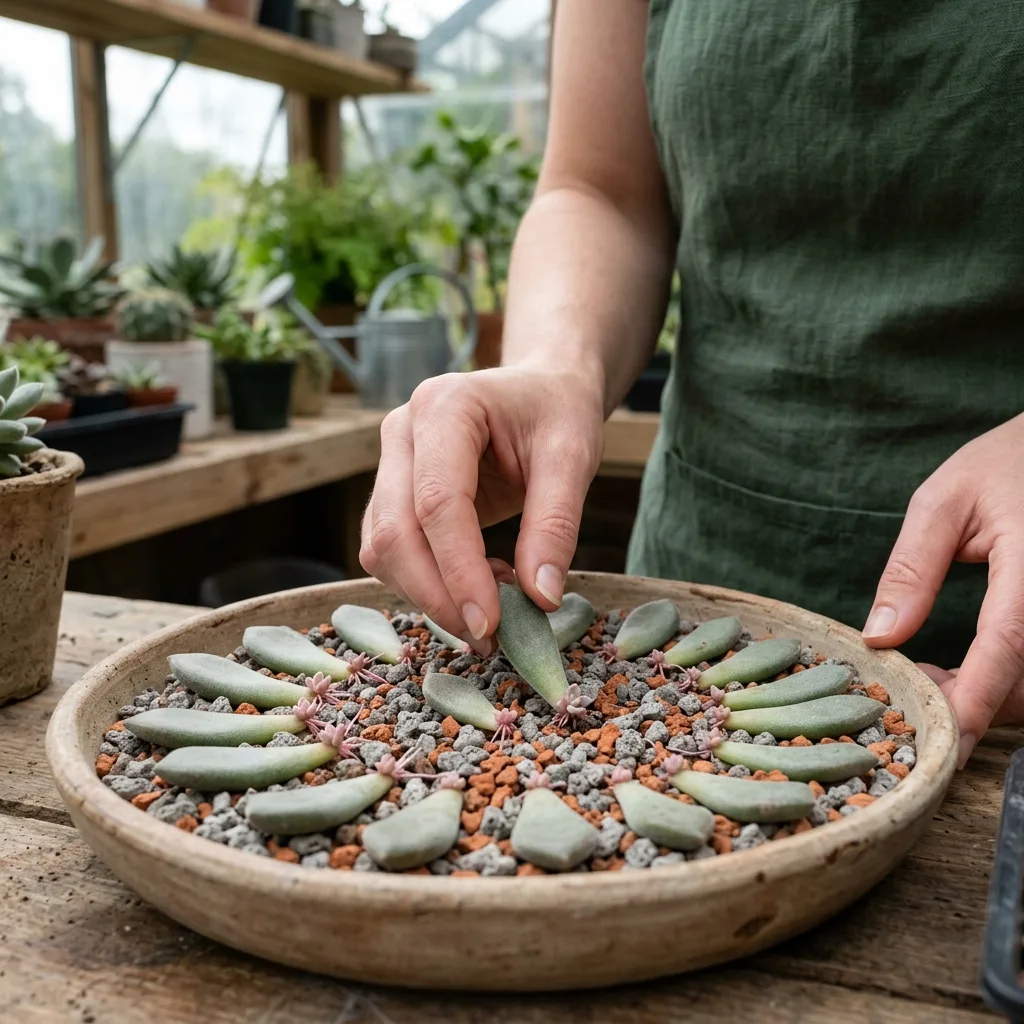
Another mesmerizing biological adaptation is deliberate foliar abscission. The petiole region connecting the leaf to the stem features a predetermined, fragile abscission zone engineered to separate under minimal mechanical force. In the wild, when desert gusts or traversing fauna brush a leaf free, meristematic tissue at the base immediately initiates adventitious roots to birth a new colony. This leaf drop is not pathology; it is evolutionary brilliance.
2. Diagnostic Cues and Symptom Recognition
Cultivating Lenophyllum successfully requires reading its subtle cellular distress signals. While the symptoms of overwatering and severe drought can look vaguely similar to the untrained eye, textural differences are decisive:
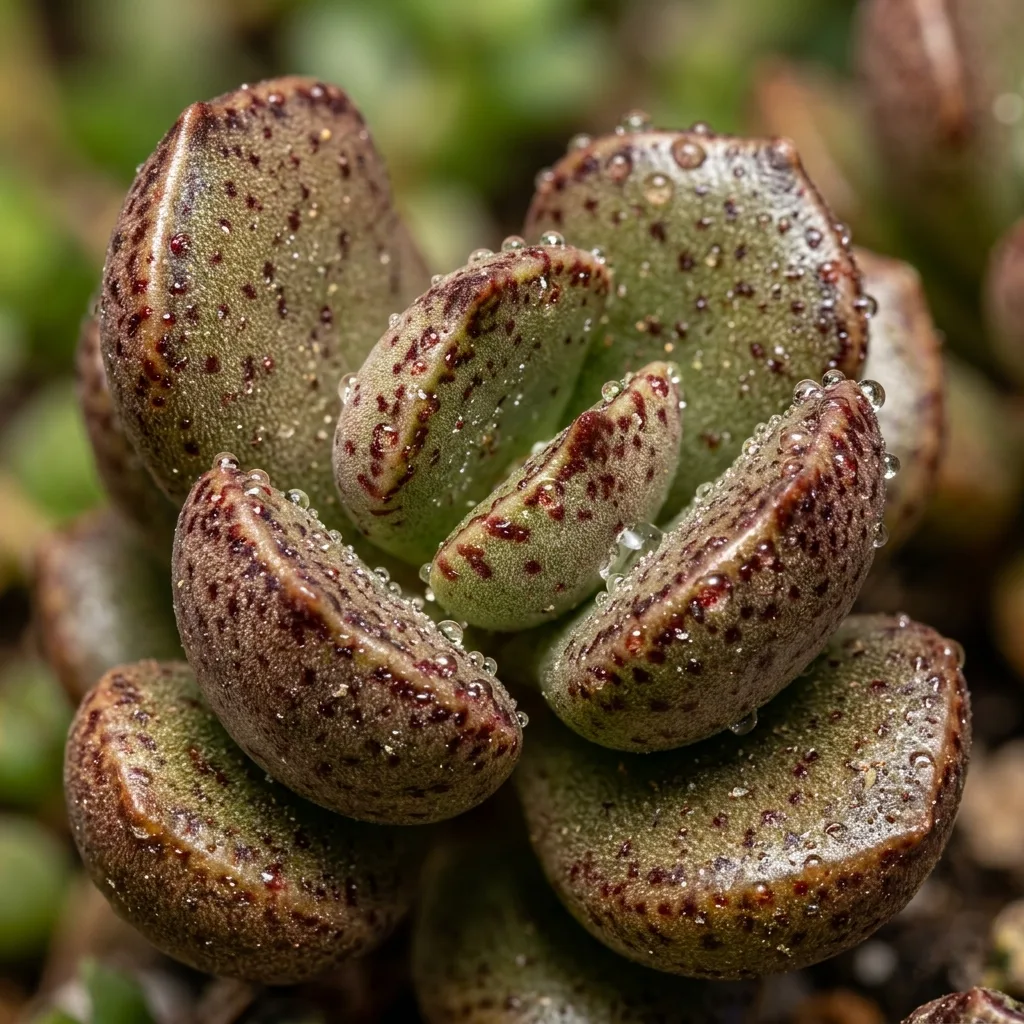
- Light Starvation and Etiolation: Healthy Lenophyllum exhibits tightly stacked, armor-like internodes. If the gaps between leaf pairs widen, the stem turns spindly, and the striking brown-to-purple mottled patterns fade into a dull, washed-out green, the plant is desperately stretching for usable photons.
- Root Suffocation and Edema (Overwatering): When basal leaves become translucent, yellowish, and mushy—bursting like water balloons at the lightest touch—the root parenchyma has rotted due to anoxia. As xylem tissue collapses, cellular walls rupture under unsustainable turgor pressure.
- Physiological Drought: Fine longitudinal wrinkles appear along the leaf surface; tissues lose their plump rigidity and soften slightly, yet the epidermal pigmentation remains vibrant. This is a definitive sign that vacuolar water reserves are running low.
- Sunburn and Cellular Scorching: Moving a specimen abruptly from dim indoor light to harsh midday sun creates bleached white patches that soon degrade into necrotic brown scar tissue. Although the plant synthesizes protective anthocyanin pigments that cast leaves in deep plum tones, unacclimated exposure will cause irreversible thermal damage.
3. Step-by-Step Cultivation Protocol
Vigorous Lenophyllum growth relies on the seamless alignment of pot selection, high-porosity mineral substrate preparation, and a calculated watering cycle.
Step 1: Container Selection and Drainage Geometry
Lenophyllum does not develop a deep taproot; its architecture consists of shallow, horizontally spreading roots. Consequently, avoid deep containers. Select broad, shallow pots (approximately 7–10 cm / 3–4 inches deep) crafted from unglazed terracotta or earthenware, fitted with generous drainage apertures. Unglazed clay breathes, wicking excessive moisture away through its porous walls to speed substrate drying.
Step 2: Engineering an Inorganic-Dominant Substrate
Standard peat-based potting soils are a death sentence for Lenophyllum. Your goal is to recreate the mineral composition of natural limestone crevices: minimal moisture retention coupled with maximum aeration. Combine 70–80% coarse inorganic minerals (pumice, crushed volcanic scoria, zeolite) with 20–30% screened coco coir or high-grade succulent potting compost containing perlite.
Step 3: Planting and Root Stabilization
Carefully clear old nursery peat from the root system without ripping the fragile fibrous threads. Seat the roots into the dry mineral mix. Do not bury the lower stem deeply; allowing fleshy leaves to sit in direct contact with damp soil invites fungal infection. Top the substrate with a 5 mm layer of crushed lava rock or coarse quartz grit to serve as a dry protective mulch.
Step 4: Initial Hydration and Photoperiod Acclimation
Never water immediately following repotting! Allow the plant to rest dry for 5 to 7 days so microscopic root lesions can form calluses against fungal entry. Afterward, irrigate using the classic "soak and fully dry" method. Keep the specimen in bright, indirect light for the first week, then gradually expose it to at least 4 to 6 hours of direct morning sunlight daily.
4. Essential Technical Parameters and Substrate Formula
The table below details the environmental parameters and substrate specifications necessary to sustain optimal physiological health in Lenophyllum succulents:
| Component / Parameter | Recommended Standard | Physiological Objective |
|---|---|---|
| Substrate Mix | 40% Pumice (2–4 mm), 20% Lava Scoria, 15% Zeolite, 25% Sifted Coco Coir/Peat | High pore volume, rapid drainage, root zone oxygenation |
| Light Intensity | 5–6 hours of direct morning sunlight or 250–300 µmol/m²/s PAR | CAM cycle activation, rich leaf spotting pigmentation |
| Irrigation Cycle | Spring–Summer: Every 10–14 days; Winter: Monthly or suspended | Balanced turgor pressure, prevention of root rot |
| Substrate pH | 6.5 – 7.8 (Neutral to slightly alkaline) | Replication of natural limestone biotope, mineral bioavailability |
| Pot Specifications | Wide, shallow (max. 8–10 cm deep), unglazed terracotta | Supports shallow root spread and accelerates evaporation |
| Temperature Range | Growth: 18°C – 30°C; Winter Rest: 5°C – 10°C (Zero frost tolerance) | Triggers natural dormancy cycles, hardens structural tissue |
5. Five Common Mistakes and Rescue Protocols
- Mistake: Foliar Misting and Spraying
Rescue Protocol: Misting does not elevate functional humidity; it merely invites fungal spore germination. Lenophyllum leaves are prone to rot if moisture pools within leaf axils. Always irrigate directly onto the substrate using a narrow-spout watering can, or utilize bottom-watering (sub-irrigation). - Mistake: Over-Fertilizing Under Low Light
Rescue Protocol: High-nitrogen feeds coupled with insufficient light cause rapid, weak, and distorted growth (etiolation). Decapitate the etiolated crown using a sterile blade, allow the cut to callus in shade for 4 days, and root it anew. Move the original stem to a sunny, well-lit exposure. - Mistake: Using Decorative Pots Without Drainage Holes
Rescue Protocol: Undrained containers trap standing water at the base, suffocating the lower roots. Unpot the plant immediately, trim off necrotic root tissue, dust the remaining root base with activated charcoal or cinnamon powder, and repot into an unglazed terracotta pot with adequate drainage. - Mistake: Warm Winter Placement Near Radiators with Active Watering
Rescue Protocol: Winter warmth prevents dormancy, forcing the plant to Grow Jumping Cholla (Cylindropuntia fulgida): Myths, Science, and Botanical Care Guide">to grow under dim winter sunlight, which distorts its rosette shape. Relocate the pot to a bright, cool room kept around 8–12°C (46–54°F) and withhold water completely unless the foliage shows pronounced shriveling. - Mistake: Assuming Leaf Abscission Signals Disease
Rescue Protocol: Lenophyllum is genetically wired to drop leaves readily. Do not react by overwatering in panic. Lay the fallen leaves atop dry grit around the base of the container; within a few weeks, your pot will develop a self-propagating colony of miniature rosettes.
6. Seasonal Calendar and Long-Term Projections
Successful Lenophyllum stewardship mirrors the seasonal dynamics of its native desert scrub:
Spring (Waking and Active Growth): Rising temperatures in March invigorate CAM cycles. Soak the pot thoroughly whenever the substrate dries completely. Early in the season, apply a quarter-strength, balanced cactus and succulent fertilizer to support emerging roots and compact foliage growth.
Summer (Heat Management and Semi-Dormancy): When ambient temperatures exceed 35°C (95°F), Lenophyllum dials down midday respiration. Diffuse peak summer sunlight with a sheer curtain to prevent scorching. Water exclusively in the cool evening hours so roots can take up moisture overnight without cooking in hot, damp substrate during the day.
Autumn (Flowering and Pigmentation): September through November brings the crowning aesthetic phase for Lenophyllum. Distinct day-night temperature swings trigger the production of deep purple, bronze, and mottled anthocyanins. Slender yellow or pale green flower stalks rise during this period. Once flowering finishes, snip spent stalks to conserve the plant's energy reserves.
Winter (Dormancy and Cold Protection): Chilly weather initiates winter rest. Root uptake drops near zero. While the plant tolerates dry cold down to roughly 5°C (41°F), it cannot survive freezing temperatures. Overwinter the plant in a bright, cool spot with completely dry soil.
Adhering to this botanical protocol ensures your Lenophyllum will not merely survive indoors—it will overflow its container with tight, geometrically pristine rosettes and vivid, mottled foliage, becoming a standout highlight in your succulent collection.


Reader Reviews & Comments 3 Reviews
Julian Vance
Clara Higgins
Marcus Sterling
Leave a Review & Rating
Share your plant care tips, experiences, or questions with our succulent community.