






Imagine an extraordinary botanical gem that holds the warm, humid breezes of tropical climates within its leaves, instantly awakening the senses with its invigorating aroma: Cuban Oregano (Plectranthus amboinicus). Spanning a native distribution from Africa and the Indian Ocean islands across to the Caribbean, this singular species—distinguished by semi-succulent fleshy leaves, dense velvety trichomes, and an intoxicating herbal fusion of thyme and mint released with the gentlest crush of your fingers—stands among the plant kingdom's most generous specimens. Drawing from years of hands-on cultivation in our Sukulentler.com research greenhouses, this detailed guide outlines every step needed to nurture this vibrant companion in your living room or outdoor patio.
1. Botanical Identity and Natural Habitat Dynamics
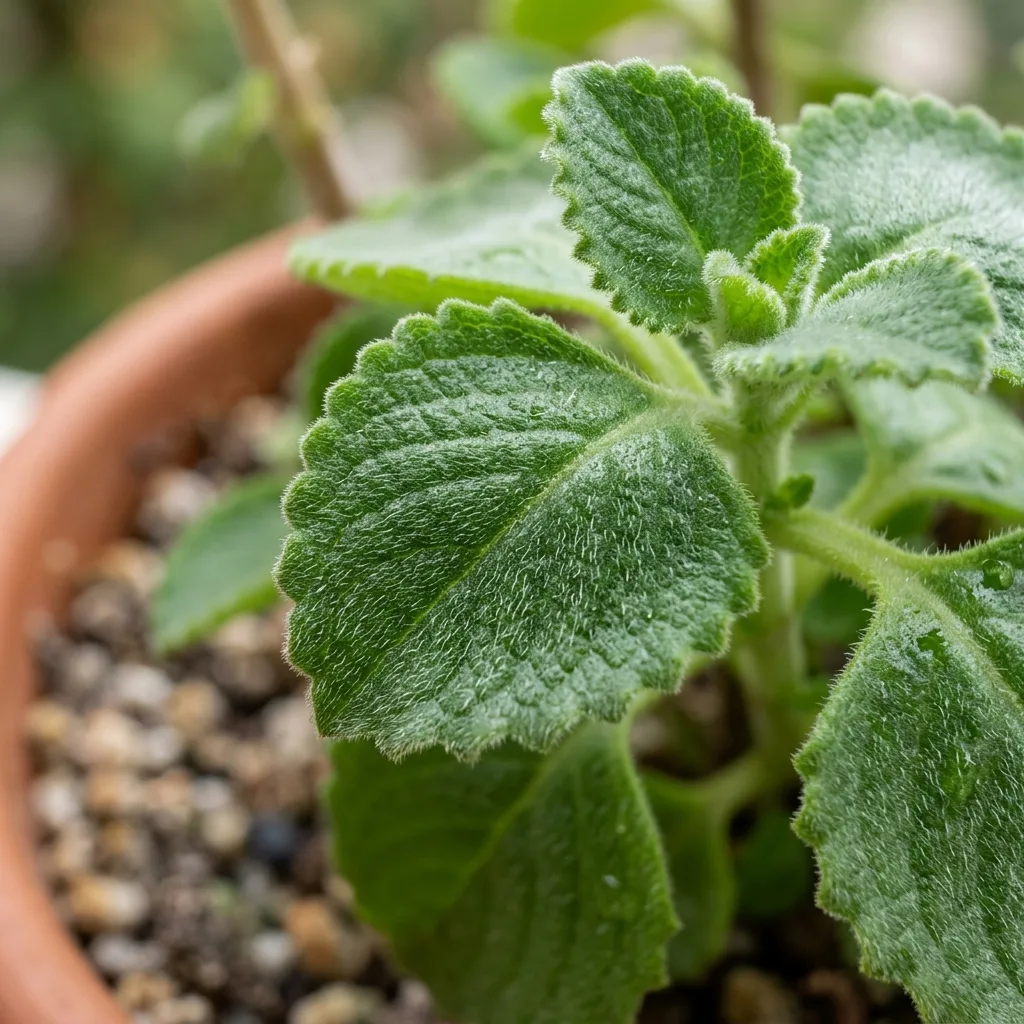
Although widely known in culinary traditions as Cuban Oregano and utilized in regional cooking as an alternative to Mediterranean oregano, Plectranthus amboinicus (recently classified in modern taxonomy under Coleus amboinicus) is in fact an herbaceous semi-succulent member of the mint family, Lamiaceae. It shares no close genetic lineage with true culinary thymes of the genus Thymus; rather, it takes its common name from its high concentration of aromatic volatile terpenes, predominantly carvacrol and thymol.
In its native tropical habitats, wild colonies colonize well-drained rocky slopes, talus ridges, and dappled clearings beneath open forest canopies where standing water never stagnates. Its turgid, succulent foliage and thickened stems serve as internal water reservoirs adapted to navigate seasonal droughts. The dense coat of microscopic glandular hairs (trichomes) covering the epidermis serves a dual purpose: drastically curtailing transpiration while deflecting harsh UV radiation to shield cellular parenchyma from phototoxic stress. The absolute secret to mastering Cuban Oregano indoors lies in honoring this botanical dichotomy: treat its roots like a desert succulent, while offering its foliage the airy warmth of the subtropics.
2. Light Requirements and Optimal Indoor Positioning
Cuban Oregano is an energetic phototropic species that thrives on generous amounts of bright, indirect illumination. Under sub-optimal lighting, internodal spacing stretches rapidly, leaf margins shrink, and the plant loses its dense architectural habit, declining into weak etiolation. To cultivate a lush, compact canopy, observe these environmental parameters:
- Sunlight Balance: Gentle morning sun (eastern exposure) is prime. The plant requires at least 4 to 6 hours of bright, filtered light daily. Intense, unshielded midday sun can overwhelm the protective barrier of the trichomes, scorching the succulent tissue with unsightly bleached or brown lesions.
- Indoor Placement: South- or west-facing windows filtered through sheer drapery offer ideal photon intensity. In low-light northern exposures, growth rates will stall noticeably, and aromatic essential oil production will drop significantly.
- Air Circulation: The combination of thick, moisture-laden leaves and dense pubescence makes the foliage vulnerable to stagnant microclimates where fungal pathogens thrive. Regular ambient ventilation is imperative; however, shelter the plant from chilled drafts, open winter sashes, and dry convective blasts from air conditioners or heating vents.
3. Substrate Engineering and Pot Selection
The definitive vulnerability of this semi-succulent lies in wet, compacted soil starved of subterranean oxygen. Plectranthus amboinicus requires an open, nutrient-rich substrate characterized by rapid percolation and low moisture retention. Using standard, dense peat-moss potting mixes out of the bag without inorganic amendments inevitably invites opportunistic root pathogens.
The signature potting blend we formulate in our specialized Sukulentler.com studio delivers optimal results:
- 40% High-grade fibrous blonde peat or well-rinsed coco coir
- 30% Coarse inorganic aerators (horticultural pumice, coarse perlite, or crushed volcanic scoria)
- 20% Coarse, washed quartz river grit
- 10% Aged worm castings (to provide gentle, bioactive, slow-release micro-nutrients)
When selecting a planter, drainage holes are completely non-negotiable. Unglazed terracotta containers are the gold standard for Cuban Oregano; their porous clay walls naturally breathe and transpire excess moisture out through the sides, lowering the risk of basal moisture pockets. If you prefer glazed ceramic or plastic pots, exercise greater vigilance and stretch the watering intervals accordingly.
4. Irrigation Dynamics, Temperature, and Humidity
One of the most frequent missteps among enthusiasts is treating Cuban Oregano like a thirsty culinary herb and watering it daily—or conversely, neglecting it like a desert cactus for months at a time. Embodying a true semi-succulent nature, it thrives under the fundamental "soak and dry" cycle.
Seasonal Watering Guidelines:
- Spring and Summer (Active Vegetative Phase): Water generously once the top 3 to 4 centimeters of soil have dried completely, ensuring moisture runs freely out of the drainage holes. On average, this translates to thorough watering once or twice a week depending on ambient heat and ventilation.
- Autumn and Winter (Dormant Phase): As daylight shortens and cellular transpiration decreases, substrate dry-down slows. Allow the soil mass to dry out almost entirely before watering sparingly, approximately once every 10 to 14 days.
Temperature and Atmospheric Humidity: Cuban Oregano is distinctly cold-sensitive. Its thermal sweet spot ranges between 18°C and 28°C (64°F–82°F). Temperatures dipping below 10°C (50°F) induce defensive leaf drop; sustained drops below 5°C (41°F) lead to ice crystallization in the succulent cells and irreversible collapse. While tropical in origin, it adapts seamlessly to typical home relative humidity levels of 40% to 60%. Never mist the leaves with spray bottles; moisture trapped among the dense leaf trichomes invites fungal spotting, powdery mildew, and localized rot.

5. Pruning, Structural Pinching, and Fertilization
Plectranthus amboinicus exhibits a vigorous, naturally rambling growth habit. Left unmanaged, top-heavy stems will trail downward, exposing a leggy, defoliated base over time. The key to preserving a lush, bushy, and architecturally striking specimen is routine apical pinching.
During the active growing season, simply pinch out the terminal growing tip—the top two tiny leaf nodes—using clean fingers or sterilized shears. This breaks apical dominance and triggers latent buds at the nodes below to push out two vigorous lateral branches. Regular pinching throughout early summer transforms a single trailing stem into a dense, hemispherical shrub.
Nutritional needs are modest. From early spring through mid-autumn, apply a balanced, water-soluble succulent fertilizer diluted to half-strength, or an organic cold-pressed kelp meal extract once a month. This gentle feed supplies balanced nitrogen and potassium to support crisp foliage and potent essential oils. Cease all fertilization completely throughout late autumn and winter dormancy.
6. Step-by-Step Propagation: Stem Cutting Protocol
Cuban Oregano boasts one of the highest adventitious rooting rates in the plant kingdom. Vegetative propagation via stem cuttings is exceptionally reliable, yielding near 100% success when executed properly:
- Harvesting Cuttings: Select a vigorous, non-woody apical stem and excise a section roughly 8 to 12 cm long. Make a clean cut directly below a leaf node using a sterile, sharp blade.
- Preparation: Strip the leaves off the bottom half of the cutting, retaining 3 to 4 healthy leaves at the top. Set the cutting in a dry, shaded, well-ventilated spot for 12 to 24 hours to let the wound callus over, preventing vascular contamination.
- Rooting Media: You can proceed through two proven techniques:
- Water Propagation: Suspend the lower node in room-temperature filtered water. Adventitious root initials will emerge along the stem within 5 to 7 days. Move into potting mix when rootlets reach 3 to 4 cm.
- Direct Soil Layering (Recommended): Insert the callused cutting 2 to 3 cm deep into a lightly moistened blend of perlite and peat. Placed in warm, bright, indirect light, it will establish an independent root system within 10 to 14 days without the stress of water-to-soil transition.
7. Common Problems, Pests, and Diagnostic Solutions
Thanks to its dense concentration of pungent volatile compounds, a vigorous Cuban Oregano maintains a natural defensive barrier against many common pests. However, environmental stress can compromise these natural defenses:
- Mealybugs (Pseudococcidae): These appear as white, cottony masses tucked deep into leaf axils and beneath young shoots. Spot-treat early infestations using a cotton swab dipped in 70% isopropyl alcohol. For extensive infestations, spray with an emulsified cold-pressed neem oil solution during evening hours.
- Yellowing and Dropping Lower Leaves: Inspect the texture. If yellowing leaves feel mushy, translucent, or waterlogged, excessive moisture is suffocating the roots. If they are dry, paper-thin, and crispy, the plant is enduring prolonged drought stress.
- Basal Stem Rot: If the stem base turns black, soft, and necrotic at the soil line, advanced fungal pathogens have destroyed the root system due to heavy, anaerobic soil. Take clean apical cuttings from healthy upper growth immediately to propagate a clean clone, and discard the compromised root ball and substrate.
- Foliar Scorch: White, bleached, or silvery dried patches on the leaves point to sudden acute sun exposure. Transition plants gradually across several days when moving them into brighter spaces.
Cuban Oregano rewards modest horticultural attention with vigorous vitality, sculptural leaves, and an intoxicating herbal fragrance that enriches any indoor sanctuary. Provided with bright light, a gritty potting medium, and mindful irrigation, this aromatic treasure will reward you with abundant cuttings and verdant beauty for years to come.


Reader Reviews & Comments 3 Reviews
Eleanor Vance
Marcus Sterling
Chloe Bennett
Leave a Review & Rating
Share your plant care tips, experiences, or questions with our succulent community.