






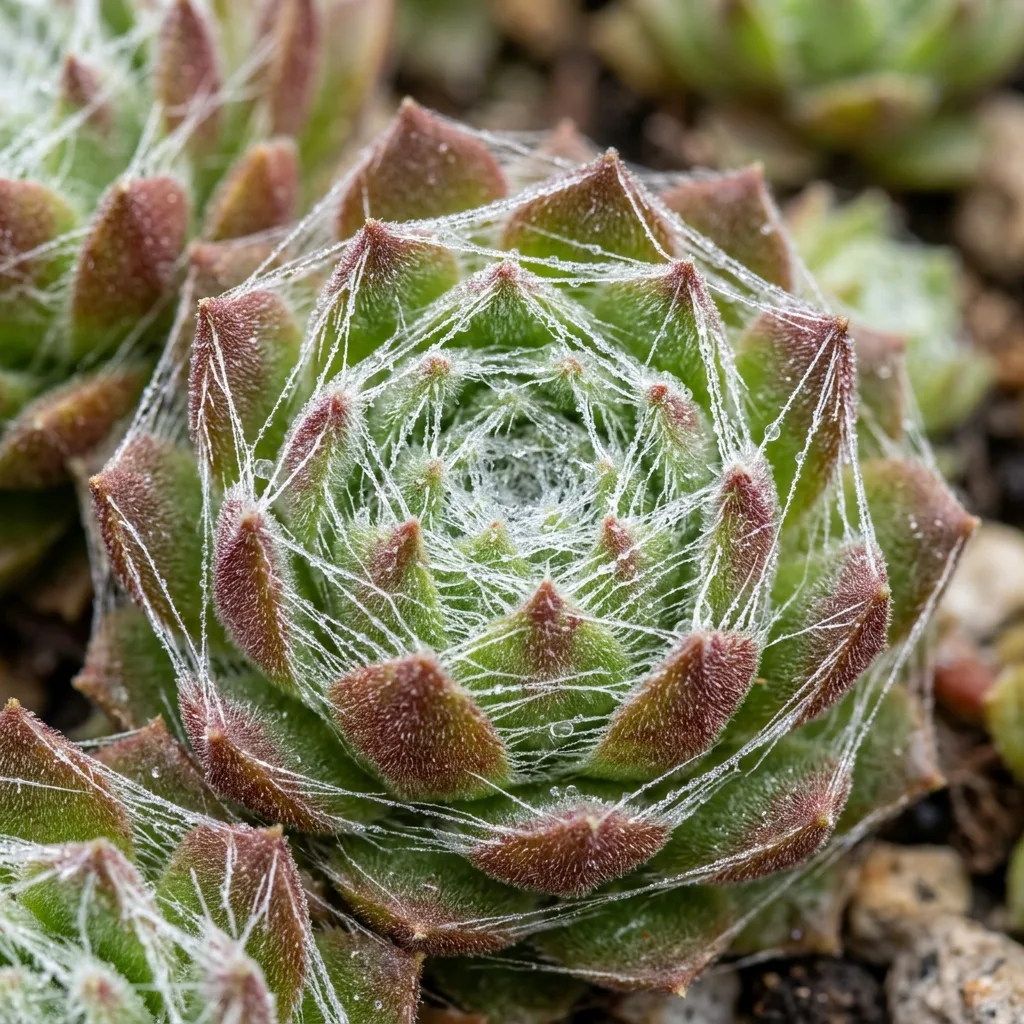
Defying the freezing gales and sheer limestone fissures of the European Alps and the Pyrenees, the Cobweb Houseleek (Sempervivum arachnoideum subsp. tomentosum) displays one of the succulent kingdom's most captivating evolutionary adaptations. Specialized, modified trichomes (cilia-like hairs) span from the tip of each succulent leaf toward the center of the rosette, weaving a silver web so intricate it looks like the handiwork of a master weaver. In alpine habitats, this dense woolly mantle serves as a triple shield: reflecting scorching high-altitude ultraviolet radiation, channeling nighttime fog condensation directly to the root zone, and locking in cellular moisture beneath freezing snow blankets. Yet, when we welcome this rugged mountain survivor to our home windowsills and patio planters, we often overlook a foundational botanical truth: alpine succulents easily tolerate polar chills and bone-dry droughts, but stagnant warm air and waterlogged roots will kill them in days.
In container cultivation, this delicate webbed veil can quickly become a deadly liability. A stray drop of overhead water pooled inside the rosette gets trapped deep within the capillary trichome fibers; combined with elevated ambient humidity and poor ventilation, it creates the ultimate nursery for Botrytis cinerea (gray mold) spores. Simultaneously, this sheltered microclimate provides an invisible fortress for mealybugs (Pseudococcidae) to establish silent colonies. If you notice the core of your rosette turning dark, individual leaves softening into a translucent jelly, or those brilliant white webs turning dull and muddy brown, your plant's vascular bundles are under siege, and time is of the essence.
1. Early Diagnostic Symptoms and Microscopic / Visual Clues
When a Cobweb Houseleek begins to decline, the earliest distress calls appear in its trichome density and leaf turgor pressure. On a thriving, healthy plant, the cobwebs are snow-white, springy, and pulled taut across the heart of the rosette. Cellular water reserves are fully pressurized, making the fleshy leaves feel firm and marble-like when gently squeezed.
- Webbing Collapse and Discoloration: If the clean white filaments turn grayish-brown, clump together into a matted felt, or develop a soggy sheen at the core, your plant is experiencing the initial stage of an active fungal infection.
- Translucent, Jelly-Like Leaves: When cell walls burst from unmanageable hydrostatic pressure (edema), the lowest leaves turn glassy, watery yellow, and mushy to the touch. This is the definitive hallmark of subterranean root rot.
- Paradoxical Shriveling and Dullness (Xylem Blockage): If the potting substrate is damp yet the leaves appear limp, puckered, and severely dehydrated, the root hairs have rotted away. Fungal mycelium has clogged the internal xylem vessels, preventing vital water uptake into the rosette.
- Cottony Clusters Hidden Under the Trichomes: Tiny, powdery white fluffs nestled deep inside the natural webbing that yield a sticky, pale fluid when disturbed signify mealybug (Pseudococcus) activity. You can easily distinguish between natural trichomes and pest secretions under a 10x jeweler's loupe: healthy plant hairs exhibit precise geometric, fibrous lines, whereas pest residues appear irregular, clumped, and waxy.
2. Primary Causes and Environmental Triggers
The evolutionary blueprint of the Cobweb Houseleek is hardwired for hurricane-force mountain airflows and razor-sharp drainage through mineral scree. In domestic settings, the leading cause of mortality is misplaced affection—specifically, chronic overwatering. Dousing succulents too frequently does not show them love; it physically suffocates their roots by driving all oxygen out of the rhizosphere.
Key environmental triggers that unleash stem and crown rot include:
- Overhead Misting and Top Watering: Pouring water straight over the crown of Sempervivum arachnoideum subsp. tomentosum is the single most catastrophic mistake you can make. The dense trichomes capture water droplets via capillary action, locking moisture tight against the tender leaf bases where it cannot evaporate.
- Impaired Gas Exchange in Heavy Peat: Standard potting soils or heavy peat moss retain moisture like dense kitchen sponges, completely starving root cells of gaseous oxygen. This anaerobic environment fosters pathogenic oomycetes and fungi, including Rhizoctonia and Pythium.
- Insufficient Sunlight and Warm Winter Rooms: Sempervivums are outdoor alpines, not indoor houseplants. Keeping them in centrally heated, dimly lit rooms during winter disrupts their biological dormancy, inducing severe etiolation (pale stretching), crippling their systemic immunity, and leaving them defenseless against pest outbreaks.
3. Organic and Mechanical Remediation Methods
When caught in the early stages, you can successfully re-establish botanical balance using targeted organic techniques without reaching for harsh chemicals:
Targeted Spot Treatment with Isopropyl Alcohol: If you spot mealybugs nesting within the cobweb matrix, dip a fine, pointed sable watercolor brush into 70% isopropyl alcohol and touch the pests directly. The alcohol dissolves their protective waxy exoskeleton in seconds and evaporates cleanly without scorching the leaf tissue. Never mist the whole rosette with alcohol; drenching will dissolve the plant's natural epicuticular waxes and unravel the delicate silk threads.
Agricultural Sulfur and Ceylon Cinnamon (Natural Fungicides): Following the surgical excision of soft, infected leaves, dust the exposed wounds on the green stem with an ultra-fine coat of elemental sulfur or fresh organic Ceylon cinnamon powder. This creates a potent phyto-barrier that dehydrates fungal hyphae and stops opportunistic spores from colonizing the wound.
Forced Air-Drying Therapy: If a rosette is accidentally drenched or shows early signs of damp mold, do not place it in hot direct sunlight, which can cook the damp tissue. Instead, position it in bright, open shade directly in front of an oscillating desktop fan set to low for several hours. This brisk airflow quickly dries the trapped water from the trichome canopy.
4. Chemical and Systemic Treatment Protocol
Advanced fungal blights or widespread root mealybug outbreaks often overpower organic methods. To eradicate pathogens entrenched deep within the plant's internal tissues and woolly recesses, systemic chemistry is the safest, most definitive route.
| Active Ingredient | Target Disease / Pest | Dosage (Per Liter of Water) | Application Protocol & Frequency |
|---|---|---|---|
| Azoxystrobin | Root & Crown Rot (Botrytis, Rhizoctonia) | 0.8 ml / L | Apply as a soil drench; repeat once after 14 days if needed. |
| Fosetyl-Aluminium | Vascular Wilt & Damping-Off (Phytophthora) | 2.0 g / L | Root drench or localized base pour; 2 applications spaced 10–12 days apart. |
| Acetamiprid | Hidden Mealybugs & Root Pests | 0.5 g / L | Sub-irrigation root soak; allow plant to absorb systemically; repeat in 10 days. |
| Copper Oxychloride | Surface Bacterial & Fungal Leaf Spotting | 1.5 g / L | Fine mist directed exclusively at the leaf undersides; keep away from trichomes. |
5. Step-by-Step Quarantine and Surgical Disinfection
The moment systemic rot or pests are verified, isolate the compromised plant at least six feet away from the rest of your succulent collection in a bright, airy quarantine bay.
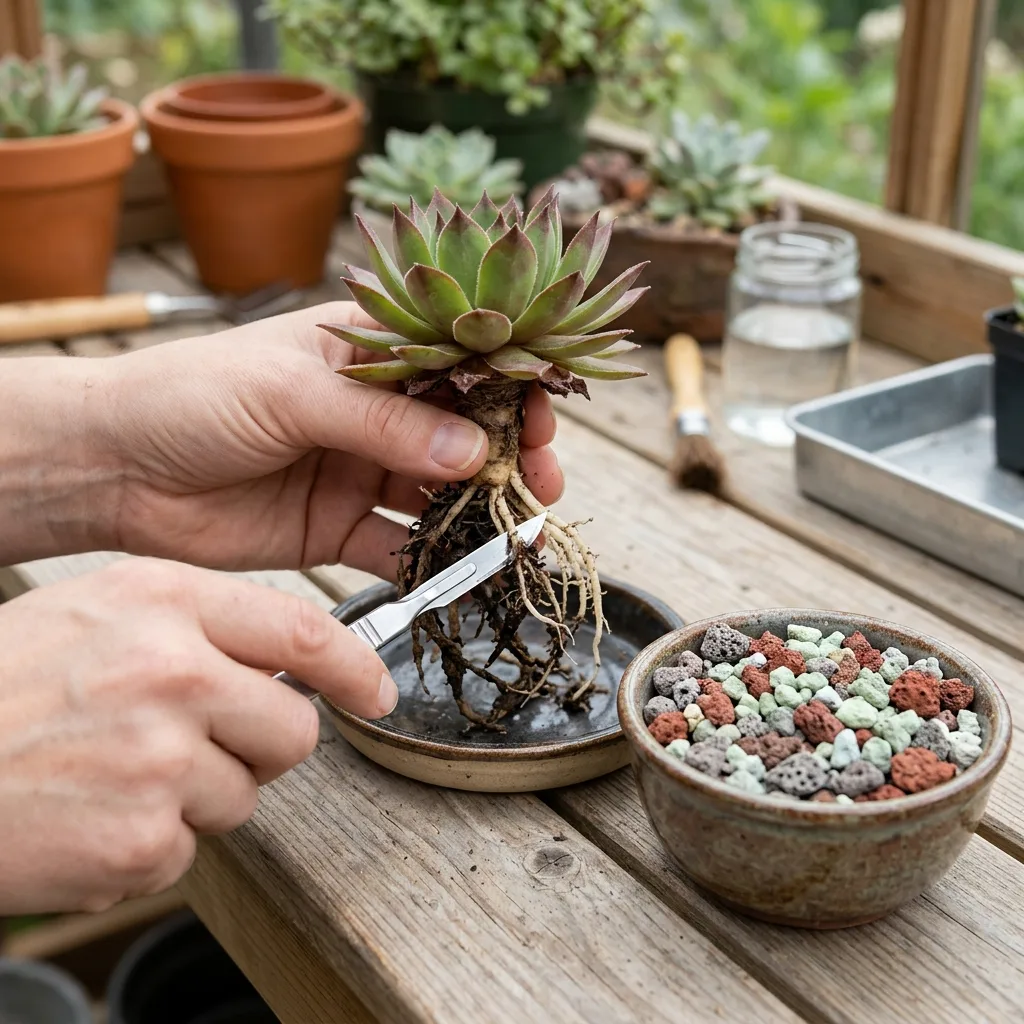
- Unpotting and Bare-Root Cleansing: Gently slide the houseleek out of its pot. Tease away the old, contaminated growing medium completely, rinsing the root ball in a basin of tepid water until every root fiber is bare and clearly visible.
- Precision Surgical Debridement: Using a flame-sterilized, alcohol-wiped scalpel or razor blade, slice away all brown, mushy, or hollow root strands until you reach firm, milky-white root tissue. If rot has entered the stem, perform horizontal micro-slices until only clean, unblemished pale-green meristem tissue remains.
- Antiseptic Dip and Callusing: Submerge the pruned root base into a 3% hydrogen peroxide solution (diluted 1:10 with distilled water) for 30 seconds to destroy lingering anaerobic spores. Place the rosette on dry paper towels in a shaded, well-ventilated spot for 2 to 3 days until all cuts develop a firm, dry, protective callus.
- Container Sterilization: Never repot into a dirty vessel. Bake unglazed terracotta pots in the oven at 250°F (120°C) for 30 minutes, or soak plastic nursery containers in a 10% household bleach solution for two hours, followed by a thorough clear-water rinse.
6. Rehabilitation Substrate and Long-Term Recovery Care
To nurse your recovered Cobweb Houseleek back to vibrant health, you must recreate the mineral-rich, hyper-porous scree of its native alpine cliffs.
The Ultimate Pure Mineral Substrate Recipe: During active convalescence, a lean, nearly organic-free potting mix is vital to prevent secondary bacterial reinfection. Blend the following:
- 40% Horticultural Pumice (2–4 mm grain size)
- 30% Zeolite, Calcined Clay, or Crushed Red Lava Rock (for cation exchange and pore aeration)
- 20% Coarse Quartz or Decomposed River Grit
- 10% Finely sifted, fiber-free cactus peat or coco coir (solely for trace moisture retention)
Replanting and First Hydration: Set the callused rosette gently atop the dry mineral grit without burying its base. Resist every urge to water immediately! Leave the plant undisturbed in completely dry mix for at least 7 full days so it can sprout delicate new root hairs. When reintroducing water, utilize the saucer soak method (bottom watering) for 10 minutes, moistening only the lower third of the substrate.
Sunlight and Thermal Requirements: Keep the recovering plant out of midday summer heat. Instead, provide bright, filtered morning sun and plenty of fresh, brisk outdoor air, ensuring an 8–10°C (15–18°F) day-to-night temperature swing. Given cool evenings and gentle light, the rosette will quickly tighten, generating brand new, blindingly white silk threads from its center as vibrant, fleshy green foliage unfurls beneath.


Reader Reviews & Comments 3 Reviews
Eleanor Vance
Clara Higgins
Julian Miller
Leave a Review & Rating
Share your plant care tips, experiences, or questions with our succulent community.