






Picture a natural wonder that retains its vibrant emerald hue and robust architecture even amid howling winds on alpine ledges and sub-zero frosts plummeting to -25°C: the Common Houseleek (Sempervivum tectorum). For centuries—ranging from ancient Roman rooftops where it served as a talisman against lightning strikes to stone garden walls across Anatolia where it functioned as a living emergency kit—this ancient succulent has captivated gardeners with its geometric rosettes while offering healing polysaccharides locked inside its succulent tissues. Prepared from its plump leaves, the home remedy historically dubbed 'Rose Honey' remains one of the most treasured recipes within our botanical heritage.
Proudly showcased by succulent collectors around the globe, the houseleek wins hearts not merely through its regal silhouette, but by defying neglect with legendary hardiness. Yet, harvesting its healing leaves to craft homemade rose honey or maintaining its compact rosette geometry across decades calls for an understanding of fundamental botanical principles. Settle in with a fresh cup of coffee as we dive deep into the intracellular mechanics, precision mineral substrate formulas, and traditional medicinal preparation of this timeless succulent.
1. Botanical Profile and Morphological Adaptations
As one of the most iconic representatives of the family Crassulaceae, Sempervivum tectorum draws its botanical name from the Latin words for 'ever living' (semper vivum) and 'of roofs' (tectorum). Its leaves are densely packed with specialized parenchymal tissue engineered to store moisture and mineral reserves. Adapted to arid, wind-scoured montane climes, it relies on CAM (Crassulacean Acid Metabolism) photosynthesis, cracking its stomata open exclusively at night to absorb carbon dioxide while dropping daytime transpiration rates virtually to zero.
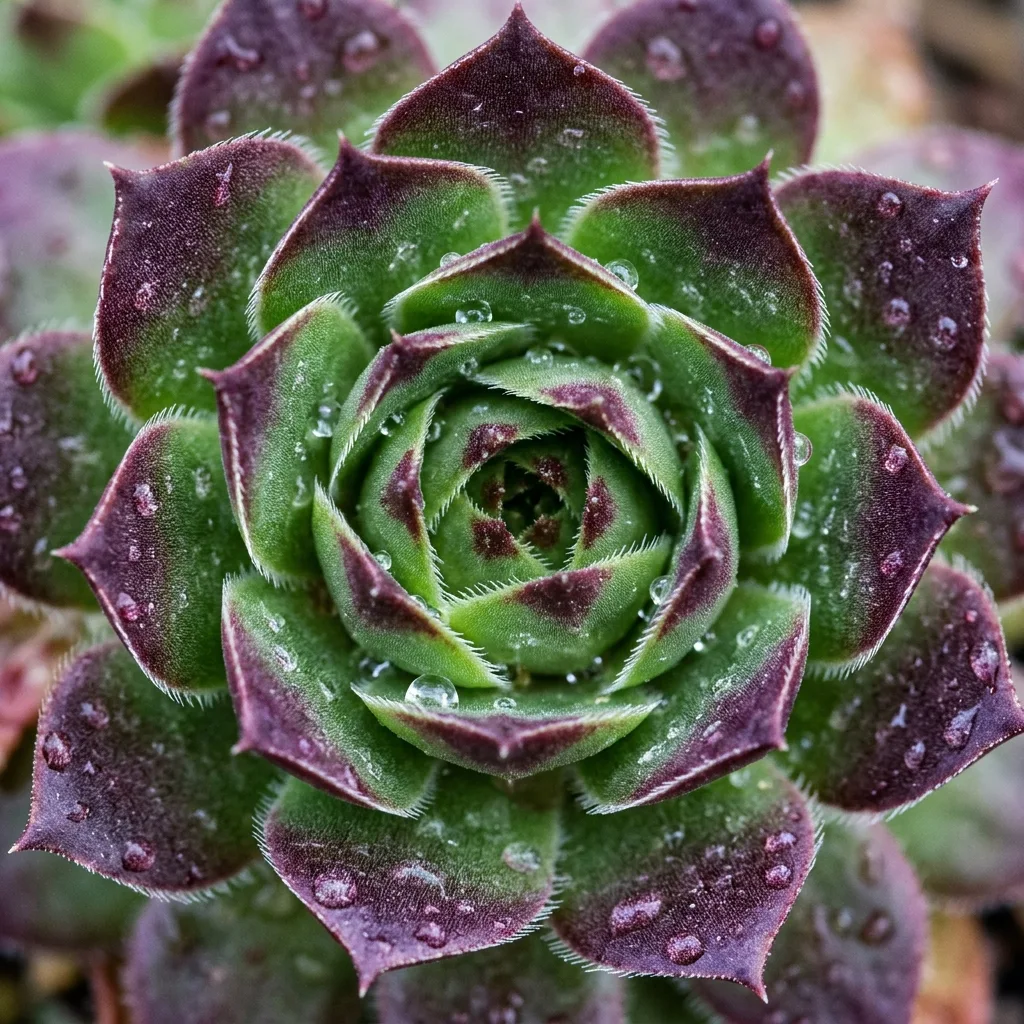
Microscopic cilia line the margins of each leaf blade, while anthocyanin pigments concentrated at the apices lend the foliage dramatic crimson, bronze, and plum margins when exposed to intense solar irradiance and cold nights. Being strictly monocarpic, an individual houseleek rosette flowers once at the end of its life cycle (typically after 3 to 5 years), projecting a starburst cyme of delicate pink blooms from its core. Although the mother rosette perishes after seeding, it first guarantees true immortality by producing dozens of clonal stoloniferous offsets—its beloved 'chicks'.
Healing Heritage: How to Prepare Natural 'Rose Honey'
Revered in traditional European and Mediterranean folk medicine for treating earaches, minor burn irritations, sore throats, and cellular oxidative stress, authentic 'Rose Honey' is created through the careful cold maceration of raw houseleek leaf gel infused into unheated pure honey. Follow this hygienic, scientifically mindful preparation protocol at home:
- Harvest Selection: Select plump, vibrant leaves from the lower and middle tiers of a mature specimen (at least 2 years old) that has never been treated with synthetic pesticides or systemic chemical fertilizers. Using a sterile scalpel, slice approximately 150 to 200 grams of fresh leaves cleanly from the stem axis.
- Washing and Dehydration: Rinse the harvested foliage gently under cold, purified water. Spread the leaves across a clean linen towel until every trace of surface water has fully evaporated. Avoiding excess water droplets is vital to prevent moisture dilution and unintended fermentation.
- Mechanical Maceration: Crush the dry leaves in a porcelain mortar and pestle (or a stainless steel mechanical grinder) until the fibrous cell walls break down completely into a dense, translucent green gel pulp.
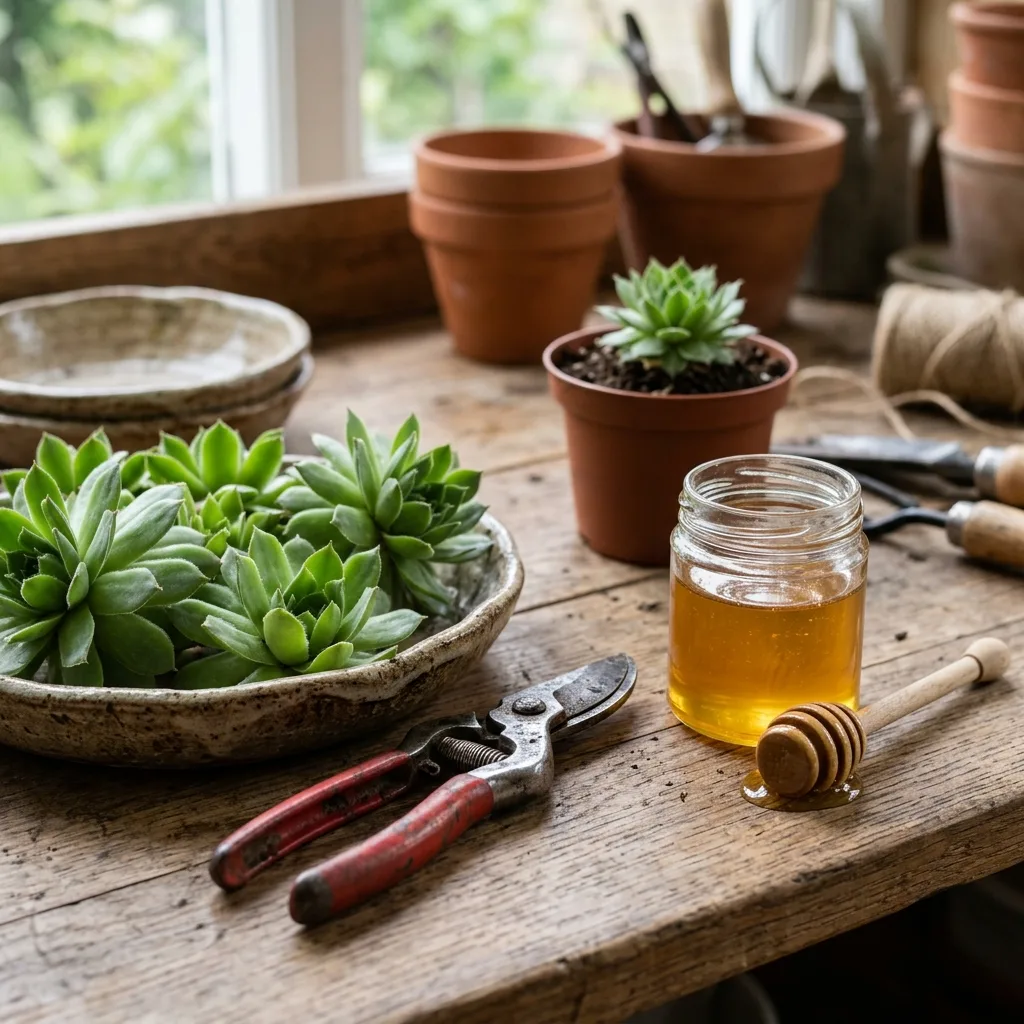
- Infusion with Raw Honey: Combine the green leaf gel in a 1:1 ratio by weight with unpasteurized, organic wildflower or raw pine honey inside a sterile glass jar. Mix thoroughly using a wooden or silicone utensil.
- Maturation and Storage: Seal the jar airtight and allow it to steep in a cool, dark pantry or refrigerator for 5 to 7 days. During this maceration window, malic acid, bioflavonoids, tannins, and complex mucilaginous polysaccharides diffuse smoothly into the honey matrix. Your finished rose honey stays potent in the refrigerator for up to 6 months.
2. Sunlight Demands and Ideal Indoor Placement
By evolutionary design, Sempervivum tectorum is an obligate photophile. In dim living rooms or low-light corners, rosettes rapidly experience etiolation—stretching out awkwardly, flattening their downward-curving leaves, and shedding their tight, sculptural form. Preserving that compact, stone-dense geometry demands a minimum of 6 hours of direct or lightly filtered strong sunlight daily.
Unshaded south- or southwest-facing window ledges, open balconies, rockeries, and patio troughs provide optimal conditions. When kept outdoors, the sharp diurnal temperature swings coax out saturated tones of carmine, burgundy, and burnished bronze. If overwintering indoors, position your plant right against the brightest window pane available, well away from the dehydrating heat plumes produced by radiators or forced-air vents.
3. Irrigation Protocol: The 'Soak and Dry' Science
The single most destructive blunder in succulent care is mistaking watering frequency for affection. Dousing succulents on a rigid weekly routine drowns root hairs, induces root hypoxia, and creates an open invitation for opportunistic fungal pathogens. While the houseleek possesses formidable drought endurance, its root flare cannot tolerate stagnant soil moisture.
Always employ the proven 'Soak and Dry' discipline. Never apply water until the substrate has dried out completely through the entire depth of the pot. Verify dryness by inserting a clean wooden skewer to the bottom of the container; if it emerges bone-dry without a speck of clinging soil, irrigation is safe. When watering, avoid splashing moisture straight into the heart of the rosette, where trapped water droplets readily trigger crown rot. Direct the stream around the base of the plant onto the soil until water runs freely out of the drainage holes.
4. Custom Soil Engineering and Container Architecture
Houseleeks despise dense, peat-laden, organic-rich potting soils. Hailing from montane screes and limestone rock crevices, their root systems need generous pore spaces and rapid drainage that sweeps away moisture in seconds. Commercial peat mixes act like waterlogged sponges, swiftly suffocating delicate root hairs.
| Component | Volume Ratio (%) | Botanical Function |
|---|---|---|
| Pumice (3–6 mm) | 35% | Creates stable macro-pores, ensuring structural aeration around root zones. |
| Crushed Lava Rock (Scoria) | 25% | Provides trace minerals, provides physical ballast, and accelerates drainage. |
| Coarse River Grit / Zeolite | 15% | Prevents perched water tables and prevents soil compaction over time. |
| Quality Cactus Mix or Coir Grit | 25% | Supplies baseline organic anchoring and minimal moisture buffer without saturation. |
Regarding containers, unglazed terracotta pots remain unmatched because their porous clay walls breathe, allowing excess moisture to evaporate laterally. Given that houseleek roots spread horizontally in search of rock fissures rather than plunging deep, shallow, wide bowl planters are ideal. These dishes mimic alpine rock ledges, granting runner stolons ample surface area to root while eliminating damp dead zones beneath the root ball.
5. Step-by-Step Propagation via Stolons
Earning its beloved folk moniker 'Hen and Chicks', Sempervivum tectorum propagates with incredible vigor by extending wiry horizontal stems (stolons) tipped with miniature clonal rosettes. Propagating these offsets in mid-spring to early summer is straightforward and rewarding:
- Harvesting the Chicks: Identify vigorous offsets around the mother plant that have achieved a diameter of at least 2 to 3 cm, preferably showing initial root nubs beneath their base. Sever the umbilical stolon close to the pup using sterilized pruning snips.
- Callus Formation: Resist the urge to tuck fresh cuttings into damp soil immediately. Rest them in a dry, shaded, well-ventilated spot for 24 to 48 hours so the severed tissue forms a tough, protective suberized callus that shields against soil-borne pathogens.
- Bedding onto Dry Substrate: Set the callused chick gently onto the surface of your gritty mineral potting blend, pressing down just enough to stabilize it without burying the crown.
- Initial Hydration: Keep the substrate completely dry for the first 5 to 7 days to prompt adventitious root emergence. Afterward, mist or lightly water the peripheral soil. Within two to three weeks, robust white roots will anchor the new plant.
6. Common Pathogens, Pests, and Treatments
Despite their legendary hardiness, houseleeks can struggle when confronted with poor air circulation, low light, and over-saturation:
- Root and Crown Rot (Pythium / Phytophthora): Triggered by lingering moisture, leaves turn translucent yellow, taking on a squishy, jelly-like texture. Unpot the plant immediately, pare away all discolored and mushy root matter with a sterile blade, let the crown dry open-air for two days, and replant in bone-dry, ultra-gritty substrate.
- Mealybugs (Pseudococcidae): These sap-suckers nestle in the tight crevices between bottom leaves, appearing as cottony white webbing. Spot-treat localized infestations using a cotton swab dipped in 70% isopropyl alcohol. For extensive outbreaks, spray thoroughly with cold-pressed neem oil or potassium salts of fatty acids (insecticidal soap).
- Sticky Foliar Residue (Honeydew vs. Nectar): If you spot clear, tacky droplets on your rosette, inspect closely for aphids or mealybugs producing sugary honeydew. If no insects are present and droplets concentrate solely along emerging flower stalks, you are observing natural floral nectar glands, which can be wiped clean with a damp cotton pad.
7. Seasonal Rhythm and Master Grower Tips
Tuning into the biological seasons of Sempervivum tectorum ensures your specimens thrive year after year:
- Spring (Awakening & Vegetative Growth): Beginning in March, rosettes break dormancy. Gradually increase watering as temperatures climb. Feed once in April with a quarter-strength, low-nitrogen succulent fertilizer to encourage offset production. The Art of Scientific Stem Cuttings and Rooting">This is also the ideal window to harvest plump leaves for fresh rose honey.
- Summer (Peak Light & Ventilation): During intense heat waves surpassing 35°C (95°F), the plant enters semi-dormancy to conserve internal reserves. Offer light shade from midday scorching sun, irrigate exclusively during cool twilight hours, and maximize ambient air movement.
- Autumn (Cold-Hardening & Pigmentation): As nighttime temperatures fall, taper off watering. Cells naturally increase intracellular sugar and proline concentrations, creating natural biological antifreeze against sub-zero temperatures. Cool nights bring out rich ruby, magenta, and copper tones.
- Winter (Full Dormancy & Snow Tolerance): Sempervivum tectorum thrives far better outdoors under a blanket of winter snow than inside a heated home. Snow cover acts as a natural insulator, allowing complete winter rest. Suspend watering entirely for outdoor pots; the soil must remain dry to prevent freeze-thaw cycles from rupturing root cell walls.


Reader Reviews & Comments 3 Reviews
Marcus Sterling
Eleanor Vance
Claire Redfern
Leave a Review & Rating
Share your plant care tips, experiences, or questions with our succulent community.