






Evolving across the arid quartz plains of Bushmanland and the Orange River basin in the Northern Cape of South Africa, Dinteranthus microspermus is one of the plant kingdom's most astonishing masters of camouflage. This extraordinary member of the Aizoaceae family mimics the brilliant white quartz gravel of its native desert floor with such flawless chalky textures and hemispherical leaf structures that foraging herbivores in the wild cannot distinguish it from a lifeless stone. Yet, when we bring this miraculous living rock into our living rooms or windowsill collections, we all too frequently overlook the uncompromising water-conservation economy it perfected over millions of years. Waking up one morning to find that pristine, porcelain-like marble body abruptly ruptured down its flank, reduced to a translucent brown jelly at the base, or collapsed in gray decay along the central fissure breaks the heart of any devoted succulent enthusiast.
Commonly known to growers as a living rock, pebble succulent, or golf ball lithops, this species maintains an osmotic equilibrium far more delicate and demands a significantly deeper taproot system than common Lithops cultivars. The internal turgor pressure sustained within its micro-vacuoles can trigger catastrophic cellular rupture at the slightest hint of stagnant air or a single unseasonal drop of water. In this guide—written with the gentle, field-tested intimacy of two growers sharing a warm cup of coffee in the greenhouse—we explore the exact physiological mechanisms behind epidermal splitting, root necrosis, and stem rot in Dinteranthus microspermus, outlining precise botanical methods to halt tissue loss and rehabilitate your plant step by step.
1. Early Diagnosis Symptoms and Microscopic / Visual Clues
In Dinteranthus, pathological damage almost invariably initiates at the cellular tier. By the time lesions manifest externally, the plant has often progressed to a critical stage. Nonetheless, keen and disciplined observation will allow you to avert complete collapse before irreversible liquefaction takes hold:
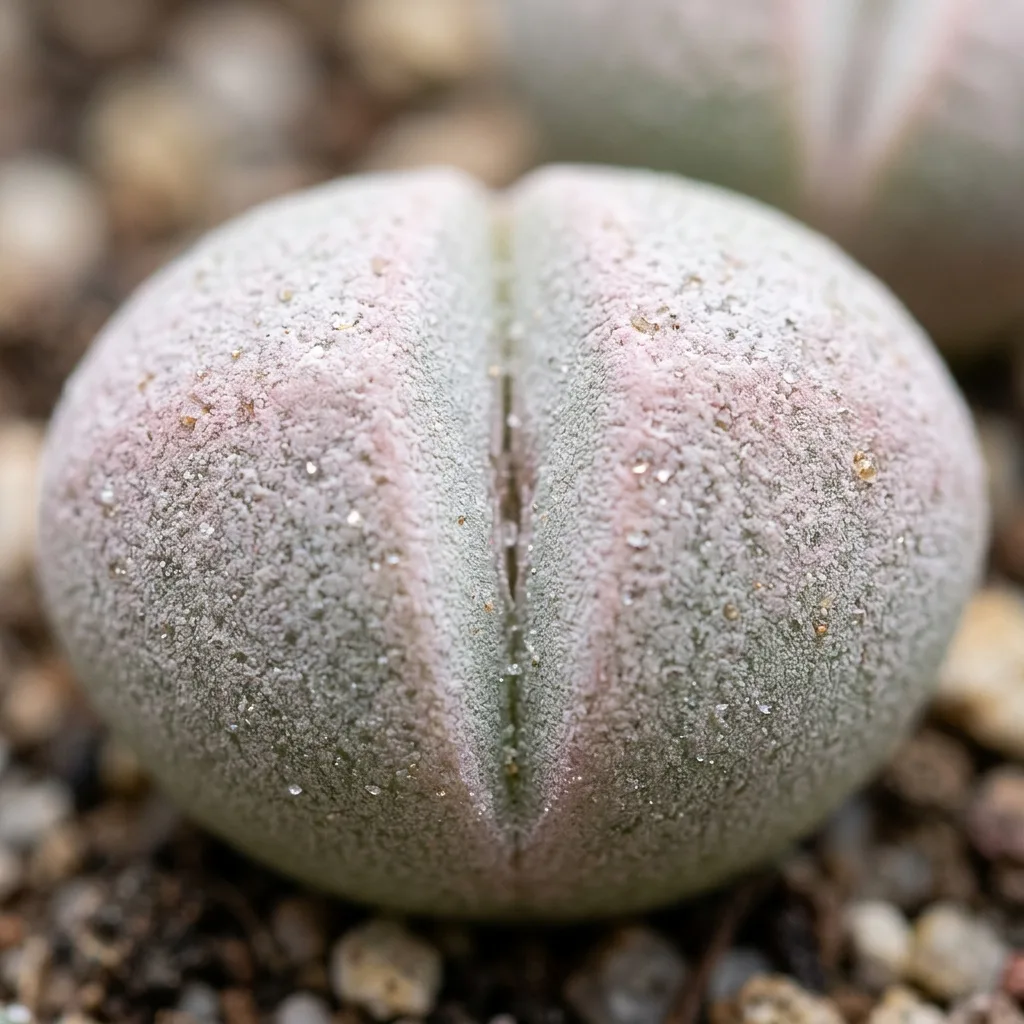
- Epidermal Strain and Longitudinal Micro-Fissures: The exterior leaf dermis is shielded by an exquisite, chalky-white epicuticular farina wax. When hydraulic uptake overpowers the cell walls, this surface turns glossy and taut, stomatal rings distend under hydrostatic strain, and hairline longitudinal fractures erupt across the lateral flanks or apex. The Art of Scientific Stem Cuttings and Rooting">This is the primary physiological distress signal that internal turgor pressure has surpassed mechanical limits.
- Hypocotyl Vitrification and Basal Translucency: Where the succulent body meets the substrate line, healthy tissue exhibits a firm, creamy-rose tone. If this basal collar transforms into a waterlogged, glassy, amber-brown hue, opportunistic oomycetes such as Pythium or vascular fungi like Fusarium have breached the stele and vascular bundles.
- Asymmetrical Softening Across the Central Fissure: The central cleft dividing the single pair of fused leaves is normally rigid, calcified, and tightly compressed. If gentle fingertip palpation reveals that one hemisphere yields like a soaked sponge while the opposing lobe remains turgid, internal moisture necrosis has initiated deep within the apical meristem.
- Leaf Stacking During the Renewal Phase: A healthy Dinteranthus microspermus should sustain only one active pair of leaves at any given time. If an emergent inner pair expands and bloats while the outer, ancestral leaf pair remains plump instead of shriveling into paper-thin, desiccation-protective husks, the specimen is experiencing physiological stacking—a precursor to bursting and lethal anaerobic decay.
- Cottony Wax Accretions Within the Cleft: Granular, powdery-white specks nestled deep within the leaf junction are pathognomonic of root or foliar mealybugs (Pseudococcidae), which pierce the nascent tissue and ingest nutrient-rich phloem directly from the juvenile growth point.
2. Underlying Causes and Environmental Triggers
The primary reason stone succulents succumb within indoor cultivation is the inability of synthetic home environments to replicate the razor-sharp environmental extremes of their native biome: torrential yet ephemeral morning fogs, blazing sun, hyper-porous quartz talus, and absolute seasonal drought. Dinteranthus operates strictly on CAM (Crassulacean Acid Metabolism) photosynthesis, locking stomata shut throughout the baking daytime heat and opening them solely during crisp night drops to assimilate carbon dioxide without sacrificial transpirational water loss.
Key environmental triggers responsible for collapse include:
- Substrate Organic Load and Peat Proliferation: Standard commercial cactus mixes formulated with blonde peat, coco coir, composted bark, or humus retain moisture for days or weeks. In nature, Dinteranthus root hairs encounter moisture trapped between inert quartz grains for mere hours before complete evaporation ensues. Prolonged dampness suffocates the subterranean root hairs, precipitating root hypoxia and irreversible anoxia-induced decay.
- Unseasonal Watering and Interruption of Leaf Absorption: This species undergoes leaf regeneration predominantly through the colder, lower-light months of late autumn and winter. The desiccating outer leaves are biologically destined to yield their stored water and nutrients entirely to the emerging internal pair. Supplying even a single teaspoon of water during this sensitive transfer halts outer leaf desiccation, builds extreme osmotic overpressure, and violently splits the plant down the middle.
- Inadequate Airflow Coupled with Insufficient Solar Radiation: Deprived of intense, unfiltered natural sunlight (requiring at least 5 to 6 hours of high-lux irradiance daily), the plant cannot synthesize its ultraviolet-protective farina coat, leaving the cell walls fragile and prone to micro-tearing. Concurrently, still, stagnant air encourages trapped droplets inside the fissure, providing a moist incubation chamber for fungal zoospores.
3. Natural and Organic Treatment Protocols
When physical ruptures occur or when root rot is discovered in its incipient stages, targeted natural methods can cauterize wounds, dehydrate infectious moisture films, and re-establish tissue integrity without resorting to harsh synthetics:
- Wound Cauterization with Micronized Sulfur and Organic Cinnamon: If hydraulic pressure has caused an open dermal split but the underlying mesophyll remains pale and firm (non-liquefied), dust the fissure immediately with pharmaceutical-grade sulfur powder or freshly ground Ceylon cinnamon using a sterile watercolor brush. Sulfur serves as an inorganic fungistatic agent, while the active cinnamaldehyde in pure cinnamon curtails fungal colonization, encouraging rapid callus tissue formation across the exposed parenchyma.
- Precision Cleansing with 70% Isopropyl Alcohol: To eradicate mealybug incursions sheltered deep within the apical cleft, saturate a fine-tipped cotton swab in 70% isopropyl alcohol and apply it directly onto the pests. The alcohol instantaneously dissolves the protective hydrophobic wax coating of the scale insects and evaporates within seconds, averting moisture retention. Always execute this treatment in twilight or under diffused shade to prevent photochemical burns.
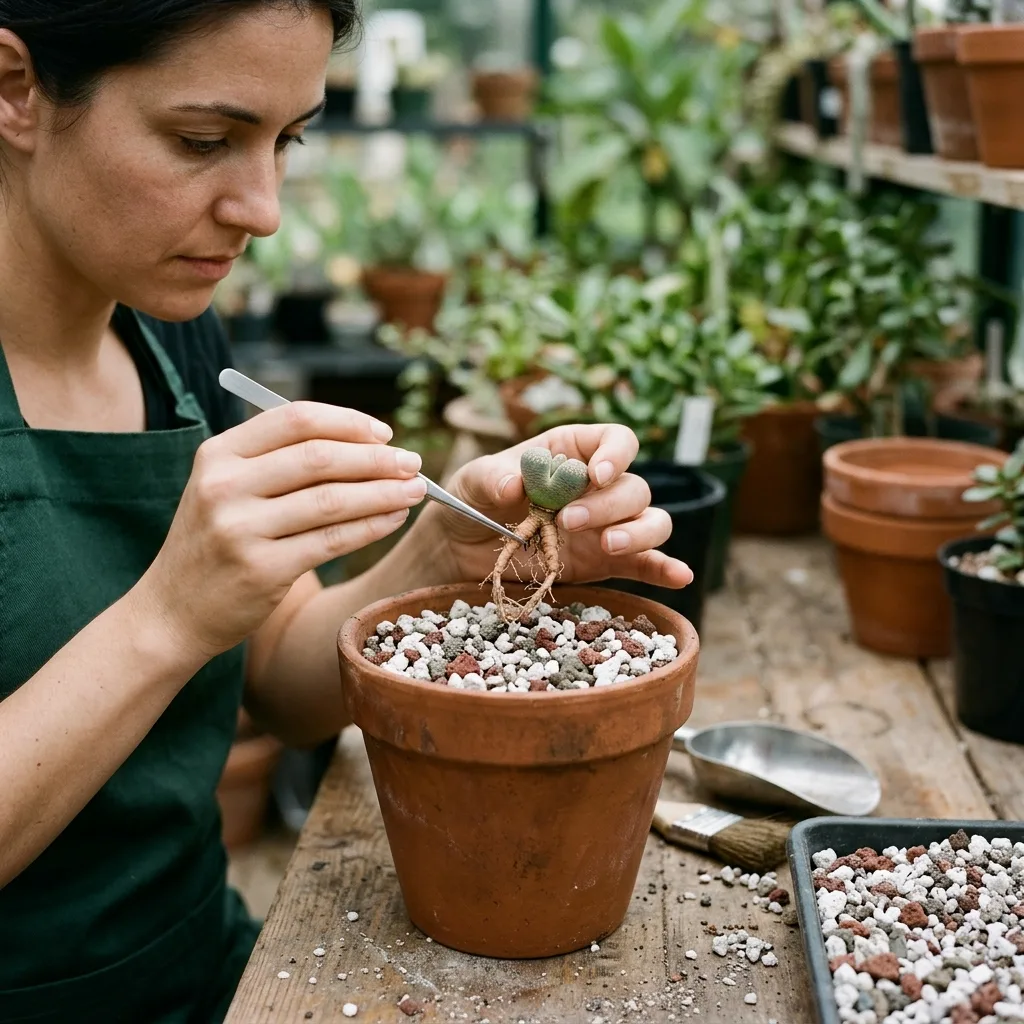
- The Bare-Root Dehydration Therapy: If early hypocotyl softening is detected, unpot the succulent immediately. Rinse away every particle of adhering nursery soil under lukewarm water, and carefully resect dark, mushy, or thread-like root fragments with a flame-sterilized blade. Place the bare-rooted plant upright upon sterile paper toweling in a warm, dry room with continuous gentle air movement for 5 to 7 days. This allows fungal hyphae to desicate and enables severed taproots to form impenetrable suberized calluses.
4. Chemical and Systemic Fungicide Application Protocols
Should vascular wilt penetrate internal transport tissue, or when mealybug infestations colonize deep meristematic crevices beyond the reach of manual swabbing, targeted systemic chemistry becomes indispensable. The table below outlines reliable, tested agrochemical active ingredients safe for Dinteranthus microspermus:
| Active Ingredient | Target Pathogen / Pest | Dosing (Per 1 Liter Water) | Application Method & Protocol |
|---|---|---|---|
| Fosetyl-Al | Root & Crown Rot (Phytophthora, Pythium) | 2.0 g | Substrate drench or localized root dip; 2 applications spaced 14 days apart. Delivers ambimobile systemic defense through upward and downward translocating action. |
| Propamocarb Hydrochloride | Damping-Off & Collar Rot | 1.5 ml | Substrate-only drench (do not spray directly onto the chalky farina); single curative dose repeated after 21 days if needed. |
| Azoxystrobin | Basal Stem Necrosis, Rust & Alternaria | 0.5 ml | Micro-mist foliar spray; apply exclusively in a well-ventilated space once every season. Halts mitochondrial respiration in fungal spores. |
| Acetamiprid | Fissure Mealybugs & Subterranean Root Aphids | 0.4 g | Systemic root drench; apply twice with a 10-day interval. Enters the sap stream to neutralize phloem-feeding pests without harming epicuticular wax. |
A vital physiological parameter to keep in mind: because Dinteranthus stomata stay tightly sealed through daylight hours, topical liquid sprays can pool across epidermal depressions and choke gas exchange. Whenever possible, administer systemic fungicides through dilute subterranean root drenches during the plant's active autumn cycle. If a foliar mist must be deployed, run an electric fan directly across the plant surface to evaporate residual droplets within thirty minutes.
5. Quarantine and Disinfection Steps
A pathogen-compromised or pest-ridden Dinteranthus represents a severe vector risk to the remainder of your mesemb collection, particularly adjacent genera such as Lithops, Conophytum, Argyroderma, and Pleiospilos.
- Spatial Quarantine: Isolate the afflicted specimen in a designated quarantine chamber situated at least two meters away from other succulents. Maintain pristine lighting and continuous, non-drafty ventilation. Subterranean root mealybugs can navigate through drainage apertures and traverse shelf trays to invade nearby pots.
- Container Sterilization: If salvaging non-porous plastic nursery containers, soak them in a 10% sodium hypochlorite solution (1 part commercial bleach to 9 parts water) for a minimum of 30 minutes, followed by a thorough clear-water wash. For porous terracotta pots, bake them in an oven at 120°C (250°F) for 40 minutes to eradicate heat-resistant fungal sclerotia embedded within the clay walls.
- Surgical Tool Hygiene: Scalpels, razors, or fine root-shears must be dipped in 90%+ isopropyl alcohol or sterilized in an open flame before and after every surgical cut. Slicing through an infected zone and subsequently trimming healthy root tissue without re-sterilizing inoculates pathogens directly into open vascular conduits.
6. Plant Rehabilitation and Post-Recovery Care
Bringing a desiccated, callused, or rescued living stone back into vigorous equilibrium demands extraordinary restraint and proper soil architecture. These plants operate at a profoundly deliberate metabolic tempo; visual progress may take an entire seasonal cycle to register.
- Engineered Ultramineral Substrate Formulation: Eliminate traditional potting soils entirely. The optimal growing medium for Dinteranthus microspermus must consist of 85% to 90% graded, porous inorganic aggregate. The ideal blend: 3 parts pumice (2–4 mm), 2 parts crushed red volcanic lava rock (scoria), 2 parts horticultural zeolite, 1 part coarse quartz grit or sharp river sand, and no more than 1 part thoroughly screened, low-humus fibrous peat or coco husk. This matrix drains fully within three seconds, preventing moisture stagnation while promoting rich oxygen exchange around the root hairs.
- Pot Ergonomics and Material Selection: While their top growth rarely exceeds a few centimeters, stone succulents produce deep, vertical, searching taproots. Abandon shallow communal bowls in favor of unglazed terracotta or ceramic pots possessing generous bottom drainage apertures and a depth of at least 8 to 10 cm (3.5 to 4 inches). Unglazed clay acts as a breathable membrane, wicking ambient moisture away from the root zone through its porous walls.
- Gradual Light and Ventilation Acclimation: Avoid thrusting a freshly repotted, traumatized plant into harsh midday summer sun; doing so induces irreversible photoinhibition and epidermal sunscald. Position the plant in bright, indirect exposure or under filtered morning sun for two to three weeks. Positioning a gentle 5V USB fan nearby guarantees microscopic boundary-layer air movement, rendering fungal spore establishment impossible.
- Safe Moisture Re-Introduction Protocol: Following surgical intervention or repotting, withhold water completely for 10 to 14 days. This mandatory dry window permits minor root micro-abrasions to suberize securely. When resuming hydration in the active autumn season, utilize shallow bottom-watering: place the pot in a shallow saucer of water for 30 to 45 seconds so only the lowest quarter of the substrate moistens by capillary action, then lift it out. Cease all watering completely during winter leaf changeover until the old leaf pair is entirely absorbed into a dry sheath.


Reader Reviews & Comments 3 Reviews
Julian Thorne
Eleanor Vance
Marcus Bennett
Leave a Review & Rating
Share your plant care tips, experiences, or questions with our succulent community.