






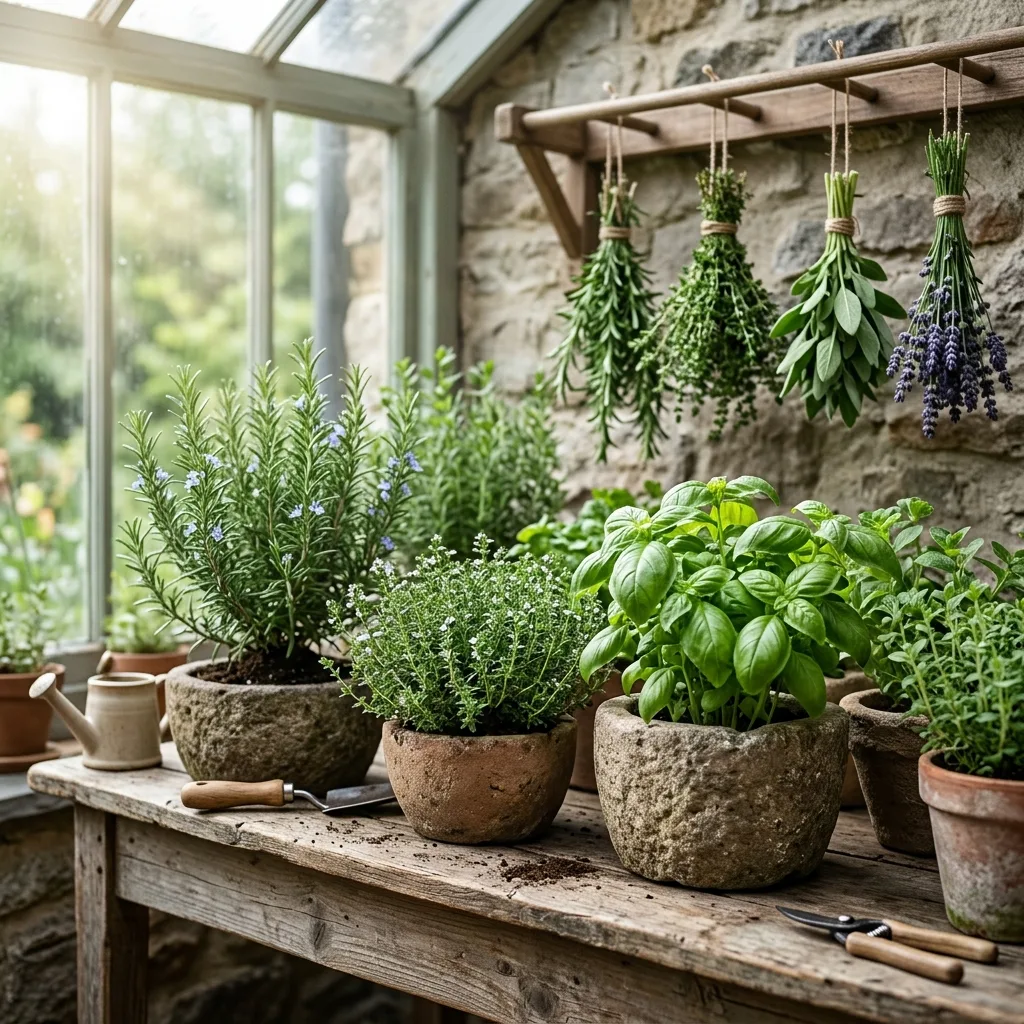
Did you know that the culinary herbs and spices that have breathed soul into our cooking for millennia are actually secondary metabolites secreted by nature's most resilient, defensive flora? From wild Mediterranean rosemary (Salvia rosmarinus) braving salty gales on chalky cliffs to tropical ginger (Zingiber officinale) weaving rhizomes beneath the humid Asian rainforest canopy, every spice plant synthesizes specialized aromatic molecules as an evolutionary defense mechanism. Yet, when we bring these botanical treasures into our living rooms, balconies, or kitchen windowsills, artificial stress factors—excessive irrigation, stagnant indoor air, and poor substrate porosity—often trigger pathogenic infections, causing the plants to forfeit their precious, fragrant volatile oils.
Can You Use Garden Soil in Pots? The Science of Topsoil and Root Oxygenation in Containers">Can You Keep a Cactus in the Bathroom? The Humidity Trap, Species Identification, and Scientific Survival Protocol">Can you truly harvest culinary-grade spices from indoor potted plants, and how do you extract pure seasoning for your pantry? The answer is an emphatic yes; however, gathering leaves, seeds, or roots demands capturing the exact window of physiological maturity while ensuring the specimen triumphs over opportunistic micro-pathogens. Do not let powdery mildew-dusted thyme, mealybug-ridden sweet basil, or moldering seed pods deter your horticultural passion. Grounded in plant physiology and botanical science, this comprehensive guide outlines the complete seed-to-table pathway, along with proven protocols to reverse cellular collapse and restore your indoor herb garden.
1. Early Diagnostic Symptoms and Microscopic / Visual Clues
Culinary spice and herb plants—dominated by the Lamiaceae (mint family) and Apiaceae (parsley/carrot family)—store volatile essential oils (terpenes, phenols, and esters) primarily inside specialized epidermal structures called glandular trichomes. When a plant faces pathogenic invasion or abiotic stress, this delicate metabolic factory breaks down, displaying immediate visual and organoleptic symptoms:
- Loss of Aroma and Volatile Terpenes: If gently crushing a leaf between your fingertips yields a flat, vegetal scent rather than a sharp, pungent bouquet, the plant is experiencing chlorophyll degradation and trichome shrinkage. This is a classic early indicator of root zone hypoxia (oxygen starvation) or incipient vascular occlusion.
- Powdery Mildew (Erysiphales): Particularly prevalent on garden mint (Mentha), common sage (Salvia officinalis), and sweet basil (Ocimum basilicum), this fungus manifests as white, talcum-like patches of epiphytic mycelium across the adaxial leaf surface. Under a hand lens or microscope, conidiospores can be seen penetrating the host cuticle; infected foliage suffers photosynthetic collapse and must never be consumed as culinary herbs.
- Vascular Wilt (Fusarium and Verticillium): In annual and biennial herbs like coriander/cilantro (Coriandrum sativum), cumin (Cuminum cyminum), and basil, lower foliage displays interveinal chlorosis, followed by unilateral stem wilting. A transverse cross-section of the stem reveals distinctive dark brown ring discoloration inside the xylem vessels.
- Trichome Necrosis and Silvery Stippling: Infestations by greenhouse thrips (Frankliniella occidentalis) or two-spotted spider mites (Tetranychidae) leave silvery patches, necrotic pinpoint feeding scars, and ultra-fine webbing on leaf undersides, drastically degrading the tissue quality required for air-drying.
2. Root Causes and Environmental Triggers
The primary reason indoor culinary herbs decline is our failure to replicate the microclimatic conditions of their native biomes. Mediterranean shrubs—such as common thyme (Thymus vulgaris), rosemary, and lavender—evolved in hyper-draining, highly alkaline, low-organic mineral scree under scorching solar radiation. When potted into dense, peat-heavy indoor potting soils that act like moisture-retentive sponges, their delicate root hairs rapidly succumb to anaerobic pathogens like Pythium and Phytophthora.
Conversely, seed spices belonging to the Apiaceae family (such as fennel, anise, and coriander) develop deep, taproot architectures. In shallow decorative planters, their taproots hit the bottom and coil, inducing stress-triggered premature flowering (bolting) before seed umbels can physiologically fill. Furthermore, stagnant indoor air paired with elevated humidity turns leaf surfaces into damp incubators, promoting spore germination directly over the oil-secreting trichomes.

How to Harvest and Cure Spices from Your Plants
Extracting culinary-grade herbs and spices requires tailored harvesting protocols matched to each botanical organ:
- Leaf Herbs (Thyme, Rosemary, Basil, Mint): Harvest just as flower buds initiate but before they open, immediately after the morning dew has evaporated. This timing coincides with peak monoterpene and volatile oil concentrations within the glandular trichomes. Spread clean foliage across cheesecloth in a dry, ventilated, dark room maintained at 25–30°C (77–86°F) for 5 to 7 days. Never flash-dry culinary herbs in a hot oven, as heat vaporizes the delicate, volatile essential oils.
- Seed Spices (Coriander, Cumin, Fennel): Allow flowering umbels to mature until they transition from bright green to a straw-yellow or tan hue. Cut the entire umbel with its stalk early in the morning before fragile seed capsules shatter. Suspend the stalks upside down inside an unbleached paper bag; as the umbels cure over two weeks, fully matured seeds naturally drop into the base. Transfer the cleaned seeds to airtight, amber glass jars.
- Root and Rhizome Spices (Ginger, Turmeric): In late autumn, when the aerial pseudostems turn yellow and naturally senesce, unpot the root cluster. Carefully snap secondary rhizomes away from the central crown, thoroughly scrub away all mineral particles, slice them paper-thin, and dehydrate at low heat (under 45°C/113°F) until brittle enough to mill into fine culinary powder.
3. Natural and Organic Disease Management
Because these plants are intended for culinary consumption, synthetic chemical treatments must be avoided in favor of food-safe, organic curative interventions:
- Potassium Bicarbonate Foliar Spray: Highly effective against powdery mildew, this organic salt elevates leaf surface pH to an alkaline level inhospitable to fungal conidia germination. Dissolve 5 grams of food-grade potassium bicarbonate and 2–3 drops of pure castile soap into 1 liter of soft water; spray thoroughly across both leaf surfaces at dusk.
- Cold-Pressed Organic Neem Oil: Acts as an organic antifeedant and insect growth regulator against aphids, thrips, and whitefly larvae. Emulsify 5 ml of pure cold-pressed neem oil with 2 ml of organic liquid soap in 1 liter of lukewarm water. Apply weekly until pests subside, halting all foliar sprays at least 7 days prior to harvest.
- Wettable Micronized Sulfur: A classic biological intervention for stubborn powdery mildew and eriophyid/spider mite infestations. Dust lightly across dry foliage during cool morning hours. Avoid applications when ambient temperatures exceed 28°C (82°F) to prevent phytotoxic foliar leaf scorch.
4. Controlled Chemical and Fungicidal Protocols
If valuable mother stock plants or rare seed-producing specimens must be rescued from systemic fungal collapse (and no fresh foliage will be harvested during the active treatment cycle), targeted treatments with defined Pre-Harvest Intervals (PHI) may be utilized:
| Target Pathogen / Pest | Active Ingredient | Dosage per Liter | Application Interval | Pre-Harvest Interval (PHI) |
|---|---|---|---|---|
| Powdery Mildew & Rust (Fungal) | Wettable Sulfur (WP) | 3 - 4 g / L | 7 - 10 days | 3 days |
| Root Rot (Pythium / Phytophthora) | Copper Oxychloride | 2 - 2.5 g / L | 14 days (Root drench) | 14 days |
| Spider Mites & Thrips | Potassium Salts of Fatty Acids | 10 - 15 ml / L | 5 days (3 rounds) | 1 day |
| Vascular Wilt (Fusarium) | Bacillus subtilis (Bio-fungicide) | 5 ml / L | 7 days (Root collar drench) | 0 days (Biological) |
5. Strict Quarantine and Sanitization Protocols
The moment systemic disease or an aggressive pest colony is identified, isolate the affected pot at least 3 meters (10 feet) away from other aromatic herbs in a room with steady, unidirectional airflow. Fungal conidia can bridge the gap between adjacent Lamiaceae specimens via air currents in a matter of hours. Always sterilize pruning shears and harvesting knives with 70% isopropyl alcohol or pass the blades through an open flame before moving between stems.
If root rot claims a plant, never discard the spent substrate into your garden compost bin; bag and dispose of it in municipal waste to halt pathogen dispersal. Porous terracotta pots that housed infected plants must be soaked in a 10% household bleach solution for at least two hours, rinsed thoroughly, and allowed to air dry completely before being replanted.
6. Plant Rehabilitation and Post-Rescue Care
Once pathogenic pressure has been neutralized, re-establishing a healthy rhizosphere is essential for restoring rich essential oil synthesis. Discard standard dense potting soils and repot into an airy, structurally porous blend: 40% coarse mineral aggregate (calcined clay, pumice, or crushed lava rock), 40% clean blonde peat or washed coco coir, and 20% aged worm castings for biological inoculation.
Place post-operative, root-pruned specimens in bright, filtered light rather than direct, scorching sun for the first 7 to 10 days to allow cell turgor pressure to stabilize without excessive transpiration stress. Strictly withhold high-nitrogen synthetic fertilizers for at least three weeks; surplus nitrogen creates soft, water-bloated cellular walls that suppress essential oil accumulation and invite re-infestation. Instead, apply a mild organic cold-water kelp meal drench to encourage vigorous lateral root regeneration.


Reader Reviews & Comments 3 Reviews
Marcus Sterling
Julian Hayes
Eleanor Vance
Leave a Review & Rating
Share your plant care tips, experiences, or questions with our succulent community.