






Those magical early childhood years, when youngsters explore the physical universe through touch, curiosity, and instinctively sampling tastes, can swiftly become an anxious time for dedicated indoor plant lovers. Having evolved complex spine armor and chemical defense systems across millennia in the unforgiving Sonoran Desert to ward off herbivores, cacti raise an entirely valid question when placed within crawling range of a toddler: Are cacti truly poisonous to children, or are sharp spines the sole tangible risk?
In the realm of systematic botany, 'true cacti' (family Cactaceae) are frequently confused with toxic spurges (Euphorbiaceae) that merely resemble them. In this comprehensive guide, we examine how to shield tiny hands from spine accidents and insidious glochids while diving deep into the physiological care protocols of completely child-safe cactus species you can cultivate with absolute confidence.
1. Taxonomic Identity, Areole Anatomy, and Spine Morphology
Determining the real threat level a specimen poses to children requires an understanding of its morphological blueprint. The single anatomical hallmark separating the family Cactaceae from every other succulent form on Earth is the specialized bud cushion known as the areole. Spines are marvelously modified leaves, transformed through millions of years of natural selection to eliminate transpirational water loss and deter grazing desert fauna.
From a pediatric safety perspective, spines present two fundamentally distinct physical mechanisms:
- Macro Spines (Radial and Central Spines): Found on genera such as Echinocactus or Ferocactus, these are heavily lignified, rigid structures. They carry no chemical toxins, yet they present clear hazards for mechanical puncture wounds and deep tissue trauma.
- Glochids: Microscopic, hair-like prickles emerging in dense clusters from the areoles, most notoriously within the genus Opuntia (Prickly Pear). These are the most common hazard for small children; upon light contact, hundreds detach into the dermis. Armed with minute retrograde barbs, they snap off beneath the skin surface, triggering severe mechanical irritant dermatitis (foreign body granulomas).
2. Light Requirements, Sun Exposure, and Safe Placement
Cultivating cacti safely in a home with toddlers hinges on harmonizing the plant's physiological demand for high solar irradiance with secure, elevated placement. At a cellular level, desert cacti perform Crassulacean Acid Metabolism (CAM photosynthesis): their stomata remain sealed during the heat of the day to halt desiccation, opening exclusively at night to absorb carbon dioxide. Powering this intense metabolic cycle demands 5 to 6 hours of unfiltered direct sunlight daily.
Rather than placing containers on low coffee tables or floor stands within crawling reach, position your pots along the upper sills of south- or southwest-facing windows, or secure them onto heavy-duty floating solid wood shelving well above standing height. Tucking cacti into dim, sun-deprived corners out of caution triggers etiolation (weak, chlorotic, stretched growth). As the cellular walls soften and the stem leans, the compromised plant risks toppling off shelves directly onto playing children.

3. Watering Cycles and the Crucial Winter Dormancy Protocol
Drenching cacti too frequently is not an act of love; it deprives the root system of vital oxygen, resulting in suffocation and cellular collapse. In family homes, constantly damp potting media does more than cause root rot—it creates an ideal breeding ground for harmful fungal spores and fungus gnats, both of which can provoke indoor respiratory allergies in sensitive youngsters.
The cardinal rule of cactus hydration is simple: Never apply water until the substrate has dried out completely down to the base of the pot. During the active vegetative growth phase through spring and summer, implement the thorough 'soak and dry' method. From late autumn through late February, cacti must enter their cold dormancy period in an unheated room (8–12°C / 46–54°F), during which irrigation should cease almost entirely. A resting cactus halts its metabolic pump; water supplied during dormancy fractures the delicate xylem vessels, inducing catastrophic basal stem rot.
4. High-Mineral Cactus Substrates and Sturdy Potting Choices
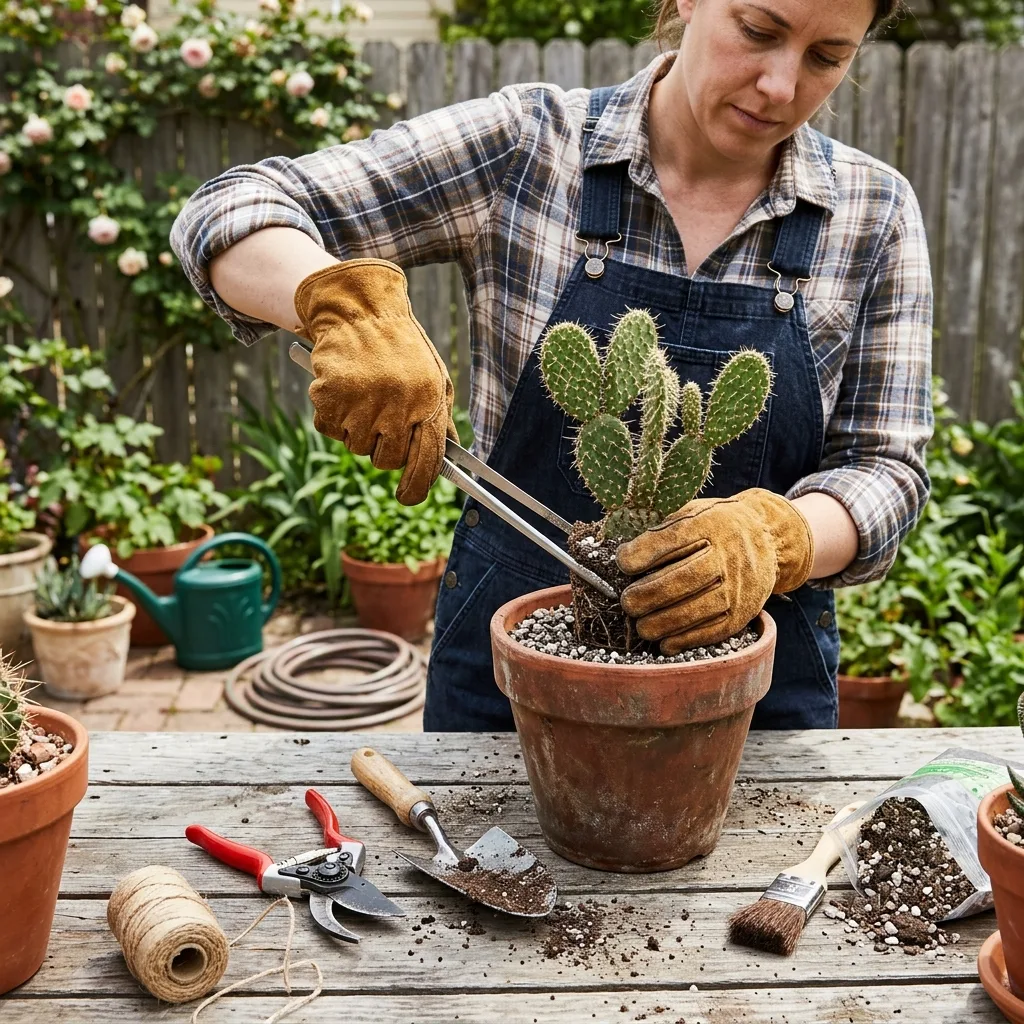
To eliminate tip-over accidents driven by curious hands or bumped furniture, the relationship between pot mass and substrate drainage must be balanced. Featherlight plastic nursery pots tip instantly if a child tugs on a tablecloth or shelf runner. Always opt for heavy, wide-based unglazed terracotta or thick ceramic containers featuring functional drainage holes.
The potting medium must ensure rapid hydraulic conductivity and sustained air porosity. The formulation below provides optimal root aeration while discouraging the pathogens associated with root rot:
| Component | Proportion (%) | Botanical Function & Child-Safety Advantage |
|---|---|---|
| Pumice (3–6 mm) | 40% | Guarantees cellular root respiration; prevents compaction and waterlogging. |
| Lava Rock / Zeolite | 25% | Enriches the rootzone with trace minerals; anchors the pot with dense physical weight. |
| Coarse Horticultural Sand / Quartz | 15% | Maintains open percolation channels throughout the substrate matrix. |
| High-Grade Peat / Coconut Coir | 20% | Provides controlled moisture retention without delaying CAM dry-down cycles. |
5. Inducing Vibrant Blooms and Nutritional Management
Watching vibrant, satiny flowers burst from formidable spines is an unforgettable way to teach children about the wonders of plant adaptation. Rather than turning to synthetic growth hormones, triggering blooms requires replicating natural desert seasons. Subjecting the plant to genuine winter dormancy—defined by lower ambient temperatures and restricted water—stimulates flower bud primordia to awaken.
When spring growth emerges, apply a specialized low-nitrogen, high-phosphorus, and high-potassium fertilizer (such as an NPK 5-10-10 or 4-8-12 formulation) once a month at half the manufacturer's recommended strength. Excess nitrogen leads to bloated, watery tissue, which softens the epidermis, attracts pests, and leaves spines weak and prone to snapping off upon incidental contact.
6. Propagation, Cuttings, and Grafting Techniques
Propagating cacti is an engaging science lesson, yet safety must come first. When gardening alongside children, bypass heavily armed desert species in favor of smooth, spineless varieties. When taking stem cuttings, always use a clean, ethanol-sanitized blade and store the severed cut in a warm, shaded spot for 4 to 7 days to form a firm callus. Planting raw, unhealed cuttings directly into damp soil leads to systemic fungal infection.
Grafting offers another family-friendly project. The popular Moon Cactus (Gymnocalycium mihanovichii), which lacks chlorophyll and exhibits bright neon tones, is typically grafted onto a fast-growing, relatively benign Hylocereus stock. This fascinating pairing yields an eye-catching, compact desk plant that introduces kids to botanical concepts with minimal spine hazard.
7. Defending Against Fungal Pathogens and Soft Tissue Decay
The leading cause of indoor cactus decline is fungal root rot caused by pathogens such as Fusarium, Phytophthora, and Pythium. A rotting cactus softens from the root flare upwards, turning translucent, yellow, and mushy. Should an unsupervised child press on an infected stem, their fingers can sink directly through the decomposed tissue, causing multiple areoles of spines to embed deep into their skin at once.
To prevent this scenario, never permit drainage saucers to retain standing water. If you detect early softness along the lower stem, stop watering immediately, unpot the specimen, wash away the soil, and excise any blackened root tissue with a sterile knife. Dust the wound with elemental sulfur or ground cinnamon, and allow the bare-root plant to dry in the open air for a full week before repotting into fresh mineral substrate.


Reader Reviews & Comments 3 Reviews
Claire Thompson
Julian Vance
Hannah Wright
Leave a Review & Rating
Share your plant care tips, experiences, or questions with our succulent community.