






When the courier rings your doorbell and hands you that compact cardboard parcel, you are not simply receiving a package; you are holding a living, breathing microcosm steeped in millions of years of evolutionary resilience straight from the Sonoran and Chihuahuan deserts. Popularized by botanical innovators such as Leaf and Clay, monthly cactus subscription boxes (often featuring beloved varieties like Pincushion Cacti, Chin Cacti, and Moon Cacti) deliver the unmatched thrill of discovering a surprise desert species on your doorstep every thirty days. Yet beneath the excitement of unboxing, these fascinating green voyagers have endured days of pitch darkness, tumbling parcel hubs, and extreme temperature fluctuations, arriving on your table in a state of profound physiological shock.
The dry aroma of kraft paper as you slice through the tape, tiny globose stems tangled in batting fibers, and loosened nursery peat scattered across the spines demand an informed botanical reception protocol. As a passionate grower, you must see past the novelty of a decorative novelty item and treat this newcomer as a specialized desert organism engineered by unforgiving environmental laws. In this comprehensive guide, we dissect the botanical identities of plants commonly found in monthly subscription boxes, map out immediate post-transit resuscitation steps, and establish foolproof conditions for robust, long-term vitality.
1. Taxonomic Identity, Areole Architecture, and Spine Morphology
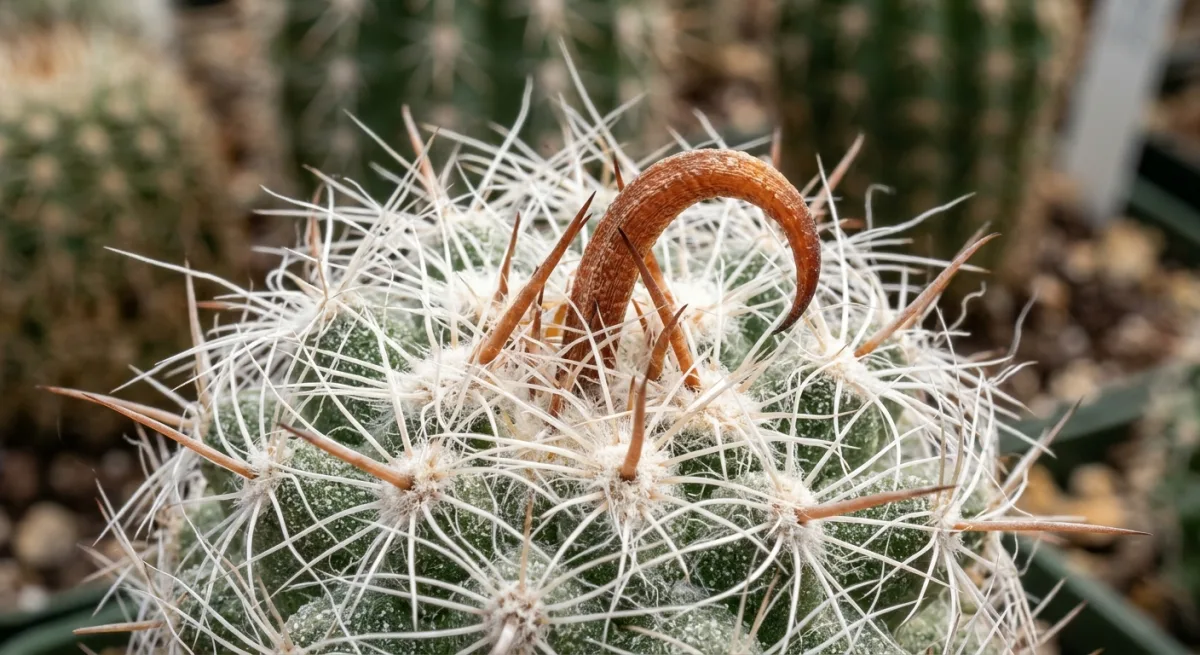
Curators of cactus subscription boxes typically select compact, collectable genera prized for their visual diversity and manageable footprints. Among the most frequent arrivals are Mammillaria (Pincushion Cactus), Gymnocalycium (Chin Cactus), Parodia (Ball Cactus, formerly Notocactus), and geometric marvels like Astrophytum (Star Cactus or Bishop's Cap). To confirm that your new arrival is a true botanical cactus belonging to the family Cactaceae, look closely for the defining morphological signature: areoles. These specialized, felted cushions represent highly condensed, modified lateral bud branches found nowhere else in the plant kingdom; spines, radial bristles, offsets, and vibrant blooms arise exclusively from these discrete growth centers.
The intricate spines adorning your new specimen serve far more than a defensive purpose. Morphologically, spines are radically modified leaves that have abandoned photosynthesis to minimize cellular transpirational moisture loss. Consider the silky white hairs (trichomes) enveloping a Mammillaria bocasana (Powder Puff Cactus): this fibrous coat acts as a microclimate shade umbrella, shielding tender green epidermis from scorching ultraviolet radiation and night-time cold snaps. Meanwhile, central hooked spines capture morning dew and direct condensation downward toward the basal root collar like miniature hydraulic channels. Unpacking your cactus with extreme care to avoid snapping these spines is paramount to preserving the plant's delicate moisture regulation equilibrium.
2. Light Exposure, Solar Radiation Intensity, and Aeration Standards
Perhaps the most widespread and catastrophic post-unboxing mistake is thrusting a freshly arrived cactus onto a sunny, south-facing windowsill under blistering midday sun. Deprived of photon energy for days inside a sealed postal crate, the plant has down-regulated its chlorophyll production and compromised its cellular turgor stability. Immediate exposure to harsh UV rays mimics putting fair, unshielded skin into an intense tanning bed: the tender epidermal cells scorch rapidly, leaving behind permanent, disfiguring chalk-white or leathery brown necrotic sunburn scars.
Instead, allow your boxed cactus to recuperate for the first 3 to 4 days in a brightly illuminated room with soft, filtered indirect light. From day 5 onward, implement an acclimatization schedule by introducing one hour of early morning sun daily, gradually increasing exposure over a two-week span. Once fully acclimated, desert cacti demand a minimum of 5 to 6 hours of unfiltered direct sunlight daily to maintain dense, colorful spination and synthesize protective epicuticular wax (farina). Equally critical is brisk air circulation; stagnant indoor air stifles cellular gas exchange and creates an ideal breeding ground for moisture-loving pathogens.
3. Irrigation Regimes and the Critical Winter Dormancy Period
Your immediate instinct upon seeing dry nursery substrate might be to pour a cup of water over the pot—resist this urge at all costs. Shipped roots have temporarily suspended active hydraulic absorption due to sustained darkness and temperature drops. Drenching the soil at this fragile stage suffocates the oxygen-starved root system and practically guarantees basal rot. Leave your unboxed cactus completely, uncompromisingly dry for at least 5 to 7 days.
Cacti practice Crassulacean Acid Metabolism (CAM), meaning their stomata remain tightly closed throughout the heat of the day to eliminate evaporative water loss, opening only under nocturnal darkness to harvest carbon dioxide. When watering resumes, adhere religiously to the 'soak and dry' philosophy. During the active growth season (spring through late summer), thoroughly saturate the substrate until water drains freely from the drainage hole, and then withhold all moisture until the potting mix has thoroughly dried throughout its entire volume.
Between November and March, respect the plant's obligatory winter dormancy period. Lower the ambient temperature to an unheated yet frost-free 8–12°C (46–54°F) and virtually suspend all watering. In their native habitats, desert cacti respond to cooler, arid winter conditions by concentrating cellular sap and synthesizing protective antifreeze proteins. Depriving a desert cactus of this cold, dry rest period all but guarantees it will fail to set flower buds when spring arrives.
4. High-Mineral Gritty Substrate and Terracotta Pot Requirements
Commercial nurseries frequently package subscription box specimens in pure peat moss or dense coconut coir to minimize transit weight and nursery production costs. While these organic sponges perform acceptably under high-heat nursery tunnels with automated moisture probes, they are death traps on a home windowsill. Peat becomes completely hydrophobic when bone-dry, deflecting water down the pot edges, yet once rewetted, it holds suffocating moisture for weeks on end.
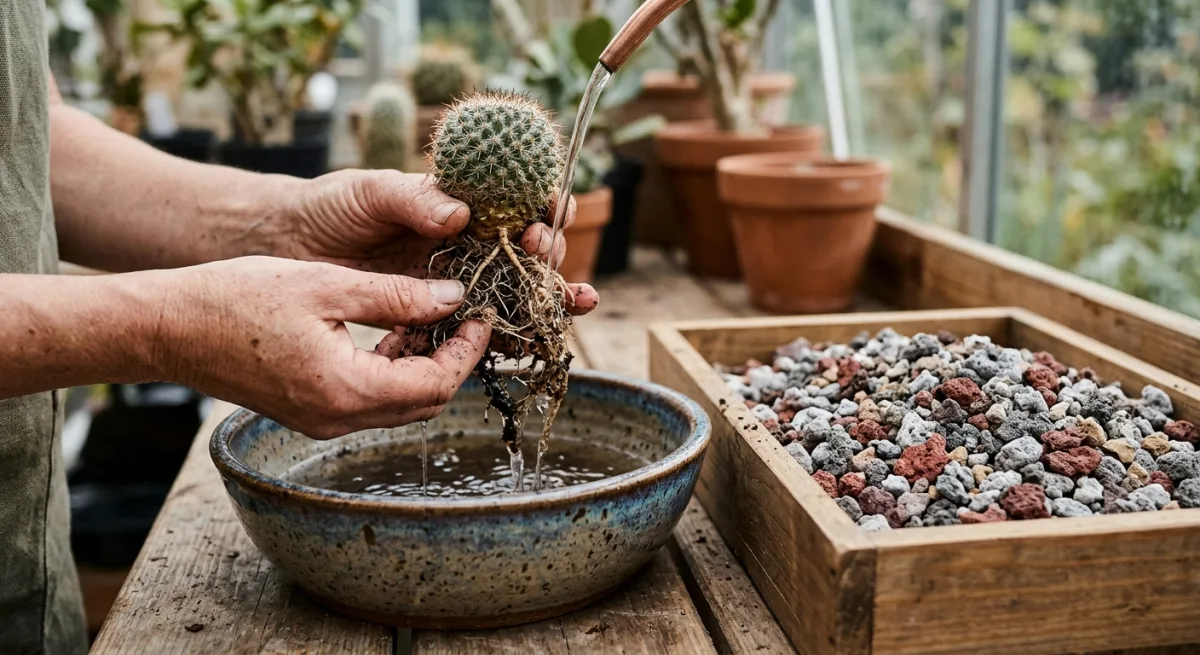
After letting your new acquisition acclimate for 10 to 14 days, gently wash the nursery peat from the root system with lukewarm water, pat the roots dry, and let the plant rest in a shaded, ventilated spot for 24 hours. Repot into a high-mineral, rapidly draining gritty mix housed in an unglazed terracotta pot featuring generous drainage apertures. The natural porosity of unglazed fired clay breathes, expelling excess moisture through the pot walls.
| Substrate Component | Ratio (%) | Botanical Function & Drainage Benefit |
|---|---|---|
| Horticultural Pumice (3–6 mm) | 40% | Creates vital macro-pore aeration pockets; prevents root asphyxiation. |
| Crushed Lava Rock or Zeolite | 30% | Provides structural weight and exceptional Cation Exchange Capacity (CEC). |
| Coarse Quartz Grit / River Sand | 15% | Keeps internal drainage pathways clear; prevents compaction over time. |
| High-Quality Sifted Cactus Soil / Compost | 15% | Delivers minimal organic anchoring and essential humic acid reserves. |
5. Flower Induction Strategies and Targeted Macronutrient Feeding
Few horticultural achievements rival the visual spectacle of an unpretentious, spine-covered barrel erupting with silky, iridescent blossoms in shades of magenta, amber, or fiery scarlet. Contrary to popular myth, coaxing a subscription box cactus into bloom is not a matter of luck; it is the natural culmination of an uninterrupted winter dormancy paired with balanced, low-nitrogen nutrition.
During the active vegetative window (May through August), feed your cactus monthly with a specialized liquid fertilizer formulated with low nitrogen (N) and elevated phosphorus (P) and potassium (K)—such as an NPK 5-10-10 or 4-8-12 dilution mixed at half strength. Excessive nitrogen fuels watery, bloated vegetative growth that splits the epidermis, renders tissues vulnerable to bacterial infection, and completely inhibits floral bud initiation. Combined with generous morning photons, low-nitrogen feeding triggers the areolar cells to differentiate into magnificent floral structures.
6. Propagation Techniques: Offsets, Cuttings, and Grafting Mechanics
As your subscription cacti settle into their new mineral home, many globose cultivars will begin producing basal lateral offsets, commonly known as 'pups'. Harvesting these offsets is the most reliable propagation route. Using a sterilized scalpel, sever the pup cleanly from the mother column, dust the wound with powdered sulfur or horticultural cinnamon, and set it in a warm, shaded spot for 4 to 7 days to form a firm, protective suberized callus. Inserting uncallused cuttings into damp media leads to rapid fungal breakdown.
If your box delivers a vivid, fluorescent red or yellow Moon Cactus (Gymnocalycium mihanovichii forma rubra), you are holding a chimeric graft. Lacking chlorophyll, the mutant scion cannot synthesize food on its own; it depends entirely on the robust green rootstock underneath—typically a tropical Hylocereus (Dragon Fruit cactus). Successful maintenance requires keeping the scion-rootstock vascular cambium junction dry and promptly removing any side shoots that sprout from the green base using a sterile blade so the rootstock does not divert energy away from the colorful crown.
7. Defending Against Root Rot, Opportunistic Fungi, and Cryptic Pests
Dark, damp parcel containers are prime incubation chambers for aggressive soil-borne fungal pathogens, including Fusarium, Phytophthora, and Pythium species. Upon receiving your box, immediately conduct a tactile inspection of the stem base with a clean fingertip. If the root collar feels spongy, waterlogged, or shows a translucent brownish discoloration, collar rot is already advancing.
Halting rot demands decisive surgical intervention: unpot the plant, excise every rotting brown root strand, and slice away discolored stem flesh until you reveal clean, pristine green-and-white vascular tissue. Disinfect the excision site with 3% hydrogen peroxide, allow a thick callus to develop over a week in dry shade, and reset the surviving crown into dry, pure horticultural pumice to stimulate adventitious root development. Finally, inspect every areole and spine crevice with a jeweler's loupe for mealybugs (Pseudococcidae); eradicate any cottony white colonies instantly by dabbing them with a cotton swab soaked in 70% isopropyl alcohol.


Reader Reviews & Comments 3 Reviews
Liam Anderson
Oliver Brooks
Sarah Jenkins
Leave a Review & Rating
Share your plant care tips, experiences, or questions with our succulent community.