






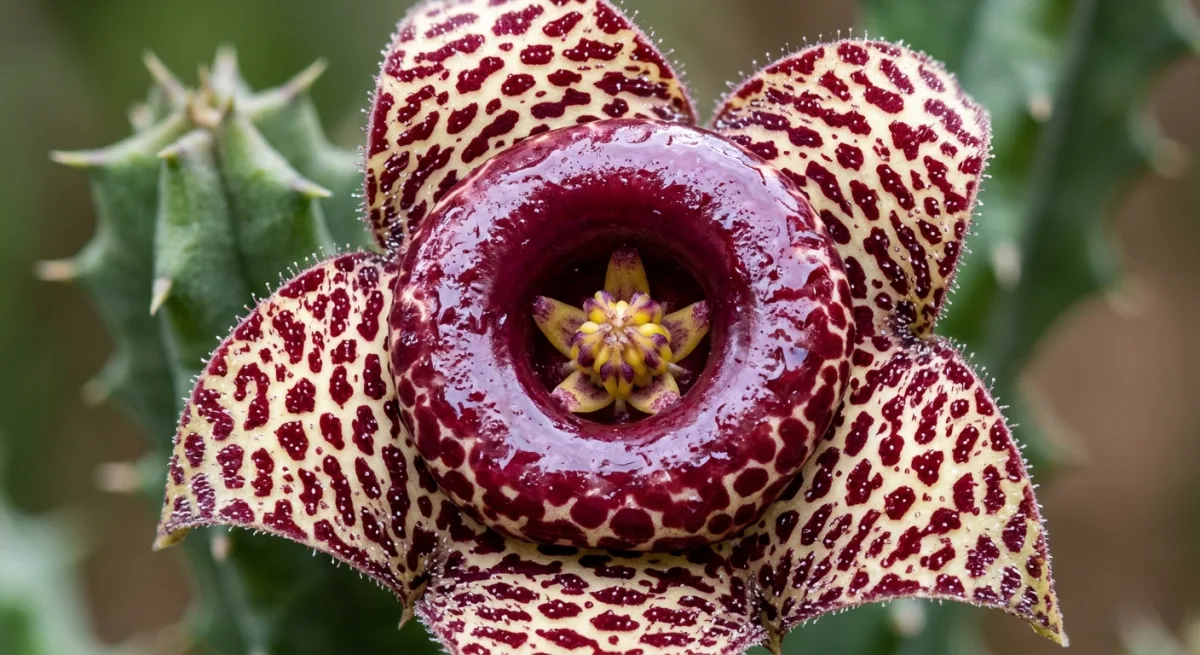
Hailing from the semi-arid Karoo basins and rugged rock crevices of Southern and East Africa, stapeliads—affectionately known among plant enthusiasts as Carrion Flowers or Starfish Cacti—stand among the most captivating curiosities in the succulent realm. Characterized by fleshy, four-angled stems and nature's most bizarre star-shaped blossoms, this group (encompassing genera such as Stapelia, Huernia, and Orbea) requires a discerning eye when grown in containers. Because they naturally thrive sheltered beneath thorny nurse bushes and nestled within mineral-rich stone fissures, cultivating them successfully indoors without basal rot hinges on a deep respect for their cellular water regulation.
Far too many growers mistake stapeliads for desert cacti, subjecting them to scorching midday sun and suffocating, peat-heavy potting mixes. The outcome is almost always identical: a heartbreakingly sudden black rot creeping up from the base and total root failure. Frequent watering is never an expression of love; in dense, non-porous soils, it simply deprives root hairs of oxygen and drowns the plant from below. In this master horticultural guide, we unpack the cellular physiology of stapeliad stems, design a pristine gritty mineral substrate, and unveil the exact environmental triggers needed to produce those famous velvety, jewel-toned blossoms.
1. Botanical Biology & Physiological Foundations
In botanical taxonomy, stapeliads belong to the dogbane family (Apocynaceae), classified under the subfamily Asclepiadoideae and the tribe Stapelieae. Their most defining evolutionary adaptation is the total reduction of true leaves into minute, tooth-like projections, transferring the entire burden of photosynthesis to their succulent, multi-angled stems (*cauliflory*). Minimizing surface area in this manner represents an exquisite xerophytic strategy engineered to halt excessive transpiration beneath harsh African skies.
At the cellular level, stapeliads utilize Crassulacean Acid Metabolism (CAM). Under this circadian metabolic pathway, stomata open strictly during the cool hours of the night to take in carbon dioxide, storing it internally as malic acid. During the day, stomata remain hermetically sealed to conserve moisture while sunlight drives photosynthesis using the stored organic acids. Within the stem cortex, expansive vacuoles store clear to slightly latex-like mucilaginous sap, allowing the plant to withstand prolonged droughts. However, this high water-storage architecture renders cell walls acutely vulnerable to excessive turgor pressure and opportunistic anaerobic pathogens.
Below ground, stapeliads do not produce deep taproots; instead, they anchor via shallow, fibrous, adventitious root systems that crave constant gas exchange. The root crown (the sensitive juncture where green stems meet subterranean tissue) is the primary vulnerability where fungal spores such as Fusarium, Pythium, and Rhizoctonia infiltrate. When potted in moisture-retentive, organic-heavy media, root cells undergo severe hypoxia (oxygen deprivation), causing root epidermises to collapse and triggering lethal ascending stem rot within 48 hours.
2. Accurate Diagnosis: Interpreting Stem Signals
Stapeliads communicate physiological distress rapidly through alterations in stem pigmentation, dermal firmness, and internodal elongation. Accurately reading these visual cues is the foundation of proactive care:
- Matte, Deep Purple or Bronze Stems: Indicates that the epidermis is producing anthocyanin pigments as a photo-protective shield against intense light. A gentle bronze blush is entirely natural and often stimulates flowering; however, if stems become paper-thin and turn a dull, scabby gray-brown, the tissue is suffering from acute sunburn and heat stress.
- Stretched, Pale Green, Fragile Growth (Etiolation): A definitive diagnosis of insufficient light. Tubercles become widely spaced, structural lignin weakens, and the plant permanently loses the biochemical energy needed to differentiate flower buds.
- Waterlogged, Blackened Tissue Creeping from the Base (Basal Wet Rot): The hallmark of anaerobic fungal infection resulting from saturated roots. The stem feels mushy and hollow upon light touch; immediate surgical intervention is non-negotiable.
- Wrinkled, Deflated Stems Despite Wet Soil: Conclusive proof of complete root loss. The subterranean root hairs have collapsed from root rot, completely severing the xylem vascular bundles. Moisture cannot travel upward, leaving the stems in an ironic state of physiological dehydration.
- White, Cottony Clusters in Stem Crevices: A colony of mealybugs (Pseudococcidae) or subterranean root mealybugs. These sap-sucking pests puncture epidermal walls, acting as vectors for lethal systemic bacterial and fungal pathogens. Immediate quarantine and systemic treatment are imperative.
3. Step-by-Step Cultivation & Blooming Protocol
To cultivate robust, rot-resistant colonies that burst into breathtaking star-shaped flowers from late summer into autumn, implement this horticultural sequence with discipline:
- Select Shallow, Porous Terracotta Containers: Never use deep plastic or glazed pots for stapeliads. Because their fibrous root architecture spreads laterally, opt for shallow terracotta bowls or bulb pans (no deeper than 8–10 cm / 3–4 inches). Cover drainage holes with fiberglass mesh to maintain maximum drainage without losing substrate.
- Engineer an Ultra-Gritty Mineral Mix: Banish pre-packaged "succulent soil" completely. Your substrate should consist of at least 70% to 80% inorganic, porous aggregate (pumice, crushed volcanic scoria, zeolite, coarse perlite). The remaining 20% to 30% should be composed of finely sifted coco coir and a touch of aged worm castings for clean, low-salt nutrition.
- Install an Inorganic Crown Collar (Top-Dressing): When potting, seat the fibrous roots in the mineral blend, but keep the immediate 1–2 cm root-to-stem collar surrounded exclusively by coarse pumice or lava gravel. Stems must never rest directly against moist organic matter.
- The Disciplined "Soak and Dry" Watering Cycle: From spring through early autumn, drench the pot thoroughly until water flows freely from bottom drainage holes. However, do not irrigate again until the potting mix has dried out 100% all the way to the bottom. When in doubt, hold off for another 3 to 4 days; severe thirst will merely cause mild wrinkling, whereas a single premature watering can destroy a prized specimen.
- Provide Bright, Filtered Light: Stapeliads loathe scorching afternoon sun. Position them where they receive 3 to 4 hours of gentle morning direct sunlight, or 6 to 8 hours of brilliant, dappled/diffused light through a sheer curtain. This preserves stem turgidity while supplying the photoperiod needed for bud development.
- Enforce a Cool Winter Dormancy: When ambient autumn temperatures drop below 12°C (54°F), curtail watering dramatically. Keep stapeliads in a bright room maintained at roughly 8–12°C (46–54°F). Under these conditions, the plant safely enters dormancy, shrinking slightly as it prepares for explosive spring growth.
4. Substrate Blueprint & Environmental Parameters
For scientific precision, maintain your stapeliad collection according to the laboratory-grade parameters and soil ratios detailed in the matrix below:
| Substrate / Parameter | Recommended Proportion / Value | Physiological Function & Benefits |
|---|---|---|
| Coarse Pumice | 40% (by volume, 3–5 mm grain) | Ensures permanent macropore spaces and continuous root oxygenation. |
| Crushed Lava Rock (Scoria) | 25% (by volume, 2–4 mm grain) | Provides trace minerals, weight stability, and prevents substrate compaction. |
| Clinoptilolite Zeolite | 10% (by volume, 2–3 mm grain) | High Cation Exchange Capacity (CEC); buffers moisture and protects roots from salt burns. |
| Sifted Coir & Worm Castings | 25% (by volume, sterile) | Minimal organic anchor offering balanced water retention for delicate root hairs. |
| Target Light Intensity | 15,000 – 25,000 Lux (Bright Indirect) | Prevents etiolation, promotes anthocyanin synthesis, and triggers flower buds. |
| Irrigation Water pH | 6.0 – 6.8 (Slightly Acidic) | Maximizes cellular bioavailability of iron and calcium while preventing mineral lockup. |
| Absolute Minimum Temperature | 8°C / 46°F (Under Bone-Dry Soil) | Guards cell membrane integrity against thermal shock and cellular lysis. |
5. 5 Fatal Pitfalls & Emergency Rescue Protocols
- 1. Using Peat-Based Commercial Succulent Potting Soils: Standard bagged cactus soil is overwhelmingly composed of milled sphagnum peat moss. When bone-dry, it becomes hydrophobic and repels water; when thoroughly wetted, it stays waterlogged for weeks, suffocating delicate stapeliad roots. Emergency Rescue: Unpot the plant immediately, gently wash all peat residue from the roots under lukewarm running water, let the bare roots air-dry in a shaded, well-ventilated spot for 48 hours, and repot into the 75%+ mineral substrate detailed above.
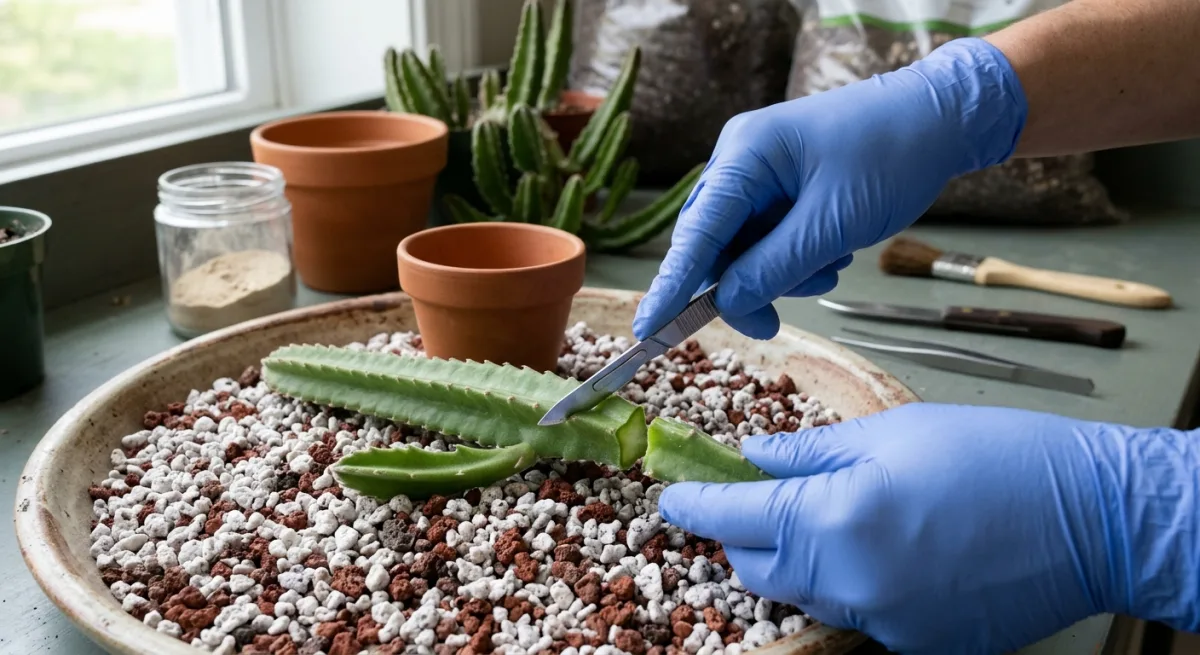
- 2. Overlooking Early Basal Stem Rot: Once dark black or translucent brown rot infiltrates the vascular cylinder, the stem cannot spontaneously recover. Emergency Rescue: Using a flame-sterilized scalpel or razor, make a clean horizontal cross-section at least 5 mm (0.2 in) above the soft lesion until the central vascular bundle reveals pure, pristine ivory-green tissue without dark discoloration. Dust the clean cut generously with sulfur powder or ground cinnamon, allow it to callus in a warm, shaded, breezy room for 5–7 days, then press the stem cut into completely dry pumice to stimulate adventitious root formation.
- 3. Misting or Wetting Delicate Starfish Blossoms: The gigantic, fleshy blooms of species like Stapelia gigantea or Orbea variegata possess delicate epidermal cellular structures. Water drops on petals cause rapid bacterial rot within hours, which swiftly travels down the pedicel into the main stem. Emergency Rescue: Always water strictly from below (bottom-watering) during the flowering phase, keeping petals completely dry. When a bloom naturally wilts, excise the spent flower stalk using sterile shears before secondary mold can establish.
- 4. Neglecting Subterranean Root Mealybugs: Often, stems appear intact, yet the plant suddenly halts growth, takes on a dull gray hue, and fails to plump up after watering. Beneath the soil line, white powdery root mealybugs are actively devouring the root system. Emergency Rescue: Discard the entire root ball and substrate. Wash the remaining root base thoroughly with high-pressure water, immerse in a systemic insecticide dip (such as an imidacloprid or acetamiprid solution), dry thoroughly, and repot in clean, sterilized mineral medium.
- 5. Sudden Exposure to Blistering Spring Sun: Moving a stapeliad directly from a dim indoor winter room out onto a sun-drenched patio causes immediate phototoxic shock. Epidermal chloroplasts rupture, permanently scarring stems with chalky white or bleached-gray scald patches. Emergency Rescue: Immediately move the plant into bright, dappled shade for 14 days. Gradually acclimatize it by increasing morning sun exposure by only 20% each week over a month.
6. Seasonal Cultivation Calendar & Long-Term Success
Aligning your cultivation practices with the physiological rhythm of wild stapeliads ensures decades of vigorous, disease-free colony growth:
- Spring (March – May): Seasonal awakening. Dormant root systems resume metabolic activity. Reintroduce watering gradually. In mid-spring, apply a very dilute (quarter-strength), low-nitrogen, high-potassium/phosphorus liquid fertilizer with your irrigation. Take healthy stem cuttings during this period for rapid root initiation.
- Summer (June – August): Active vegetative growth. Maintain bright, filtered sunlight and generous ventilation. During heatwaves exceeding 35°C (95°F), stapeliads may enter a brief semi-dormancy (estivation); reduce watering frequency during intense heat spikes and maximize airflow to prevent heat stagnation.
- Autumn (September – November): The pinnacle blooming season. Natural day-night temperature swings of 8–10°C (15–18°F) trigger prolific bud differentiation. Exotic star blooms unfurl during these weeks. Gradually scale back watering starting in late October as ambient temperatures decrease.
- Winter (December – February): Absolute physiological rest. Maintain plants in a cool, bright location between 10–14°C (50–57°F). Provide only a tiny splash of water once a month on a crisp, sunny morning solely to keep root hairs from entirely desiccating.
By honoring their innate evolutionary biology and replacing moisture-trapping soils with pure, oxygen-rich mineral grit, your stapeliads will reward you with pristine turgor, spreading colonies, and the most magnificent, other-worldly floral displays in the botanical world.


Reader Reviews & Comments 4 Reviews
Clara Higgins
Julian Vance
Marcus Sterling
Elena Rostova
Leave a Review & Rating
Share your plant care tips, experiences, or questions with our succulent community.