






Hailing from the arid valleys and sun-bleached limestone slopes of Mexico to grace our homes and Mediterranean-style landscapes, Agave americana—affectionately known as the Century Plant—is nature's living monument to patience and fortitude. Enduring years of blistering drought all for a single monumental terminal inflorescence, this architectural succulent has conquered extreme climates through massive cellular water reserves stored within its fibrous leaves and its nocturnal CAM (Crassulacean Acid Metabolism) pathway. Yet, this prehistoric giant that effortlessly splits native bedrock can turn surprisingly delicate when confined to poorly drained pots or subjected to misplaced indoor care routines.
Many plant enthusiasts assume that because it is a desert survivor, it is virtually indestructible. Consequently, they trap their agaves in dark corners or plant them in heavy, peat-rich soils. Before long, those steely blue-gray, serrated upright leaves soften at the base, turn yellow, and collapse beneath sunken black lesions. The vast majority of collectors who turn to our nursery seeking help for 'Century Plant problems' are unknowingly grappling with fundamental care errors that paralyze the plant's natural immune mechanisms.
Mastering Agave cultivation requires a clear understanding of its cellular hydraulic dynamics, the protective epicuticular farina on its cuticle, and the oxygen demands of its root xylem. Watering succulents frequently is not an act of devotion; it suffocates the roots and initiates systemic rot. In this comprehensive botanical manual, we will scientifically diagnose fungal root rots, fatal snout weevil incursions, chlorosis patterns, and etiolation crises, equipping you with actionable protocols to nurse your Century Plant back to health.
1. Early Diagnostic Symptoms and Visual / Microscopic Clues
Pathologies in Agave americana typically advance stealthily; thick, fibrous parenchyma tissue often conceals internal cellular collapse until it is far advanced. Honing your diagnostic eye to catch the following early warning signs can save your specimen's life:
- Crown Collapse and Toppling Heart: The innermost emergent spear suddenly lists to one side and pulls out effortlessly when gently tugged. This almost invariably signals that Scyphophorus acupunctatus (the Agave snout weevil) grubs are devouring the apical meristem from the inside out.
- Translucent, Mushy Lower Foliage: In cases of collar and root rot brought on by Fusarium oxysporum or Phytophthora, the outermost basal leaves lose their chalky glaucous hue and dissolve into a squishy, brownish-yellow jelly.
- Anthracnose and Concentric Necrotic Lesions: Triggered by the fungal pathogen Colletotrichum, these appear as sunken, dry, circular or concentric dark brown-to-black necrotic spots cratering the leaf blades.
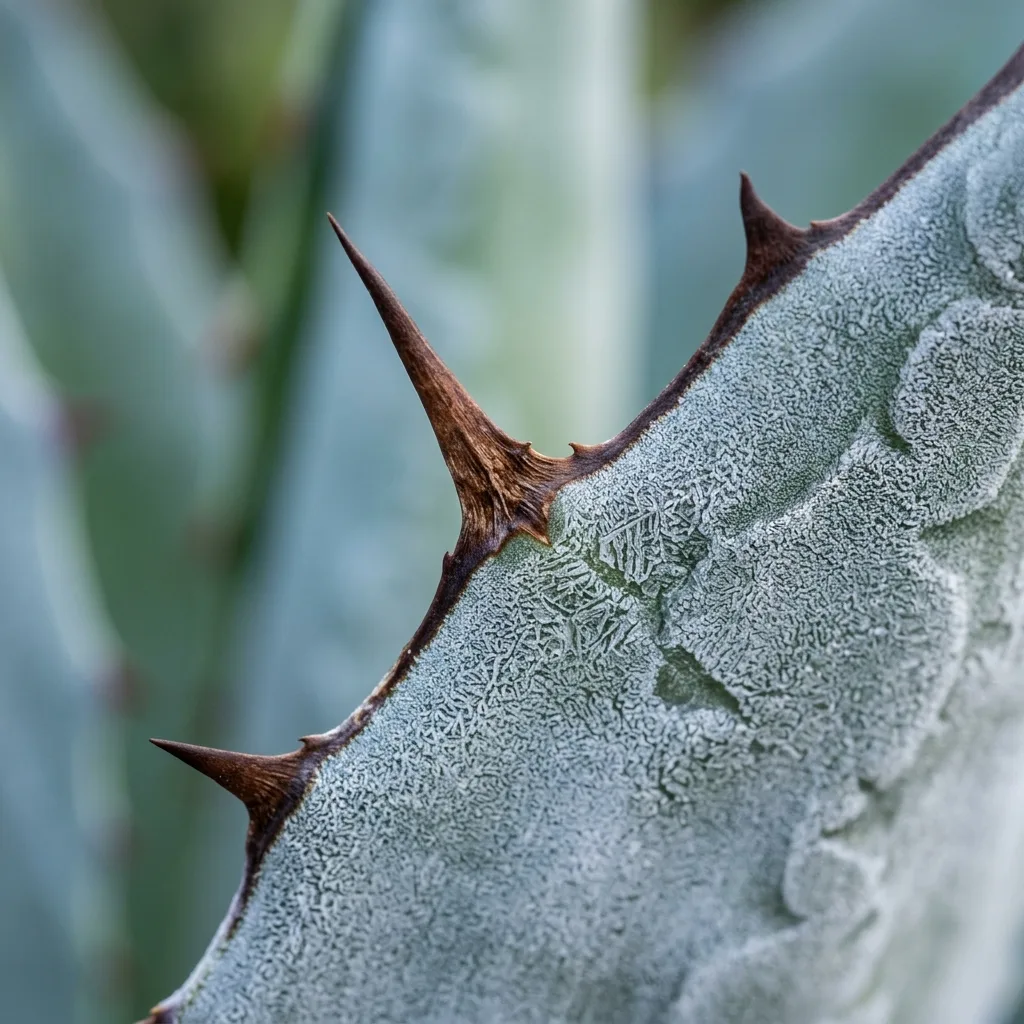
- Stripping of the Cuticular Farina: The powdery, silvery wax coating the leaves serves as the plant's endogenous sunscreen; avoid handling leaves and rubbing it off. Damaging this epicuticular layer exposes underlying epidermal cells to direct photo-oxidation (sunburn) and creates entry points for opportunistic microbes.
- Etiolation and Loss of Rosette Compactness: Denied sufficient photon flux, the Century Plant abandons its tight, sword-like rosette. New growth turns pale green, narrows, and bends outward in a desperate search for light.
2. Root Causes and Environmental Triggers
Agave americana evolved specifically for mineral-dense, calcareous, rapidly draining soils under unmitigated solar irradiance. When placed in cultivation, physiological failure generally stems from the following triggers:
- Root Hypoxia (Oxygen Deprivation): Conventional potting soils act like sponges, retaining water for days. Agave roots (specifically their vascular xylem and phloem bundles) require rapid dry-downs and oxygenated pore spaces between waterings. Persistently saturated medium suffocates root hair cells and invites necrotrophic water molds.
- Excessive Nitrogen Fertilization: Applying high-nitrogen fertilizers to accelerate growth results in bloated, thin-walled parenchyma cells. These structural weaknesses leave the plant mechanically fragile and an easy target for sap-sucking pests.
- Suboptimal Light Levels and CAM Disruption: Agaves demand at least 6 to 8 hours of unfiltered, direct sunlight daily. Light starvation halts stomatal opening during the night, reducing transpiration to near zero and causing water to stagnate around the root zone.
- Standing Water in Saucers: A classic amateur mistake is leaving run-off water inside the drainage saucer. This back-siphonage drowns the delicate root tips, kicking off ascending rot.
3. Natural and Organic Mitigation Methods
Before deploying synthetic chemicals, early-stage infections and moderate pest pressures can be addressed through targeted biological and mechanical interventions:
- Surgical Debridement and Wound Sealing: Use a flame-sterilized, curved pruning knife to excise rotted or collapsing basal leaves flush with the main stem. Liberally dust all exposed cuts with pure cinnamon powder. Cinnamon contains cinnamaldehyde, an exceptional natural fungicide and desiccant that accelerates wound callusing.
- Cold-Pressed Horticultural Neem Oil Protocol: Emulsify 5 ml of pure cold-pressed neem oil into 1 liter of lukewarm water using 2 to 3 drops of pure potassium castile soap. Shake vigorously and apply during the evening to manage mealybugs, scale, and spider mites. Avoid applying under high pressure directly against pristine foliage to protect the delicate farina.
- Diatomaceous Earth Perimeter: Dust food-grade micronized diatomaceous earth around the soil line and the crevice where the lower leaves join the stem. This microscopically sharp barrier lacerates the epicuticular lipid layer of crawling adult weevils, causing fatal dehydration before they can bore inside.
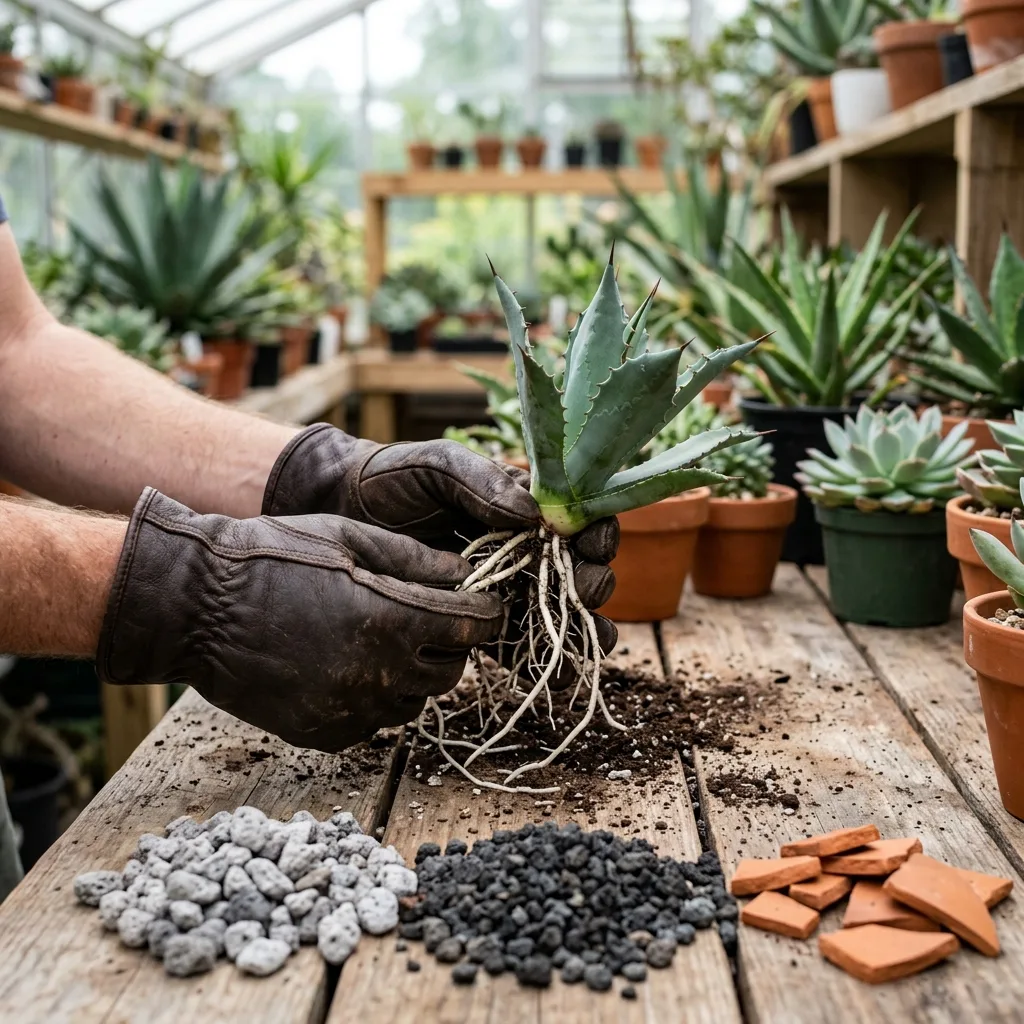
- Open-Air Callusing Therapy: When treating root rot, unpot the specimen, wash away all spent medium, trim away dark, hollow roots, and let the bare-root plant dry in a shaded, well-ventilated staging area for 4 to 7 days to form a defensive callus over all cut surfaces.
4. Chemical and Systemic Treatment Protocols
If the central spear shows instability or active snout weevil activity is detected, organic barriers are often insufficient. At this junction, targeted systemic active ingredients are required:
| Active Ingredient | Target Pest / Pathogen | Dosage (per 1 Liter Water) | Application Method & Interval |
|---|---|---|---|
| Imidacloprid / Acetamiprid | Agave Snout Weevil (Larvae & Adults), Mealybugs | 0.5 - 0.75 ml | Soil drench targeting the crown base. Repeat once after 14 days. |
| Fosetyl-Aluminium | Phytophthora & Pythium Root Rot | 2.0 - 2.5 g | Soil drench combined with light foliage spray. 2 applications, 10 days apart. |
| Copper Oxychloride | Bacterial Soft Rot & Anthracnose | 3.0 - 4.0 g | Paint onto excised wound sites with a brush or spray at dusk. 15-day interval. |
| Azoxystrobin + Difenoconazole | Fusarium Crown Rot & Leaf Spot Fungi | 0.8 - 1.0 ml | Foliar mist avoiding the central funnel pool. Single dose; re-evaluate after 21 days. |
5. Quarantine and Disinfection Protocols
The moment an Agave americana succumbs to contagious disease or boring pests, your immediate priority is safeguarding neighboring succulents and cacti:
- Strict Physical Isolation: Move the affected plant at least 15 feet away from all Agavaceae and Crassulaceae family members. Choose a bright, sheltered, dry quarantine area with ample air movement that is protected from rain.
- Tool and Container Sterilization: Wipe all shears, knives, and repotting tools with 70% isopropyl alcohol or dip them in a 10% bleach solution, followed by flame sterilization between every cut. If reusing the existing container, scrub it thoroughly with hot water and bleach, then dry it under direct sunlight.
- Biosecure Soil Disposal: Never discard infected soil into garden beds or compost piles. Bag the discarded soil, spent roots, and culled leaves inside a sealed, heavy-duty trash bag and dispose of it as municipal solid waste.
6. Rehabilitation and Post-Recovery Culture
Once the acute crisis has been managed, your Century Plant needs an optimized growing medium and disciplined care to initiate adventitious root growth:
- High-Porosity Mineral Substrate:
- 40% Coarse Pumice (4–8 mm grain size)
- 20% Red or Black Volcanic Scoria (Lava rock)
- 15% Clinoptilolite Zeolite (for cation exchange and substrate aeration)
- 25% Low-salt washed coco coir or professional-grade fibrous cactus soil
- Potting and Withholding Initial Water: Repot the well-callused Agave into an unglazed terracotta pot featuring large drainage apertures. Do not water immediately! Keep the medium bone-dry for at least 7 to 10 days to allow microscopic root micro-abrasions to heal.
- Gradual Light Acclimation: Reintroducing a traumatized, stressed plant directly to scorching midday sun can cause fatal sunburn. Provide bright, indirect light or soft morning sun for the first two weeks before moving it back to full sun.
- The Desert Simulation Watering Regimen: Water only when the entire substrate column has dried out completely (verify by inserting a wooden skewer to the bottom of the pot). Saturate the root zone until water flows freely from the bottom, then discard runoff after 5 minutes. In winter, reduce watering intervals to once every 4 to 6 weeks.


Reader Reviews & Comments 3 Reviews
Julian Vance
Clara Higgins
Marcus Sterling
Leave a Review & Rating
Share your plant care tips, experiences, or questions with our succulent community.