





Stretching from the rugged limestone cliffs of Mexico to the sun-baked dunes of the Sonoran Desert, cacti represent nature's most flawless living sculptures, sculpted by millions of years of evolutionary adaptation to arid extremes. Many casual plant lovers mistake cacti for static, 'immortal' decorative objects that require virtually no water; in reality, they operate on an intricate biochemical equilibrium governed by internal turgor pressure and nocturnal stomatal gas exchange. Welcoming them into our warm, quiet living spaces and synchronizing our care routine with this wild desert rhythm turns into a deeply rewarding horticultural journey.
If you are eager to step into the world of indoor cacticulture but are unsure which species can truly thrive within the microclimates of a modern home, you have arrived at the right place. In this definitive guide, we explore the physiological intricacies and cultivation secrets of four of the most popular, resilient, and adaptable cactus species—Mammillaria gracilis, Echinocactus grusonii, Schlumbergera truncata, and Gymnocalycium mihanovichii.
1. Taxonomic Identity, Areole Architecture, and Spine Morphology
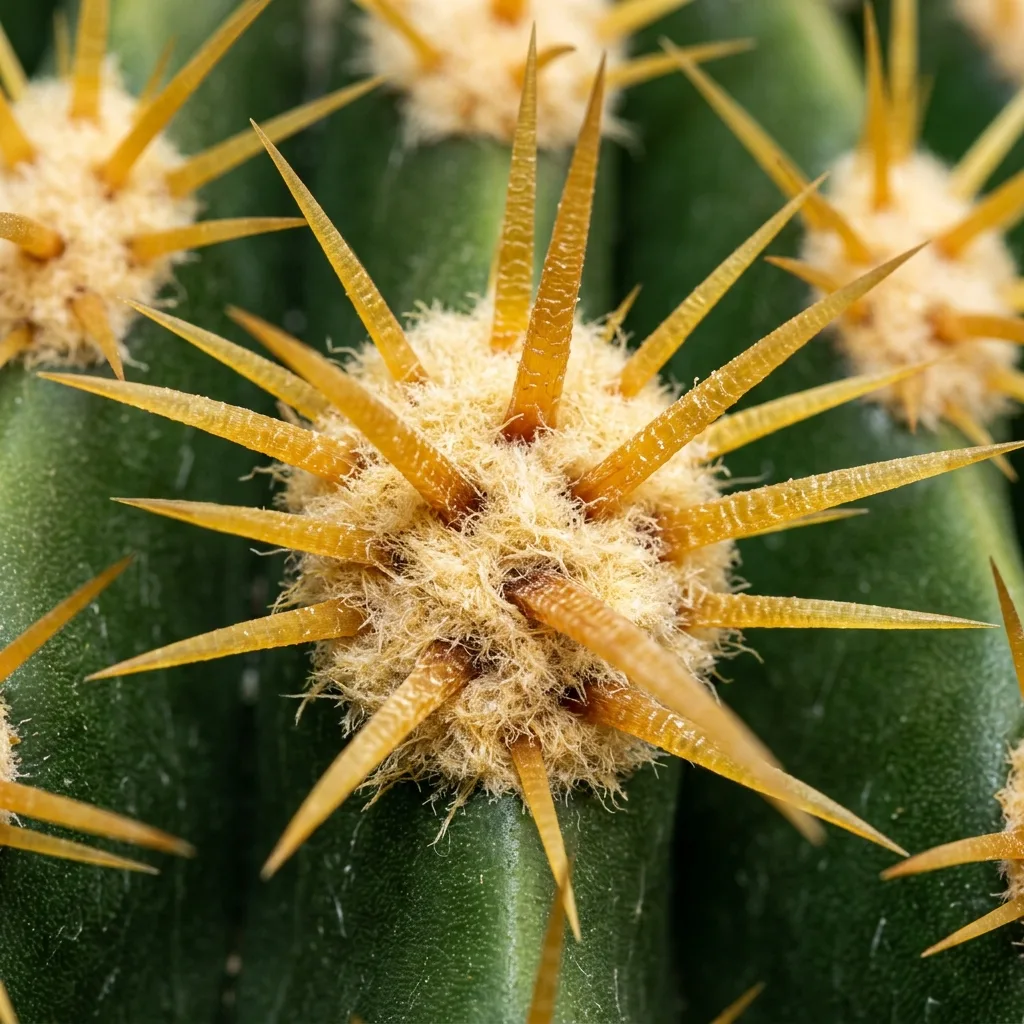
The definitive botanical signature that distinguishes a true cactus from other stem succulents is the presence of areoles—highly specialized, condensed nodal growth centers. Throughout the evolutionary history of the Cactaceae family, leaves were reduced and modified into rigid, sclerified spines to minimize transpiration surfaces and provide mechanical defense against herbivores. Here is the anatomical blueprint of the four most common indoor species:
- Mammillaria elongata / M. gracilis (Thimble Cactus / Lace Cactus): Characterized by spiraling tubercles (nipple-like projections) rather than vertical ribs. From each areole radiates a cluster of ivory-white or golden spines, weaving a delicate microscopic sun-shading mesh that shields the epidermal tissue from scorching UV radiation.
- Echinocactus grusonii (Golden Barrel Cactus): Displays prominent, sharp, accordion-like ribs. These structural folds allow the body to expand smoothly during heavy hydration and contract during prolonged drought without rupturing cellular membranes. Areoles are armed with thick, formidable, golden-yellow defensive spines.
- Schlumbergera truncata (Thanksgiving / Holiday Cactus): An epiphytic forest cactus native to the humid coastal cloud forests of southeastern Brazil. Its spines have softened into minuscule, brush-like bristles, while its stems have evolved into flattened, photosynthetic leaf-like segments known as cladodes.
- Gymnocalycium mihanovichii (Chin Cactus / Moon Cactus): Renowned for notched ribs with pronounced chins and 'naked calyx' flower buds that lack spines or hairs. The brilliant ruby-red, yellow, or neon-orange cultivars are chlorophyll-deficient mutants that cannot survive on their own roots; they must be grafted onto a vigorously photosynthetic green rootstock, typically Hylocereus undatus.
2. Light Requirements, Solar Intensity, and Ventilation Dynamics
Photosynthetically active radiation (PAR) drives a cactus's internal engine, yet different taxa demand vastly different light intensities. Desert natives such as Echinocactus grusonii and Mammillaria require a minimum of 6 to 8 hours of unobstructed, direct sunlight daily. When starved of light, these species suffer from 'etiolation'—a distressing developmental deformation where the apex stretches and narrows into pale, fragile tissue, severely weakening structural integrity and permanently marring aesthetic appeal.
Conversely, Schlumbergera, having evolved beneath the dappled canopy of tropical trees, must be shielded from harsh midday direct sun. It flourishes in bright, indirect light. Air circulation is just as vital as photonic energy: stagnant, unventilated indoor air creates an ideal breeding ground for airborne fungal spores to lodge in areolar crevices. Cracking your windows open periodically generates gentle ambient air movement, dispelling dense humidity pockets around the stem and warding off opportunistic collar rots.
3. Hydration Cycles and the Vital Cold Dormancy Period
Cacti operate via Crassulacean Acid Metabolism (CAM) photosynthesis: their stomata stay tightly closed throughout the day to halt transpiration and open exclusively at night to absorb and fix carbon dioxide into malic acid. Consequently, their irrigation demands fundamentally differ from conventional tropical houseplants. The cardinal rule for desert cacti is the strict 'soak and dry' regimen: saturate the root ball thoroughly, and then allow the entire substrate profile to dry out completely before irrigating again. Sprinkling light sips of water on a frequent schedule is not kindness—it suffocates roots and drowns fragile capillary root hairs.
A winter dormancy period is biologically non-negotiable if you wish your desert cacti to initiate floral buds in spring. Between November and late February, species like Mammillaria and Echinocactus should be relocated to a bright, cool environment maintained between 8°C and 12°C (46°F–54°F), and watering must cease almost entirely (once a month at most, or suspended altogether). Cold, wet potting media induces severe root-cell plasmolysis followed by lethal pathogen invasion. The notable exception is the epiphytic Schlumbergera: because it blooms in the heart of winter, its substrate must remain lightly, evenly moist throughout this period.
4. Gritty Mineral Substrates and Aerated Potting Systems
Cactus root networks possess an immense physiological craving for oxygen. Standard peat-heavy potting soils retain moisture for far too long, effectively suffocating root hairs. An authentic, professional cactus mix must consist predominantly of coarse, inorganic, mineral aggregates that allow excess water to flush through within seconds. Porous aggregates like pumice, volcanic scoria, and zeolite supply permanent macro- and micro-pores that maximize root aeration.
| Substrate Component | Ratio (%) | Botanical Function & Benefits |
|---|---|---|
| Porous Pumice (3–6mm grain) | 40% | Guarantees rapid drainage and continuous oxygen exchange in the rhizosphere. |
| Lava Rock (Scoria) & Zeolite | 30% | Prevents substrate compaction and increases cation exchange capacity (CEC). |
| Coarse Horticultural Sand / Crushed Quartz | 10% | Adds structural weight and stabilizes physical drainage pathways. |
| Sieved Blonde Peat or Coco Coir Fiber | 20% | Provides the bare minimum organic fraction for healthy root anchorage. |
When selecting a planter, unglazed terracotta or ceramic pots with generous drainage holes are always superior to plastic containers. The porous clay walls allow moisture to evaporate laterally from the sides of the root ball, cutting the risk of subterranean fungal rot by half.

5. Inducing Floral Blooms and Strategic Nutrition
Coaxing an indoor cactus into magnificent bloom is the art of delivering precise environmental cues. Floral primordia are triggered inside the areoles by the environmental stress of cold temperatures and dry roots during winter dormancy. When day length expands and temperatures climb in spring, reintroducing hydration signals the plant to break dormancy, enter its generative phase, and push out stunning, iridescent blossoms.
Fertilization should be reserved exclusively for the active vegetative window (April through August). Standard high-nitrogen houseplant formulas must be avoided at all costs; excessive nitrogen causes rapid, bloated cellular growth that bursts the epidermis and leaves tissues defenseless against bacterial attack. Instead, apply a specialized low-nitrogen, high-phosphorus, and high-potassium cactus fertilizer (such as NPK 4-10-15) diluted to half-strength once every four to six weeks.
6. Propagation: Pups, Stem Cuttings, and Grafting Arts
Multiplying these four beloved species is one of the most rewarding endeavors in indoor horticulture:
- Offset Division (Mammillaria and Echinopsis): Gently sever basal offsets ('pups') with a sterile, razor-sharp scalpel. Crucially, do not pot them immediately. Set the offsets in a warm, dry, shaded spot for 4 to 6 days until a firm, callused barrier forms over the wound. Once callused, place them onto dry mineral grit and wait a full week before offering light bottom moisture.
- Cladode Cuttings (Schlumbergera): Twist off healthy segments composed of 2 to 3 cladodes at the natural joint. Let the cuttings dry overnight for 24 hours, then insert them upright into a perlite-rich substrate. Roots typically initiate within 2 to 3 weeks.
- Grafting Technique (Gymnocalycium mihanovichii f. variegata): Because neon-pigmented mutants lack chlorophyll, they cannot sustain themselves on their own roots. Slice the apical tip of a healthy, rooted Hylocereus undatus (Dragon Fruit) stem horizontally, align the vascular cambium rings of both the rootstock and the scion, and secure them firmly under tension using elastic bands. Cellular vascular tissues will fuse within 14 days.
7. Defending Against Fungal Pathogens and Pest Invasions
The foremost killers of indoor cacti are soil-borne pathogenic oomycetes and fungi (most notoriously Fusarium, Phytophthora, and Pythium). When roots suffocate from overwatering, necrotic tissue spreads upward into the vascular bundles, transforming the firm, fibrous internal core into a watery, blackened slush that culminates in sudden structural collapse.
If you detect suspicious softening or darkening at the soil line, unpot the cactus immediately. Excise every trace of discolored tissue using an alcohol-sterilized knife until you reach pristine, pale-green vascular tissue. Dust the clean cut surface generously with sulfur powder or ground cinnamon, allow it to dry open-air for 10 to 14 days to establish a woody callus, and re-root in fresh, bone-dry mineral media. For cottony white mealybug clusters (Pseudococcidae) nestled deep between areoles, eradicate them promptly using a cotton swab dipped in 70% isopropyl alcohol, followed by a targeted horticultural neem oil treatment.


Reader Reviews & Comments 3 Reviews
Marcus Sterling
Eleanor Vance
Julianna Reed
Leave a Review & Rating
Share your plant care tips, experiences, or questions with our succulent community.