






Hailing from the mineral-steeped limestone canyons of central Mexico to our sunny interior windowsills, this captivating succulent body represents a genuine desert jewel that all too often falls victim to nursery labeling confusion. Frequently encountered in garden centers or imported succulent shipments under the garbled phonetic misnomer 'mammillaris aroena', this striking plant is properly identified in botanical literature as Mammillaria amoena (often regarded by taxonomists as an elegant, distinctively tubercled form aligned with the Mammillaria polythele / M. discolor complex). Once enthusiastic plant lovers welcome this spiny companion into their living spaces, the pivotal question inevitably emerges: 'What exact horticultural path must I follow to help this specimen thrive?' That question carries vital weight, because its desert-adapted genetics will never forgive haphazard care in a standard indoor room.
Merely splashing water onto a succulent and leaving it on a random windowsill is far from providing genuine vitality. To truly succeed, one must honor the intricate biological defense mechanisms it forged across millions of evolutionary years: the nocturnal rhythm of its respiratory cycle and the desperate search of its fibrous feeder roots for micro-drainage between porous mineral rock fragments. This comprehensive botanical roadmap brings together rigorous science and practical mentorship to shield your thorny, fleshy friend from lethal root rot and reward you each spring with a breathtaking halo of pink-to-cream crown blooms.
1. Botanical Identity and Morphological Anatomy
The genus Mammillaria stands as one of the largest, most morphologically diverse, and beloved groups within the botanical family Cactaceae. Commonly deformed on commercial invoices and nursery tags as 'mammillaris aroena', this taxon draws its generic name from the Latin mamilla ('small nipple' or 'teat'), referring to the conical, breast-shaped tubercles that completely encase the green stem rather than traditional continuous vertical ribs. The specific epithet amoena derives from Latin, translating poetically to 'charming', 'delightful', or 'lovely'.
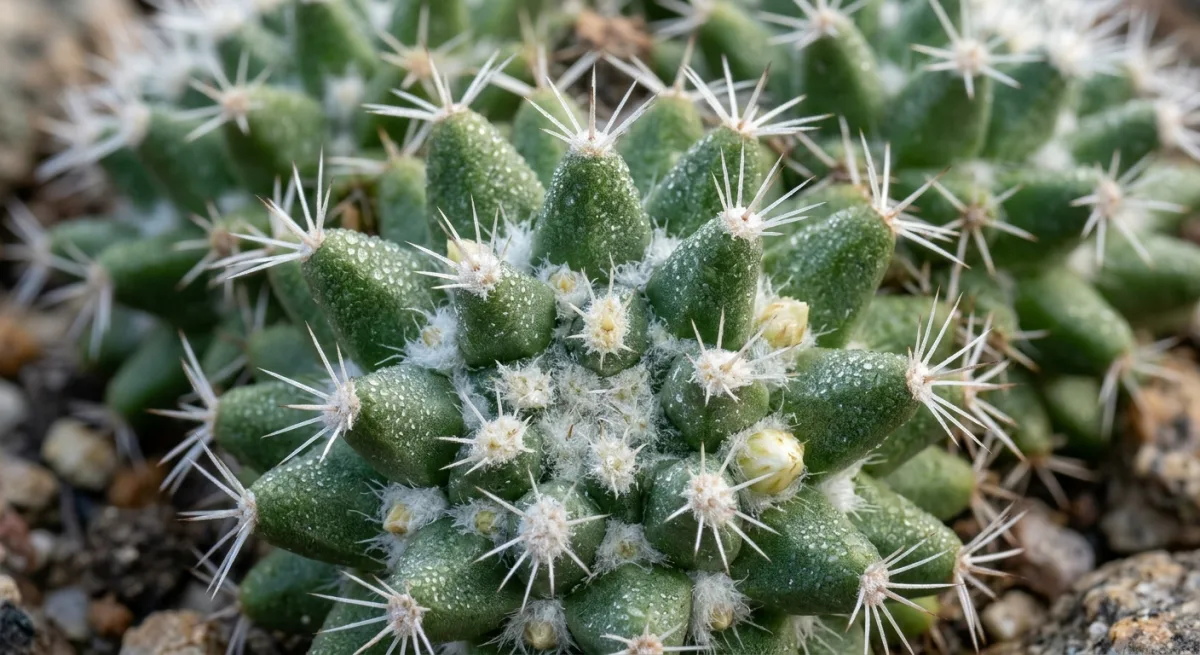
Rather than relying on continuous longitudinal ribs, the plant possesses a solitary to freely clustering, globose-to-cylindric architectural form built entirely of independent spiraling tubercles. At the apex of each tubercle lies a specialized spine-bearing areole, adorned with radial and central spines that form an intricate, protective shade lattice against intense ultraviolet radiation. The woolly felt nesting down in the tubercle axils and areolar depressions captures ephemeral morning dew while drastically reducing convective transpiration. In classic pincushion fashion, floral buds do not emerge from the tubercle tips, but burst forth in a circular halo from the prior year's woolly axils. Photosynthesis is governed entirely by Crassulacean Acid Metabolism (CAM): to prevent desiccation under blazing desert winds, its stomata stay tightly sealed throughout the daylight hours, opening exclusively in the cool nighttime air to assimilate and fix carbon dioxide.
2. Sunlight Requirements and Indoor Placement
In its native highlands across Hidalgo, Querétaro, and Puebla, Mammillaria amoena basks under an intense, thin-atmosphere mountain sun, often dappled by sparse desert scrub and sheer rock outcroppings. In domestic interior environments, by far the most pervasive blunder is banishing this cactus to an underlit coffee table or a dark bookshelf. Deprived of adequate photons, the plant rapidly undergoes etiolation: its tight, depressed-globose geometry stretches upward into a pale, tapered, structurally brittle column. Far beyond being merely unsightly, etiolation compromises cellular wall turgor and radically lowers the specimen's innate defenses against opportunistic fungal spores.
The quintessential indoor position for Mammillaria amoena is right against an unobstructed south- or southwest-facing windowsill that provides at least 5 to 6 hours of unfiltered or lightly sheer-diffused direct solar energy daily. During peak midsummer heat waves, when window glass can act as a scorching magnifying lens between 12:00 PM and 3:00 PM, maintaining steady ambient ventilation is paramount. Stagnant, suffocating heat trapped against the glass can break down epidermal chlorophyll reserves and cause permanent, unsightly sunscald scarring.
3. Watering Discipline: The 'Soak and Dry' Protocol
Watering desert succulents frequently is never an act of care; it is an unintentional suffocation of their root systems. The subterranean roots of Mammillaria amoena evolved specifically to exploit sudden torrential desert downpours separated by months of blistering drought. Cortical root cells drink voraciously, channeling water upward into the specialized water-storage parenchyma of the fleshy tubercles; once hydrated, the root system demands a completely dry resting phase.
Horticulturists must adhere stringently to the 'Soak and Dry' protocol. When watering, saturate the potting medium thoroughly until water flows freely and generously from the base drainage holes, ensuring that any residual water collected in the saucer below is completely discarded within 15 minutes. Never hydrate on a fixed calendar schedule; look solely to the tactile moisture level of the substrate. Insert a thin wooden skewer to the very bottom of the pot—if it emerges with even a microscopic trace of damp grit, defer watering entirely. In the depths of winter, as CAM metabolic processes slow down significantly, irrigation should be curtailed almost entirely; depending on ambient home temperatures, providing water once a month or leaving the soil bone-dry for weeks is ideal.
4. Ideal Soil Formulation and Pot Selection
The xylem vessels and fragile feeder rootlets of this species possess zero tolerance for soggy, anaerobic conditions. The slightest puddle of stagnant water dissolves the delicate epidermal sheath of the roots, opening a highway for devastating rot to ascend directly into the heart of the caudex. Standard commercial potting peat, dense compost, or heavy garden loam serves as a swift death sentence. Mammillaria amoena demands a porous, highly inorganic, gritty medium with an acidic to neutral balance (pH 6.0 to 7.0).
The following substrate recipe provides optimal oxygen circulation around the root architecture while guaranteeing that excess gravitational water evacuates the vessel within 15 to 20 seconds:
| Substrate Component | Ratio (%) | Horticultural Function & Benefits |
|---|---|---|
| Pumice (3-5 mm grade) | 40% | Retains micro-air pockets, prevents compaction, and facilitates oxygen exchange. |
| Lava Rock / Volcanic Cinder (2-4 mm) | 25% | Offers structural mineral anchoring and accelerates hydraulic drainage. |
| Clinoptilolite Zeolite (2-3 mm) | 15% | Elevates cation-exchange capacity (CEC), buffering nutrients and moisture swings. |
| Sterile Low-Peat Cactus Mix or Coir Grit | 20% | Supplies a restrained, non-compacting organic buffer for fine root hairs. |
Container selection is equally vital. Unglazed terracotta pots are indisputably superior to plastic or sealed ceramics. Their porous clay walls allow moisture to transpire laterally through the pot itself, lowering the danger of subterranean moisture entrapment and root suffocation by up to 70%. Never place this compact pincushion in a cavernous container; choose a shallow, squat pot whose diameter is only slightly wider than the plant's spiny girth.
5. Step-by-Step Propagation Techniques
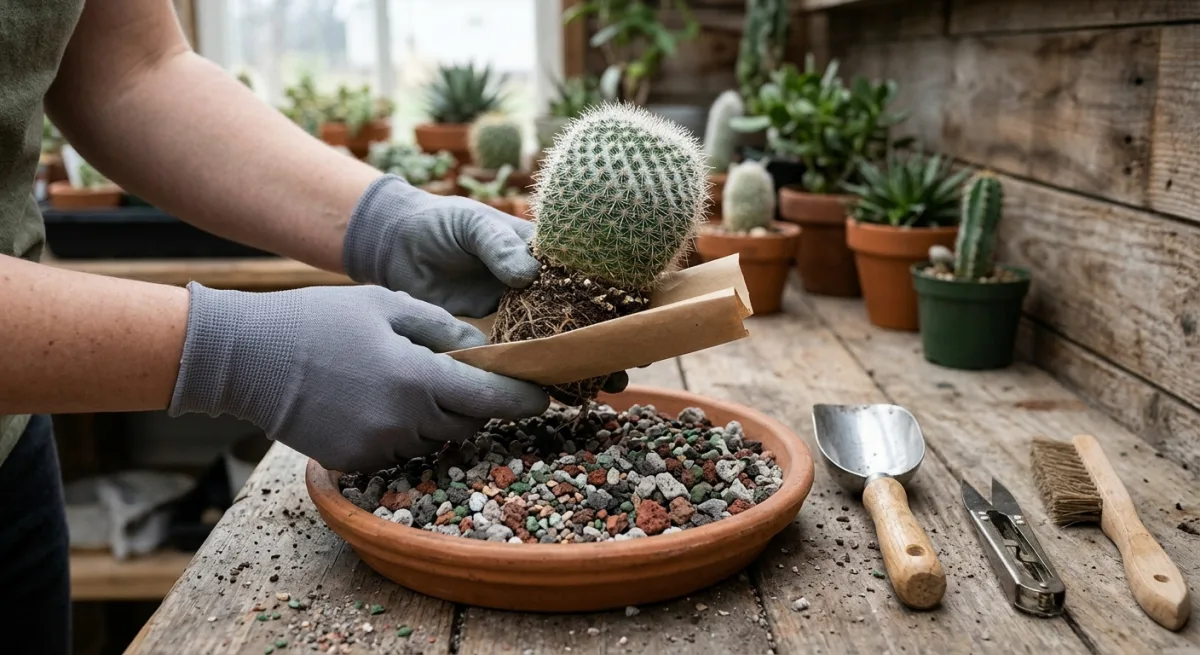
As Mammillaria amoena matures, it naturally begins to produce miniature basal clonal offsets—affectionately termed 'pups'—from its lowermost tubercle axils. These offsets are genetic duplicates of the mother specimen and provide the most dependable, beginner-friendly route for plant propagation:
- Timing the Harvest: The ideal period to detach offsets is early to mid-spring (April through May), coinciding with the seasonal surge in natural vegetative growth hormones (auxins).
- Sterile Severance: Using an alcohol-sterilized hobby scalpel or razor-sharp grafting knife, sever the offset cleanly at the narrow junction where it connects to the mother stem, taking special care not to gouge the parent tissue.
- Callus Formation: Never insert freshly cut succulent cuttings directly into moist soil. Rest the offsets on a dry paper towel in a warm, bright, well-ventilated spot away from harsh direct sun for 4 to 7 days until the raw severed base transforms into a hard, chalky, greyish-white protective callus layer. This corky seal serves as a biological shield against invasive pathogens.
- Rooting Substrate: Gently set the callused pup atop a dry rooting substrate composed predominantly of pumice and coarse horticultural sand. Do not water for the first 10 to 14 days; simply maintain moderate ambient air warmth.
- The Awakening Sip: Once fine, reddish-white micro-roots emerge from the base (typically after 2 to 3 weeks), begin gentle bottom-watering or misting around the base, gradually acclimating the young plant to morning sun exposure.
6. Common Pests, Diseases, and Curative Treatments
The primary adversaries of this Mexican desert gem are cottony mealybugs (Pseudococcus spp.) and fungal root rots. Mealybugs frequently embed their waxy, cotton-like egg sacs within the protected crevices between the tubercles and inside the dense woolly axils, where they pierce tender tissue to suck out vital sap. For localized, early-stage infestations, manually dab each insect using a cotton swab dipped in 70% isopropyl alcohol. In severe, pervasive infestations, drench the roots with a systemic insecticide (such as imidacloprid) or thoroughly treat the aerial surfaces with cold-pressed horticultural neem oil emulsion after moving the plant out of the sun.
If the lower tubercles become squishy, translucent, or develop a darkened, water-soaked brown collar, root rot caused by Phytophthora or Pythium is actively underway. You must act decisively: unpot the cactus immediately, rinse away all old soil, excise every mushy, discolored root fragment back to healthy white tissue with sterile shears, dust the clean cuts generously with powdered sulfur or cinnamon, allow the entire bare-root plant to dry in open air for 5 to 7 days, and replant into fresh, bone-dry inorganic grit.
7. Seasonal Care Calendar and Professional Tips
Honoring the natural biological calendar of your pincushion cactus is the ultimate prerequisite for coaxing out spectacular seasonal flowers. Follow this horticultural rhythm throughout the year:
- Spring (The Awakening): Beginning in mid-March, slowly resume light soakings. In April, treat the plant once monthly to a low-nitrogen, high-potassium cactus fertilizer diluted to 1/4 strength. Distinctive pinkish flower buds will begin swelling inside the woolly tubercle rings.
- Summer (Peak Vegetative Drive): Provide abundant sunshine and maximum fresh-air ventilation. Follow the soak-and-dry routine whenever the soil dries completely. During prolonged heat spells (over 95°F / 35°C), the cactus may slip into brief estivation (summer dormancy); space waterings slightly further apart during these extreme stretches.
- Autumn (Acclimatization): Starting in late September, systematically reduce irrigation frequency. Restricting water encourages cell sap concentration, thickening cellular walls against cold temperatures. Terminate all supplemental feeding completely.
- Winter (Cold Vernalization & Dormancy): The paramount secret to prolific spring blossoming is an authentic cold winter rest. Overwinter the cactus in a bright room maintained consistently between 46°F and 54°F (8°C to 12°C), withholding water almost entirely. This chill-and-drought combination triggers floral primordia differentiation within the tubercle axils.


Reader Reviews & Comments 3 Reviews
Julian Vance
Marcus Sterling
Clara Higgins
Leave a Review & Rating
Share your plant care tips, experiences, or questions with our succulent community.