






When the first mild breezes of spring reach our windowsills, a vibrant wave of plant trends sweeps through garden centers and social media feeds, introducing collector gems, variegated cultivars, and sculptural caudiciforms into our homes. Originating from the sheer cliffs of Oaxaca, the arid expanses of the South African Karoo, or modern tissue culture laboratories, these fleshy beauties—including favorites like pastel Echeveria rosettes, the sought-after Stephania erecta, and the delicate Variegated String of Pearls (Senecio rowleyanus variegata)—are frequently forced into rapid early spring growth using commercial greenhouses stocked with high humidity and synthetic hormones. However, the moment they cross our thresholds, a silent and hazardous conflict begins between a root system still emerging from winter dormancy, sudden heavy watering, and harsh display lighting.
In succulent physiology, early spring represents the most vulnerable biological crossroads of Crassulacean Acid Metabolism (CAM), as plants transition from winter metabolic deceleration to active cellular division. Driven by seasonal interior design trends, plant lovers frequently acquire these specimens potted in stylish, drainage-free decorative ceramic containers filled with dense, water-retentive peat moss. This setup triggers immediate hydrostatic pressure surges inside the plant's vascular xylem, causing severe cellular edema while waking up dormant, opportunistic soil-borne fungi.
Drenching succulents out of pure spring enthusiasm is not an expression of care; it starves fragile feeder roots of vital oxygen and creates an ideal breeding ground for fungal pathogens. In this clinical guide, we unpack the hidden pathological hazards lurking beneath popular seasonal trends, outline early warning signs, and detail scientifically grounded interventions to rescue compromised plants.
1. Early Diagnostic Signs and Microscopic / Visual Clues
Tissue collapse in newly acquired or recently awakened succulents does not occur overnight. Instead, the plant displays subtle cellular indicators. Failing to decode these early warning signals can lead to catastrophic, irreversible stem rot within just a few days.
- Cellular Edema (Oedema) and Crystallization: Raised blisters, translucent fluid-filled bumps, or subsequent corky brown pustules on leaf undersides indicate that the roots are absorbing water far faster than the foliage can transpire it, causing the cell walls to rupture under internal turgor pressure.
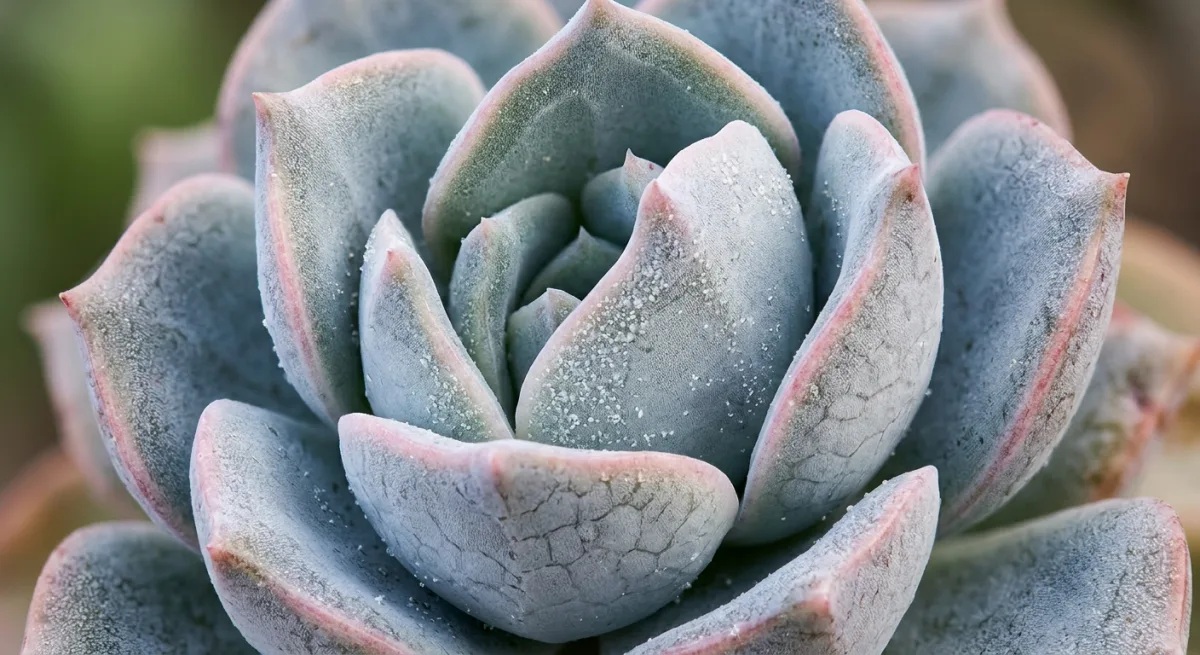
- Dull Farina and Fingerprint Necrosis: The silvery, chalky epicuticular wax (farina) coating the leaves functions as the plant's natural sunscreen and hydrophobic defense shield; avoid touching or wiping it off. When this powdery layer turns blotchy, dull, or sheds irregularly, it indicates compromised epidermal turgor and an increasingly permeable cuticle.
- Etiolation and Stem Stretching: When placed in dim interior display corners, compact rosettes rapidly stretch their internodes toward the light source. This pale green, chlorotic growth drastically reduces the plant's structural integrity and suppresses its systemic immune responses.
- Dark Brown Collar Ring (Early-Stage Rhizoctonia or Fusarium): Softening, water-soaked, jelly-like tissue at the soil line indicates that fungal hyphae have invaded the vascular bundles (xylem and phloem), cutting off upward and downward translocation.
- Mealybug (Pseudococcidae) Nests in Fresh Spring Shoots: Rising vascular sap activates dormant mealybug nymphs tucked away inside tender leaf axils beneath white, cotton-like filaments. Under a 10x hand lens, tiny pinkish-orange crawlers can be observed feeding directly on cellular fluids.
2. Core Causes and Environmental Triggers
The visual staging of popular plant styling often conflicts fundamentally with the evolutionary ecology of succulents. As documented in botanical archives such as Kew Plants of the World Online, wild desert and semi-arid succulents navigate the winter-to-spring transition gradually, sheltered within rocky crevices that buffer against moisture extremes and acute ultraviolet exposure.
- Drainage-Free Decorative Cachepots: Trendy glazed ceramics, glass terrariums, and painted tins without bottom drainage holes accumulate standing water. Trapped moisture depletes pore oxygen within 48 hours, causing fine feeder roots to suffocate and decay.
- High-Nitrogen Spring Fertilizer Shock: Applying nitrogen-heavy fertilizers to a succulent whose root system has not yet resumed full metabolic uptake forces overly rapid, soft cell wall expansion. These fragile tissues become effortless entry points for fungal hyphae and sap-sucking pests.
- Photochemical Leaf Scald (UV Shock): Moving fleshy leaves accustomed to low winter light straight onto an unshaded, south-facing windowsill causes rapid photo-oxidative stress within chloroplasts, resulting in bleached white or sunken brown necrotic patches.
- Peat-Dense Commercial Nursery Soil: Standard commercial nursery potting mixes are formulated for automated drip irrigation. In an indoor setting, once this peat dries out completely, it becomes water-repellent (hydrophobic); conversely, once saturated, it remains damp for weeks, turning into an incubator for fungal root rot.
- Stifling Decorative Top Dressings: Gluing down decorative pebbles or blanketing the soil with craft moss prevents atmospheric evaporation entirely, sealing moisture in and virtually guaranteeing root asphyxiation.
3. Natural and Organic Treatment Methods
When mealybugs, spider mites, or surface fungal spots are intercepted in their early stages, non-toxic biological interventions should always be prioritized over aggressive chemicals to safeguard the plant's delicate tissues.
- Targeted 70% Isopropyl Alcohol Swabbing: Dip a cotton swab in 70% isopropyl alcohol and apply it directly to cottony mealybug clusters nestled in leaf axils. The alcohol instantly dissolves the insect's protective waxy cuticle, desiccating it on contact. Avoid wetting uninfested farina-coated surfaces, and always conduct this treatment in the evening away from direct sun to prevent tissue burning.
- Cold-Pressed Neem Oil and Potassium Soap Wash: Emulsify 5 ml of pure, cold-pressed neem oil (standardized for Azadirachtin) and 3 ml of organic liquid potassium castile soap in 1 liter of lukewarm distilled water. Spray the undersides of the leaves and the root crown to disrupt pest molting cycles and inhibit feeding reflexes.
- Antifungal Cinnamon (Cinnamaldehyde) Dusting: Pure ground cinnamon contains natural cinnamaldehyde, a potent organic fungicide. Dust raw surgical cuts, detached leaf points, or damaged tissue with cinnamon to prevent fungal spores from establishing while promoting clean callus formation.
- Food-Grade Diatomaceous Earth Barrier: Once the topsoil is completely dry, dust a thin layer of food-grade diatomaceous earth over the surface. The microscopic, razor-sharp silica particles breach the exoskeletons of crawling mealybugs, thrips, and fungus gnat larvae, dehydrating them mechanically without chemical resistance risks.
4. Chemical and Systemic Treatment Protocols
When pest populations have spread into the root ball or vascular discoloration confirms an internal fungal attack, gentle organic methods become insufficient. Professional botanical rehabilitation requires targeted chemical actives applied with precision.
| Active Ingredient | Target Pathogen / Pest | Dosage (Per 1 Liter Water) | Application Frequency | Mechanism & Horticultural Notes |
|---|---|---|---|---|
| Acetamiprid | Mealybugs, Scale Insects, Aphids | 0.5 - 0.8 g | Every 14 days (Max 2 cycles) | Systemic neonicotinoid; absorbed into vascular sap to paralyze the central nervous system of piercing-sucking insects. |
| Propamocarb Hydrochloride | Pythium, Phytophthora (Root Rot) | 1.5 - 2.0 ml | Every 10-12 days (2 drenches) | Applied as a soil drench; disrupts fungal cell membrane lipid synthesis to halt progressing root rot. |
| Copper Oxychloride | Foliar Spot, Rust, Botrytis | 1.5 g | Single evening application | Broad-spectrum protective contact fungicide. May leave harmless pale residue; test on lower leaf undersides first to check farina compatibility. |
| Abamectin | Spider Mite (Acari) Species | 0.5 ml | Every 7 days (3 consecutive treatments) | Translaminar miticide; penetrates deep into the leaf parenchyma to eliminate sap-feeding mites hiding on leaf undersides. |
Always apply chemical treatments in well-ventilated spaces wearing gloves and respiratory protection. Shield treated plants from direct sun for at least 24 hours post-treatment to avoid severe phototoxic leaf scorch.
5. Quarantine and Disinfection Protocols
Introducing newly acquired spring succulents directly to your main display shelves is one of the quickest ways to compromise an entire plant collection.
- Strict Isolation Window (Minimum 21 Days): Keep all new additions in a separate room or isolated windowsill at least 2 meters away from other houseplants. The reproductive life cycle of most succulent pests—including mealybugs and spider mites—spans 14 to 21 days; hidden eggs are invisible to the naked eye.
- Bare-Root Nursery Substrate Removal: Gently unpot new arrivals and wash the heavy nursery peat away from the roots under a stream of lukewarm water. Nursery soil often harbors pest pupae, fly larvae, or dormant fungal spores.
- Tool Sterilization: Disinfect pruning shears, tweezers, and repotting tools between every single plant using 70% ethyl alcohol or a 1:9 household bleach-to-water dilution. A single unsterilized blade can transfer Fusarium across an entire tray of succulents.
- Pot Decontamination: If reusing nursery containers or unglazed clay pots, scrub them thoroughly in warm soapy water, soak them in a mild bleach solution for 15 minutes, and allow them to dry completely in the sun before repotting.
6. Plant Rehabilitation and Long-Term Recovery Care
Rescuing a succulent from rot or an aggressive pest outbreak requires a structured, patient botanical rehabilitation regimen.
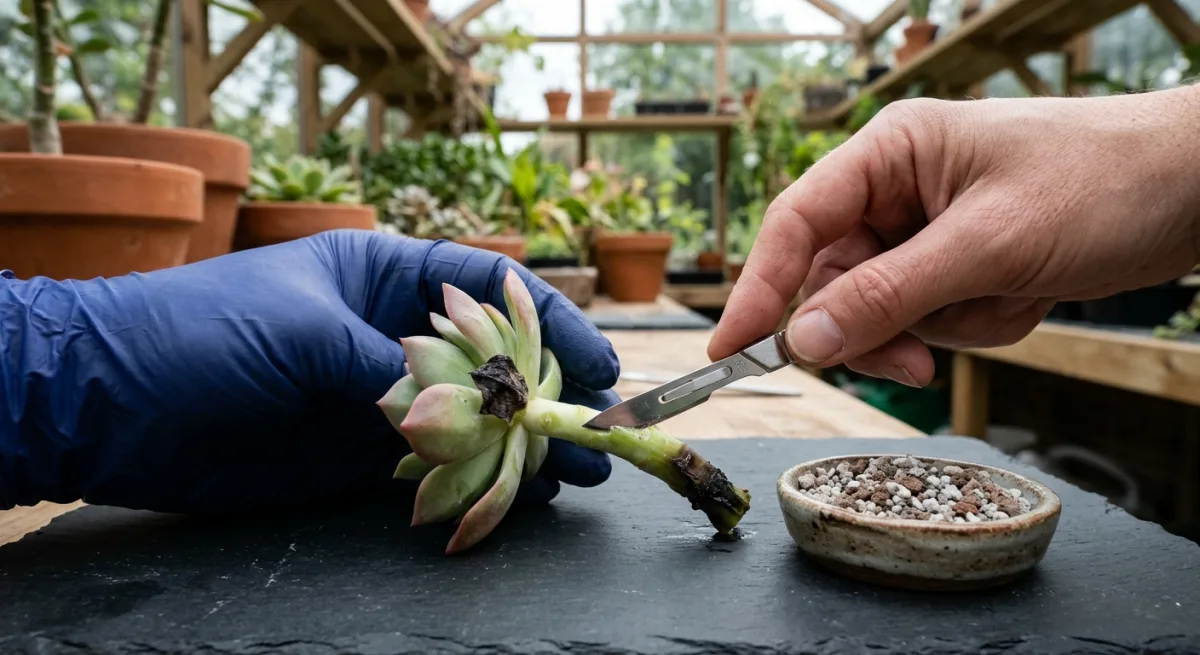
- Surgical Resection and Callus Formation: Using a sterile scalpel, slice cleanly through rotting stems until you encounter completely firm, pristine green-and-white tissue. If you observe even a microscopic dark ring or brown fleck in the vascular ring, make another cut higher up. Do not pot the cutting immediately; place it in a shaded, warm room with good airflow for 5 to 7 days until the cut end forms a tough, leathery callus.
- High-Porosity Mineral Substrate Formula: Standard potting soil will suffocate recuperating root systems. Rebuild the root zone using this mineral-rich formulation:
- 40% Horticultural pumice (3–5 mm grain size)
- 20% Calcined zeolite or crushed volcanic basalt
- 20% Coarse perlite or washed quartz grit
- 20% Fully matured, sifted organic leaf compost or fine coco coir
- Gradual Light Acclimatization: Reintroduce recovering plants to sunlight gently. Begin with just 1 hour of soft, early morning sun during the first week. Increase exposure by 30 minutes each week until the plant handles its ideal light levels without developing stress-induced anthocyanin reddening or tissue bleaching.
- Bottom Capillary Watering (Bottom-Soaking): Avoid pouring water over the top of recovering plants without established root systems. Instead, place the pot in a shallow dish containing 2 to 3 cm of room-temperature water for 10 minutes, allowing only the lower mineral layer to draw up moisture. This encourages nascent root tips to travel downward in search of moisture while keeping the sensitive root crown bone-dry.


Reader Reviews & Comments 1 Review
No comments yet. Be the first to share your succulent experience!
Leave a Review & Rating
Share your plant care tips, experiences, or questions with our succulent community.