






Look closely at the windswept, arid, precipitous cliffs of the Andes Mountains, and you will spot vast, ancient plant mounds blanketing rock crevices like living emerald carpets—organisms that appear to have suspended time itself. This marvel of the natural world belongs to the genus Deuterocohnia (most notably represented in cultivation by Deuterocohnia brevifolia, formerly classified under Abromeitiella), occupying the most extreme xerophytic frontier of the family Bromeliaceae. Unlike the standard single-stemmed succulents in our collections, this species forms a living rock sculpture woven from thousands of tightly packed miniature rosettes—a masterclass in patience, structural integrity, and botanical resilience.
Welcoming a Deuterocohnia into your collection is far less like buying a potted houseplant and far more like curating an ancient micro-ecosystem that has braved geological epochs. The plant has elevated water conservation into an architectural art form: the hermetic interlocking of leaf bases brings evaporative moisture loss virtually to zero, while specialized trichomes capture microscopic overnight dew droplets and channel them straight into storage cells. Yet, this extreme ruggedness does not mean it can be treated casually on the windowsill. Watering succulents excessively is never an act of care; it is an unintentional suffocation of the rhizosphere. In this guide, we dive into the deep physiological mechanics required to cultivate this ancient cliff dweller at home without ever risking crown or root rot.
1. Tekniğin / Sorunun Botanik Biyolojisi ve Fizyolojik Temelleri
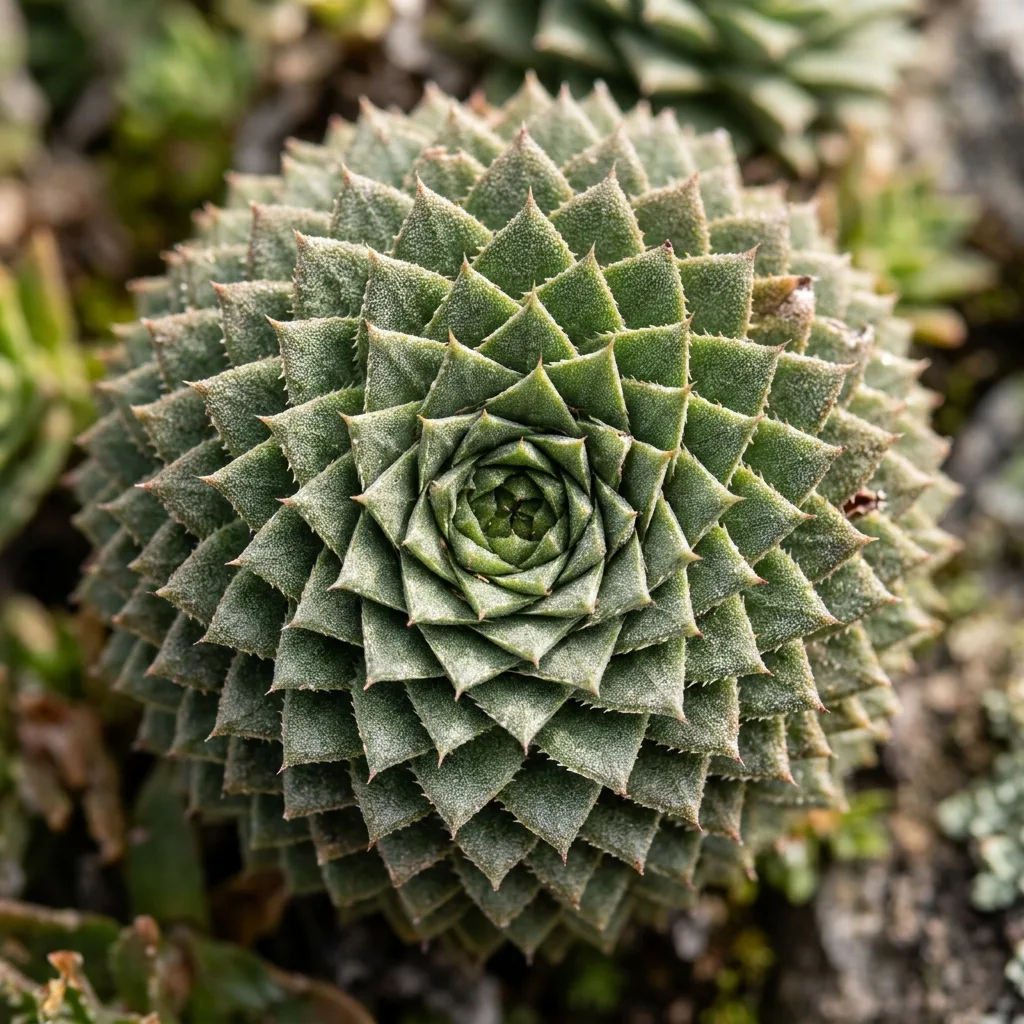
While Deuterocohnia is taxonomically classified within the bromeliad lineage, morphologically and functionally it operates as an obligate xerophytic succulent. Its defining characteristic is its dense, cushion-forming habit (pulvinate growth form), wherein hundreds to thousands of individual micro-rosettes fuse into a contiguous, domed cushion. This architecture is not coincidental; by minimizing total surface area relative to aggregate biomass, the colony forms its own boundary layer microclimate, shielding tender interior tissues from desiccating alpine desert gales and blistering solar irradiance.
At the cellular level, the plant relies on Crassulacean Acid Metabolism (CAM) photosynthesis. It keeps its stomata hermetically sealed during the scorching daylight hours to curb transpiration, opening them exclusively during the cool Andean night to sequester atmospheric carbon dioxide in the form of vacuolar malic acid. The foliar epidermis is reinforced with an exceptionally thick, protective cuticular wax layer, and each leaf margin is lined with tiny, rigid, chitinous teeth. Beneath the cushion, the root system is uniquely specialized: adapted for mechanical anchorage in petrophytic fissures, the roots are delicate, fibrous, and critically vulnerable to prolonged moisture retention. When stagnant water lingers in the potting mix, root cortical cells rapidly suffocate, opening vascular pathways to opportunistic anaerobic pathogens within mere days.
2. Doğru Teşhis ve İhtiyaç Belirtileri
Because Deuterocohnia operates at a deliberate, slow metabolic tempo, it rarely broadcasts stress or physiological damage instantaneously; its morphological signals emerge across weeks. To intervene effectively, you must learn to read the subtle biological indicators the colony provides:
- Softening, Browning Rosette Centers: Fungal or bacterial crown rot (typically initiated by Erwinia or Fusarium strains) triggered by overhead watering or moisture entrapment within the crown.
- Inward Curling of Leaf Margins and Dull Ash-Grey Hue: A sharp decline in cellular turgor pressure; confirms prolonged drought where internal storage tissues are severely drained and roots are searching for hydration.
- Loose, Elongated, Unraveling Rosettes (Etiolation): Insufficient photoperiod or photon flux density. The collapse of the compact cushion structure into leggy spikes indicates an urgent requirement for intense, filtered solar radiation.
- Bronze, Reddish, or Amber Foliar Tints: Anthocyanin hyper-accumulation in response to high light and thermal shifts. This is a healthy physiological shield, not a sign of distress; it helps maintain tight rosette geometry.
3. Adım Adım Uygulama Protokolü
When cultivating Deuterocohnia, your structural goal is to replicate the hyper-drained, mineral-dense rock fissures of high-altitude South American canyons. Follow this precise protocol to ensure robust root vigor and impenetrable rosette density:
- Container Selection: Choose broad, shallow, unglazed terracotta or ceramic bonsai-style vessels. Deep containers hold redundant soil mass that stays saturated far too long. Unobstructed, multiple drainage apertures at the base are mandatory.
- Mineral Substrate Formulation: The organic fraction must never exceed 20–25% of the total volume. The core backbone must consist of porous pumice, porous lava rock, zeolite, and coarse quartz grit. Macroporous aeration is indispensable for oxygenating the fragile root xylem.
- Planting Technique: Gently position the cushion flat atop the substrate bed. Never bury the living green portions of the rosettes. Only the basal, fibrous root layer should make direct contact with the mineral layer beneath.
- Top Dressing Application: Spread a 1 cm (0.4 in) thick layer of coarse, washed volcanic lava grit or pumice directly under and around the cushion perimeter. This acts as a barrier, preventing living foliage from touching damp organic substrate.
- Irrigation Cycle: Strictly enforce a 'soak and complete dry' regimen. Before offering water, probe the deepest point of the pot with a dry wooden dowel or moisture sensor to confirm that the substrate is entirely dry throughout.
4. Gerekli Ekipman, Malzeme ve Ölçütler
Maintaining a flourishing Deuterocohnia colony demands dialed-in physical substrate metrics and strictly observed environmental parameters. The following framework summarizes the standards refined in our greenhouse collections over years of cultivation:
| Bileşen / Parametre | Önerilen Standart / Oran | Fizyolojik Gerekçe |
|---|---|---|
| Coarse Horticultural Pumice (3–6 mm) | 40% | Guarantees maximum root aeration and rapid non-capillary drainage |
| Crushed Lava Rock / Zeolite (2–4 mm) | 30% | Supplies structural trace minerals while buffering excess moisture surges |
| Coarse River Grit / Quartz Sand | 10% | Stabilizes substrate density and mimics natural petrophytic crevices |
| Quality Low-Peat Cactus Mix / Coco Coir | 20% | Provides minimal cation-exchange capacity for gentle micronutrient uptake |
| Light Intensity | 6–8 hours of intense, filtered sun | Sustains dense rosette clustering and drives CAM acid synthesis |
| Irrigation Rhythm | Spring/Summer: Every 10–14 days; Winter: Every 4–6 weeks | Prevents root hair asphyxiation and basal pathogen outbreaks |
| Thermal Tolerance | Absolute min: +5°C (41°F); Optimal: 18°C–28°C (64°F–82°F) | Cold wetness compromises cellular membrane permeability, causing cell rupture |
5. Sık Yapılan 5 Hata ve Kurtarma Yolları
- 1. Overhead Watering Across the Rosette Surface: Moisture trapped between micro-leaves inevitably leads to meristematic tissue rot. Recovery: Always water strictly from the pot periphery using a precision, narrow-spout watering can, or utilize sub-irrigation by setting the base in water for 10 minutes until capillary action moistens the roots.
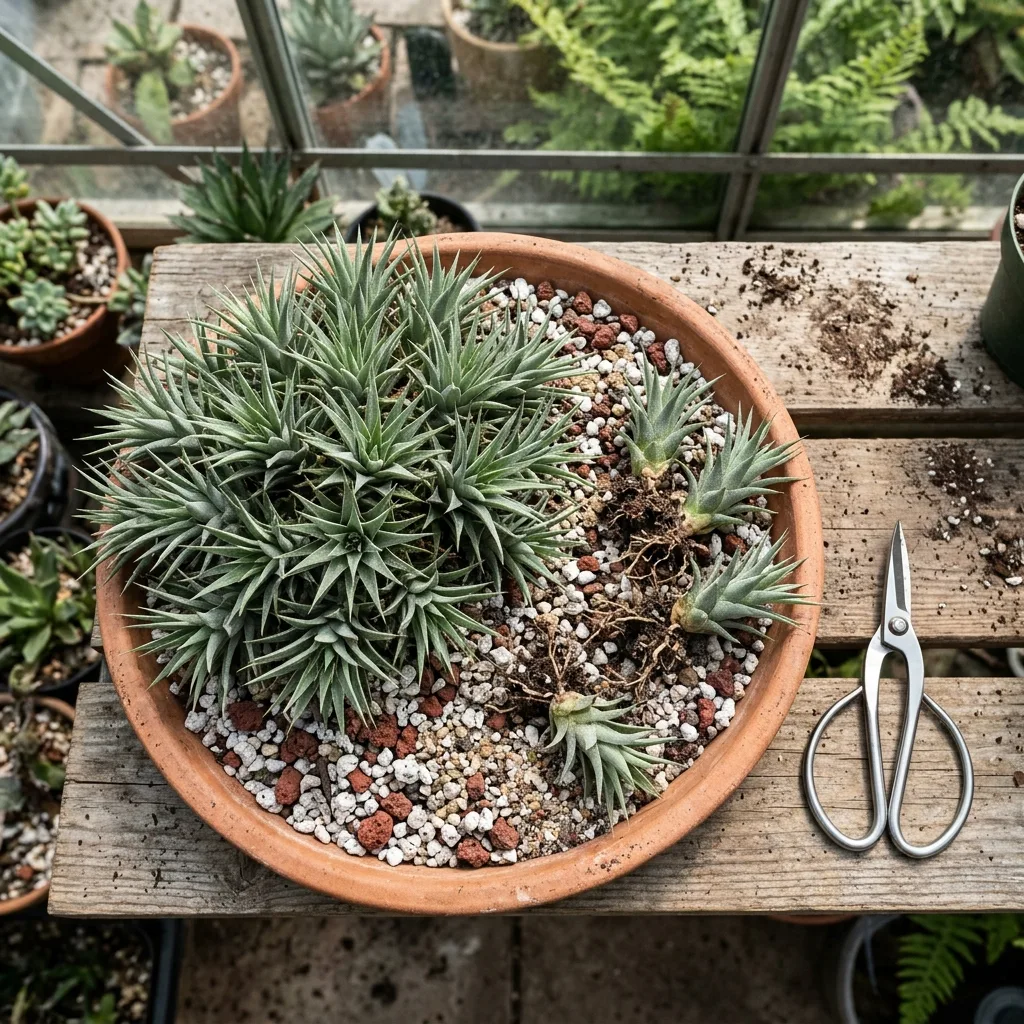
- 2. Planting in Standard Organic Potting Soil: Peat-heavy mixes remain waterlogged, suffocating root hairs. Recovery: Immediately unpot the specimen, wash away organic sludge from the root zone with tepid water, air-dry for 48 hours, and repot in a high-purity inorganic mineral matrix.
- 3. Inadequate Lighting Paired with Regular Irrigation: In low-light windows, the plant continues absorbing water while unable to photosynthesize effectively, resulting in floppy, disfigured growth. Recovery: Acclimate the colony step-by-step to direct morning or late-afternoon sunlight, increasing exposure by 30–60 minutes daily to rebuild cellular density without scorching.
- 4. Maintaining Summer Watering Schedules During Winter: Lower temperatures and short photoperiods induce a metabolic rest phase. Recovery: Suspend irrigation almost entirely through the cold season; deliver a micro-dose of water around the rim only if the outer rosettes show profound dehydration folds.
- 5. Premature Colony Division: Tearing tiny cushions apart causes massive shock and developmental arrest. Recovery: Divide colonies exclusively in early spring, only after the mound spills substantially beyond the pot edges, and ensure every split division contains at least 10–15 fully formed rosettes with intact basal tissue.
6. Mevsimsel Takvim ve Uzun Vadeli Sonuçlar
Spring (Awakening and Active Growth): As ambient temperatures consistently exceed 15°C (59°F), Deuterocohnia emerges from winter stasis. Gradually increase watering frequency. Apply a specialized, low-nitrogen, potassium-focused succulent fertilizer at quarter-strength once a month. This is the optimal window for repotting, vessel upgrades, and careful colony division.
Summer (Peak Metabolism and Light Balance): The colony maintains structural development, though extreme heat exceeding 35°C (95°F) can trigger a protective midday dormancy. Provide 20–30% shade cloth protection against harsh, unshielded midday solar spikes. Irrigating in the late evening allows CAM-driven root systems to uptake moisture smoothly through the cooler night.
Autumn (Hardening Off): As daylight hours contract, widen the intervals between watering sessions. Cease all fertilization completely. Allowing the colony to experience cool, fresh outdoor air helps thicken the outer cuticle layers, preparing internal cell walls for winter endurance without risking frost exposure.
Winter (Rest and Dormancy): House the specimen in a bright, cool setting between 8°C and 12°C (46°F–54°F). Keep the substrate entirely dry. This cool, arid dormancy is essential to satisfy the plant's hormonal rhythm, priming mature rosettes to push their distinctive, tubular emerald-to-yellow blossoms come springtime.


Reader Reviews & Comments 3 Reviews
Elena Rostova
Julian Vance
Marcus Bennett
Leave a Review & Rating
Share your plant care tips, experiences, or questions with our succulent community.