






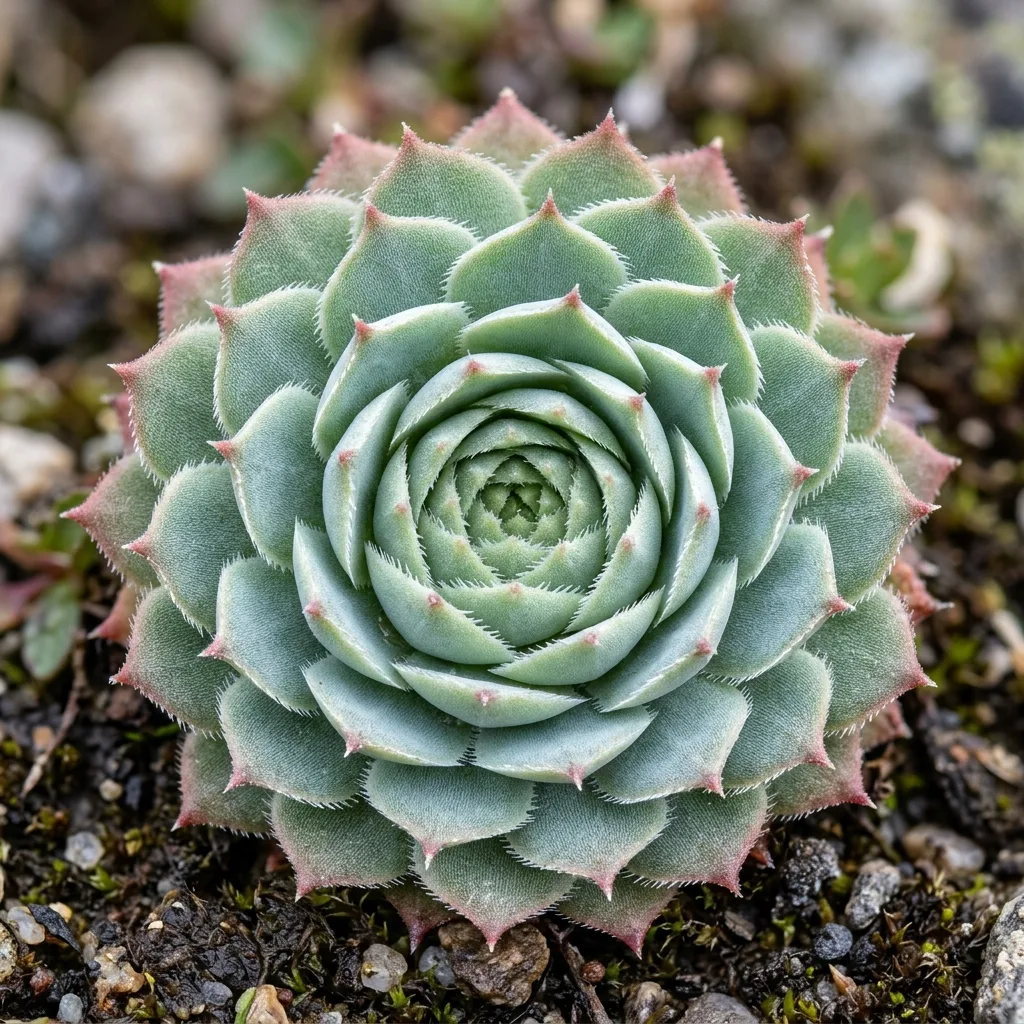
Across the most uncompromising landscapes on Earth—from the gale-scoured passes of the Himalayas to the rugged limestone gorges of Anatolia—thrives a botanical marvel clinging to microscopic pockets of mineral dust: the genus Rosularia. When succulent enthusiasts encounter these intricate, tightly packed rosettes for the first time, they often mistake them for miniature Sempervivum or exceptionally dense dwarf Echeveria. Yet, Rosularia possesses a distinct, untamed alpine grace within the family Crassulaceae. Transforming narrow stone crevices into living, geometric carpets with rosettes merely centimeters wide, cultivating these mountain dwellers in your rock garden or container terrace invites you to witness one of nature's most resilient architectural feats.
However, attempt to grow a Rosularia on a dimly lit coffee table or embedded in conventional, peat-heavy commercial potting soils, and disappointment is virtually guaranteed. These plants biologically crave the cooling mountain drafts, high-altitude UV radiation, porous calcified rock, and oxygen-saturated root microclimates of their native ranges. Frequent watering of succulents is never an act of maternal kindness; it is an act of unintended suffocation that denies fragile root hairs cellular oxygen. When it comes to Rosularia, this horticultural maxim is twice as strict: born from cold bedrock, these miniature rosettes cannot endure even a single drop of stagnant moisture pooling at the root crown. Let us unveil the botanical secrets required to transform your balcony or sunny sill into a flourishing alpine scree.
1. Botanical Biology and Physiological Foundations
Botanically classified under the family Crassulaceae, Rosularia species exhibit varied growth habits, spanning monocarpic variants (where an individual flowering rosette dies after setting seed) to perennial, polycarpic colony-builders. To master their urban cultivation, the first cellular system one must comprehend is their specialized Crassulacean Acid Metabolism (CAM) photosynthetic cycle. Subjected in nature to intense daytime solar irradiance paired with dry atmospheric humidity, Rosularia seals its stomata tightly during diurnal peak heat to conserve cellular moisture. Atmospheric carbon dioxide intake occurs exclusively under nocturnal conditions when ambient temperatures plummet, temporarily storing the absorbed carbon as malic acid within cellular vacuoles.
If you maintain a Rosularia in an unventilated indoor space where nocturnal temperatures never drop below 24–26°C (75–79°F), the plant cannot trigger stomatal conductance to complete gas exchange. Cellular respiration falters, metabolic carbohydrates dwindle, and the rosette slowly starves. Simultaneously, the foliar epidermis is fortified with a waxy cuticular farina—and frequently microscopic trichomes (fine hairs)—that mitigate evaporative transpiration and diffuse excess solar radiation. The mesophyll cells bind internal water reserves into viscous, pectinaceous gels transported through xylem conduits from the root cortex. The root architecture itself is decidedly fibrous and shallow, adapted to weave laterally through rock fissures rather than plunge deeply into earth. This morphology makes shallow, wide containers a physiological necessity rather than an aesthetic choice.
2. Diagnostics and Symptoms of Physiological Distress
When cultivating Rosularia, minute shifts in macroscopic morphology serve as direct barometers of internal cellular equilibrium. A vigorous, balanced specimen displays firm, thick, densely packed rosettes whose coloration—depending on the species—ranges from vibrant emerald green and olive bronze to rich amethyst and crimson tips. Watch for these diagnostic indicators signaling the need for immediate cultural correction:
- Etiolation (Light Starvation & Rosette Dispersion): The central apical meristem elongates upward, internodal spacing widens along the stem, and the bases of newly formed leaves lose chlorophyll, turning a bleached, pale lime-white. This occurs as elevated auxin concentrations drive rapid, weak cell elongation in desperate pursuit of photons.
- Cervical & Basal Foliar Necrosis (Root Crown Rot): The bottom tiers of leaves become translucent, yellowing into a mushy, gelatinous mass. This signals high cellular turgor rupture compounded by rhizosphere hypoxia, facilitating opportunistic fungal pathogens (such as Pythium or Fusarium) to invade the crown.
- Epidermal Shriveling and Loss of Luster: The rosette loses its structural rigidity, appearing deflated, dull, and papery. While this confirms cellular water deficit, proceed with caution: dead, rotted roots cannot take up moisture either. Always examine substrate moisture before intervening.
- Stunted Stoloniferous Offsets: Offsets emerging along lateral stolons that remain thread-like, frail, or desicate prior to anchoring indicate either severe micronutrient depletion or a rootbound condition preventing nutrient uptake.
3. Step-by-Step Cultivation Protocol
To cultivate robust, structurally dense Rosularia specimens that colonize freely with every passing spring, implement the following operational steps:
- Vessel Selection and Microclimate Placement: Select an unglazed terracotta dish or porous ceramic vessel equipped with a minimum of 3 to 4 drainage ports. Depth must not exceed 6–8 cm (2.5–3 inches). Position the container where it receives intense morning sun (at least 5–6 hours of unfiltered direct solar radiation daily) coupled with continuous, dynamic air circulation on an open patio or well-ventilated sill.
- Engineered Mineral Substrate Preparation: Conventional potting soils are fatal to Rosularia. Formulate a gritty, open substrate composed of crushed pumice, volcanic scoria, zeolite, and washed coarse river sand sized between 2–5 mm. Confine organic matter (such as screened coco coir or mature compost) to no more than 20–25% of total volume.
- Elevated Planting Technique: The subterranean stem-root junction (crown) must never be buried beneath damp organic particles. Fan the fibrous root network through the mineral substrate, then seat the underside of the foliage directly upon a 2–4 mm layer of pure volcanic grit or crushed limestone top-dressing. This barrier insulates foliage from wet soil post-irrigation, reducing collar rot incidence by up to 90%.
- Thermal-Regulated Dynamic Irrigation: Practice the soak-and-dry methodology. When the substrate is desiccated through its entire profile, deliver water around the inner perimeter of the pot rather than overhead into the rosette center. During winter dormancy when ambient temperatures hover between 5–10°C (41–50°F), reduce irrigation frequency to once every 4–6 weeks, supplying barely enough to prevent root hair dieback.
- Offset Division and Colony Propagation: In mid-spring, locate lateral offsets that have achieved a diameter of at least 1–1.5 cm. Sever their connecting stolons with a flame-sterilized blade. Allow the excised wounds to suberize (callus) in an airy, shaded spot for 48 hours. Settle them onto dry mineral mix, delaying moisture introduction for 5 days until adventitious root primordia engage.
4. Botanical Specifications and Cultivation Metrics
Managing the delicate balance between drought resilience and moisture storage demands precise cultural parameters. The table below delineates the scientifically validated criteria required for long-term health:
| Parameter / Component | Target Horticultural Standard | Physiological Purpose & Impact |
|---|---|---|
| Inorganic Mineral Ratio | 75% – 80% Gritty Inorganics (Pumice, Lava, Zeolite) | Guarantees macroporosity and instantaneous drainage, banishing stagnant moisture. |
| Organic Fraction | 20% – 25% Screened Coco Peat or Fine Grit Compost | Provides baseline cation exchange capacity (CEC) and transient root moisture. |
| Substrate Particle Granulometry | 2 mm – 5 mm Uniform Aggregate Diameter | Eliminates fine dust particles to avert rhizosphere compaction and anaerobic pockets. |
| Pot Geometry & Material | Wide, shallow unglazed terracotta (Depth: 6–8 cm) | Facilitates lateral transpiration through vessel walls and accelerates dry-back cycles. |
| Photoperiod & Light Intensity | 5–7 hours of direct, unhindered solar radiation daily | Preserves compact cellular internodes and triggers protective anthocyanin coloration. |
| Thermal Range | Active: 14°C – 24°C / Frost Tolerance: down to -10°C | Montane alpine adaptation; winter vernalization induces vibrant spring inflorescences. |
| Irrigation Water Chemistry | pH 6.2 – 6.8 / Low EC, minimal carbonates and chlorine | Prevents foliar mineral calcification and root uptake lockout. |

5. Five Critical Cultivation Mistakes & Rescue Protocols
- Mistake 1: Overhead Watering Directly Into the Rosette Center.
The Rescue: Rosette leaf axils trap droplets. In warm indoor air, trapped water transforms the apex into a bacterial incubator. Always bottom-water or direct flow to the pot perimeter. If water accidentally collects in the crown, immediately evacuate it using a handheld air blower or the capillary edge of a paper towel. - Mistake 2: Standard Peat-Based 'Cactus Soil' Blends.
The Rescue: Commercial peat-rich soils become hydrophobic when bone-dry and sponge-like when saturated, suffocating fine roots for weeks. Immediately unpot the plant, gently rinse the peat from the fibrous root architecture with lukewarm water, allow it to air-dry, and repot into a high-porosity mineral substrate. - Mistake 3: Indoor Placement in Stagnant, Shaded Areas.
The Rescue: Insufficient photons cause the rosette to stretch rapidly into a pale cone. Abruptly moving a weakened plant into full summer sun will scorch foliar tissue. Acclimate systematically: provide bright, filtered exposure behind sheer fabric for 7 days before introducing morning sun. - Mistake 4: Deep, Massive Containers.
The Rescue: Substrate in the lower half of deep containers remains damp indefinitely, while shallow alpine roots occupy only the top few centimeters. Relocate the plant to a wide alpine dish or shallow stone planter with generous surface area. - Mistake 5: Overwintering in Heated Living Rooms.
The Rescue: Rosularia species are cold-hardy montane succulents requiring a cold vernalization dormancy. Forcing continuous growth through warm, dim winters exhausts energy reserves, preventing spring flowering. Overwinter plants on a frost-protected cold balcony, cold frame, or unheated sunroom kept between 5–10°C (41–50°F).
6. Seasonal Phenology and Long-Term Colony Management
Cultivating Rosularia successfully requires synchronizing your interventions with nature's seasonal arc. By aligning your care with its montane rhythms, single rosettes will evolve over seasons into expansive, cushion-forming colonies:
Spring (Regeneration & Vegetative Surge): As ambient temperatures settle between 12–15°C (54–59°F), the vascular system awakens from dormancy. Step up watering frequency incrementally. In mid-spring, apply a balanced, low-nitrogen succulent fertilizer diluted to 1/4 strength once. This is the optimal window for offset harvesting, rooting, and substrate refreshes.
Summer (High-Heat Semi-Dormancy): When midday temperatures exceed 30°C (86°F), Rosularia initiates metabolic deceleration to safeguard water reserves. Irrigation must be scaled back. While early morning sun remains beneficial, provide light shade during harsh afternoon UV spikes and ensure dynamic wind or fan ventilation.
Autumn (Secondary Growth Pulse & Hardening): Crisp, cool autumn evenings reactivate growth. Rosettes tighten their forms, and increased anthocyanin synthesis paints margins with striking magenta, copper, and bronze tones. Maintain measured soak-and-dry watering as long as daylight conditions support growth.
Winter (Full Dormancy & Cold Acclimation): Maintained in a dry state, established cultivars of species like Rosularia chrysantha and R. platyphylla comfortably endure temperatures down to -10°C (14°F). Suspend routine watering; offer merely a sparse surface misting once monthly on a sunny morning to preserve root sheath integrity during severe freeze-thaw cycles.


Reader Reviews & Comments 3 Reviews
Julian Vance
Clara Davenport
Marcus Sterling
Leave a Review & Rating
Share your plant care tips, experiences, or questions with our succulent community.