






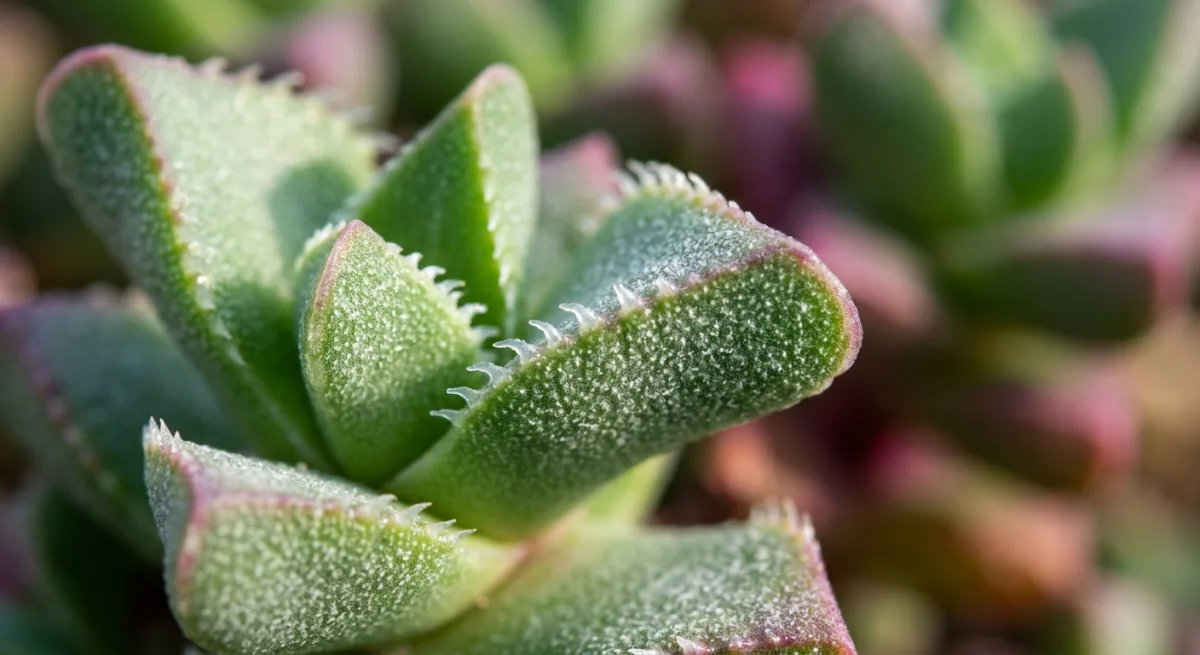
Tucked away within the calcareous rock fissures of South Africa’s semi-arid Karoo plateau, Braunsia stands out as one of the most architectural and geometrically captivating miniature marvels of the Aizoaceae (ice plant) family. Commonly known among enthusiasts as the Toothed Ice Plant, this compact succulent boasts opposing, triquetrous (three-angled) fleshy leaves edged with delicate micro-teeth and explodes into vibrant magenta flowers each spring, turning any sunny windowsill into an authentic miniature rock garden. Yet, this resilient jewel is naturally adapted not to the forgiving luxury of standard houseplant compost, but to the unforgiving, mineral-rich extremes of its native desert biome.
Many plant lovers encounter Braunsia and mistakenly treat it like a generic, forgiving leafy succulent, repotting it into dense, peat-laden commercial potting soil. The real secret to thriving cultivation lies in understanding that frequent watering is not an expression of affection; in fact, persistent moisture suffocates and collapses its fragile root hairs. Let us step up to the potting bench and explore the cellular water balance, photon demands, and long-term cultivation protocols required to keep your Braunsia vigorous for decades.
1. Botanical Biology and Physiological Foundations
Braunsia (most notably the widely cultivated Braunsia apiculata and Braunsia geminata) possesses sophisticated morphological adaptations designed to withstand relentless transpirational stress. The microscopic, tooth-like marginal tubercles lining the leaf keels act as a passive dew-harvesting mechanism, capturing condensation from early morning coastal and desert fogs and channeling precious moisture droplets directly toward the root crown. In tandem, a waxy epicuticular layer and cellular farina coating serve as the plant's built-in sunscreen, refracting harsh ultraviolet radiation and safeguarding the underlying chloroplasts from photoinhibition.
Like many specialized xerophytes, the plant operates via Crassulacean Acid Metabolism (CAM). Under this physiological regime, the stomata remain tightly sealed during scorching daylight hours to eliminate evaporative moisture loss. At night, as temperatures drop, the pores open to absorb atmospheric carbon dioxide, converting and storing it in vacuoles as malic acid for daytime photosynthesis. Consequently, Braunsia demands cool, buoyant air circulation after dark. Below the soil line, its root system is shallow yet horizontally expansive. Dense, organic-rich substrates that retain excessive water create an anoxic environment, driving root cortical cells into rapid cellular lysis within days and creating prime entry vectors for fungal pathogens like Fusarium and Pythium.
2. Accurate Diagnosis and Plant Signals
Successfully caring for a Braunsia succulent begins with reading the subtle morphological cues of its foliage. The plant communicates directly through cellular turgor and pigment expression:
- Turgor Depletion and Longitudinal Wrinkling: Slight shrinkage, softening, or fine wrinkling along the lowest leaf pairs indicates that the plant has drawn down its vacuolar water reserves. This is the natural, healthy signal that it is time for a thorough watering.
- Glassy Texture and Yellowish-Brown Basal Rot: A translucent, squishy appearance at the stem base signals cellular edema caused by chronic overwatering. The feeder roots have suffocated, and systemic rot is moving up the main vascular cylinder.
- Etiolation (Spindly, Stretched Growth): Lengthening internodes (the spacing between leaf pairs) accompanied by pale green foliage indicate insufficient photon flux. The plant is stretching in search of light, resulting in structurally compromised, weak tissue.
- Bronze and Carmine Pigmentation: Reddish, purple, or bronze blushing along the marginal teeth and tips is not a sign of disease; it is the natural production of protective anthocyanin pigments. This response confirms optimal sunlight exposure and healthy environmental stress.
3. Step-by-Step Braunsia Cultivation and Care Protocol
To maintain a dense, compact habit and encourage abundant floral flushes year after year, follow this 4-step physiological care routine:
- Optimal Exposure and Lighting Dynamics: Position your plant on an unobstructed south- or east-facing windowsill where it receives at least 5 to 6 hours of direct morning or late afternoon sun daily. During extreme midsummer heatwaves (especially between 12:00 PM and 3:00 PM), provide light, sheer filtration to protect leaf margins from thermal scorch.
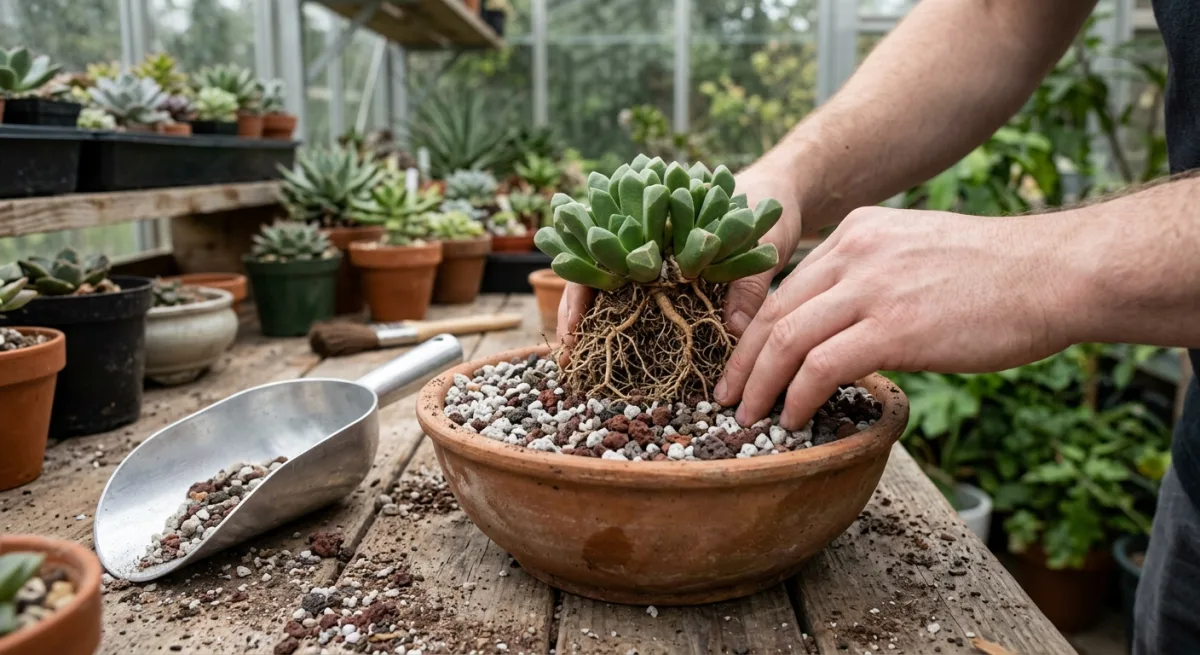
- Mineral-Dominant Substrate Assembly: Avoid conventional peat-based cactus soils straight out of the bag. Build an open, gritty substrate comprising pumice, zeolite, crushed lava rock, and a minimal fraction (20-30%) of screened coco coir or mature compost. This coarse structure guarantees water drains through within seconds, leaving vital oxygen pockets around the root zone.
- The 'Soak and Complete Dry-Out' Method: When watering, saturate the pot thoroughly until excess water drains freely from the bottom holes. Immediately discard any standing water from the saucer. Withhold further watering until the root ball has dried completely to the base of the container and the lower leaves exhibit subtle flexibility. In the depths of winter or during summer dormancy, reduce watering intervals to once every 3 to 4 weeks.
- Air Circulation Management: Stagnant, humid conditions are lethal to densely clustered mesembs like Braunsia. Maintain continuous, gentle airflow around the plant. Even during cold winter months, briefly vent the room for 10 to 15 minutes on mild afternoons to exchange stale indoor air.
4. Essential Technical Specifications and Substrate Ratios
The following table outlines the precise horticultural parameters and environmental criteria required to maximize root respiration and sustained growth for Braunsia:
| Component / Parameter | Recommended Standard | Physiological Rationale |
|---|---|---|
| Inorganic Soil Fraction | 70% - 80% Mineral (Pumice, Zeolite, Lava grit) | Prevents water retention; ensures superior aeration and macro-porosity. |
| Organic Soil Fraction | 20% - 30% Screened Coco Coir / Sifted Compost | Provides essential anchor moisture and supports beneficial microflora. |
| Grit Particle Size | 2 - 5 mm screened mineral aggregate | Facilitates root hair penetration and keeps oxygen circulating freely. |
| Light Intensity | 25,000 - 35,000 Lux (or 5-6 hours direct sun) | Preserves tight internodes and powers efficient chlorophyll synthesis. |
| Container Material | Unglazed Terracotta (baked clay) | Porous clay walls breathe, allowing moisture to evaporate evenly from all sides. |
| Ambient Temperatures | Active Growth: 18–26°C (64–79°F) | Winter Rest: 8–12°C (46–54°F) | A cool resting period provides the thermal vernalization required to trigger buds. |
5. Five Common Pitfalls and Remediation Strategies
- Mistake 1: Planting in glazed or drainless decorative cachepots.
Remedy: Containers lacking drainage holes trap standing water at the base, quickly causing root asphyxiation. Unpot the plant immediately, air-dry the root ball on absorbent paper, and repot into an unglazed terracotta container equipped with generous drainage openings. - Mistake 2: Misting or spraying the foliage.
Remedy: The tightly paired, clasping leaves of Braunsia readily trap water droplets in their junctions, creating prime conditions for fungal spores. Discontinue all foliar misting; apply water strictly to the soil surface using a precision, narrow-spout watering can. - Mistake 3: Overwatering in low-light indoor locations.
Remedy: Under subdued light, photosynthesis and transpiration drop dramatically, leaving the root system unable to take up soil water. Gradually transition the plant over 7 to 10 days into a brighter, sun-drenched exposure to safely stimulate metabolic activity. - Mistake 4: Applying high-nitrogen fertilizers to push growth.
Remedy: Excess nitrogen forces weak, bloated, watery growth that is highly vulnerable to rot and suppresses floral bud development. Apply a low-nitrogen, high-potassium liquid fertilizer formulated for cacti and succulents at quarter-strength just once in early spring. - Mistake 5: Discarding the entire specimen when basal rot appears.
Remedy: If rot takes hold at soil level, salvage healthy upper branches by severing them with a sterilized scalpel at least 5 mm above any discolored tissue. Dust cut ends with sulfur powder or ground cinnamon, allow them to callus in a dry, shaded spot for 3 to 4 days, and root them in dry mineral grit. Moisten lightly after 10 days.
6. Seasonal Calendar and Annual Care Rhythm
Aligning your cultivation practices with the seasonal rhythms of the Southern Hemisphere desert keeps your Toothed Ice Plant compact, vigorous, and floriferous year after year:
- Spring (Awakening & Flowering): As photoperiods lengthen starting in March, resume regular soak-and-dry watering. During this period, Braunsia displays its showstopping magenta blossoms. Once flowers fade, gently remove spent petals using sterilized tweezers to deter saprophytic fungal growth.
- Summer (Semi-Dormancy & Heat Defense): During periods of sustained heat above 32°C (90°F) in midsummer, CAM metabolism often slows down to conserve moisture. Reduce watering frequency, skip fertilization, and shield the plant from harsh midday sun.
- Autumn (Active Secondary Growth): As moderate temperatures return (20–25°C / 68–77°F) in September and October, Braunsia undergoes a strong vegetative flush. Water thoroughly whenever the substrate dries completely; this is also the premier season for taking and rooting stem cuttings.
- Winter (Cool Rest & Vernalization): Relocate the plant to a cool (8–12°C / 46–54°F), high-light room. Reduce watering to a bare minimum—just enough every 3 to 4 weeks to prevent severe stem shriveling. This prolonged cold treatment triggers floral bud differentiation for the upcoming spring.
By honoring these botanical requirements, your Braunsia will carpet its container like a living, jewel-encrusted mosaic, rewarding your mindful care with a breathtaking display of silky blooms every spring.


Reader Reviews & Comments 3 Reviews
Chloe Jenkins
Eleanor Vance
Marcus Bennett
Leave a Review & Rating
Share your plant care tips, experiences, or questions with our succulent community.