






Hailing from the scorching limestone bluffs of the Caribbean and the windswept coastal shelves of the Virgin Islands, Consolea rubescens—famously known in plant collector circles as the Road Kill Cactus—is both one of the most architectural and frequently misunderstood members of the cactus family. Its peculiar colloquial monikers (including the dramatic Turkish market idiom 'yolda öldüren' or 'dies on the road') stem from a quirky logistical reality: unrooted or fresh nursery specimens often dehydrate rapidly, drop their segment joints under transit shock, or buckle at the root collar if transported in damp, chilly conditions. Yet, once you understand its native biology and grant it the microclimate it evolved in, this sculptural desert sentinel transforms into an exceptionally resilient, living indoor monument that can reach soaring heights.
1. Taxonomic Identity, Areole Architecture, and Spine Morphology
Classified botanically within the family Cactaceae and the subfamily Opuntioideae, Consolea rubescens (historically referenced under the synonym Opuntia rubescens) departs dramatically from standard, shrub-like prickly pears. Its most prominent anatomical hallmark is the development of a distinct, central, woody monopodial trunk (arborescent stem) as it matures, from which flattened, paddle-like cladodes (cladodia) radiate symmetrically. In its native Caribbean habitat, it is a genuine tree cactus capable of towering up to 6 meters (20 feet) in height.
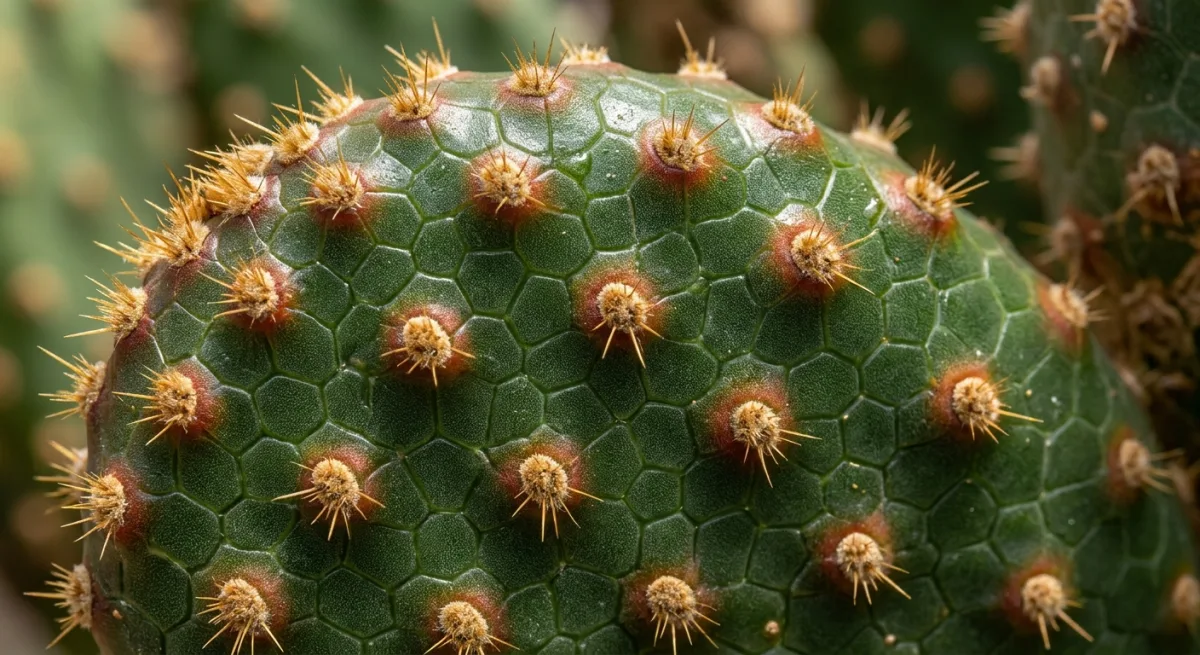
The surfaces of its emerald-to-olive cladodes are adorned with diminutive areoles arranged in a neat, geometric matrix. The specific epithet rubescens ('reddening' or 'becoming blush') refers to the warm bronze-red to crimson pigmentation that washes over the areolar margins and juvenile pads under high ultraviolet light exposure. While dense clusters of glochids (microscopic, barbed, easily detached hairs) are relatively sparse compared to classic opuntias, mature specimens can develop formidable, needle-like central spines ranging from 1 to 6 centimeters long that harden with age. Operating on Crassulacean Acid Metabolism (CAM), this arborescent succulent keeps its stomata sealed tight against the baking daytime heat, fixing atmospheric carbon dioxide exclusively during cooler nighttime hours to eliminate transpirational water loss.
2. Light Exposure, Solar Intensity, and Ventilation Standards
Adapted to the relentless, sea-level solar radiation of tropical archipelagos, Consolea rubescens is an uncompromising photophile. When cultivated indoors, it must be positioned directly in front of unobstructed south- or west-facing windows that deliver at least 6 to 8 hours of unfiltered, direct sunlight daily. In sub-optimal, low-light exposures, the plant swiftly succumbs to etiolation: newly emerging pads stretch out unnaturally, turning pale, fragile, spindly, and structurally incapable of bearing their own weight.
Sunlight alone, however, is only half of the biological equation; vigorous atmospheric ventilation serves as the plant's metabolic engine. Stagnant, humid, airless room corners hinder transpirational pull and create an opportunistic breeding ground for airborne fungal spores. Moving your specimen outdoors to a sunny patio, sheltered terrace, or balcony during warm summer months promotes phenomenal stem thickening, tighter areole spacing, and that signature deep bronze epidermal glow.
3. Hydration Cycles and Critical Winter Dormancy Protocol
Dousing desert cacti with frequent, small sips of water is not an act of kindness—it is a slow form of underground asphyxiation that rots fine root systems and hollows out tissues from within. Consolea rubescens stores substantial reserves of moisture and complex mucilage in its deep stem parenchyma. Accordingly, your irrigation strategy must always obey the uncompromising 'soak and dry' philosophy. During active spring and summer growth, hydrate thoroughly until water flows freely from the drainage holes, and discard any excess run-off collected in drip trays immediately.
From late autumn (November) through late winter (March), the plant enters obligate dormancy. During this quiet phase, environmental temperatures should ideally hover around 10–15°C (50–59°F), and watering must cease almost entirely. It is completely normal for cladodes to lose slight volume, thin out, or display slight wrinkling during this resting period; this shrinkage concentrates intracellular solutes, acting as a biological antifreeze against cold cell damage. Subjecting the plant to chilled, waterlogged substrate during winter inevitably freezes vascular xylem vessels and sparks catastrophic basal stem rot.
4. Highly Mineralized Substrate and Terracotta Pot Requirements
The root system of this Caribbean tree cactus utterly rejects organic-heavy nursery potting soils, dense peat moss, and garden compost. Root hairs require a high volumetric fraction of interconnected air pores to respire efficiently. Inadequate porosity suffocates feeder roots within hours of saturating irrigation. Volcanic gravels, porous pumice, and zeolitic minerals must form the core framework of your growing medium.
Container choice is equally pivotal. Always opt for unglazed terracotta or high-drainage porous clay pots rather than non-breathable plastic vessels. Unglazed clay wicks moisture through its sidewalls, facilitating evaporative cooling and rapid moisture dissipation. Furthermore, because mature Consoleas adopt a top-heavy, upright growth form, a broad-based, hefty terracotta vessel provides essential mechanical stability against tipping over.
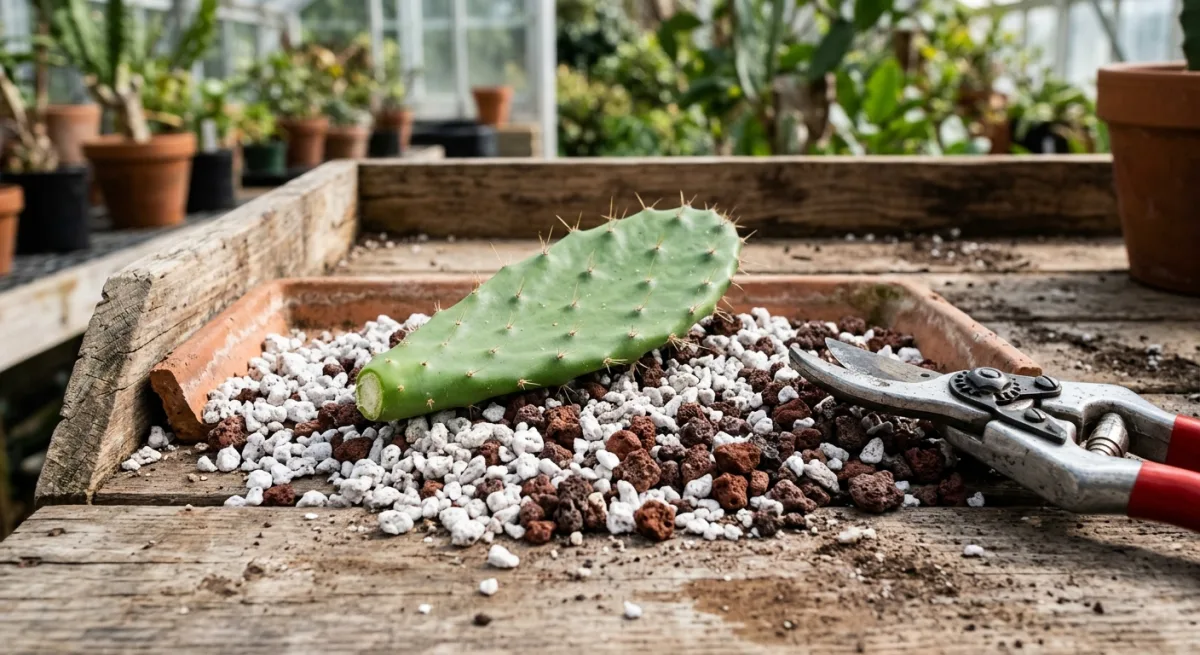
| Substrate Component | Ratio (%) | Functional Benefit to the Rhizosphere |
|---|---|---|
| Coarse Horticultural Pumice (3–6 mm) | 40% | Provides non-compacting macro-pores and superb root aeration. |
| Lava Grit & Clinoptilolite Zeolite | 25% | Improves cation exchange capacity (CEC) while buffering soil salts. |
| Washed Sharp River Sand / Quartz Grit | 15% | Ensures lightning-fast drainage channels and solid root anchoring. |
| Sterile Coir Fiber (Coco Peat) | 15% | Provides a low-decay, fibrous organic matrix for root hair adhesion. |
| Calcined Clay / Expanded Clay Granules | 5% | Acts as an internal moisture buffer without breaking down into muck. |
5. Flowering Dynamics and Macronutrient Fertilization
In mature specimens, Consolea rubescens produces captivating, cup-shaped flowers along the upper margins of its terminal cladodes, boasting vivid hues of fiery scarlet, deep orange, or burnt terracotta. Inducing blossoms in domestic interiors requires patience and faithful simulation of natural seasonal cues. Flower bud initiation is triggered primarily by a rigorous, bone-dry, cool (10–12°C / 50–54°F) winter resting period. A cactus kept in an overly warm, continuously watered living room all winter will remain entirely vegetative.
During active spring and summer growth (April to August), supplement monthly with a low-nitrogen, high-potassium liquid fertilizer formulated specifically for cacti and succulents (such as an NPK 5-10-15 ratio enriched with chelated trace elements), diluted to half strength. Excessive nitrogen application must be avoided; it forces bloated, soft, watery cellular expansion, resulting in brittle stems that are highly susceptible to opportunistic pathogens and pest infestations.
6. Propagation, Pad Cuttings, and Rootstock Grafting
Multiplying this magnificent tree cactus through vegetative cladode cuttings is straightforward, highly successful, and best undertaken during late spring or early summer when ambient temperatures favor rapid cell division:
- Using a surgically sharp, flame-sterilized or alcohol-wiped knife, cleanly slice a mature, blemish-free cladode right at the narrow junction where it joins the parent stem.
- Never plant a freshly severed pad into damp soil. Lay the cutting flat in a warm, dry, shaded, well-ventilated spot for 5 to 7 days to allow the wound to produce a thick, suberized cork layer (callus).
- Once fully calloused, insert the cutting 2 to 3 cm deep into a dry, highly mineral rooting substrate (e.g., 80% pumice and perlite). Secure it with small bamboo stakes or stones if needed to maintain an upright posture.
- Withhold all moisture for the first 14 days, maintaining ambient warmth. From the third week onward, mist the base or bottom-water lightly to encourage geotropic root development. Robust vascular roots will establish within 4 to 6 weeks.
Additionally, thanks to its vigorous vertical sap flow, dense vascular cylinder, and sturdy structural xylem, Consolea rubescens is frequently prized among advanced collectors as an elite grafting rootstock for slower-growing globular treasures like Ariocarpus, Lophophora, and variegated crests.
7. Stem Rot Mitigation, Fungal Pathogens, and Pest Defense
The single most destructive threat to Consolea rubescens is soil-borne fungal pathogens, predominantly Fusarium oxysporum and Phytophthora species. The sudden, tragic collapse of a specimen—the very phenomenon that earned it its morbid colloquial reputations—is almost invariably the culmination of soft black collar rot ascending rapidly from waterlogged roots up through the vascular core. If you notice a dark brown, water-soaked, soft, or foul-smelling zone at the stem base, instant surgical intervention is mandatory.
Unpot the plant immediately, wash the roots, and use a sterile scalpel to excise all decayed tissue until only pristine, translucent green-white flesh remains—without a single specks of vascular discoloration. Dust the clean cut surface generously with sulfur powder or activated horticultural charcoal to seal against reinfection, let the stump callus in a dry room for 7 to 10 days, and replant in completely fresh, sterile mineral grit. On the pest front, mealybugs (Pseudococcidae) frequently attempt to hide within the deep recesses of the areoles. Eradicate spot infestations with a cotton swab soaked in 70% isopropyl alcohol; for broader outbreaks, apply systemic horticultural neem oil emulsions or insecticidal soap sprays in the evening away from direct sun.


Reader Reviews & Comments 4 Reviews
Julian Vance
Clara Higgins
Marcus Sterling
Samantha Reed
Leave a Review & Rating
Share your plant care tips, experiences, or questions with our succulent community.