






On the windswept granite plateaus of Madagascar, standing defiant against the scorching sun, Senecio crassissimus—popularly celebrated as the Propeller Plant or Vertical Leaf Senecio—presents one of the most striking architectural silhouettes in the succulent realm. Rather than orienting its broad leaf surfaces perpendicular to intense solar radiation, this species angles its flattened leaves vertically toward the heavens, offering only thin, knife-like edges to peak midday rays. This sophisticated morphological adaptation minimizes transpirational moisture loss while representing nature's masterstroke against desert heat. Enveloped in a powdery silver-blue epicuticular farina and outlined by vibrant magenta-purple margins, it is a prized centerpiece for personal collectors and commercial wholesale nurseries alike.
Evolving over time into a woody-stemmed subshrub, this distinct member of the Asteraceae (daisy) family brings the wild, untamed essence of Madagascar's rocky landscape right into your living space. Whether you cultivate a single specimen on a bright windowsill or manage wholesale flats for boutique arrangements and xeriscape landscapes, unlocking its cellular water rhythm and ecological instincts is the absolute secret to sustaining its sculpted beauty for decades to come.
1. Botanical Identity and Morphological Characteristics
Taxonomically classified within the vast Senecio genus of the Asteraceae family, Senecio crassissimus Humbert is endemic to the arid, rocky slopes and limestone outcrops of southern and southwestern Madagascar. Officially documented in the botanical archives of Kew Plants of the World Online, this evergreen succulent develops an upright, semi-woody branching structure reaching 60 to 80 cm in height and 40 to 50 cm in spread.
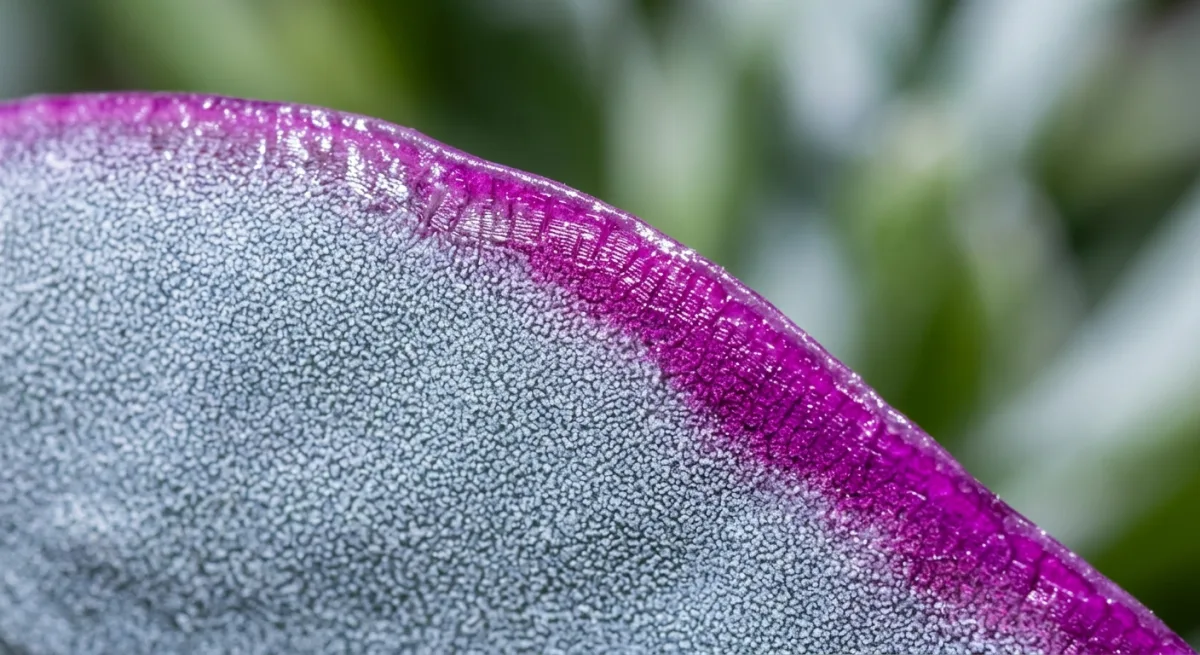
Its most mesmerizing morphological feature is the vertical, twisted arrangement of its foliage along the stems—resembling the blades of an airplane propeller. Thick, fleshy, and obovate (paddle-shaped), these leaves are sheathed in a heavy waxy cuticle and a powdery pruinose coating ('farina') that acts as a physical barrier against desiccation. Under intense, unfiltered sunlight, photoprotective anthocyanin pigments activate rapidly, brushing the leaf rims in brilliant tones of violet, magenta, and royal purple.
From late summer through mid-autumn, mature specimens produce tall, branched terminal peduncles crowned with clusters of bright yellow, daisy-like capitula (flower heads). These cheerful blossoms attract specialized arid pollinators and serve as an unmistakable biological indicator of a thriving, well-balanced root system.
2. Sunlight Requirements and Indoor Positioning
Having evolved within the granite crevices and sun-baked expanses of Madagascar, the Propeller Plant demands abundant, direct sunlight to flourish. Light intensity is the single most critical environmental trigger governing its compact growth habit and signature purple rims:
- Sunlight and Pigmentation: Provide a minimum of 5 to 6 hours of direct, unfiltered sun daily. Early morning and late afternoon sun are exceptionally beneficial. The more intense and sustained the illumination, the deeper and more luminous its violet-purple leaf margins become.
- Low Light and Etiolation: Deprived of adequate photoperiods, the plant quickly undergoes etiolation—internodes stretch awkwardly, leaves lose their rigid vertical orientation, tissues turn a dull pale green, and the magnificent purple edges vanish completely.
- Window Orientation: An unobstructed southern or western exposure is ideal in indoor settings. An eastern window can sustain moderate growth, but supplemental full-spectrum LED grow lights are strongly recommended throughout dim winter months.
3. Watering Discipline: The 'Soak and Dry' Protocol
As a true drought-hardy xerophyte, Senecio crassissimus operates via Crassulacean Acid Metabolism (CAM). Its stomata stay clamped tightly shut during blistering daytime hours to conserve internal reserves, opening exclusively at night for gas exchange. When root cells are kept suffocated in continuously damp, dense potting soil, they rapidly deplete available oxygen, triggering cellular lysis (tissue collapse) and lethal black rot within days.
Your watering regimen must unequivocally adhere to the 'Soak and Dry' protocol:
- Never add water until 100% of the soil profile is completely dry down to the base of the container. Insert a wooden skewer to the bottom or assess the pot's weight before watering.
- When moisture is needed, saturate the root ball thoroughly until water runs freely and generously from the base drainage holes.
- Discard all runoff collected in saucers or cachepots within 15 minutes. Roots sitting in stagnant water is an outright death sentence.
- Physiological Indicator: When the lowest mature leaves soften subtly and exhibit fine longitudinal wrinkles, the plant is dipping into its cellular water cache. This is your safest and most reliable sign that it is ready for a thorough drink.
4. Ideal Soil Substrate and Container Selection
The fine, fibrous feeder roots of Senecio crassissimus require continuous subterranean airflow. Mass-market wholesale succulents often arrive planted in dense, unamended peat moss or compressed coconut coir for transit stability and low shipping weight. Kept in typical indoor environments, these water-retentive organic mediums stay soggy for weeks, invariably suffocating the root system.
To guarantee longevity, cultivate your Propeller Plant in a highly porous, gritty mineral mix. The following formulation provides an optimal biological balance:
| Substrate Component | Ratio (%) | Horticultural Function |
|---|---|---|
| Coarse Horticultural Pumice (3-5 mm) | 35% | Creates permanent structural macropores and keeps root zones aerated. |
| Crushed Lava Rock / Scoria | 25% | Supplies essential iron and trace minerals while maximizing rapid drainage. |
| Clinoptilolite Zeolite | 15% | Enhances cation-exchange capacity (CEC) and inhibits fungal pathogens. |
| Coarse Perlite or Washed River Sand | 10% | Maintains structural lightness and prevents compact substrate stratification. |
| Sterile Cactus Peat / Leaf Compost | 15% | Provides minimal organic matter for root anchorage and nutrient uptake. |
Regarding planters, unglazed terracotta or ceramic pots with raw interior walls should always be your premier choice. The micro-porosity of baked clay allows moisture to evaporate laterally through the vessel walls while facilitating gas exchange. A generously sized drainage hole at the base is non-negotiable.
5. Step-by-Step Propagation Techniques
Under the right seasonal timing, multiplying Senecio crassissimus via stem cuttings is exceptionally straightforward and boasts a near-perfect success rate. For boutique propagators and passionate hobbyists aiming to expand their stock, stem and tip cuttings represent the absolute gold standard.
Stem and Terminal Tip Cutting Protocol
- Select the Optimal Window: Schedule propagation during late spring or early summer, when the plant is surging through its active vegetative growth cycle.
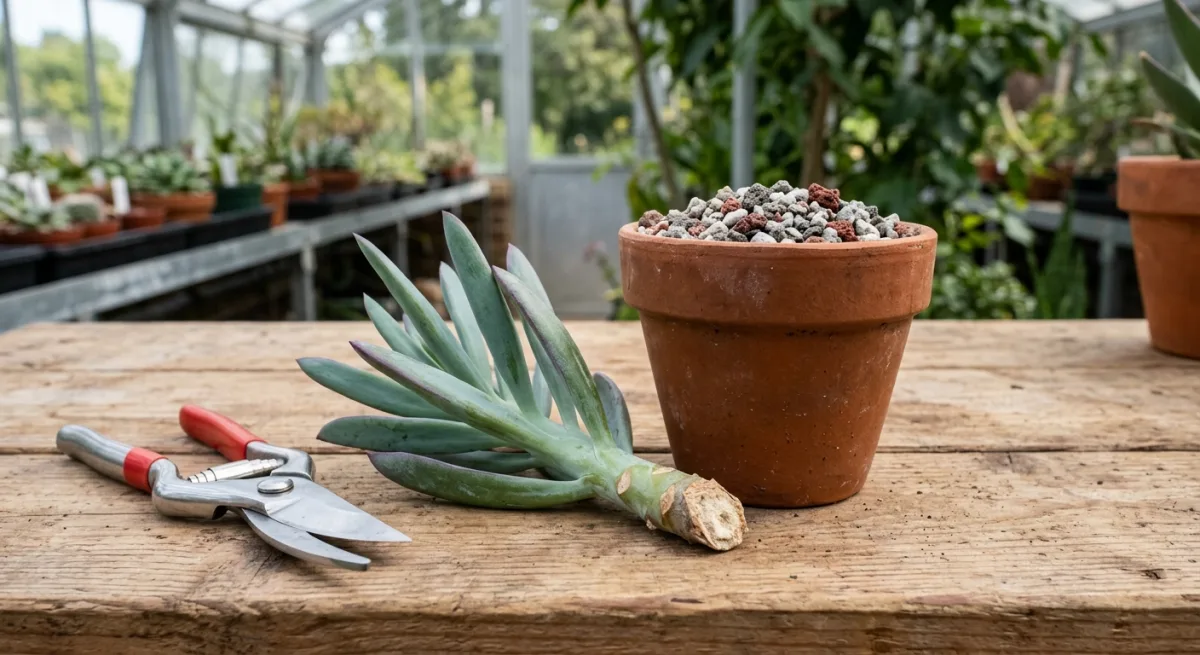
- Make a Sterile Cut: Using bypass shears sterilized with 70% isopropyl alcohol, sever a vigorous terminal stem segment 8 to 12 cm long that features at least 3 to 4 healthy nodes.
- Strip Basal Leaves: Gently detach the bottom 2 to 3 leaves to expose a bare stem section. Adventitious root initials will emerge directly from these dormant nodes.
- Induce Callus Formation: Never plant freshly cut, wet succulent tissue directly into soil. Rest the cutting in a warm, dry, shaded spot with good airflow for 4 to 6 days. Allowing the cut wound to produce a firm, protective suberized callus reduces rot risks by 95%.
- Plant into Dry Mineral Mix: Insert the callused cutting 2 to 3 cm deep into the bone-dry mineral potting mix described above. Do not apply water for the first 7 to 10 days.
- Introduce Moisture: After 10 to 14 days, gently wiggle the cutting. Once you feel firm subterranean resistance (confirming root anchorage), begin misting or lightly watering around the base perimeter. A robust, autonomous root network will form within 3 to 4 weeks.
6. Common Pests, Diseases, and Troubleshooting
While inherently sturdy and pest-resistant thanks to its tough cuticle, structural imbalances and poor ventilation can occasionally invite opportunistic problems:
- Mealybugs (Pseudococcidae): Appearing as white, cottony clusters tucked deep within leaf axils and along stem junctions, these sap-suckers deplete cellular vitality and disfigure new growth. Treatment: Spot-treat visible colonies with a cotton swab saturated in 70% isopropyl alcohol. For extensive infestations, apply cold-pressed neem oil emulsified with insecticidal soap during twilight hours.
- Root and Stem Rot (Pythium / Phytophthora): Caused by lingering moisture in poorly drained soil, turning roots into black mush and causing basal stem collapse. Treatment: Unpot immediately, excise all blackened necrotic roots, salvage firm upper stem sections as new cuttings, and discard infected substrate.
- Lower Leaf Dropping: Sudden temperature drops below safe thresholds, cold drafts, or prolonged severe desiccation can cause base leaves to shrivel and drop prematurely. Stabilize ambient temperatures and ensure consistent air movement.
7. Seasonal Care Calendar & Wholesale Greenhouse Tips
Aligning your routine with the natural phenological rhythm of Senecio crassissimus ensures stress-free, year-round vitality:
- Spring (Awakening): Vegetative growth accelerates. Water whenever the substrate dries thoroughly. Feed once every two months using a balanced, low-nitrogen succulent fertilizer diluted to quarter-strength.
- Summer (Peak Photosynthesis): High ambient light is vital. In extreme heat spikes (exceeding 35°C / 95°F), the plant may enter partial summer dormancy; space out waterings accordingly to protect dormant roots.
- Autumn (Flowering): Vibrant yellow bloom stalks emerge. Maintain strong direct sun exposure to open all floral heads. Gradually taper watering frequency as ambient temperatures drop.
- Winter (Rest Period): Complete semi-dormancy. Keep ambient temperatures safely above 8–10°C (46–50°F). Water sparingly—only once a month or when foliage exhibits noticeable cellular wrinkling.


Reader Reviews & Comments 1 Review
No comments yet. Be the first to share your succulent experience!
Leave a Review & Rating
Share your plant care tips, experiences, or questions with our succulent community.