






Stretching from the sun-drenched, semi-arid highlands of Mexico to the rocky, salt-sprayed crags of the Mediterranean basin, the prickly pear cactus (Opuntia ficus-indica) represents one of nature's most sophisticated monuments to drought survival. Known colloquially as the paddle cactus, Indian fig, or nopal, this fleshy titan might initially resemble an untamed, spiky desert shrub; beneath its tough epidermis, however, lies millions of years of refined biochemical genius. Frequently saturating our desert companions with water is never a demonstration of affection—it simply suffocates their roots by stripping away vital oxygen. The prickly pear performs its truest horticultural wonders within that precise balance of deliberate neglect and arid austerity.
If you wish to introduce a touch of rugged desert resilience to your brightest living room window or your sunniest outdoor patio, you must first understand the prickly pear's unique anatomy, hydraulic mechanics, and surprising biological adaptations. Let us place this noble survivor under the botanical microscope and reveal the most striking secrets documented in horticultural literature.
1. Taxonomic Identity, Areole Architecture, and Spine Morphology
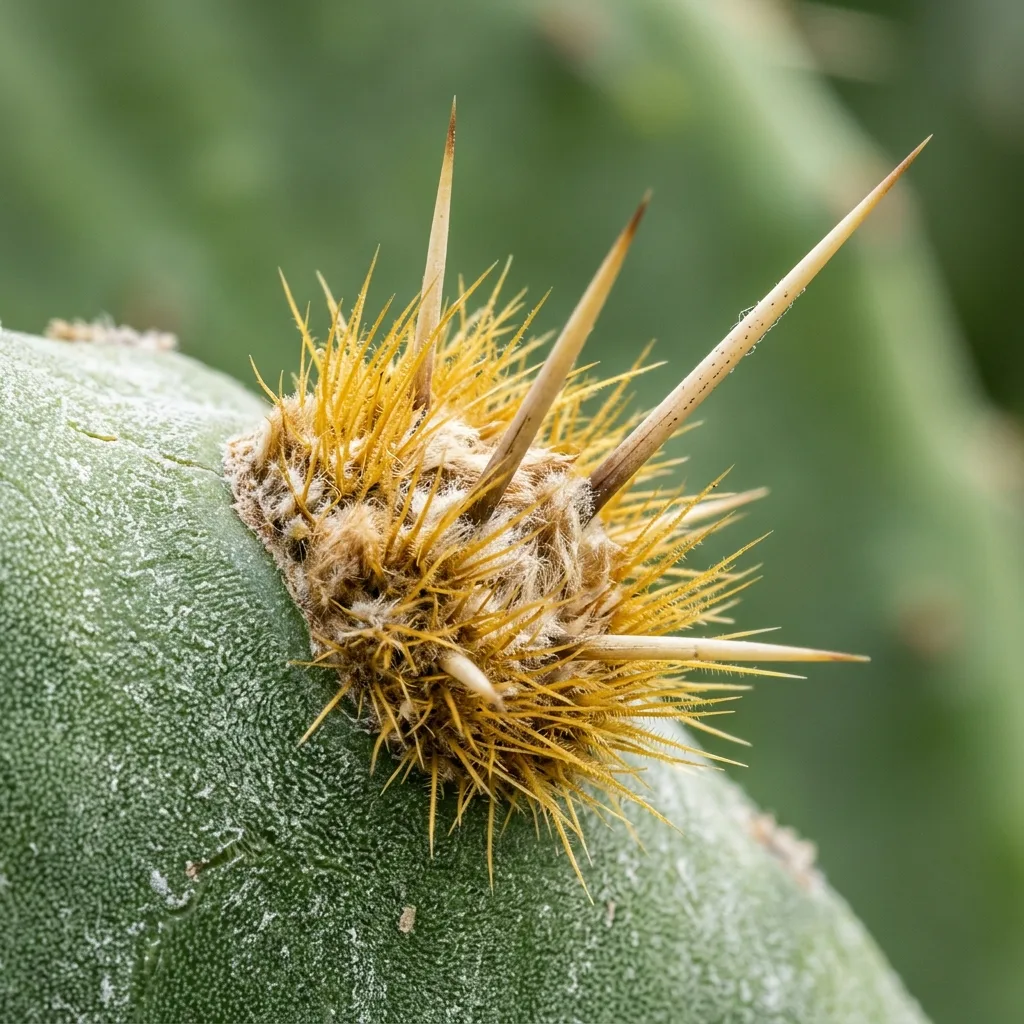
The prickly pear is a succulent shrub or arborescent specimen belonging to the genus Opuntia within the botanical family Cactaceae. The flat, fleshy, paddle-like segments commonly mistaken for leaves are, in precise botanical terminology, 'cladodes'—flattened, modified stems functioning as the plant's primary photosynthetic organs. Genuine leaves manifest solely on tender young growth as fleeting, microscopic, cylindrical structures that quickly desiccate and drop to eliminate transpirational water loss.
Let us examine the 8 remarkable botanical phenomena that distinguish the prickly pear from virtually all other desert flora:
- 1. Modified Stem Tissue, Not a Simple True Berry: The prickly pear fruit (commonly termed 'tuna') originates from an inferior ovary entirely enveloped by an extended floral receptacle and modified stem tissue (the hypanthium). As a direct result of this morphological origin, the developing fruit itself bears fully functional areoles and glochids.
- 2. Microscopic Harpoons with Retrograde Barbs (Glochids): Under an electron microscope, each individual glochid reveals an array of hundreds of tiny, backward-facing serrations resembling a prehistoric fishing harpoon. Once introduced into mammalian dermis, these barbs anchor mechanically, making extraction exceptionally challenging and causing persistent localized irritation.
- 3. The Living Foundation of Historic Royal Carmine Dye: The wild scale insect Dactylopius coccus (cochineal) feeds host-specifically upon Opuntia pads. Since pre-Columbian Aztec times, dried female cochineals harvested from prickly pears have served as the world's most coveted natural crimson pigment, transforming international trade, textiles, cosmetics, and fine art.
- 4. Nocturnal Respiration via CAM Photosynthesis: To prevent catastrophic daytime evaporation, the prickly pear keeps its stomata hermetically sealed during scorching daylight hours. At night, it opens these pores to assimilate carbon dioxide, converting it into malic acid for storage. When sunlight returns, it metabolizes this stored acid behind closed pores, producing energy while conserving almost 90% more moisture than traditional C3 flora.
- 5. The Green Invader That Overran a Continent: Introduced to 19th-century Australia as a living agricultural fence, Opuntia escaped cultivation in the absence of native predators, aggressively smothering over 25 million hectares of productive land. This ecological catastrophe triggered one of history's most celebrated biological control triumphs through the targeted introduction of the cactophagous moth, Cactoblastis cactorum.
- 6. A Dual-Purpose Nutrient Reservoir (Both Nopal and Tuna): The prickly pear serves as an extraordinary culinary double-crop. Tender, young cladodes harvested in spring ('nopalitos') are prepared as a nutrient-dense, mucilage-rich vegetable, while mature floral fruits ('tunas') offer sweet, antioxidant-packed, thirst-quenching pulp.
- 7. Sub-Zero Physiological Supercooling: As winter approaches, cold-hardy Opuntia species systematically purge free cytoplasmic water into extracellular voids while elevating internal sugar and hydrophilic mucilage concentrations. This natural antifreeze mechanism enables specimens such as Opuntia humifusa to endure brutal freezes as low as -15°C (5°F) completely unharmed.
- 8. The Self-Sealing Suberin Armor: Whenever a cladode suffers mechanical injury, its exposed parenchymal cells synthesize a dense layer of suberin and lignin within hours. This impenetrable cork-like scar tissue promptly prevents opportunistic fungal infection and arrests immediate sap dehydration.
2. Light, Solar Intensity, and Ventilation Standards
Prickly pears are unyielding heliophiles; their evolutionary blueprints necessitate uninterrupted, intense solar exposure (a minimum of 6 to 8 hours of direct, unfiltered ultraviolet light daily). When relegated to dim interior settings, cladodes quickly exhibit 'etiolation'—a distressing structural deformity characterized by pale, elongated, fragile, and misshapen growth leaning desperately toward distant light sources. The translucent, waxy cuticle layering every pad serves as natural biological sunscreen, safeguarding chloroplasts against high-energy solar radiation.
For indoor culture, allocate an unobstructed south-facing or southwestern windowsill. Furthermore, stagnant indoor air invites disaster; continuous atmospheric circulation across the cladodes is indispensable for driving transpiration and preventing airborne fungal spores from settling around the humid bases of areoles.
3. Watering Regimen and the Critical Winter Dormancy Period
When hydrating a prickly pear, the golden rule of arid culture reigns supreme: 'soak thoroughly, then dry out completely.' Throughout the active vegetative cycle in spring and summer, drench the root zone until water flows freely from the drainage apertures. Discard any residual water lingering in collection trays after 15 minutes. Never reapply water until the substrate has dried out to the very bottom of the container.
From late autumn into early spring, the plant must transition into a physiologically imperative winter rest (dormancy). Maintain temperatures between 5°C and 12°C (41°F–54°F) and virtually suspend all watering (restricting applications to once every 4 to 6 weeks, or solely if pads exhibit significant deflation). Without this crisp, bone-dry vernalization period, an Opuntia will fail to initiate reproductive flower buds for the coming season.
4. High-Mineral Gritty Substrate and Potting Requirements
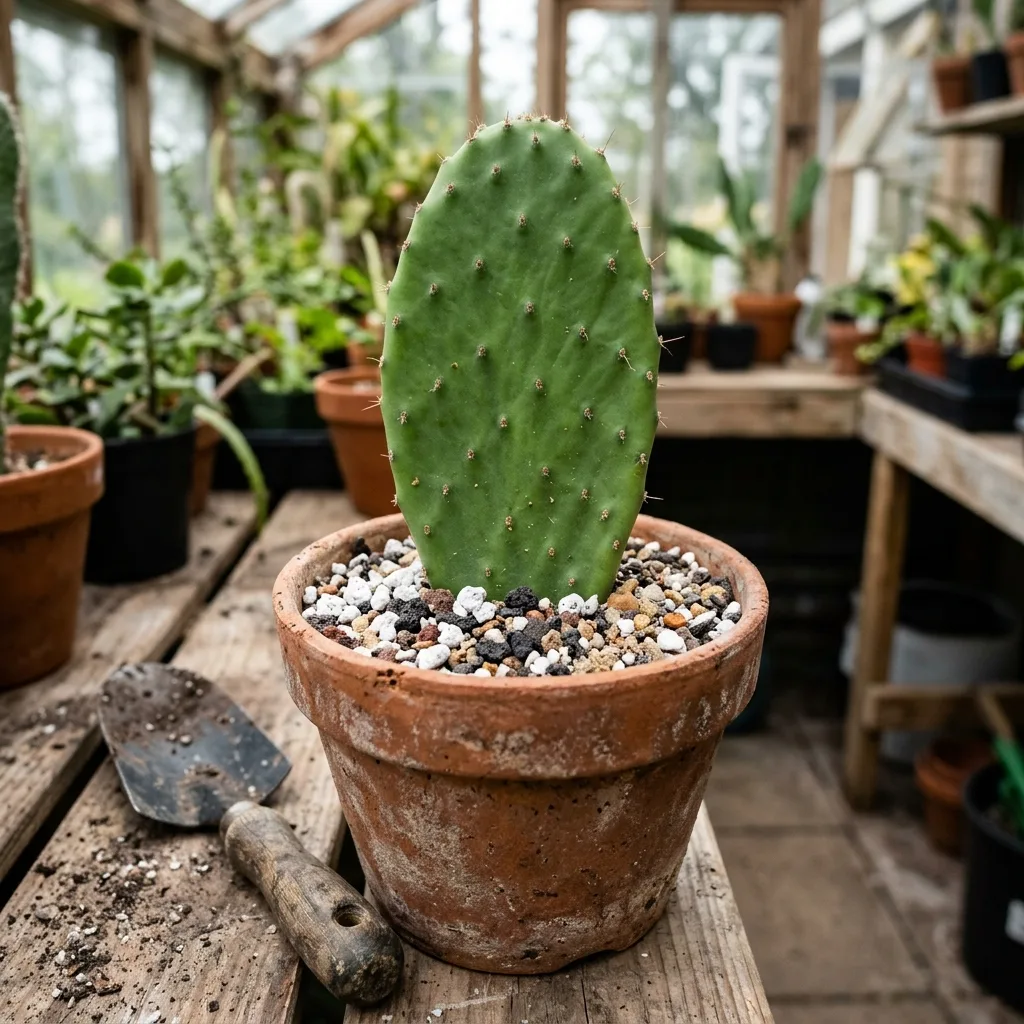
The fibrous root network of an Opuntia detests rich, peat-dense soils that retain ambient moisture like a sponge. For proper root respiration, the growing medium must be porous, coarse, and rapidly draining. Furthermore, containers must feature generous drainage holes. Choose unglazed, porous terracotta pots over plastic or glazed ceramics; porous clay allows substrate walls to 'breathe', expediting moisture evaporation and minimizing underground saturation.
| Component | Recommended Ratio (%) | Botanical Function |
|---|---|---|
| Pumice (3–6 mm) | 35% | Imparts cellular structural porosity for superior root aeration and swift drainage. |
| Lava Rock (Scoria) / Zeolite | 25% | Prevents root rot while capturing and gradually releasing essential micronutrients. |
| Coarse Horticultural Sand / Granite Grit | 15% | Eliminates substrate compaction and guarantees instantaneous water transit. |
| Sterile Organic Soil / Cactus Peat | 20% | Provides baseline botanical nutrients and minimal structural moisture bridging. |
| Horticultural Charcoal (Crushed) | 5% | Acts as a natural antifungal barrier and neutralizes toxic fungal byproducts. |
5. Blooming Strategies and Fertilization Protocol
Coaxing an Opuntia into displaying its satiny yellow, vivid orange, or fiery red blossoms demands seasonal discipline. Flower buds develop along the uppermost areolar margins of fully mature, sun-hardened cladodes that successfully traversed a cold, dry winter dormancy.
As biological activity restarts in mid-spring, supply a specialized low-nitrogen, high-phosphorus, and high-potassium cactus fertilizer (such as an NPK 5-10-10 or 4-8-12 formulation) diluted to half-strength once monthly. Avoid nitrogen-heavy plant foods, which merely trigger unbridled vegetative pad proliferation at the complete expense of floral initiation.
6. Propagation, Pad Cuttings, and Grafting Techniques
Propagating prickly pear pads is among the most dependable procedures in plant propagation. The primary method involves taking stem cuttings from mature cladodes:
- During late spring or early summer, detach a healthy, fully mature pad (at least one year old) at its narrow basal joint using a sterilized, razor-sharp blade.
- Never pot a freshly severed pad directly into moist soil! Position the cutting in a dry, shaded, well-ventilated space for 5 to 7 days until the cut wound produces a firm, pale grey, corky calloused seal.
- Insert the calloused edge vertically into a dry, gritty mineral mix, anchoring it roughly 3 to 4 cm (1.5 inches) deep. Stabilize with small bamboo stakes or river stones if necessary.
- Refrain from watering entirely for the first 10 to 14 days, offering only light surface misting. Once basal adventitious roots begin to anchor, transition gradually to the standard soak-and-dry regimen.
Owing to their tremendous vascular pressure and hardy root systems, Opuntia cladodes also serve as exceptional rootstocks for grafting finicky, slow-growing desert species such as Ariocarpus or Pediocactus.
7. Defending Against Stem Rots and Fungal Pathogens
The primary vulnerabilities of the prickly pear stem from soil-borne pathogenic fungi, most notably species of Fusarium, Phytophthora, and Pythium. These organisms proliferate swiftly in cold, oxygen-deprived, waterlogged substrates, invading through the vulnerable root collar. The moment you detect basal softening, dark water-soaked discoloration, or a sour odor, immediate surgical intervention is non-negotiable.
Unpot the afflicted plant promptly and excise all compromised, darkened tissue using a sanitized blade until only clean, pale-green vascular tissue remains. Dust the surgical wound generously with elemental sulfur powder or activated charcoal to inhibit reinfection, then allow the specimen to air-cure dry for a full week before repotting into fresh, bone-dry mineral grit.


Reader Reviews & Comments 3 Reviews
Julian Hayes
Eleanor Vance
Marcus Sterling
Leave a Review & Rating
Share your plant care tips, experiences, or questions with our succulent community.