





Journeying from the sun-scorched limestone plateaus of Mexico and the rocky Mediterranean hillsides straight into our homes, the Opuntia—popularly known as the 'Prickly Pear' or 'Barbary Fig'—is one of the plant kingdom's most resilient structural wonders. Celebrated for its flattened stem pads (cladodes) and architectural silhouette, this ancient desert dweller is a genuine marvel of natural engineering, armed with a specialized cellular matrix designed to defy prolonged drought. If you are prepared to host an unapologetic slice of the wild on your sunniest windowsill, Opuntia will generously reward your patience with dazzling satin blooms and luscious fruits.
While many houseplant enthusiasts carelessly label Opuntia as an 'indestructible cactus,' a single hydrological mistake or insufficient photon density indoors can swiftly turn this desert titan into an etiolated, light-starved, and rot-stricken shadow of its former self. In this comprehensive guide, speaking as your greenhouse companion, I will reveal the trade secrets to cultivating vigorous Opuntia specimens, handling their treacherous micro-spines with total confidence, and encouraging them to push explosive new pads every single spring.
1. Taxonomic Identity, Areole Architecture, and Spine Morphology
The genus Opuntia represents one of the largest and morphologically most intriguing clades within the family Cactaceae. While Opuntia ficus-indica (Indian Fig) remains the archetype of the genus, more compact varieties such as Opuntia microdasys (Bunny Ears cactus) are beloved staples of indoor collections. The defining morphological hallmark of these cacti is their cladodes—modified, flattened photosynthetic stem segments that take over the primary role of true foliage. True leaves appear only transiently on the tender tips of juvenile shoots as diminutive, conical scales, drying up and dropping off almost immediately.
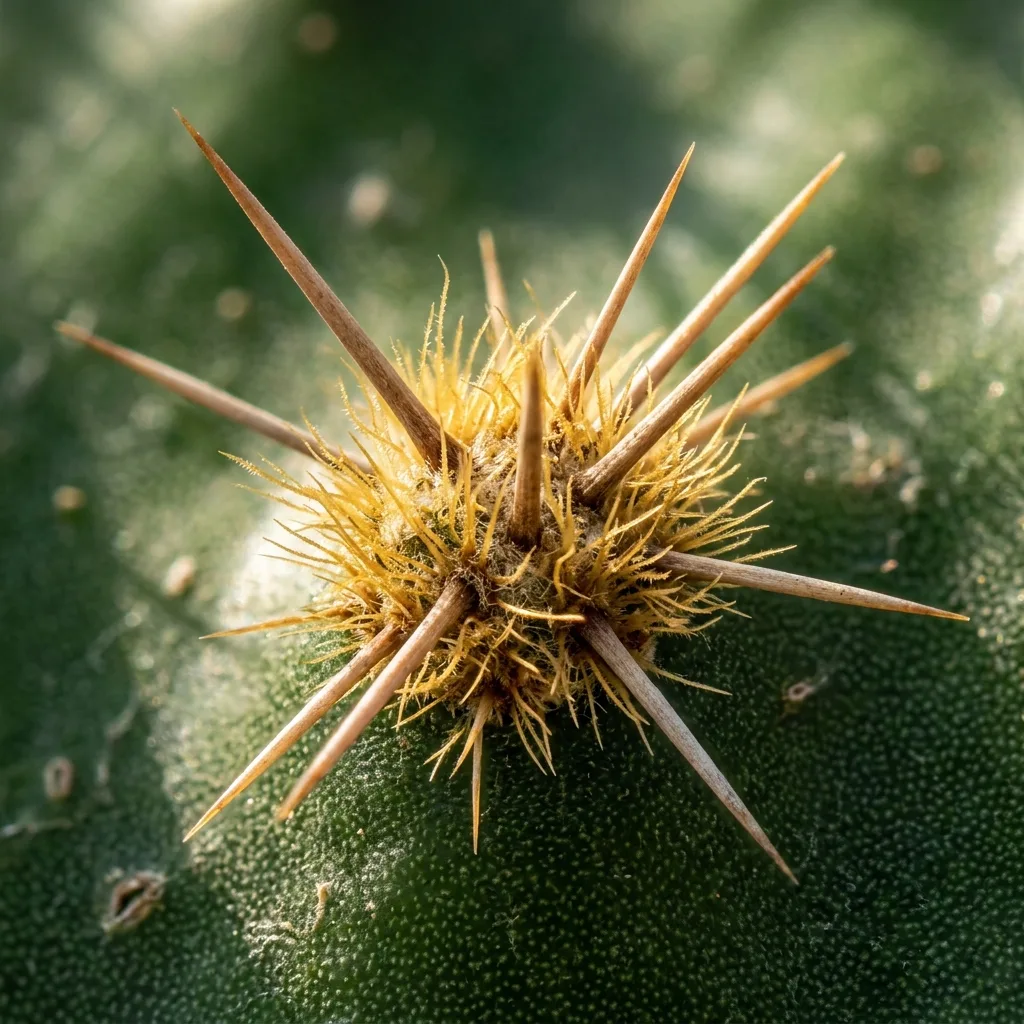
The most fascinating yet dangerous element of Opuntia anatomy resides within its areoles. Each areole houses a dual-layered defensive arsenal: prominent, calcium-fortified structural spines, and dense clusters of hairline, barely perceptible micro-spines known as glochids. When examined under an electron microscope, glochids reveal rows of razor-sharp, backward-facing barbs. The moment they brush against human skin or fabric, they detach with zero resistance and anchor deep into living tissue.
2. Light Requirements, Solar Irradiance, and Ventilation Protocols
Opuntia is an unapologetic, obligate heliophile. To maintain thick, turgid, and richly pigmented cladodes, it demands a minimum of 6 to 8 hours of direct, unfiltered solar radiation daily. In low-light interiors, the plant inevitably undergoes etiolation—a severe morphological distortion where new cladodes emerge long, cylindrical, pale, and structurally feeble in a desperate attempt to locate photons. This structural deformity is physiologically irreversible and permanently compromises the plant's structural balance.
If kept indoors, an unobstructed south- or west-facing window is non-negotiable. However, high photon exposure alone is not enough; accustomed to relentless, dry desert winds, this cactus requires continuous air circulation. Stagnant, humid microclimates around the areoles create an ideal breeding ground for mealybugs, scale, and virulent fungal spores.
3. Irrigation Cycles and the Critical Winter Dormancy Regime
The governing philosophy of Opuntia hydration is the strict 'soak and dry' method. Utilizing Crassulacean Acid Metabolism (CAM), this cactus keeps its stomata hermetically sealed during blazing daylight hours, opening them exclusively under cover of darkness to fix carbon dioxide while cutting transpirational water loss to near zero. During active vegetative growth—from mid-spring to late summer—water generously and thoroughly until water freely discharges from the drainage holes, but only when the substrate has dried out completely down to the base. Dribbling small, frequent sips of water onto cacti is not an act of devotion; it suffocates root hair zones and invites latent pathogens.
As autumn draws to a close and ambient temperatures drop toward 10–12°C (50–54°F), you must initiate the winter dormancy protocol. Throughout the cold season, irrigation should be practically terminated. An Opuntia denied a cold (5–10°C / 41–50°F), dry winter rest period will fundamentally fail to initiate flower primordia for the upcoming spring. A slight wrinkling, deflation, and purple-bronze blushing of the pads during dormancy is completely normal; it is an ingenious survival reflex wherein the plant consolidates cellular sugars and elevates osmotic pressure to prevent internal cell wall rupture from freezing.
4. High-Mineral Cactus Substrate and Potting Dynamics
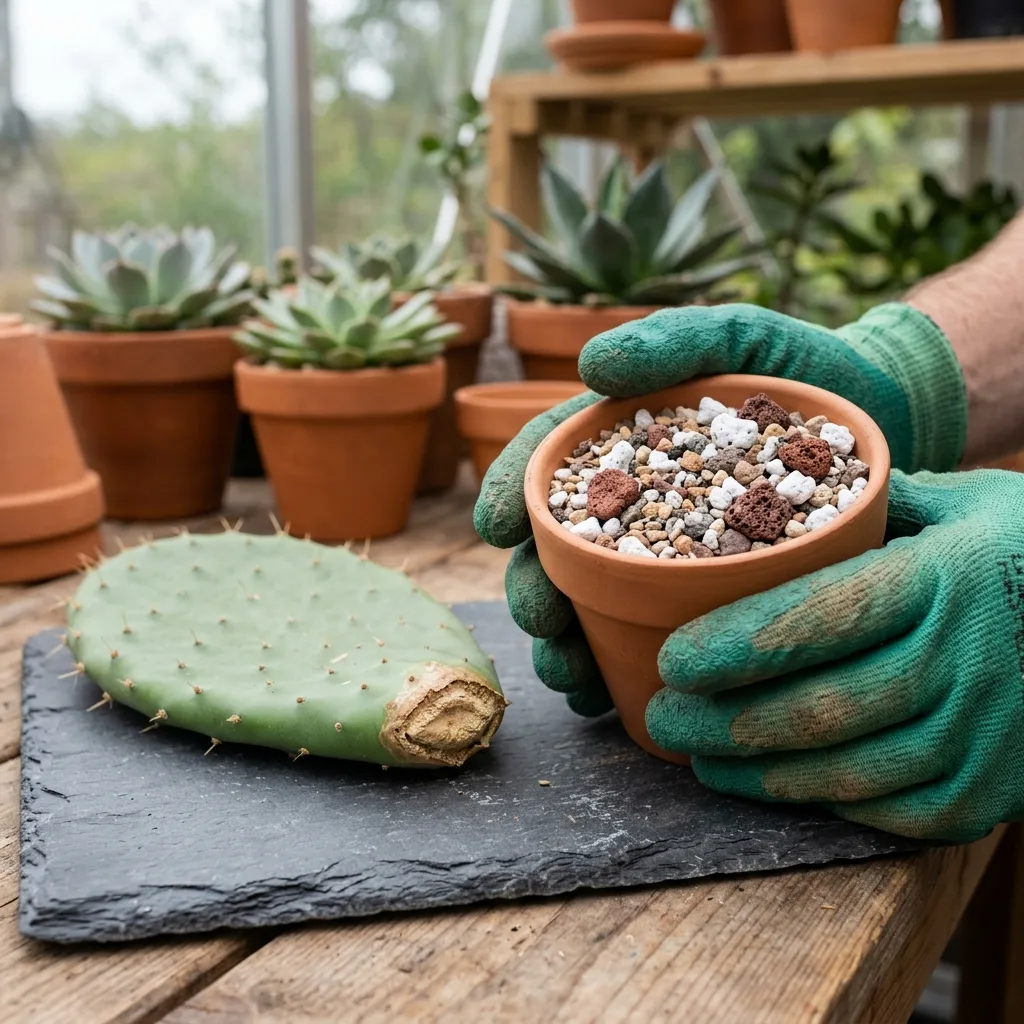
Prickly pears detest nutrient-heavy, peat-laden, moisture-retentive commercial potting soils. Possessing a fibrous, highly efficient, yet delicate root network, Opuntia requires a rapidly draining, coarse volcanic substrate through which gravitational water clears within seconds. The ideal container material is undeniably unglazed terracotta with ample drainage holes; the natural porosity of terracotta allows the root ball to transpire moisture outward across its entire surface area.
| Component Class | Raw Material | Ideal Ratio (%) | Physiological Function |
|---|---|---|---|
| Inorganic / Mineral | Horticultural Pumice (3–6 mm) | 40% | Root aeration matrix & structural drainage backbone |
| Inorganic / Mineral | Crushed Lava Rock & Zeolite Mix | 25% | Slow-release trace minerals & root anchoring grip |
| Inorganic / Mineral | Coarse River Sand / Grit (Quartz) | 10% | Prevents compaction & promotes laminar water flow |
| Organic Base | Washed Coir Fiber & Well-Aged Leaf Mold | 25% | Nutrient exchange capacity & minimal baseline hydration |
5. Flower Induction Tactics and Strategic Nutrition
Witnessing an Opuntia erupt into luminous, silk-textured blossoms is one of the crowning triumphs of cactus horticulture. Flowering relies strictly on two non-negotiable triggers: an uninterrupted, dry winter dormancy period and targeted, low-nitrogen nutrition. Exposure to cold winter air prompts the plant to synthesize flower buds inside its mature areoles as day lengths expand in early spring.
From April through late July, incorporate a specialized low-nitrogen, high-phosphorus and potassium liquid fertilizer (such as an NPK 5-10-10 or 4-8-12 formulation) diluted to half-strength once per month into your watering schedule. Heavy nitrogen feeding must be avoided at all costs; an excess of nitrogen drives unchecked, bloated vegetative pad growth while completely aborting floral bud production.
6. Propagation, Stem Cuttings, and Cladode Rooting
Opuntia propagation is remarkably dependable. A single detached, mature cladode (pad) possesses the regenerative potency to establish an independent root system within just a few weeks if executed properly. The optimum window for propagation is late spring through early summer.
- Pad Harvesting: Select a fully formed, blemish-free pad. Sever it precisely at the joint with a sterilized, razor-sharp blade, or grip it with silicone tongs and gently twist it off at the natural union point.
- Callus Formation: Never place a fresh cutting into soil! Rest the pad upright or on its edge in a warm, dry, shaded spot with excellent airflow for 5 to 7 days. The severed vascular tissue must produce a firm, dry, light-gray protective callus barrier before planting.
- Rooting the Cladode: Insert the callused pad 2 to 3 cm deep into your pre-mixed, dry mineral cactus substrate. For the first 10 to 14 days, withhold surface watering entirely. Lightly bottom-mist or bottom-water the very base of the pot to encourage downward root exploration without wetting the cut stem.
7. Mitigating Rot and Combating Fungal Pathogens
The primary vulnerability of Opuntia is chronic moisture retention, which rapidly facilitates fatal opportunistic root rot pathogens like Fusarium and Phytophthora. If the base of your cactus exhibits yellowing, water-soaked brown lesions, or soft mushy tissue, root compromise has begun. Do not confuse pathological basal rot with natural corking—a healthy, aged physiological process where the lower trunk hardens into a rigid, bark-like structure. Natural corking remains rock-hard and dry to the touch, whereas rot is soft, gives way under gentle pressure, and carries an unmistakable sour smell.
At the first sign of active rot, unpot the specimen immediately. Excise every trace of necrotic tissue with a flame-sterilized blade until you expose pure, vibrant green, translucent vascular tissue. Dust the clean incision generously with sulfur powder or cinnamon to arrest fungal proliferation, allow a new callus to form over 7 to 10 days, and re-establish the salvageable portion in fresh, completely sterile mineral media.


Reader Reviews & Comments 3 Reviews
Clara Sterling
Julian Vance
Marcus Holloway
Leave a Review & Rating
Share your plant care tips, experiences, or questions with our succulent community.