






Succulents of the genus Kalanchoe display the remarkable xerophytic morphology characteristic of the Crassulaceae family, exhibiting extraordinary environmental adaptability. The biological key to propagating these plants lies in the totipotent nature of primary meristematic tissues concentrated at the stem nodes and petiole bases. Given the appropriate biochemical signals, these undifferentiated cells rapidly organize into adventitious root primordia, laying the foundation for an entirely new specimen.
The principal driver of this regenerative physiology is the plant hormone auxin. Upon severing a cutting, local polar auxin transport is interrupted, resulting in a pronounced accumulation of auxin at the excision surface. This hormonal shift prompts neighboring parenchyma cells to divide rapidly, generating a protective, suberized scar tissue known as a 'callus'. Planting cuttings before callus formation is complete provides an open portal for soil-borne opportunistic pathogens to invade vascular bundles, leading inevitably to basal stem rot.
Furthermore, Kalanchoe species utilize Crassulacean Acid Metabolism (CAM) photosynthesis, opening their stomata exclusively at night to minimize evaporative water loss. To prevent unrooted cuttings from suffering severe transpiration stress, preserving this metabolic cycle and safeguarding the hydrophobic epicuticular farina wax layer on the foliage is essential for survival.
1. Botanical Foundations of Propagation Methods
Two primary protocols are globally recognized for maximum success when propagating Kalanchoe: Stem Cuttings and Leaf Cuttings. Stem cuttings contain mature vascular cambium and pre-formed nodal meristems, allowing them to establish roots substantially faster—often developing active shoots within 2 to 3 weeks. Vegetative, non-flowering shoots measuring 7–10 cm (3–4 inches) contain optimal carbohydrate reserves to fuel vigorous adventitious rooting.
Leaf propagation, conversely, is particularly effective with species featuring thick, succulent foliage endowed with significant water-storage reserves, such as Kalanchoe tomentosa (Panda Plant) or fleshy cultivars of Kalanchoe blossfeldiana. Severed cleanly at the meristematic junction where the petiole joins the main stem, the leaf base initiates both adventitious root systems and miniature adventitious plantlets (daughter rosettes). While this developmental trajectory is noticeably slower than stem propagation, it allows growers to produce dozens of independent specimens from a single mother plant.
2. Sterile Equipment and Mother Plant Preparation
A sterile operating field is non-negotiable for successful propagation. Soft vegetative tissues of Kalanchoe are susceptible to damping-off fungi, notably Fusarium and Pythium species. Prior to taking cuttings, ensure the donor plant is in full cellular turgor; water the mother plant thoroughly at the root zone roughly 48 hours prior to harvesting tissue.
- Cutting Tool: A surgically sharp scalpel, razor blade, or bypass pruner sterilized with 70% isopropyl alcohol.
- Sterile Drying Surface: Unbleached parchment paper or a clean ceramic tray for callus formation.
- Wound Protectant: Food-grade powdered cinnamon or activated charcoal powder for broad-spectrum antifungal defense.
- Plant Labels: Waterproof nursery tags to record harvest dates and cultivar names.
3. Step-by-Step Harvesting and Callus Formation Protocol
When harvesting stem cuttings, execute a clean, single-stroke cut at a 45-degree angle approximately 0.5 cm below a leaf node. Carefully strip the lowest 2 to 3 leaves to expose a bare stem section of at least 2 to 3 cm. When taking leaf cuttings, gently wiggle the leaf side-to-side until it snaps cleanly from the stem, ensuring the basal meristematic tissue remains intact without tearing.
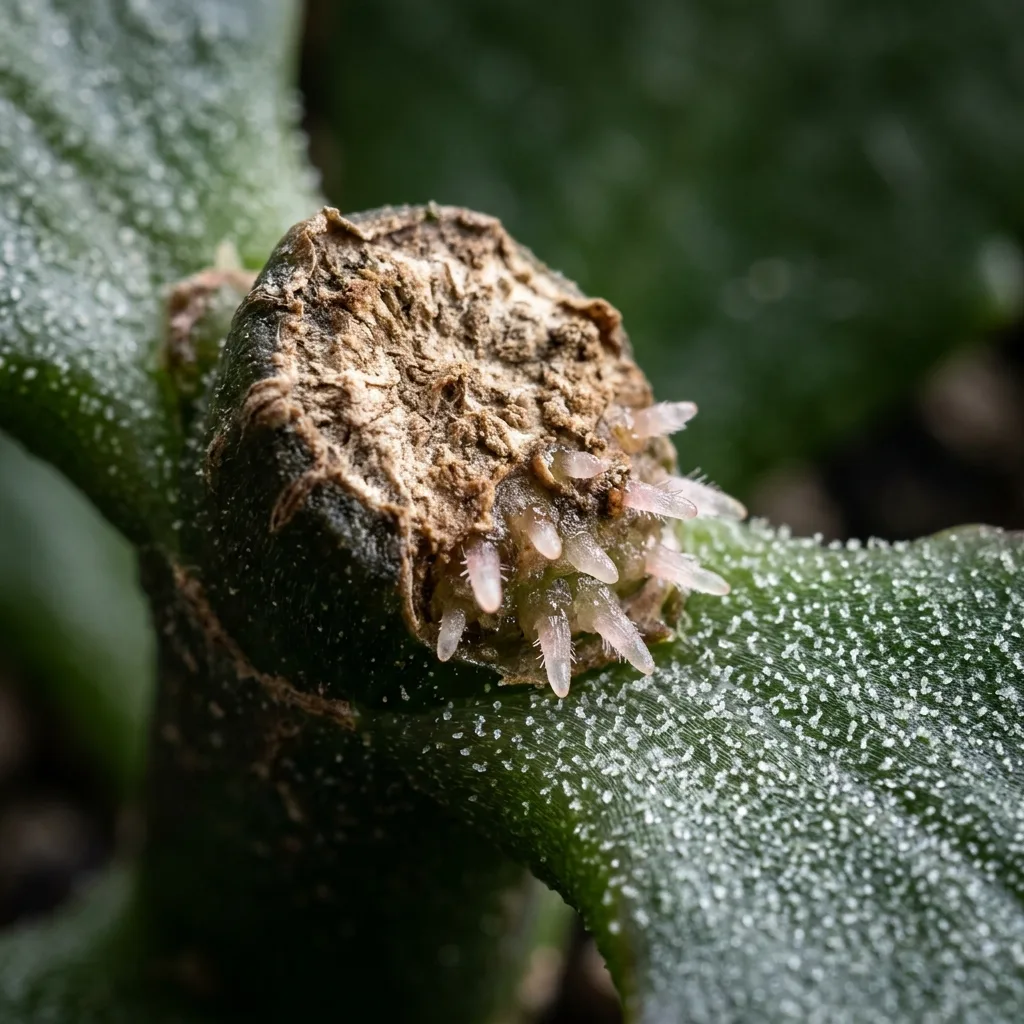
Never insert fresh cuttings directly into moist potting media. Cuttings must be placed in a warm, dry room with gentle air movement, out of direct sun, for 3 to 5 days to allow the cut surfaces to desicate and form a suberized protective layer. During this interval, a firm, grayish-white callus tissue will develop over the exposed vascular tissue.
4. Ideal Rooting Media and Substrate Selection
Callused cuttings require an open substrate that delivers abundant oxygen (macroporosity) alongside minimal, regulated capillary moisture. Heavy garden loams or dense peats will suffocate delicate root initials, triggering rot. The comparative table below outlines the primary substrates used for rooting Kalanchoe:
| Substrate Type | Aeration Capacity | Moisture Retention | Rot Risk | Root Quality |
|---|---|---|---|---|
| Dry Horticultural Pumice (2–4 mm) | Exceptional (~90%) | Low | Negligible | Thick, robust root fibers |
| Horticultural Perlite | Very High (~80%) | Moderate to Low | Low | Fine, branched, fragile rootlets |
| Succulent Mix (60% Inorganic) | Balanced (~60%) | Optimal | Low with controlled watering | Excellent capillary soil adaptation |
| Water Rooting (Liquid Culture) | Poor (Stagnant) | Continuous / High | High | Brittle 'water roots' (Difficult soil transition) |
For most indoor growers, the safest medium is an open formulation composed of 60% pumice/perlite/calcined clay and 40% clean peat or fine coco coir maintained on the drier side of moist. Insert stem cuttings roughly 2 cm deep; for leaf cuttings, lay them flat or rest them at a 30-degree angle on the substrate surface, leaving the petiole base in light contact with the soil without burying the leaf blade.

5. Environmental Balance: Light, Temperature, and Humidity
Because newly severed cuttings lack a functioning root architecture to draw water, controlling transpiration stress is vital during early development:
- Light Exposure: Provide 12 to 14 hours of bright, indirect, filtered light daily. Direct, unshielded sunlight degrades photosynthetic pigments in the parenchyma and dehydrates cuttings before roots can form.
- Temperature: Optimum adventitious root initiation occurs between 20°C and 24°C (68°F–75°F). Ambient temperatures below 15°C (59°F) retard mitotic activity, while heat exceeding 30°C (86°F) stimulates heat-shock responses that halt root emergence.
- Moisture Regimen: The substrate should not stay saturated. Lightly spritz the top layer of substrate around the base of the cutting once or twice weekly using a fine mister to induce positive hydrotropism (roots seeking moisture). Avoid wetting the foliage or stem directly.
6. Potting Up and Acclimatizing Rooted Specimens
After roughly 3 to 4 weeks, gently tug upward on a stem cutting. Firm underground resistance indicates that an adventitious root network has anchored into the medium. On leaf cuttings, tiny pinkish-white root tips accompanied by miniature pea-sized plantlets will emerge from the leaf base.
Once roots reach 2 to 3 cm in length, transfer individual plantlets into permanent containers. Unglazed terra cotta pots with generous drainage holes are ideal, as their porous walls permit lateral gas exchange and prevent root-zone water retention. Withhold irrigation for the first 3 to 4 days after potting to allow torn microscopic root hairs to heal. Afterward, resume a standard soak-and-dry watering cycle.
7. Troubleshooting Failures and Rescue Interventions
The most frequent propagation setback is stem discoloration and soft tissue collapse. This almost always points to an abbreviated callusing phase or an overly wet rooting medium. If you observe basal darkening, immediately sever the stem at least 1 cm above the discolored tissue into clean, healthy green vascular bundles. Treat the cut with charcoal or cinnamon and restart the callusing protocol from day one.
A secondary issue is premature foliar shriveling and severe dehydration. If the leaves exhibit deep wrinkles before root primordia emerge, the ambient humidity is excessively low. You can rectify this by placing a perforated, clear plastic dome over the propagation container to raise the ambient micro-humidity slightly without stifling ventilation.


Reader Reviews & Comments 3 Reviews
Eleanor Vance
Marcus Sterling
Clara Higgins
Leave a Review & Rating
Share your plant care tips, experiences, or questions with our succulent community.