






Climbing from the dim floor of tropical rainforests up towering tree trunks toward the canopy light, trailing vines transform our living rooms into cascading emerald waterfalls. Those graceful heart-shaped shoots gracing hanging planters are frequently mistaken for the exact same plant: are Pothos and Philodendron truly identical? Belonging to entirely distinct genera in botanical taxonomy, these two legendary climbers display a similar trailing aesthetic yet possess marked morphological differences ranging from petiole sulcate indentations to cataphylls (protective leaf sheaths). However, the foundational biological reality uniting them is their tropical roots' absolute hunger for dissolved gaseous oxygen.
Colloquially grouped together as 'devil's ivy' or parlor vines, these species thrive in nature as epiphytes or hemi-epiphytes; this means their root systems never anchor in dense, waterlogged, compacted earth, but instead cling loosely among aerated tree bark crevices, decaying leaf litter, and moss carpets. The primary reason an indoor aroid fails is rarely low ambient light; rather, it is the root suffocation caused by heavy, silty, or ultra-fine bagged commercial peat mixes that lack gas porosity. For root xylem and phloem tissues to sustain active cellular respiration and water transport, we must engineer a granular, high-porosity micro-ecosystem that drains gravitational water instantly.
1. Comparative Analysis of Inorganic Mineral Amendments
While Pothos and Philodendron roots are not adapted to extreme xerophytic drought like succulent and cactus tissues, they are every bit as vulnerable to hypoxic root rot. The inorganic mineral fractions we blend into our potting mix ensure that gravitational moisture drains away rapidly post-irrigation, instantly refilling macro-pores with fresh air. Here are the indispensable inorganic components we incorporate into professional aroid blends:
- Pumice (4–8 mm): Packed with millions of microscopic, interconnected vesicles, pumice retains a balanced film of capillary moisture while maintaining permanent structural air cavities around the root tips. It stands as our number one defensive buffer against anoxic fungal rot.
- Lava Rock / Scoria (3–6 mm): With its substantial bulk density, crushed basaltic lava provides physical ballast to prevent tall planters from toppling, while leaching trace minerals and creating a mildly stabilizing pH. Its rough, vesicular edges give epiphytic root hairs firm traction to anchor securely.
- Zeolite (Clinoptilolite - 3–5 mm): Featuring exceptional Cation Exchange Capacity (CEC), zeolite acts as a microscopic nutrient vault, capturing ammonium and potassium ions from fertilizer solutions and releasing them slowly as root hair pumps demand them. This prevents hazardous fertilizer salt crystallization and substrate souring.
- Coarse Horticultural Perlite: Rather than using crushed or dusty grade perlite, a clean, 4–6 mm coarse expanded perlite effectively lightens substrate bulk density; however, because it gradually floats to the surface over repeated watering cycles, it should serve as a secondary amendment alongside heavier pumice.
2. Balancing Organic Matrix: Peat, Coco Coir, and Compost
While inorganic stone aggregates establish the structural skeleton of the mix, climbing aroids depend on a nourishing, fibrous organic matrix that closely mimics the forest floor humus. The golden rule here is ensuring that organic components are coarse, chunk-form, and highly resistant to rapid biological breakdown.
Orchid Pine Bark (10–15 mm): The true backbone of any premier aroid mix. These graded bark nuggets provide broad planar surfaces for root adhesion, establish an optimal mildly acidic pH range (5.8–6.5), and recreate the natural tree bark biome of equatorial jungles. As they slowly degrade over years, they gradually release protective humic compounds.
Coco Coir Chunks & Chips: Standard powdered coco peat can pack into an overly dense, spongy sludge when maintained continuously damp indoors. Instead, opt for coarse, diced coconut husk chips (coco chips) roughly the size of a hazelnut. These chunks absorb 8 to 9 times their dry weight in water while leaving expansive macro-porosity channels open between adjacent fragments.
Fibrous Blonde Sphagnum Peat & Worm Castings: Common black topsoil and dense municipal compost form an airless barrier in indoor containers. In their place, use coarse, unground blonde Sphagnum peat moss combined with a modest 5–10% proportion of fully cured, screened worm castings (vermicompost) to supply gentle, biologically active micronutrients safely.
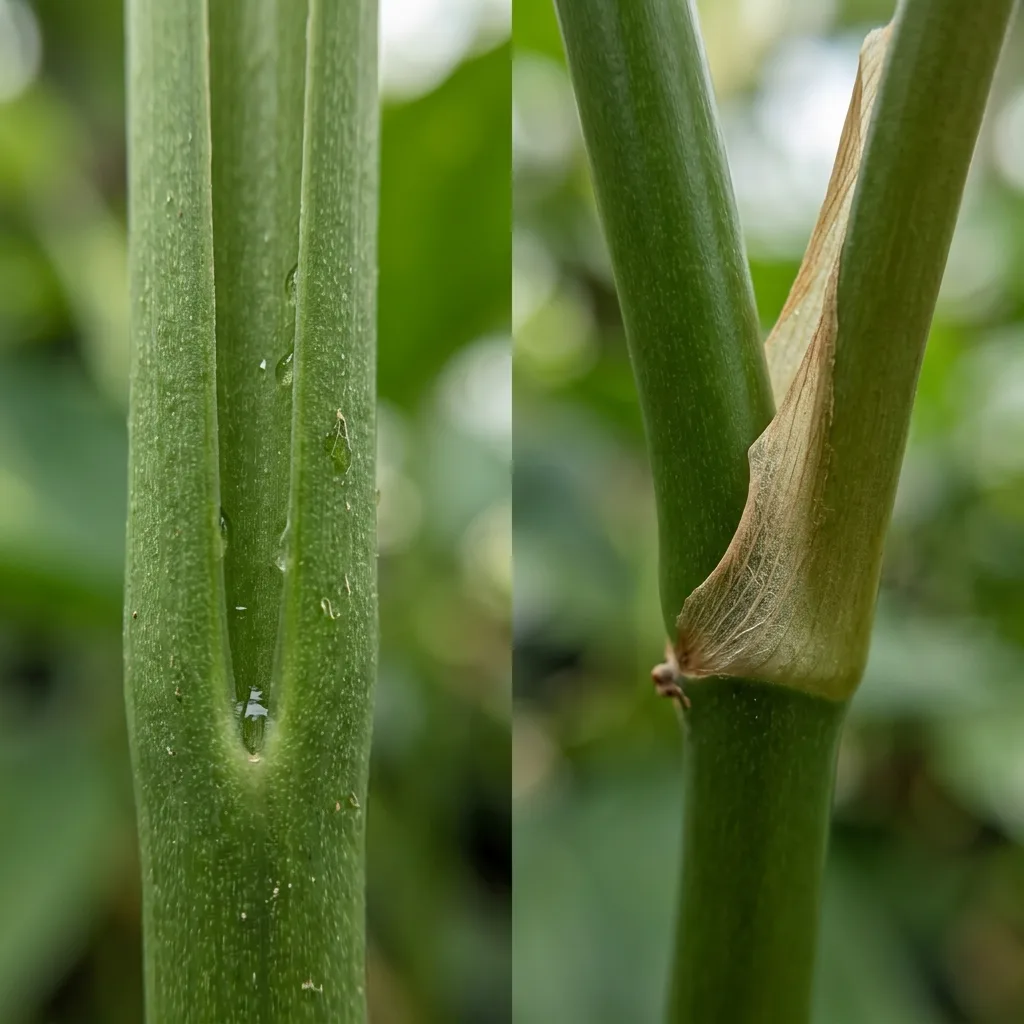
3. Substrate Formulations Across Climatic Conditions and Plant Types
Your blend must adapt to your home's relative humidity, air movement, seasonal temperature swings, and personal watering discipline. While Epipremnum (Pothos) handles temporary dry-downs with remarkable resilience, Philodendrons demand an evenly distributed, airy basal moisture. Consult the table below for our volumetric granular substrate formulas spanning common aroids and delicate succulents alike:
| Plant Group / Species | Inorganic Minerals (% by Volume) | Organic & Fibrous Fractions (% by Volume) | Target Particle Size | Hydration & Drainage Profile |
|---|---|---|---|---|
| Pothos & Philodendron (Universal Aroid Blend) | 30% Pumice, 10% Zeolite or Coarse Perlite | 35% Pine Bark (1 cm), 15% Coco Chips, 10% Fibrous Peat | 6 – 15 mm | Free-draining; maintains airy internal humidity for 3–4 days without waterlogging |
| Haworthia & Gasteria | 50% Pumice, 20% Lava Rock, 10% Zeolite | 20% Coarse Blonde Peat / Coco Coir | 3 – 6 mm | Hyper-porous; engineered to prevent thick, succulent storage roots from suffocating |
| Echeveria & Sedum | 45% Pumice, 15% Lava Rock, 10% Perlite | 30% Coarse Fibrous Peat | 2 – 5 mm | Dry-down rapid gas exchange; allows full dry cycle between thorough drenchings |
| Desert Cacti & Lithops | 60% Pumice, 20% Lava Rock, 10% Zeolite | 10% Screened Sterile Peat | 2 – 4 mm | Nearly 100% mineral; minimal organic moisture hold to simulate desert scree |
4. Pot Material Dynamics: Terracotta, Glazed Ceramic, and Plastic
Even the most meticulously blended substrate can be compromised by an unsuitable container. Remember that your choice of pot material directly governs the transpiration and evaporative dynamics of the root zone:
Unglazed Terracotta (Fired Clay) Pots: The microporous clay walls allow gas diffusion and moisture evaporation not just through bottom drain holes, but through the entire surface of the pot. If you tend to be a heavy-handed, doting waterer, unglazed terracotta is a literal lifesaver for Pothos and Philodendron roots. Epiphytic root hairs cling eagerly to the porous inner walls. The only trade-off is the need for more frequent irrigation during dry, hot summer peaks.
Clear Plastic Aroid Pots: Currently the gold standard among professional botanical growers. Clear plastic allows complete 360-degree inspection of root tip health, active mycorrhizal development, and core moisture levels without uprooting the specimen. You can even observe active chloroplast development as roots meet ambient light. Furthermore, drilling additional lateral air slits along the side walls is effortlessly simple.
Glazed Ceramic and Decorative Metal Planters: These materials are completely non-porous and vitreous. If they lack drainage holes, they quickly turn into death traps for root systems. Use glazed decorative pots strictly as external cachepots, housing an interior, freely draining plastic nursery pot elevated on a slight pebble riser.
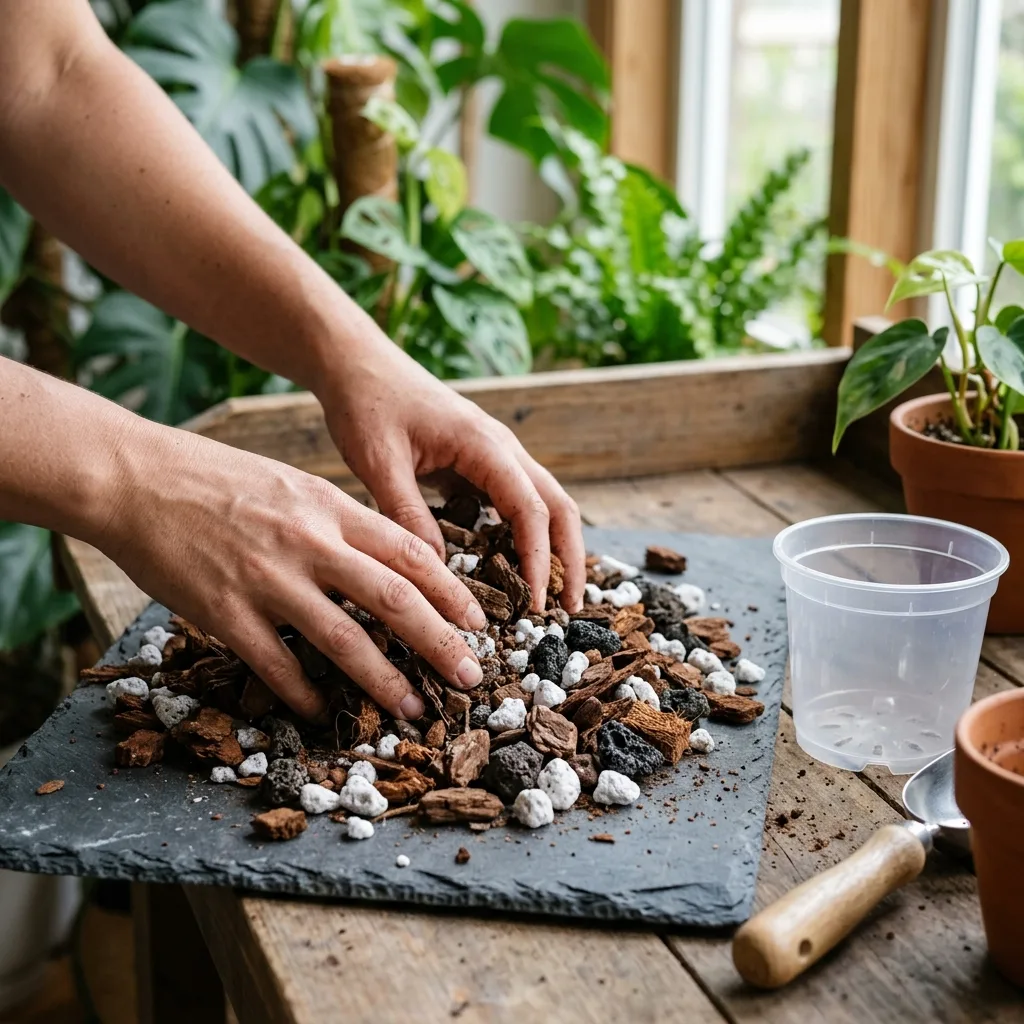
5. Step-by-Step Repotting Protocol and Root Pruning
When your Pothos or Philodendron begins pushing vigorous aerial roots out of drainage holes, shows stunted new leaves, or wilts merely hours after watering due to complete soil displacement, repotting is non-negotiable. Follow this methodical repotting workflow:
- Pre-Hydration and Extraction: Lightly water your specimen two days before repotting; this gives roots turgor and structural suppleness, allowing them to slide away from container walls without tearing. Lay the pot horizontally, gently compress the sides, and ease the root mass outward.
- Gentle Root Detangling: Using your fingertips, carefully massage and coax away the old, exhausted potting substrate. If the root mass has formed a tightly compacted, spiraling root-bound mat, gently tease and open the bottom coils using a sanitized root rake or clean chopstick.
- Root Inspection and Sanitation: Using sterilized pruning shears, excise any blackened, mushy, or hollowed-out root strands until you reveal healthy, firm white or cream-colored vascular tissue. Lightly dust significant cut surfaces with finely ground cinnamon, a natural contact antifungal agent.
- Positioning in the New Vessel: Select a container that is only 2 to 3 cm (one pot size) broader in diameter than the previous one. Overpotting creates a perimeter of dead soil that stays damp indefinitely, chilling and drowning root tips. Layer 2 cm of coarse pumice or chunky pine bark across the floor, position the root flare centrally, and settle fresh granular aroid mix into the interstitial voids with gentle taps on the pot wall.
6. Post-Repotting Critical Care: The 'Withhold Water' Rule
In casual houseplant culture, drenching a plant immediately upon repotting is frequently treated as standard practice. However, dousing a plant whose root system has just sustained microscopic breakage and shears is the biological equivalent of introducing contaminated water directly into open wounds.
Instead of soaking your plant right away, allow it to settle into the slight background moisture of the freshly unpacked medium. While desert succulents benefit from 5 to 7 days of complete dryness, tropical epiphytic aroids require a brief 24- to 48-hour moisture hiatus to initiate clean suberization and callus development over cut root tissue. During this transitional phase, shelter the plant from intense, direct solar radiation and place it in bright, diffused light behind a sheer drape. When applying the initial thorough watering, use lukewarm, dechlorinated water and confirm that gravitational flow drains unimpeded out the bottom.


Reader Reviews & Comments 3 Reviews
Eleanor Vance
Clara Higgins
Marcus Thorne
Leave a Review & Rating
Share your plant care tips, experiences, or questions with our succulent community.